
In the landscape of personal finance, managing your banking relationships is a critical component of maintaining a healthy financial life. Sometimes, this management involves the decision to close an existing account. Whether you’re consolidating your finances, dissatisfied with current services, or simply seeking a better fit for your evolving needs, understanding the proper procedure for closing an account, particularly with a major institution like Chase, is paramount. This guide will walk you through the process of closing your Chase checking account, offering insights and practical steps to ensure a smooth transition, all framed within the broader context of sound personal financial management.
Understanding Your Decision: Why Close a Checking Account?
The decision to close a checking account is often driven by various financial considerations, ranging from strategic optimization to addressing practical inconveniences. Recognizing the underlying reasons for your decision can help solidify your approach and confirm it aligns with your broader financial goals.
Financial Reassessment and Optimization
As your financial life evolves, so too should your banking strategy. A common reason for closing an account is a periodic financial reassessment. Perhaps you’ve found an account with lower fees, higher interest rates (for savings, though less common for checking), or more tailored benefits that better suit your current income, spending habits, or investment strategies. Optimizing your banking setup can translate directly into cost savings or increased financial flexibility, making it a smart move for astute financial managers.
Consolidating Accounts for Simplicity
Many individuals find themselves with multiple checking accounts accumulated over the years, often from different banks or for various purposes that are no longer relevant. Consolidating these accounts can significantly simplify your financial life. Fewer accounts mean less administrative overhead, easier tracking of spending, and a clearer overall financial picture. This streamlined approach aids in budgeting, reduces the risk of overlooking inactive accounts that could incur fees, and fosters a more organized financial ecosystem.
Seeking Better Banking Alternatives
The banking industry is dynamic, with new fintech solutions and competitive offerings constantly emerging. Dissatisfaction with Chase’s fees, customer service, digital tools, or branch availability might prompt you to explore alternatives. Whether it’s a credit union offering more personalized service, an online-only bank with higher yields, or another traditional bank providing a more suitable package, seeking a better banking alternative is a valid financial strategy aimed at maximizing value and convenience.
Addressing Account Inactivity or Unused Balances
Inactive accounts can be a hidden financial liability. Many banks charge inactivity fees, or worse, they can escheat funds to the state after a prolonged period of dormancy. If you have a Chase checking account that you no longer use, or one with a negligible balance that simply sits idle, closing it is a prudent step. It eliminates potential fees, frees up mental bandwidth, and prevents your funds from becoming unclaimed property, ensuring your financial assets remain under your direct control.
Essential Preparations Before Closing Your Chase Account
Closing a checking account isn’t as simple as flipping a switch; it requires careful preparation to avoid financial disruptions and ensure a seamless transition. These preparatory steps are crucial for safeguarding your financial stability.
Transferring Funds and Zeroing Out Your Balance
Before you initiate the closure process, it’s imperative to transfer all funds out of your Chase checking account. Most banks require an account to have a zero balance before it can be officially closed. You can transfer funds electronically to another account (either at Chase or an external bank), withdraw cash, or obtain a cashier’s check for the remaining balance. Ensure that any outstanding checks have cleared and all pending transactions have settled. It’s often advisable to leave a small buffer amount initially, only to zero it out once you’re absolutely certain no further transactions will post.
Updating Direct Deposits and Automatic Payments
This is perhaps the most critical preparatory step. Any direct deposits (like your paycheck, government benefits, or investment dividends) and automatic payments (such as utilities, subscriptions, mortgage, or loan payments) linked to your Chase checking account must be updated before closure. Failure to do so will result in missed payments, potential late fees, damage to your credit score, or delayed income. Contact each respective company or employer well in advance to provide them with your new account information. Allow sufficient time for these changes to process and verify their successful redirection to your new account.
Downloading Statements and Financial Records
Once an account is closed, accessing past statements and transaction histories can become challenging, if not impossible. For your personal financial record-keeping, tax purposes, or future reference, it’s wise to download and save digital copies of your bank statements for at least the past several years. Chase typically allows you to access statements online. Reviewing these records can also help you identify any recurring charges or old direct deposits you might have forgotten about, further aiding in the transition.
Cancelling Linked Services and Cards
Remember to cancel any services directly linked to your Chase checking account that you no longer need or that won’t automatically transfer. This includes services like overdraft protection from a linked savings account or credit line (if applicable), and any recurring transfers setup within Chase’s system. Shred your old Chase debit card and any unused checks to prevent unauthorized use after the account is closed. Simply cutting them in half might not be enough; ensure critical information like your account number is thoroughly destroyed.
Step-by-Step Guide to Closing Your Chase Checking Account
Chase offers several methods for closing a checking account, each with its own advantages and considerations. Understanding these options will help you choose the most convenient and secure approach for your situation.
Option 1: Closing In-Person at a Chase Branch
Closing your account at a physical Chase branch is often the most straightforward and secure method, especially if you prefer face-to-face interaction or have specific questions.
- Preparation: Ensure you’ve completed all the essential preparations mentioned above, particularly zeroing out the balance and updating direct deposits/payments. Bring a valid government-issued ID (driver’s license, passport) and your Chase debit card or account number.
- Process: Visit any Chase branch during business hours. Inform a banker of your intention to close the checking account. They will verify your identity, confirm the account balance (which should ideally be zero), and guide you through the necessary paperwork. You’ll typically sign a form acknowledging the closure.
- Benefits: Immediate confirmation of closure, opportunity to ask questions, and a clear paper trail (you can request a confirmation letter).
Option 2: Closing by Phone with Customer Service
If visiting a branch is inconvenient, you may be able to close your account over the phone.
- Preparation: Have your account number, personal identification information (e.g., Social Security Number), and a phone handy. Confirm your balance is zero or nearly zero.
- Process: Call Chase customer service at the number listed on their website or on the back of your debit card. Be prepared to go through security verification. Explain your desire to close the checking account. The representative will guide you through the process, which may involve verbally confirming information or sometimes mailing a form for your signature.
- Considerations: While convenient, phone closures might require follow-up to ensure official closure and confirmation, especially if a signed form is required. Ask for an email or reference number for your call.
Option 3: Closing by Mail (When Applicable)
In some instances, particularly if you’ve moved or cannot access a branch or phone easily, closing by mail might be an option, though it’s less common for checking accounts with larger balances due to security concerns.
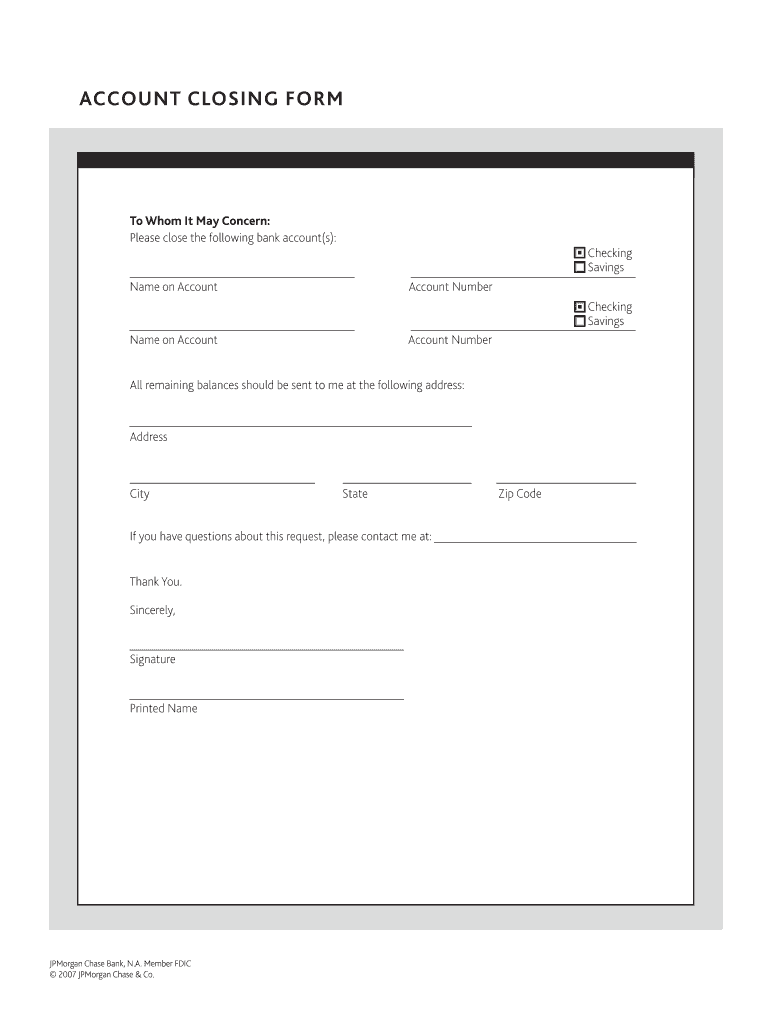
- Preparation: Write a formal letter clearly stating your intent to close the account. Include your full name, account number, current address, and a clear statement that you wish to close the account. If there’s a small residual balance, you might instruct Chase on how to disburse it (e.g., mail a check to your address).
- Process: Send the letter via certified mail with a return receipt requested. This provides proof that Chase received your request.
- Considerations: This method is slower and offers less immediate confirmation. It’s generally recommended for accounts with a zero balance or very small residual amounts, as sending a check for a large balance through mail has inherent risks. Always confirm the correct mailing address for account closures with Chase customer service.
Online Closure Limitations and Considerations
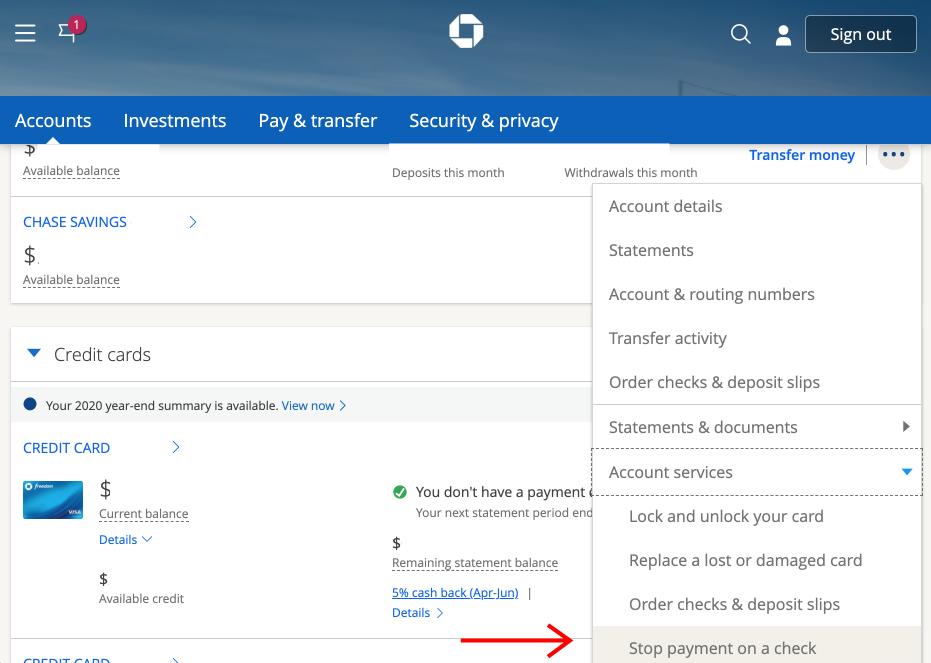
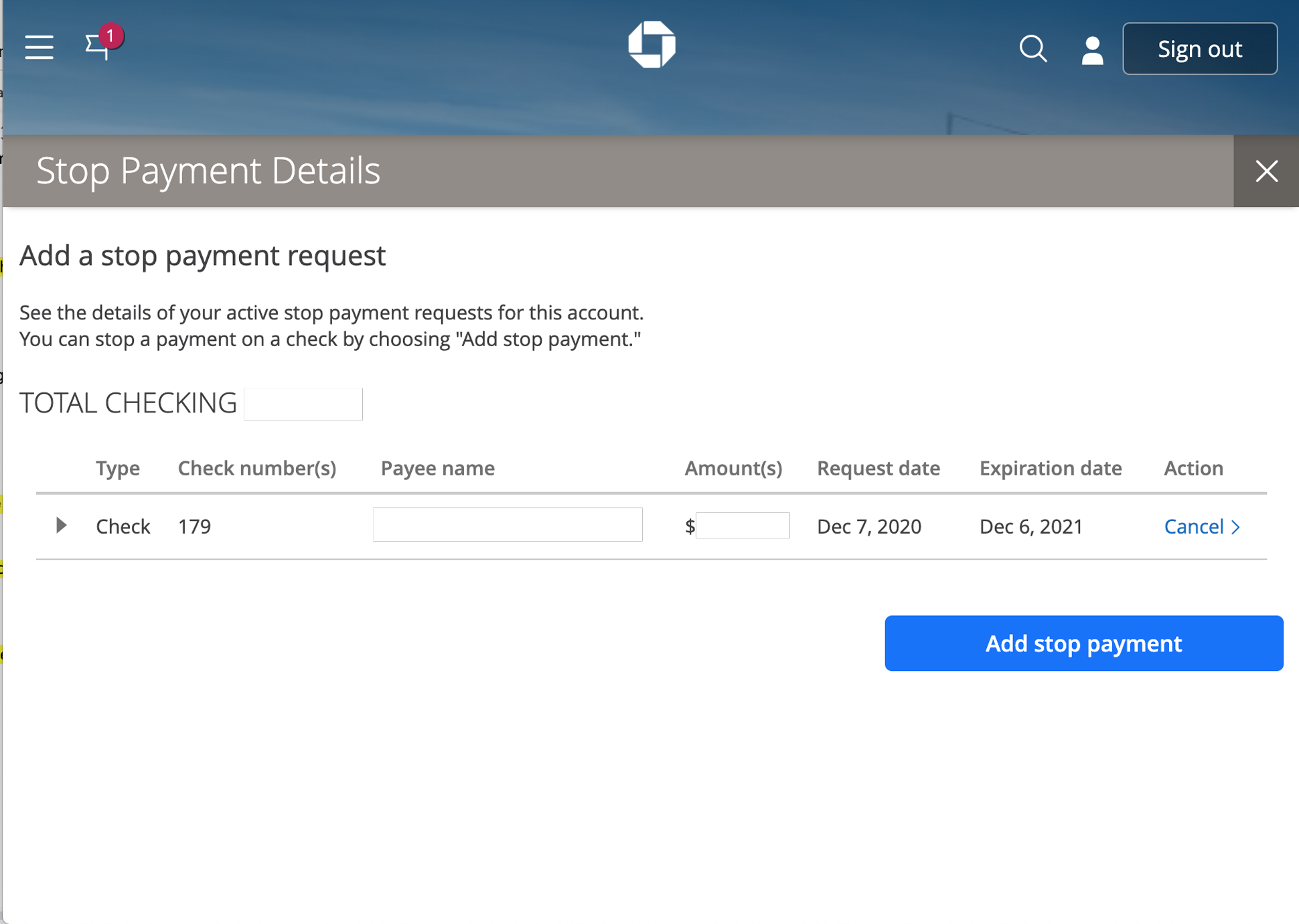
While Chase offers robust online banking tools, closing a checking account directly through the online portal or mobile app is typically not an option for security reasons. Online platforms are excellent for managing accounts, but for a permanent action like closure, most financial institutions require a more direct interaction (in-person or phone) to verify identity and ensure all protocols are followed. This prevents unauthorized closures and ensures the account holder fully understands the implications.
Navigating Potential Challenges and Post-Closure Steps
Even after initiating the closure process, a few additional considerations and follow-up steps are essential to ensure everything is finalized correctly and to protect your financial standing.
Understanding Fees and Account Minimums
Before closing, inquire about any potential fees associated with the closure itself. While most banks don’t charge a fee to close a standard checking account, some might if the account was opened very recently (e.g., within 90 or 180 days). Also, if your account had a minimum balance requirement and you fell below it prior to closure, you might incur a monthly service fee for that period. Be prepared to address any such charges to ensure your account can be successfully closed with a zero balance.
Verifying Account Closure and Obtaining Confirmation
Never assume an account is closed simply because you submitted a request. It’s crucial to verify the closure officially.
- Request Written Confirmation: When closing in person or over the phone, explicitly ask for a written confirmation letter or email stating that the account has been closed. This document is your official proof.
- Check Online Access: Attempt to log into your Chase online banking portal a few days or weeks after your request. If the account no longer appears or you cannot access it, that’s a good sign.
- Monitor for Activity: For a month or two after closure, continue to monitor your new bank account for any unexpected debits or credits related to the old Chase account. If you spot any, contact Chase immediately.
What to Do with Old Debit Cards and Checks
Once your account is officially closed, your old Chase debit card and any remaining unused checks are obsolete. As mentioned earlier, shred the debit card (especially the magnetic strip and chip) and shred or burn any unused checks. Simply throwing them away could put you at risk of identity theft or unauthorized access to your closed account number. Proper disposal is a non-negotiable step in financial security.
Monitoring Your Financial Health
While closing a checking account doesn’t directly impact your credit score like a loan or credit card might, it’s a good practice to regularly monitor your overall financial health. Check your credit reports periodically to ensure no fraudulent activity has occurred and that all your financial accounts are accurately reflected. Regularly reviewing your bank statements and budgeting helps ensure you’re on track with your financial objectives.
Alternatives to Full Account Closure and Final Considerations
Sometimes, a full account closure isn’t the only solution. Exploring alternatives can be beneficial, and understanding the broader implications of your decision is part of comprehensive financial planning.
Downgrading or Changing Account Types
If your primary concern is fees or features, but you otherwise like banking with Chase, consider if simply downgrading your account type to one with fewer requirements or different benefits is an option. Chase offers various checking accounts, and switching might resolve your issues without the hassle of a full closure and opening a new account elsewhere. Discuss this possibility with a Chase representative.
Maintaining a Minimum Balance for Future Needs
For some, keeping a Chase account open with a minimum balance might be strategic. Perhaps you anticipate needing their services again in the future, or you want to maintain access to specific Chase products (like a credit card that benefits from a checking account relationship). Weigh the cost of maintaining the account (potential fees) against the convenience or strategic benefit.
The Broader Implications for Your Financial Portfolio
Closing an account is a tactical move, but it should fit into your overarching financial strategy. Consider how this change impacts your financial portfolio:
- Emergency Fund: Is your emergency fund properly housed in a new, accessible account?
- Budgeting: Does your new banking setup make budgeting easier or harder?
- Relationship Banking: Are you consolidating your banking relationships to one institution for better rates or services, or diversifying for risk management?
Ultimately, the decision to close your Chase checking account is a personal financial choice. By understanding the reasons, meticulously preparing, following the correct procedures, and conducting thorough follow-up, you can ensure this transition contributes positively to your overall financial well-being and security.
aViewFromTheCave is a participant in the Amazon Services LLC Associates Program, an affiliate advertising program designed to provide a means for sites to earn advertising fees by advertising and linking to Amazon.com. Amazon, the Amazon logo, AmazonSupply, and the AmazonSupply logo are trademarks of Amazon.com, Inc. or its affiliates. As an Amazon Associate we earn affiliate commissions from qualifying purchases.