
In the contemporary financial landscape, the agility of your capital is often dictated by the efficiency of the tools you use. As digital banking evolves, consumers are no longer tethered to the institutions where they opened their first checking accounts. Whether you are migrating to a high-yield savings account to capitalize on rising interest rates, consolidating your assets for better oversight, or fleeing predatory fee structures, knowing how to close a bank account online is a vital skill in modern personal finance management.
Closing an account is more than just clicking a button; it is a strategic maneuver that requires precision to avoid “zombie” accounts, overdraft fees, and unnecessary hits to your internal banking reputation. This guide explores the systematic approach to offboarding from a financial institution through digital channels while maintaining total control over your liquidity.
Preparing Your Finances for a Seamless Exit
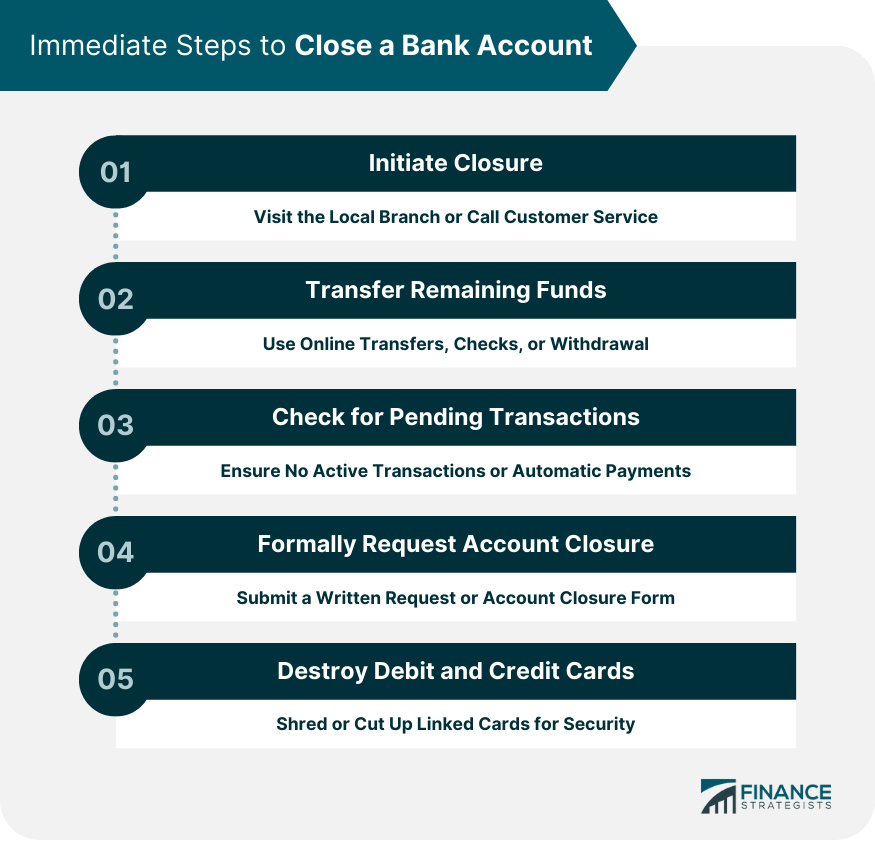
Before initiating the digital closure process, you must conduct a comprehensive audit of your financial ecosystem. An impulsive closure can lead to failed payments and significant administrative headaches. The goal is to ensure that the account is “dormant” in practice before it is legally closed.
Identifying Linked Subscriptions and Direct Debits
The modern consumer often has dozens of invisible threads tied to their primary checking account. These include streaming services, utility bills, insurance premiums, and gym memberships. To prevent a “broken pipe” in your cash flow, review your bank statements from the last twelve months. This duration is crucial because it captures annual renewals that you might otherwise overlook.
Move these obligations to your new financial hub at least one full billing cycle before you request closure. This “buffer month” allows you to verify that every service has successfully transitioned to the new payment method.
Managing Outstanding Balances and Pending Transactions
A common pitfall in online account closure is the “pending” transaction. If you initiate a closure while a check is still in the mail or a debit card transaction is clearing, the bank may reject the closure request or, worse, allow the account to go into a negative balance.
Stop using the account entirely for at least ten business days before starting the closure process. During this time, monitor the account daily to ensure every cent is accounted for. If you have an outstanding balance, you must settle it immediately; banks generally will not close an account that owes money, and unpaid balances can be reported to ChexSystems, the banking equivalent of a credit bureau, making it difficult for you to open accounts elsewhere in the future.
The Digital Protocol for Closing Your Account
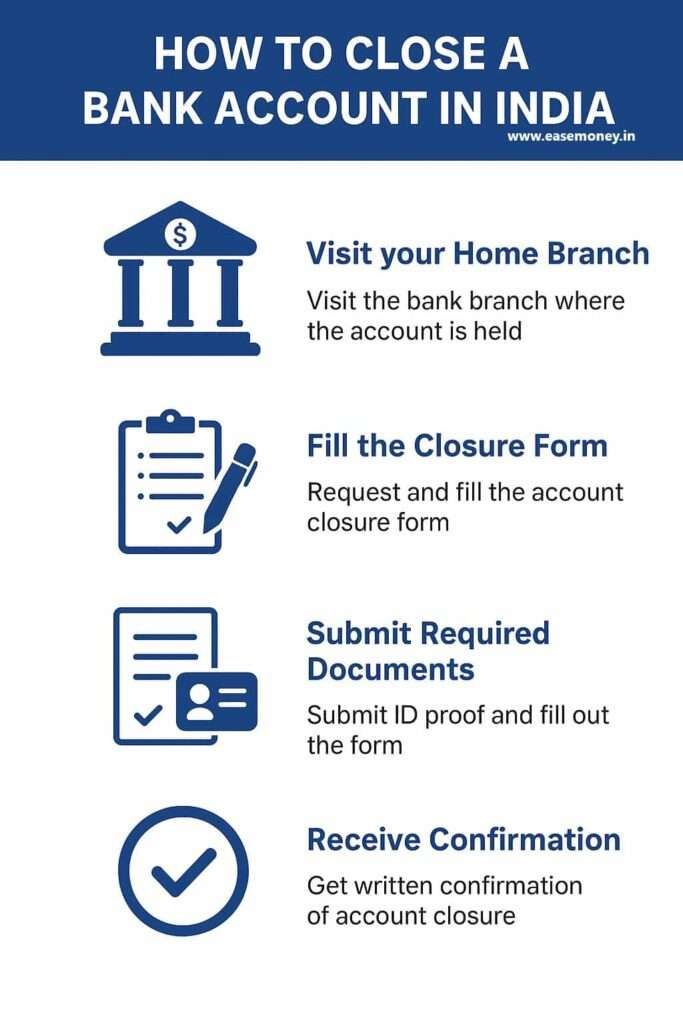
Once your financial footprint has been successfully moved, you can begin the formal process of termination. Most modern banks offer three primary digital avenues: the mobile app, the web portal’s secure messaging system, or a dedicated “Close Account” feature within the settings menu.
Utilizing Mobile Apps and Web Portals
Fintech-forward institutions and neobanks typically provide a streamlined “Close Account” button within their interface. However, traditional legacy banks often bury this feature or require a more interactive approach. If a direct button is not available, the most effective tool is the Secure Message Center.
When writing your request, be professional and concise. State clearly that you wish to close account number [X] and that you have already cleared all pending transactions. Explicitly request a written confirmation of the closure for your records. Using the internal messaging system is superior to standard email because it is encrypted and linked directly to your authenticated profile, providing a legally recognized paper trail of your intent.
Secure Messaging and Live Chat Documentation
If the bank requires a live chat interaction to process the closure, treat the session as a formal business meeting. Many banks use this opportunity to offer “retention incentives,” such as waiving fees for six months or offering a small cash bonus to stay. If your decision is based on a long-term financial strategy—such as seeking a better Annual Percentage Yield (APY) or lower overhead—remain firm.
At the conclusion of the chat, always ask for a transcript or a reference number. If the platform does not provide an automated transcript, take screenshots of the final confirmation message. This documentation is your primary defense if the bank fails to execute the closure and subsequently charges an inactivity fee.
Navigating Potential Hurdles and Common Roadblocks
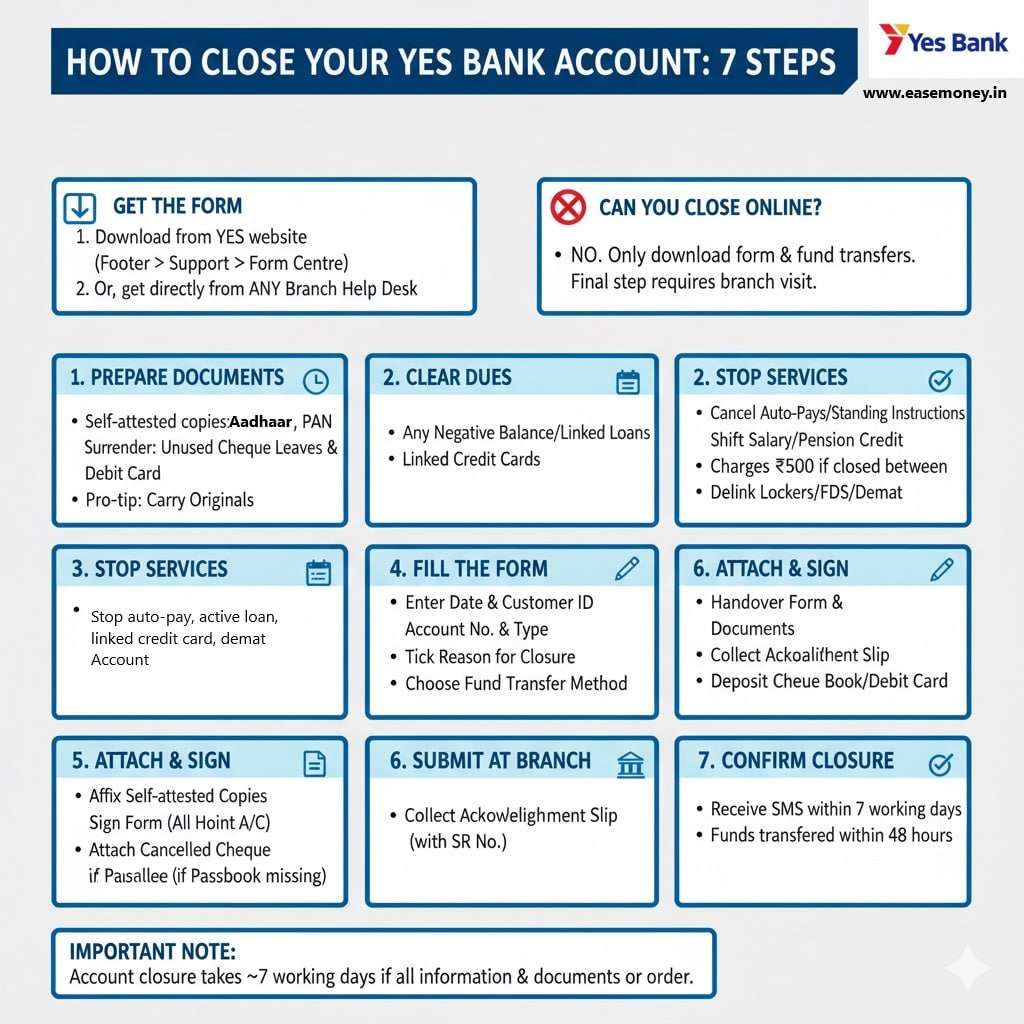
Financial institutions are often reluctant to see liquidity leave their ecosystem. Consequently, you may encounter specific friction points designed to slow down the exit process or capture one last round of fees.
Avoiding Account Inactivity Fees and Early Closure Penalties
Some banks impose an “Early Account Closure Fee” if you terminate the relationship within 90 to 180 days of opening the account. These fees typically range from $25 to $50 and are designed to recoup the costs of account setup and any initial promotional bonuses. If you are closing a relatively new account, check the fee schedule first. It may be more cost-effective to leave the minimum balance required to waive monthly fees and wait until the penalty window expires.
Furthermore, be wary of the “Inactivity Fee.” If you drain your account to zero but do not officially close it, the bank may charge a fee for a low balance or lack of activity. This can drive the balance into the negative, leading to a “charged-off” status that damages your financial standing.
Handling Residual Interest and Final Statements
For interest-bearing accounts, such as High-Yield Savings Accounts (HYSA) or Money Market Accounts, the timing of interest accrual can complicate a closure. Interest is typically calculated daily but posted monthly. If you withdraw your full balance on the 15th of the month, the interest earned during those first 15 days may post on the 1st of the following month, effectively reopening the account.
To avoid this, ask the representative to perform a “mid-cycle interest sweep” or to include any accrued interest in the final payout. This ensures that the account balance truly reaches zero and stays there.
Consolidating Your Wealth: What to Do After the Closure
The closure of an account is an opportunity to optimize your broader financial strategy. Once the funds are liberated, they should be immediately put to work in a way that aligns with your long-term goals.
Transferring Funds via ACH or Wire Transfer
When emptying the account, you have two primary digital methods: the Automated Clearing House (ACH) transfer or a Wire transfer. ACH transfers are usually free but can take 1–3 business days to settle. Wire transfers are near-instant but often carry a fee of $20 to $30.
For most personal finance needs, a standard ACH transfer is the most logical choice. However, if you are moving a significant sum—such as a down payment for a home—the security and speed of a wire transfer may justify the cost. Ensure the destination account is fully verified before initiating the move to prevent funds from being held in “limbo” between institutions.
Establishing a New Primary Financial Hub
Closing an old account is the perfect time to evaluate the features of your new institution. Are you getting the best possible APY? Does the new bank offer robust budgeting tools, seamless Zelle integration, or fee-free international ATM access? By consolidating your accounts, you reduce the “cognitive load” of your finances, making it easier to track your net worth and monitor for fraudulent activity.
Long-Term Financial Health and Account Maintenance
The process of closing a bank account doesn’t end when the login stops working. There are long-term administrative steps to ensure the closure has no negative impact on your financial health.
Monitoring Your Credit Report and ChexSystems
While closing a bank account does not directly impact your FICO or VantageScore (unlike closing a credit card), it does leave a footprint in ChexSystems. Approximately 30 to 60 days after closure, it is wise to request a copy of your ChexSystems report to ensure the account is listed as “Closed at Consumer’s Request” or simply “Closed.” This prevents any future confusion about whether the account was terminated due to mismanagement or overdrafts.
Maintaining a Digital Paper Trail for Future Audits
Keep your final bank statement and the closure confirmation letter in a secure digital vault or a physical file. These documents are essential for tax purposes, especially if the account generated more than $10 in interest, which will trigger a 1099-INT form. Furthermore, if you ever apply for a high-security financial product, such as a mortgage, underwriters may ask for documentation regarding the source of funds moved from the closed account.
By following this structured, digital-first approach to closing your bank account, you transition from a passive consumer to an active manager of your capital. You eliminate the waste of unnecessary fees and ensure that every dollar you earn is positioned in an environment that maximizes its growth and security. In the world of personal finance, the ability to close a door is just as important as the wisdom to open the right one.
aViewFromTheCave is a participant in the Amazon Services LLC Associates Program, an affiliate advertising program designed to provide a means for sites to earn advertising fees by advertising and linking to Amazon.com. Amazon, the Amazon logo, AmazonSupply, and the AmazonSupply logo are trademarks of Amazon.com, Inc. or its affiliates. As an Amazon Associate we earn affiliate commissions from qualifying purchases.