
In the realm of personal finance and household budgeting, every dollar counts. Whether you are a dedicated DIY enthusiast, a professional contractor managing high-volume project accounts, or a homeowner looking to maximize the value of every return, store credit represents a specific form of retail liquidity. Unlike standard gift cards, store credit at major retailers like Home Depot often carries specific stipulations, security measures, and utility constraints that require a proactive management strategy. Understanding how to check your Home Depot store credit balance is not merely a technical task; it is an essential component of maintaining an organized financial portfolio.
Store credit is essentially “dormant capital.” It is money that has been locked into a specific ecosystem, waiting to be redeployed into your next asset-building project. Effectively tracking this balance ensures that you are not leaving money on the table and that your home improvement projects remain within their allocated budgets.
Understanding Home Depot Store Credit as a Financial Asset
To manage your finances effectively, it is critical to distinguish between the various types of “stored value” instruments offered by retailers. Many consumers mistake store credit for gift cards, but from a financial and security standpoint, they are managed quite differently.
Store Credit vs. Gift Cards: Key Distinctions
Home Depot gift cards are typically purchased with cash or credit and are treated as “bearer instruments,” meaning whoever holds the card can spend the balance. Consequently, gift card balances are easily checked online or via mobile apps.
Store credit, however, is usually issued as a result of a return where a receipt was not present or when a purchase was originally made via a specific promotion. Because store credit is often tied to the identification of the person who made the return, it is a restricted asset. This restriction is a security measure designed to prevent the fraudulent resale of returns. From a personal finance perspective, this means your store credit is less “liquid” than a gift card because it cannot always be easily transferred or sold on the secondary market.
The Impact of Store Credit on Your Home Improvement Budget
When planning a renovation or a side hustle in property flipping, cash flow is king. Store credit should be viewed as a “earmarked fund.” By keeping a precise tally of your available credit, you can offset the “out-of-pocket” costs of your next project. For example, if you have $450 in Home Depot store credit from returned flooring materials, that is $450 of your liquid cash that can remain in a high-yield savings account or be invested elsewhere while the store credit covers the cost of paint or hardware.
Step-by-Step Methods to Verify Your Balance
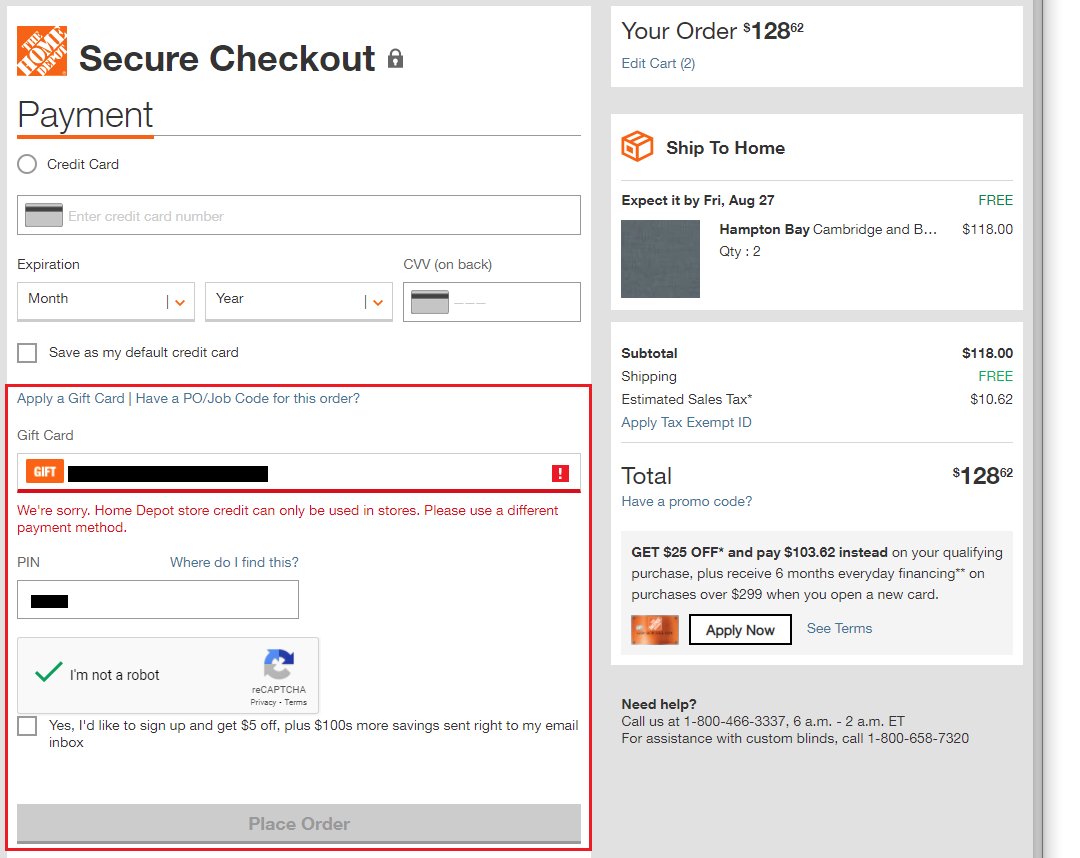
Because Home Depot implements rigorous security protocols to protect store credit from theft and fraud, the process for checking these balances is more restricted than it is for standard gift cards. You cannot simply enter a number into a generic web form in most cases; you must follow specific verification channels.
In-Store Verification: The Most Reliable Method
The most direct and secure way to check a Home Depot store credit balance is to visit the Customer Service desk at any physical location. This is the gold standard for financial verification for several reasons:
-
Identity Verification: Since store credit is often linked to a government-issued ID, the associate can verify that the credit is being accessed by the rightful owner.
-
Physical Card Integrity: The associate can swipe the physical card through their Point of Sale (POS) system, providing a real-time, accurate reflection of the remaining balance.
-
Printed Records: Once the balance is checked, you can request a printed inquiry receipt. This serves as a physical audit trail for your personal financial records, which is especially useful if you are tracking expenses for a business or a tax-deductible home office improvement.
Navigating the Digital Limitations
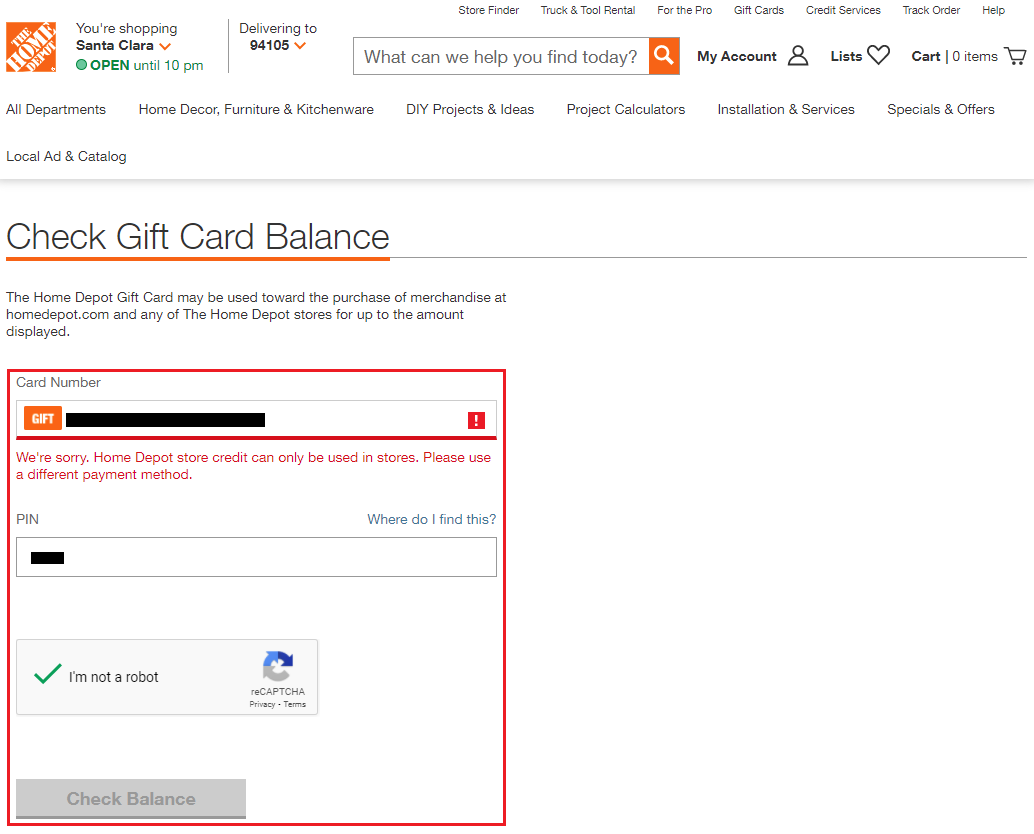
A common point of frustration for those managing their finances digitally is the inability to check certain store credit balances on the Home Depot website. While gift cards have a dedicated “Check Balance” portal, store credit cards issued via the “Returns” department often lack the necessary security codes for online validation.
If your card has a PIN (usually hidden under a scratch-off coating), you may attempt to use the online gift card balance checker. However, if the card was issued as “Store Credit” following a non-receipted return, the system may require you to present the card in person. This is an intentional hurdle designed to protect your “retail capital” from being drained by unauthorized digital access.
Utilizing Customer Support Channels
If a store visit is not feasible, the next best option is to contact Home Depot’s dedicated gift card and credit support line at 1-800-466-3337. When calling, ensure you have the 19-digit card number and the PIN (if applicable) ready.
From a financial management perspective, it is wise to perform these checks during business hours when specialized departments are available to handle discrepancies. If the balance reported does not match your records, a phone representative can often provide a basic transaction history, allowing you to reconcile your spending and identify any potential unauthorized use.
Strategic Optimization of Store Credit for Personal Finance
Simply knowing your balance is the first step; the second is utilizing that balance in a way that maximizes your net worth. Store credit should be integrated into your broader financial planning.
Leveraging Credit for High-ROI Home Renovations
If you are sitting on a substantial store credit balance, the most financially sound move is to apply it toward projects that increase the value of your home. Instead of spending the credit on consumable goods (like cleaning supplies or seasonal decor), consider using it for permanent upgrades—such as energy-efficient lighting, high-quality insulation, or smart home thermostats. These purchases provide a double return: they utilize “locked” credit and reduce your long-term utility expenses, effectively turning store credit into monthly cash savings.
Using Store Credit to Offset Inflationary Material Costs
In an era of fluctuating material costs, store credit acts as a hedge. By using your credit to purchase raw materials like lumber, copper piping, or electrical components during price dips, you are protecting your future project budgets. If you have a credit balance, monitoring the Home Depot “Special Buy of the Day” can allow you to stretch that credit even further, achieving a higher purchasing power than the face value of the credit might suggest.
Security, Fraud Prevention, and Protecting Your Retail Capital
In the world of personal finance, security is as important as accumulation. Store credit is a target for scammers, and losing a card with a $500 balance is no different than losing five $100 bills.
Protecting Your ID-Linked Assets
Home Depot store credit is often non-transferable. This means that if you lose the physical card, it can be incredibly difficult to recover the funds. Unlike a credit card, which has a layer of consumer protection and the ability to “freeze” the account, store credit is much closer to cash.
To safeguard your balance:
-
Treat it like a checkbook: Keep the physical card in a secure location, not just loose in a vehicle or a junk drawer.
-
Documentation: Take a clear photograph of the front and back of the card as soon as you receive it. Store this image in a secure, encrypted digital folder. If the card is lost, having the 19-digit number and proof of the original return may assist customer service in cancelling the old card and issuing a new one.
The Myth of Expiration
Under federal law and many state regulations, most store-issued credits and gift cards do not expire for several years, and in many jurisdictions, they cannot expire at all. However, “dormancy fees” can sometimes apply in specific regions or for specific types of promotional credit. Checking your balance at least once every six months ensures that your account remains active in the retailer’s system and that you are aware of any changes to the terms of service.
Maximizing Purchasing Power Through Savvy Management
Managing your Home Depot store credit is an exercise in retail financial literacy. By moving away from a “spend it when I find it” mentality and toward a “strategic asset management” approach, you can significantly improve your project margins.
Always reconcile your store credit balances during your monthly financial review. If you have multiple cards with small balances, take them all to the store and ask an associate if they can be consolidated into a single card (where policy allows) or simply use them all in a single transaction to clear the “clutter” from your portfolio.
In conclusion, a Home Depot store credit balance is more than just a receipt for a returned item; it is a specialized financial tool. By utilizing in-store verification, maintaining rigorous security, and strategically deploying those funds into value-adding home improvements, you ensure that your retail liquidity is working for you, rather than sitting forgotten in a drawer. Smart money management requires oversight of all assets, and your store credit is a vital piece of that puzzle.
aViewFromTheCave is a participant in the Amazon Services LLC Associates Program, an affiliate advertising program designed to provide a means for sites to earn advertising fees by advertising and linking to Amazon.com. Amazon, the Amazon logo, AmazonSupply, and the AmazonSupply logo are trademarks of Amazon.com, Inc. or its affiliates. As an Amazon Associate we earn affiliate commissions from qualifying purchases.