
In the increasingly digitized world of personal finance, understanding and easily accessing your core financial identifiers is paramount. Among these, your bank account number stands as a fundamental piece of information, essential for a myriad of financial transactions and administrative tasks. Far more than just a sequence of digits, it represents your unique financial identity within your chosen institution. Whether you’re setting up a direct deposit, making an online payment, applying for a loan, or simply reconciling your monthly statements, knowing how to efficiently and securely locate your account number is a critical skill for responsible financial management.
This guide delves into the various methods—both digital and traditional—available for checking your account number, offering practical steps and vital security considerations. We aim to empower you with the knowledge to confidently navigate your financial landscape, ensuring accuracy and protecting your sensitive data every step of the way.
Why Knowing Your Account Number is Crucial for Financial Management
Your bank account number is the bedrock of your financial interactions, serving as a unique identifier that distinguishes your funds and transactions from millions of others. Its importance extends across almost every aspect of your financial life, making its ready accessibility a necessity.
Facilitating Transactions and Payments
At its core, your account number is indispensable for moving money both into and out of your account. For incoming funds, it’s essential for setting up direct deposits from employers, government benefits, or investment dividends, ensuring your income lands exactly where it should. When paying bills, especially for utilities, loans, or subscriptions, many providers offer the option to pay directly from your bank account using its number, often alongside a routing number. This method is frequently preferred for its efficiency and lower transaction fees compared to credit card payments. Whether you’re receiving a reimbursement, sending money to family, or setting up recurring payments, the account number is the primary key to initiating and completing these financial transfers accurately.
Setting Up Financial Services and Links
Beyond daily transactions, your account number is often required when integrating with broader financial ecosystems. Opening new investment accounts, applying for loans (mortgages, personal loans, student loans), or even setting up third-party payment apps like PayPal or Venmo frequently necessitate linking them to your primary bank account. This linking process typically involves providing your account number to verify ownership and enable seamless fund transfers between platforms. Without this crucial identifier, you would be unable to establish these connections, limiting your financial flexibility and access to a wider range of services that can enhance your wealth management and convenience.
Ensuring Accuracy and Preventing Delays
The precision of your account number cannot be overstated. Even a single incorrect digit can lead to significant complications. An erroneous account number submitted for a direct deposit could result in funds being returned to the sender, or worse, deposited into someone else’s account—a situation that can be challenging and time-consuming to resolve. Similarly, incorrect details for outgoing payments could lead to bounced transactions, late fees, or service interruptions. By knowing how to accurately verify your account number, you safeguard against these common pitfalls, ensuring that your financial intentions are executed precisely and without unnecessary delays or stress. This attention to detail is a hallmark of diligent financial stewardship.
Understanding Your Financial Identity
Beyond its practical applications, your account number is a fundamental component of your financial identity with your bank. It’s how the institution recognizes and tracks all activities related to your specific funds. Understanding this identifier contributes to a deeper sense of financial literacy and control. It helps you navigate customer service interactions more effectively, understand your bank statements, and generally feel more empowered in managing your money. In essence, it’s not just a number; it’s a key to understanding and managing your financial relationship with your banking institution.
Common Digital and Physical Methods for Locating Your Account Number
Thankfully, financial institutions have made it relatively straightforward to find your account number through various accessible channels. Knowing where to look can save you time and provide peace of mind.
Online Banking Portals and Mobile Apps
For most individuals today, the quickest and most convenient way to find your account number is through your bank’s online banking portal or mobile application. These digital platforms are designed for ease of access to your financial information.
- Online Banking Portal: After logging in securely to your bank’s website, navigate to the specific account (e.g., checking, savings) for which you need the number. Often, the account number will be prominently displayed on the account summary page. If not immediately visible, look for options like “Account Details,” “Statement & Documents,” “Information,” or “Settings” for that particular account. Some banks might mask portions of the number for security, requiring you to click to “show full number” or verify your identity again.
- Mobile Banking App: Similar to the online portal, log into your bank’s mobile app. Tap on the relevant account. The account number, or an option to view it, is typically found under “Account Details,” “Account Info,” or by selecting a specific transaction to view its details. Many apps integrate biometric security (fingerprint, facial recognition) for secure access to sensitive information.
Always ensure you are using the official app downloaded from a trusted app store or accessing the bank’s website via its legitimate URL to avoid phishing scams.
Checking Your Physical Checkbook
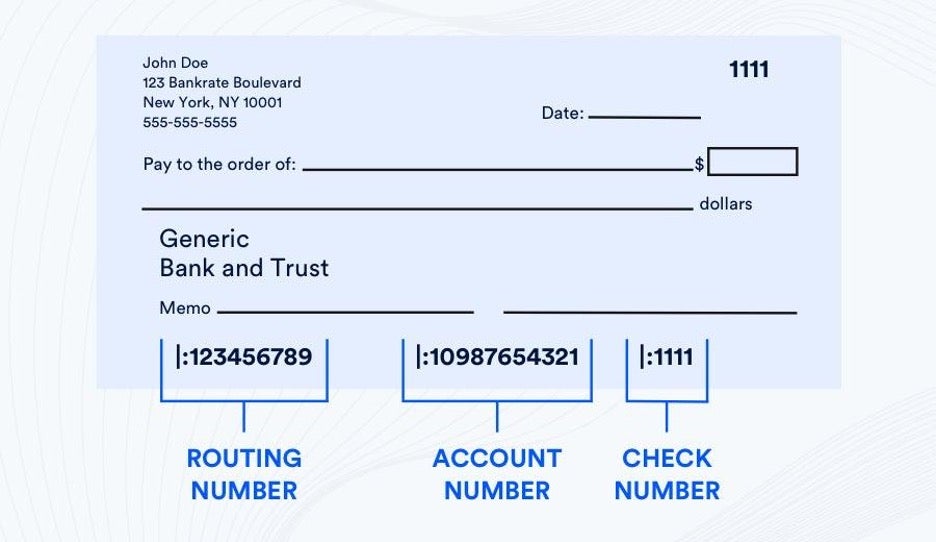
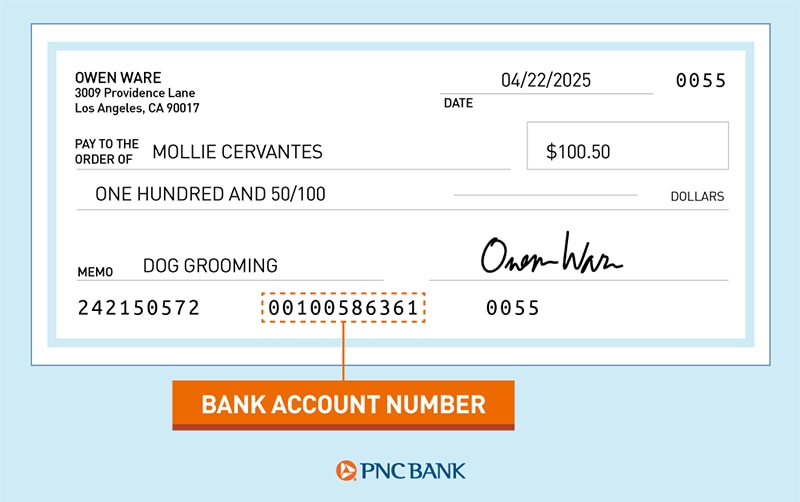
If you still use a checkbook, your account number is printed on every check. Look at the bottom of a personal check. You will typically see three sets of numbers separated by symbols.
- The first set of numbers (usually nine digits) is your bank’s routing number. This identifies your financial institution.
- The second set of numbers (which can vary in length, often 10-12 digits) is your account number. This specifically identifies your individual account within that bank.
- The third set of numbers is the check number.
It’s crucial to correctly identify the account number from the routing number. The routing number always comes first, followed by your account number, and then the check number. These numbers are printed using Magnetic Ink Character Recognition (MICR) font, designed for automated processing.
Bank Statements (Paper or Electronic)
Bank statements, whether delivered via postal mail or accessed digitally, are another reliable source for your account number.
- Paper Statements: Your full account number is usually clearly printed near the top of the statement, often alongside your name and address, or in the account summary section.
- Electronic Statements (e-Statements): You can access electronic versions of your statements through your online banking portal. Navigate to the “Statements,” “Documents,” or “e-Documents” section. Once you open a PDF version of your statement, your account number will be visible in the same location as it would on a paper statement. This is an excellent method if you don’t have a checkbook or can’t immediately find it on the main account summary page.
Ensure you store paper statements securely and protect digital statement PDFs with strong passwords, as they contain a wealth of sensitive financial information.
Debit Cards and Credit Cards (Clarification)
It’s a common misconception that your bank account number is printed on your debit or credit card. Generally, this is not the case.
- Debit Cards: The long number on your debit card is the card number, which is distinct from your bank account number. While your debit card is linked to your checking account, the card number is used specifically for card-based transactions (e.g., point-of-sale purchases, online shopping) and for accessing ATMs. It’s a separate identifier.
- Credit Cards: The number on your credit card is solely a credit card number and is not linked to any specific bank account number in the same direct transactional way a debit card is. It identifies your credit card account with the issuer.
Relying on your cards to find your bank account number will likely lead to frustration and incorrect information. Always refer to your online banking, checkbook, or statements for the correct bank account number.
Direct Engagement with Your Financial Institution
Sometimes, digital methods or physical documents aren’t readily available, or you might prefer direct human interaction for sensitive information. Your bank offers several avenues for direct assistance.
Contacting Customer Service
Reaching out to your bank’s customer service department is a reliable method if you’re unable to locate your account number through other means. Most banks offer multiple channels for support:
- Phone Support: Call the customer service number listed on your bank’s official website, on the back of your debit/credit card, or on a recent statement. Be prepared to go through a rigorous identity verification process. This typically involves providing personal details like your full name, address, date of birth, social security number (or part of it), and answering security questions related to your account history or other personal information. This process is crucial for preventing unauthorized access to your sensitive data.
- Live Chat/Secure Messaging: Many banks offer live chat support or a secure messaging system within their online banking portal or mobile app. These methods provide a text-based alternative where you can make your request and undergo verification. This can be convenient if you prefer not to speak on the phone, but the verification process will be equally stringent.
Always verify you are contacting the official bank channel to avoid falling victim to phishing or vishing (voice phishing) scams.
Visiting a Local Branch
For those who prefer face-to-face interaction or if digital access is problematic, visiting a local branch of your bank is an effective solution. This method offers the highest level of security and personalized assistance.
- Required Identification: When visiting a branch, you will need to present valid government-issued photo identification, such as a driver’s license, passport, or state ID. The bank teller will use this to confirm your identity before providing any account-specific information. It’s also helpful to bring any documents related to your account, even if they don’t contain the full account number, as they can aid in verification.
- Benefits of In-Person Help: A branch visit is particularly useful if you’re having trouble accessing your online account, suspect fraudulent activity, or simply prefer to speak with a banking professional directly. They can print out statements, help you navigate the online portal on a secure computer, or simply tell you your account number after successful verification.

Ensure you visit an officially recognized branch location to maintain security.
Utilizing Bank-Specific Documentation
Beyond statements, other documents provided by your bank at various stages of your financial relationship often contain your account number.
- Welcome Kits: When you first open an account, banks typically provide a welcome kit that includes detailed information about your new account, often including the full account number, routing number, and initial deposit slips.
- Account Opening Documents: The initial paperwork you signed when opening your account (e.g., account agreement, signature card) will contain your account number. While you might not keep these readily accessible, they are often available upon request from the bank.
- Loan Agreements: If you have loans with the same institution (e.g., personal loans, auto loans), the related loan agreements might reference the checking or savings account you use for payments, though this is less common for directly stating the full account number itself unless it’s for a direct debit setup.
Keeping these foundational documents organized and stored securely can provide a fallback for essential financial details.
Understanding Related Identifiers: Routing Numbers and SWIFT Codes
While the account number is specific to your individual account, it often works in conjunction with other identifiers to ensure smooth and accurate financial transactions, particularly when funds are moving between different institutions or across international borders.
The Role of Routing Numbers
The routing number, also known as an ABA (American Bankers Association) routing transit number, is a nine-digit code that identifies your specific financial institution within the United States. Its primary purpose is to facilitate the routing of electronic transactions, such as:
- Automated Clearing House (ACH) Transfers: These include direct deposits (paychecks, government benefits), automatic bill payments, and electronic fund transfers between banks.
- Wire Transfers: For faster, typically larger, and often irreversible transfers within the U.S.
- Check Processing: As mentioned, it’s the first set of numbers on your check, directing which bank to send the check to for payment.
Each bank has one or more routing numbers, depending on its size and whether it has merged with other institutions. It ensures that funds are directed to the correct bank before the account number specifies the individual recipient within that bank. It’s critical to provide the correct routing number along with your account number for any domestic electronic transaction.
SWIFT/BIC Codes for International Transactions
For international money transfers, a SWIFT (Society for Worldwide Interbank Financial Telecommunication) code, also known as a BIC (Bank Identifier Code), takes the place of a routing number. A SWIFT/BIC code is an 8-11 character alphanumeric code that uniquely identifies a bank and sometimes a specific branch in an international transaction.
- Global Transfers: If you are sending or receiving money from outside your country, the sender will need your bank’s SWIFT/BIC code in addition to your bank account number. Without it, the international wire transfer cannot be correctly routed to your financial institution.
- Structure: An 8-character SWIFT code identifies the bank and country (e.g., AAAA BB CC), while an 11-character code further specifies a particular branch (e.g., AAAA BB CC DDD).
Most banks list their SWIFT/BIC code on their website, often in the FAQ section related to international transfers, or you can obtain it by contacting customer service. Just like with routing numbers, providing the correct SWIFT code is non-negotiable for successful international financial operations.
Differentiating Account Number from Other Identifiers
It’s vital to understand the distinct roles of these identifiers to avoid confusion and errors:
- Account Number: Identifies your specific account within your bank.
- Routing Number: Identifies your bank for domestic U.S. transactions.
- SWIFT/BIC Code: Identifies your bank for international transactions.
While they all work in concert to facilitate the movement of money, each serves a unique and indispensable purpose. Always double-check which specific number is being requested for a given transaction to ensure accuracy and prevent delays or misdirected funds.
Security Best Practices When Accessing and Sharing Account Numbers
Given the sensitive nature of your account number and related financial details, employing robust security practices is non-negotiable. Protecting this information is crucial to safeguard your assets and prevent identity theft.
Protecting Your Digital Access Credentials
The primary gateway to your account number for most people is online banking. Therefore, securing your digital access is paramount.
- Strong, Unique Passwords: Create complex passwords for your banking accounts that are different from those used for other online services. A strong password combines uppercase and lowercase letters, numbers, and symbols, and is at least 12-16 characters long.
- Two-Factor Authentication (2FA): Always enable 2FA if your bank offers it. This adds an extra layer of security, typically requiring a code sent to your phone or generated by an authenticator app, in addition to your password, to log in.
- Beware of Phishing: Be highly suspicious of emails, text messages, or phone calls asking for your banking login credentials or personal information. Banks will never ask for your full password or PIN via unsecure channels. Always navigate directly to your bank’s official website or app.
- Secure Wi-Fi: Avoid accessing your banking accounts on public, unsecured Wi-Fi networks, as these can be vulnerable to eavesdropping. Use a secure, private network or a Virtual Private Network (VPN) when possible.
Verifying Recipients Before Sharing
Before providing your account number to anyone, always verify their identity and the legitimacy of their request.
- Double-Check Details: If someone asks for your account number (e.g., for a direct deposit), confirm their identity through a trusted channel (e.g., call their official phone number, not one provided in an unsolicited email).
- Legitimate Requests Only: Only share your account number with trusted entities for legitimate purposes, such as your employer for direct deposit, a reputable biller for automatic payments, or a financial institution for linking accounts.
- Scam Prevention: Be wary of urgent requests, unsolicited offers, or individuals claiming to be from official organizations (like the IRS or police) demanding your account number. These are common tactics used in social engineering scams.
Secure Storage of Financial Documents
Physical and digital documents containing your account number must be handled with care.
- Shred Old Statements: Do not simply throw away old bank statements, checks, or other documents with your account number. Shred them thoroughly using a cross-cut shredder.
- Secure Digital Storage: If you download e-statements or other banking documents, store them in password-protected folders on your computer or an encrypted cloud storage service. Avoid saving them to easily accessible locations without protection.
- Physical Security: Keep checkbooks, current statements, and welcome kits in a secure location at home, away from prying eyes.
Recognizing and Avoiding Scams
Scammers are constantly evolving their tactics. Vigilance is your best defense.
- Impersonation: Be aware of scammers impersonating your bank, government agencies, or even charities. They might use sophisticated phishing emails or spoof phone numbers.
- Urgency and Threats: Scams often involve a sense of urgency or threats (e.g., “your account will be closed,” “you will be arrested”). Legitimate institutions rarely communicate this way.
- Unsolicited Contacts: Treat any unsolicited request for your account number with extreme caution. If in doubt, contact your bank directly using a number you know to be official.
What to Do If Your Information is Compromised
Despite all precautions, breaches can happen. Knowing how to react quickly is essential.
- Contact Your Bank Immediately: If you suspect your account number or other financial information has been compromised, contact your bank’s fraud department immediately. They can help monitor your account, place alerts, or even freeze your account if necessary.
- Monitor Accounts: Regularly review your bank statements and online transaction history for any unauthorized activity. Set up transaction alerts from your bank.
- Place Fraud Alerts: Consider placing a fraud alert with credit bureaus (Equifax, Experian, TransUnion) to make it harder for identity thieves to open new accounts in your name.
- Change Passwords: Change passwords for all affected financial accounts and any other linked services.
By adopting these rigorous security practices, you significantly reduce the risk associated with accessing and sharing your account number, ensuring your financial navigation remains safe and secure.
Knowing how to efficiently and securely check your bank account number is a foundational element of modern financial literacy. It’s a skill that underpins everything from receiving your salary to managing investments and protecting against fraud. By leveraging the digital tools offered by your bank, understanding the physical documents at your disposal, and knowing when to directly engage with your financial institution, you can quickly and accurately pinpoint this crucial identifier.
Furthermore, integrating robust security practices into your routine—from safeguarding digital credentials to verifying recipients and recognizing potential scams—is not just advisable, but absolutely essential. In an age where financial transactions are increasingly digital, the power to manage your money confidently and securely lies in your hands. Embrace these strategies, and you’ll be well-equipped to navigate the complexities of your financial world with ease and peace of mind.
aViewFromTheCave is a participant in the Amazon Services LLC Associates Program, an affiliate advertising program designed to provide a means for sites to earn advertising fees by advertising and linking to Amazon.com. Amazon, the Amazon logo, AmazonSupply, and the AmazonSupply logo are trademarks of Amazon.com, Inc. or its affiliates. As an Amazon Associate we earn affiliate commissions from qualifying purchases.