
In the vast landscape of personal finance, business dealings, and everyday consumer choices, percentages are the ubiquitous language of comparison, growth, and cost. From the alluring discounts on a sale rack to the critical interest rates governing loans and investments, understanding and, crucially, knowing “how to check a percentage” isn’t merely an academic exercise—it’s a fundamental skill for financial empowerment. Misinterpreting or neglecting to verify a percentage can lead to missed savings, overspending, or poor investment decisions. This article delves into the core principles of percentages within the financial realm, equipping you with the knowledge and tools to confidently check, understand, and leverage these powerful numbers in your financial life.

Understanding the Basics: What a Percentage Truly Represents
Before we can effectively check a percentage, we must first grasp its fundamental meaning. A percentage is more than just a number followed by a ‘%’ symbol; it’s a direct way of expressing a proportion or a fraction of a whole, specifically out of one hundred.
Defining the Percentage: Part of a Whole
The term “percentage” literally translates to “per hundred.” When you see 25%, it means 25 out of every 100, or a quarter of the total. This concept of expressing a fraction in relation to a base of 100 makes it incredibly useful for standardized comparisons, regardless of the original size of the whole. For instance, whether you’re looking at 10% of $1,000 or 10% of $1,000,000, the underlying proportion is the same, making it easy to scale and understand relative impact.
Common Financial Scenarios Involving Percentages
Percentages permeate almost every facet of our financial lives. They are the bedrock upon which many financial calculations and decisions are made. Consider these common scenarios:
-
Discounts and Sales: A “20% off” sign instantly tells you the proportion of savings you’ll receive.
-
Interest Rates: Whether it’s the interest earned on savings, paid on a mortgage, or charged on a credit card, these are all expressed as percentages, indicating the cost or return of borrowing or lending money.
-
Taxes: Sales tax, income tax rates, and property tax rates are all percentages applied to a base amount.
-
Inflation: The rate at which prices for goods and services are rising is typically communicated as a percentage, indicating the erosion of purchasing power.
-
Investment Returns: The performance of your investments, whether stocks, bonds, or mutual funds, is measured by their percentage return over a period.
-
Budgeting: Financial advisors often recommend allocating income by percentage (e.g., 50% for needs, 30% for wants, 20% for savings).
The Importance of Context
While percentages are powerful, they are meaningless without context. A percentage always refers to “a percentage of what?” A 10% increase might sound significant, but if it’s 10% of a very small number, the absolute value might still be negligible. Conversely, a seemingly small percentage like a 1% annual fee on a large investment portfolio can accumulate into substantial costs over time. Always identify the “whole” or the “base amount” to which the percentage is being applied to fully understand its implications.
Practical Methods for Checking Percentages Manually and Mentally
While technology offers swift solutions, understanding the underlying manual calculations empowers you to critically evaluate numbers and perform quick checks even without a gadget.
The Fundamental Calculation Formula
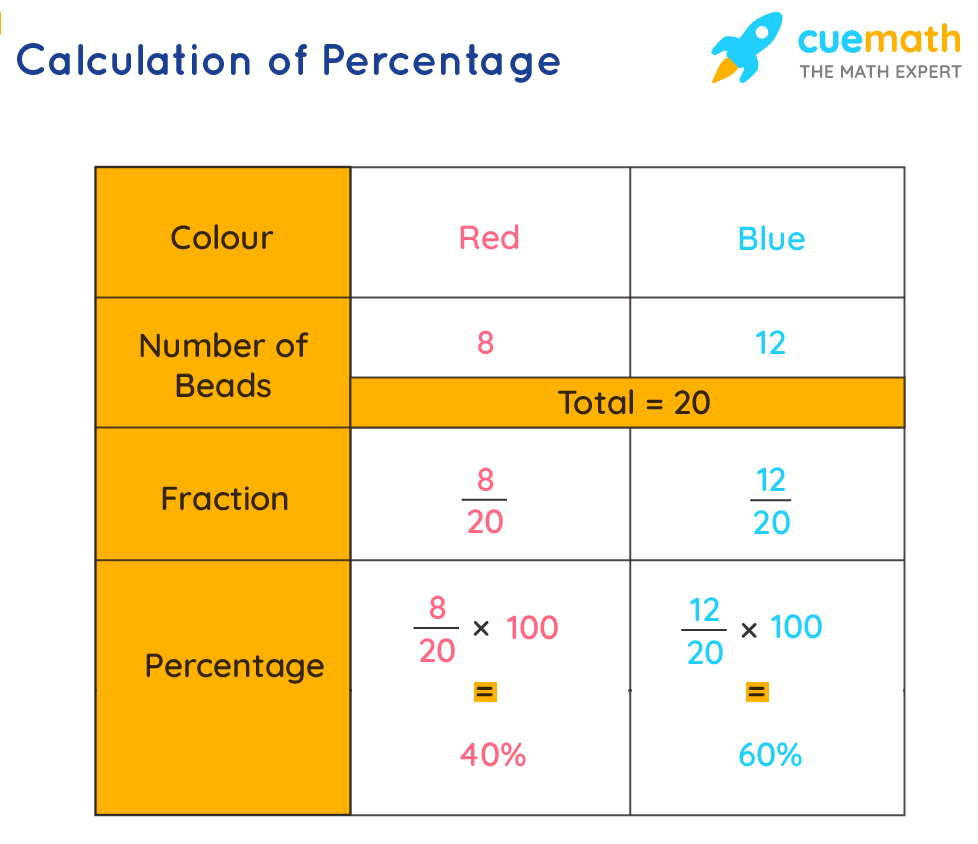
The most basic way to calculate a percentage is to divide the part by the whole and then multiply by 100.
Formula: (Part / Whole) × 100 = Percentage
Let’s say you spent $30 on groceries from your $200 weekly budget. To find what percentage of your budget went to groceries:
($30 / $200) × 100 = 0.15 × 100 = 15%.
This formula is invaluable for verifying reported percentages or calculating your own financial metrics.
Mental Math Shortcuts and Estimations
You don’t always need a calculator to get a good sense of a percentage. Developing mental math shortcuts can be incredibly useful for quick financial assessments.
-
Finding 10%: To find 10% of any number, simply move the decimal point one place to the left. For example, 10% of $750 is $75.
-
Finding 1%: Move the decimal point two places to the left. 1% of $750 is $7.50.
-
Using Multiples: Once you know 10%, you can easily find multiples. 20% is simply 10% multiplied by 2. If 10% of $500 is $50, then 20% is $100.
-
Finding 50%: This is simply half of the total. 50% of $120 is $60.
-
Estimating for Quick Checks: If an item costs $49.99 and is advertised as 20% off, you can quickly estimate. 10% of $50 is $5, so 20% is $10. The item should cost around $40. This quick check helps you spot potential errors or misleading claims instantly. Mental estimation is particularly useful in stores, at gas pumps, or when reviewing statements where precise calculations aren’t immediately necessary but a quick verification is.
Cross-Checking for Accuracy
A robust way to check a percentage is to reverse the calculation. If you’re told that 25% of your $400 income went to rent, the amount should be $100. You can check this by calculating:
Amount = Percentage (as decimal) × Whole
0.25 × $400 = $100.
If the reported rent was, say, $120, then you know there’s a discrepancy, and 25% is not accurate for that amount. This method is particularly effective for verifying statements, bills, or financial reports where the percentage and one of the absolute values are provided, and you need to confirm the other.
Leveraging Financial Tools for Precision and Efficiency
While mental math is great for quick estimates, modern financial tools offer unparalleled accuracy and efficiency, especially for complex or recurring percentage-based calculations.
The Ubiquitous Calculator: Your First Digital Ally
Every smartphone, computer, and even many physical devices have a built-in calculator with percentage functionality.
-
Calculating a percentage of a number: To find 20% of $150, you’d typically enter “150 * 20 %” (or “150 * 0.20”).
-
Adding/Subtracting percentages: To calculate a 5% sales tax on $100, you’d enter “100 + 5 %”. To apply a 10% discount to $80, enter “80 – 10 %”. Understanding how your specific calculator handles percentage buttons is key. Most treat ‘%’ as a divisor of 100, effectively converting the number before it into a decimal for the calculation.
Spreadsheet Software (Excel, Google Sheets) for Complex Calculations
For ongoing financial management, budgeting, or investment analysis, spreadsheet software like Microsoft Excel or Google Sheets is indispensable.
-
Basic Percentage Calculation: If ‘Part’ is in cell A1 and ‘Whole’ is in B1, the formula to calculate the percentage is
=(A1/B1)*100. -
Calculating Discounts: If the original price is in A1 and the discount percentage (as a decimal, e.g., 0.20 for 20%) is in B1, the discounted price is
A1*(1-B1). -
Calculating Growth: For a value growing by a percentage, use
A1*(1+B1). -
Dynamic Budgeting: Spreadsheets allow you to create dynamic budgets where you can see what percentage of your income is allocated to various categories, and these percentages update automatically as your income or expenses change. They are perfect for scenario planning and detailed financial modeling.
Online Financial Calculators and Apps
The internet is awash with specialized calculators designed for specific financial tasks.
-
Mortgage Calculators: Input the loan amount, interest rate (percentage), and term to calculate monthly payments and total interest paid.
-
Loan Interest Calculators: Determine the interest accrual on personal loans, auto loans, or student loans.
-
Investment Return Calculators: Project potential returns on investments based on initial capital, additional contributions, and expected annual percentage returns, often factoring in compounding.
-
Tax Calculators: Estimate income tax liabilities based on your salary and various deductions. These tools are often more user-friendly than setting up complex spreadsheets and can visualize the impact of percentages over time.
Financial Software and Budgeting Apps
Modern financial software (e.g., Quicken) and budgeting apps (e.g., Mint, YNAB) automate much of the percentage checking process.
-
Automated Budgeting: They categorize your spending and automatically calculate what percentage of your income goes to housing, food, transportation, etc. This real-time feedback is invaluable for adherence to percentage-based budgeting rules.
-
Portfolio Performance: Investment tracking features automatically show the percentage gain or loss of your holdings, often broken down by individual asset or overall portfolio.
-
Debt Repayment Visuals: Many apps visualize your debt repayment progress as a percentage, encouraging you to stay on track. These tools simplify financial management by putting percentage analysis at your fingertips without requiring manual calculations.
Critical Scenarios: When Checking Percentages Can Save or Make You Money
Proactively checking percentages isn’t just about correctness; it’s about making informed decisions that directly impact your financial well-being.
Decoding Discounts and Sales
Retailers often use percentages to entice customers, but not all “deals” are created equal.
-
“Up to X% off”: This phrasing often means only a few select items or a small portion of the stock receive the maximum discount, while most items have a much lower percentage off. Always check the actual percentage applied to the specific item you want.
-
Calculating Final Price: Don’t just rely on the advertised percentage. Mentally or digitally calculate the final price to compare against competitors or to ensure it fits your budget. Sometimes, a smaller percentage discount on a higher quality item might be a better value than a larger percentage off a cheaper, inferior product.
-
Stacking Discounts: Understand how multiple percentage discounts are applied (e.g., 20% off total, then an additional 10% off the discounted price, which is different from 30% off the original price).
Understanding Interest Rates (Loans, Savings, Credit Cards)
Interest rates, expressed as percentages, are arguably the most critical financial percentages to understand.
-
APR vs. APY: Know the difference between Annual Percentage Rate (APR) and Annual Percentage Yield (APY). APR is the annual rate of interest charged to borrowers, while APY reflects the effective annual rate that an investment or savings account earns, taking into account compounding. A 5% APR loan is different from a 5% APY savings account; the latter generally yields more due to compounding.
-
Impact of Compounding: Even small differences in interest percentages can lead to vastly different outcomes over time, especially with compounding. For savings, a higher APY means significantly more money earned. For loans, a higher APR means significantly more money paid. Always check the fine print for compounding frequency.
-
Credit Card Interest: The high-interest percentages on credit cards can quickly escalate debt. Understanding how interest is calculated on your average daily balance is crucial for managing and minimizing credit card debt.
Evaluating Investment Returns and Fees
Your financial future often hinges on the percentages related to your investments.
-
ROI (Return on Investment): This percentage tells you how much profit or loss you’ve made relative to your initial investment. Consistently checking your ROI helps you assess the performance of your portfolio and make adjustments.
-
Management Fees and Expense Ratios: Even seemingly small percentages for investment management fees (e.g., 0.5% or 1%) can significantly erode your long-term returns, especially with large portfolios. Over decades, a 1% annual fee can cost you tens or even hundreds of thousands of dollars in lost earnings. Always check and compare these percentages.
-
Compound Interest: The “eighth wonder of the world,” compound interest allows your earnings to generate further earnings. Understanding the power of even a small percentage return compounded over many years highlights the importance of starting to invest early.
Budgeting and Financial Planning
Percentages are a practical framework for creating and sticking to a budget.
-
The 50/30/20 Rule: A popular budgeting strategy suggesting 50% of income for needs, 30% for wants, and 20% for savings and debt repayment. Checking your spending percentages against these targets helps you stay on track.
-
Tracking Spending: Regularly check what percentage of your income is going to different categories. If entertainment is 25% of your income, but your goal is 15%, you know where to make adjustments.
-
Setting Financial Goals: Whether it’s saving a certain percentage of your paycheck for retirement or aiming to pay down X% of a loan each year, percentages provide clear, measurable targets for financial planning.
Developing a Percentage-Savvy Mindset
True financial literacy isn’t just about performing calculations; it’s about adopting a critical mindset towards all numbers, especially percentages.
Questioning the Numbers
Never take a percentage at face value, particularly when it’s presented in marketing, sales pitches, or persuasive advertisements. Always ask:
-
“Percentage of what?” – What is the base amount this percentage is derived from?
-
“Compared to what?” – What is the benchmark? Is this a good percentage compared to industry averages or historical data?
-
“Over what period?” – Is this an annual, monthly, or one-time percentage?
Recognizing Misleading Percentage Use
Companies and marketers can sometimes leverage percentages to create a specific impression.
-
Percentage Point vs. Percentage Change: An increase from 2% to 4% is a 2 percentage point increase, but it’s a 100% percentage change (it doubled). The language can be manipulative.
-
Small Base Numbers: A 500% increase sounds massive, but if it’s from 1 customer to 6 customers, the absolute impact is small. Be wary of large percentage changes presented without the base numbers.
-
Incomplete Data: A bank might advertise “up to 5% interest” without clarifying that only a tiny portion of your balance (or specific conditions) qualifies for that rate.

Continuous Learning and Application
Like any skill, becoming adept at checking percentages requires practice.
-
Integrate into Daily Life: Make it a habit to quickly calculate discounts, verify interest on statements, or estimate proportions when budgeting.
-
Stay Informed: Keep abreast of financial news and economic indicators (inflation rates, interest rate changes) to better contextualize the percentages you encounter.
-
Teach Others: Explaining how to check percentages to friends or family solidifies your own understanding.
In conclusion, the ability to effectively check a percentage is a cornerstone of financial literacy. It’s a skill that empowers you to decode financial information, make smarter spending and investment decisions, avoid costly pitfalls, and ultimately build a more secure and prosperous financial future. By understanding the fundamentals, utilizing available tools, and adopting a critical, percentage-savvy mindset, you can navigate the complex world of money with confidence and control.
aViewFromTheCave is a participant in the Amazon Services LLC Associates Program, an affiliate advertising program designed to provide a means for sites to earn advertising fees by advertising and linking to Amazon.com. Amazon, the Amazon logo, AmazonSupply, and the AmazonSupply logo are trademarks of Amazon.com, Inc. or its affiliates. As an Amazon Associate we earn affiliate commissions from qualifying purchases.