
The ability to convert whole numbers into percentages is not merely a fundamental mathematical skill; it is an indispensable tool in the world of personal finance, investing, and business. Percentages serve as a universal language, providing a standardized way to compare proportions, assess growth, measure decline, and understand relative values across a myriad of financial scenarios. From calculating investment returns to budgeting expenses or analyzing economic indicators, mastering this conversion is paramount for informed decision-making and robust financial literacy.
The Indispensable Role of Percentages in Financial Acumen
In the intricate landscape of finance, raw whole numbers often fall short in conveying the full story. A profit of $5,000, for instance, means vastly different things if it’s from a $10,000 investment versus a $1,000,000 investment. Percentages bridge this gap by contextualizing figures, allowing for direct comparison and a more intuitive understanding of performance and impact.

Think about comparing the growth of two different stocks. Stock A might have increased by $10, while Stock B increased by $50. Without knowing their initial prices, it’s impossible to tell which performed better proportionally. If Stock A started at $20 and Stock B at $1000, then Stock A’s 50% increase (10/20) dramatically outperforms Stock B’s 5% increase (50/1000). This simple example underscores why percentages are the universal currency for financial comparison, risk assessment, and tracking progress over time. They illuminate the relative significance of figures, whether you’re evaluating interest rates, return on investment (ROI), inflation figures, or the allocation of your budget.
Deciphering the Core Conversion: “Part” to “Whole” as a Percentage
The phrase “how to change whole numbers into percentages” often implies converting a part (represented by a whole number) into a percentage of a whole (also represented by a whole number). While a standalone whole number like ‘5’ can technically be expressed as 500% (of 1), its practical financial application almost exclusively occurs within the context of a proportion or ratio. This section will focus on the most common and financially relevant interpretation: expressing one whole number as a percentage of another.
The Fundamental Principle: Part Divided by Whole
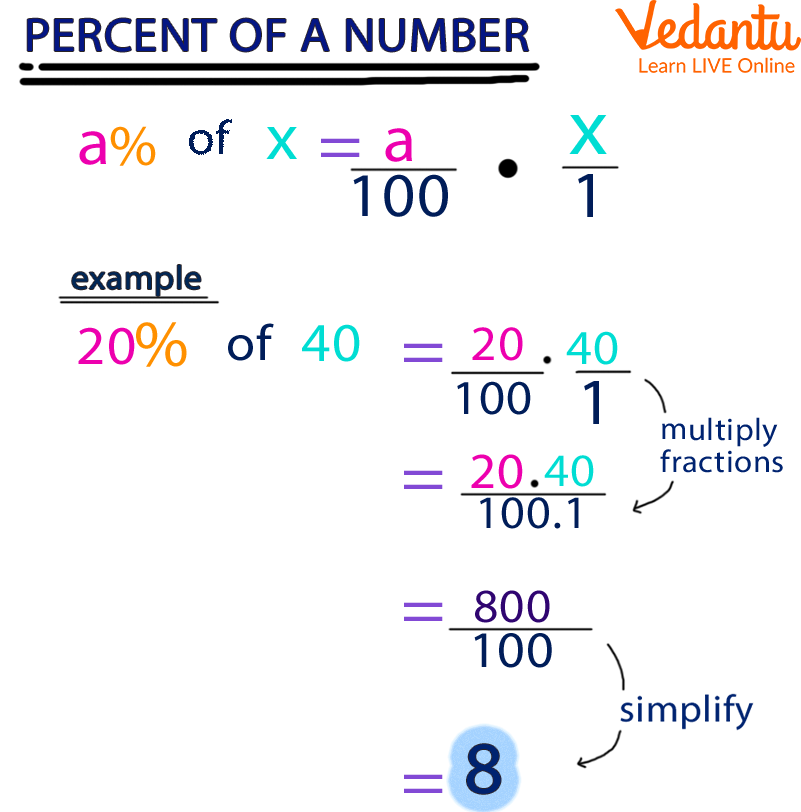
To express a quantity (the ‘part’) as a percentage of a total (the ‘whole’), the foundational step is division. You simply divide the part by the whole. This action results in a decimal, which represents the proportion.
The formula is:
Proportion (as a decimal) = Part ÷ Whole
Let’s say you spent $300 on groceries this month from an allocated budget of $500.
Here, the ‘part’ is $300, and the ‘whole’ is $500.
Proportion = $300 ÷ $500 = 0.6
The Final Step: Multiplying by 100 and Adding the Percentage Sign
Once you have the decimal representation of the proportion, the next step is to convert it into a percentage. This is achieved by multiplying the decimal by 100 and then appending the percentage symbol (%). The ‘%’ symbol literally means “per one hundred,” so multiplying by 100 effectively scales the proportion to a base of 100.
Continuing the grocery example:
Percentage = Proportion × 100%
Percentage = 0.6 × 100% = 60%
So, you spent 60% of your grocery budget.
Contextualizing “Whole Numbers” for Financial Accuracy
It’s critical to understand that when working with financial data, you’re almost always dealing with whole numbers that represent quantities or values that are parts of a larger whole.
For example:
-
If your investment grew from $10,000 to $12,000, the ‘part’ of the growth is $2,000, and the ‘whole’ or original investment is $10,000.
($2,000 ÷ $10,000) × 100% = 20% growth. -
If a company’s revenue was $500,000 and its profit was $75,000, the ‘part’ is profit, and the ‘whole’ is revenue.
($75,000 ÷ $500,000) × 100% = 15% profit margin.
In these scenarios, you’re not converting an isolated whole number like ’75’ into ‘7500%’; rather, you are calculating what percentage ‘75,000’ represents of ‘500,000’. This distinction is crucial for accurate financial analysis.
Financial Applications: Where This Conversion Comes Alive
The conversion of whole numbers (as parts of a whole) into percentages is a cornerstone of virtually every aspect of financial management.
Investment Returns and Growth Rates
Whether you’re tracking your stock portfolio, mutual funds, or real estate investments, understanding growth and returns is predominantly expressed in percentages.
-
Return on Investment (ROI):
(Current Value - Original Cost) ÷ Original Cost × 100%If you bought a stock for $500 and sold it for $625, your profit is $125.
($125 ÷ $500) × 100% = 25% ROI. -
Portfolio Growth: If your portfolio value increased from $100,000 to $108,000 in a year, the growth is $8,000.
($8,000 ÷ $100,000) × 100% = 8% annual growth.
Budgeting and Expense Allocation
Effective personal finance hinges on understanding where your money goes. Percentages allow you to visualize your spending habits relative to your total income or budget.
-
Expense Categories: If your monthly income is $4,000 and you spend $1,200 on rent, $600 on food, and $400 on transportation.
-
Rent:
($1,200 ÷ $4,000) × 100% = 30%of income. -
Food:
($600 ÷ $4,000) × 100% = 15%of income. -
Transportation:
($400 ÷ $4,000) × 100% = 10%of income.
-
This helps you adhere to budgeting rules (e.g., the 50/30/20 rule) and identify areas for adjustment.
Debt Management and Interest Rates
Understanding the cost of borrowing is fundamentally a percentage exercise. Interest rates (Annual Percentage Rate – APR) are, by definition, percentages.
-
Interest Paid: If you borrowed $10,000 and paid $500 in interest over a year.
($500 ÷ $10,000) × 100% = 5%effective interest rate for that period. -
Credit Utilization: If your credit card limit is $5,000 and your outstanding balance is $1,500.
($1,500 ÷ $5,000) × 100% = 30%credit utilization. Keeping this low is crucial for good credit health.
Discounts, Markups, and Profit Margins
In business finance, percentages are vital for pricing strategies, sales analysis, and profitability assessment.
-
Discount: A $20 item on sale for $15 has a discount of $5.
($5 ÷ $20) × 100% = 25%discount. -
Markup: If a product costs a retailer $60 and they sell it for $100, the markup is $40.
($40 ÷ $60) × 100% = 66.67%markup on cost. -
Profit Margin: Using the previous profit example: a $75,000 profit on $500,000 revenue.
($75,000 ÷ $500,000) × 100% = 15%net profit margin.
Economic Indicators
Many key economic data points are reported as percentages to show relative change or proportion.
-
Inflation Rate: The percentage increase in prices over a period.
-
Unemployment Rate: The percentage of the labor force that is unemployed.
-
GDP Growth: The percentage increase in a country’s gross domestic product.
Precision and Pitfalls: Ensuring Financial Accuracy
While converting to percentages is straightforward, precision and careful interpretation are paramount in finance. A small error can lead to significant miscalculations or misunderstandings.
The Importance of the “Base” Number
Always be clear about what constitutes the “whole” or the base number in your calculation. Is it the original amount, the new amount, or the difference? An increase from $100 to $120 is a 20% increase ($20/$100). A decrease from $120 to $100 is a 16.67% decrease ($20/$120). The base number significantly alters the percentage.
Rounding Rules in Finance
Financial percentages often require careful rounding. While general math might suggest rounding to two decimal places, financial contexts might demand more or less precision. For instance, interest rates might be quoted to several decimal places, whereas budget allocations might be rounded to the nearest whole percentage for clarity. Always adhere to industry standards or the specific requirements of your financial analysis. Over-rounding can lead to inaccuracies, while under-rounding can make figures cumbersome.
Avoiding Common Misinterpretations: Percentage Points vs. Percentage Change
A critical distinction in finance is between “percentage points” and “percentage change.” If an interest rate increases from 4% to 5%, this is a 1 percentage point increase. However, it’s a 25% percentage change (calculated as (5-4)/4 * 100%). Confusing these two can lead to significant errors in financial reporting and analysis.
Leveraging Technology for Financial Percentage Calculations
While understanding the manual conversion process is vital, modern financial management heavily relies on technological tools to expedite and ensure the accuracy of percentage calculations.
Spreadsheets (Excel/Google Sheets)
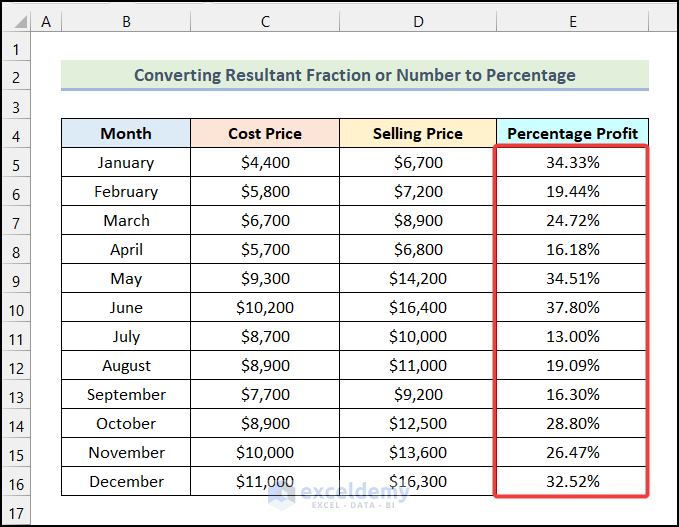
Spreadsheet programs are perhaps the most ubiquitous tools for financial calculations. They allow you to input whole numbers, apply formulas, and instantly see the results as percentages.
-
Basic Conversion: If you have ‘Part’ in cell A1 and ‘Whole’ in cell B1, you can calculate the percentage in C1 using the formula
= (A1/B1). Then, simply format cell C1 as a percentage to display it correctly. -
Dynamic Analysis: Spreadsheets enable you to create complex models where percentages automatically update as you change underlying whole numbers, facilitating scenario planning for investments, budgets, or business forecasts.
Financial Calculators and Software
Dedicated financial calculators, whether physical devices or software applications, often have built-in percentage functions (e.g., a ‘%’ button) that streamline calculations for discounts, markups, or tip computations. More sophisticated financial software for accounting, investment tracking, or enterprise resource planning (ERP) automatically handles these conversions as part of their core functionality, presenting users with clear, percentage-based insights into their financial data.
Mastering the conversion of whole numbers into percentages is more than just arithmetic; it’s a gateway to greater financial understanding and control. By applying this fundamental skill with precision and context, individuals and businesses alike can navigate the complexities of financial data with confidence, making smarter decisions that drive growth and stability.
aViewFromTheCave is a participant in the Amazon Services LLC Associates Program, an affiliate advertising program designed to provide a means for sites to earn advertising fees by advertising and linking to Amazon.com. Amazon, the Amazon logo, AmazonSupply, and the AmazonSupply logo are trademarks of Amazon.com, Inc. or its affiliates. As an Amazon Associate we earn affiliate commissions from qualifying purchases.