
Navigating the administrative landscape of personal finance can often feel daunting, especially when life events necessitate changes to fundamental aspects of your financial identity. Changing your name on a bank account is one such critical task, far more than just a bureaucratic checkbox. It’s an essential step in maintaining financial consistency, security, and integrity across your entire financial ecosystem. From ensuring seamless transactions to safeguarding against fraud, updating your bank records reflects a responsible approach to personal finance management. This guide delves into the detailed process, critical considerations, and broader financial implications of changing your name on your bank account, ensuring a smooth and secure transition for your financial self.
The Imperative of Identity: Why a Name Change Matters Financially
Your name on a bank account is the cornerstone of your financial identity. Any discrepancy between your legal name and the name registered with your financial institutions can lead to a cascade of complications, impacting everything from daily transactions to long-term financial planning. Understanding the catalysts for such a change and their potential financial ramifications is the first step toward proactive financial management.
Key Life Events Triggering a Name Update
Life is a series of transitions, and many significant personal milestones directly impact your legal name and, consequently, your financial identity.
Marriage and Merging Financial Identities
One of the most common reasons for a name change is marriage. When individuals decide to adopt a new surname, this change needs to be meticulously reflected across all financial accounts. Failing to update your bank account can create friction with joint accounts, loan applications, and any financial instrument that links your new legal identity with your old one. It’s not just about a preference; it’s about aligning your legal status with your financial one, especially when combining assets or liabilities with a spouse. From shared savings goals to mortgage applications, an outdated name can introduce significant administrative hurdles and delays.
Divorce and Financial Separation
Conversely, divorce often necessitates a return to a maiden name or a prior legal name. This transition is equally crucial for financial separation. As you restructure your financial life post-divorce, ensuring your bank accounts accurately reflect your current legal name is vital for managing individual assets, receiving alimony or child support, and establishing new credit lines. An updated bank account name is a foundational element in establishing a clear, independent financial future. It helps prevent mix-ups in financial statements and ensures that your credit report accurately reflects your individual financial activities moving forward.
Legal Name Changes: Personal Choice and Correction
Beyond marriage and divorce, individuals may choose to legally change their name for personal reasons, or to correct an error on official documents. Regardless of the motivation, once a legal name change is officialized through a court order, it becomes imperative to update all financial accounts. This ensures that your financial records are consistent with your new legal identity, preventing future issues with identification, transactions, and interactions with financial and governmental bodies. Accuracy in this domain underpins trust and functionality within the financial system.
The Financial Ramifications of Discrepancies
The consequences of neglecting to update your name on your bank account extend far beyond mere inconvenience. They can touch upon critical aspects of your financial health and security.
Ensuring Transactional Smoothness
Imagine trying to cash a check made out to your old name, or attempting to complete a large transaction that requires identity verification, only to find your bank records don’t match your current legal documents. These scenarios can lead to rejected transactions, frozen accounts, and significant delays. Direct deposits (like paychecks or government benefits) and automatic payments (for bills or subscriptions) rely on precise name matching. Any mismatch can disrupt these essential financial flows, potentially leading to late fees or missed payments, which can, in turn, affect your credit standing.
Mitigating Fraud and Identity Theft Risks
An accurate and up-to-date name on your bank account is a key component of financial security. Discrepancies can, in some rare instances, raise flags that complicate fraud investigations or make it harder for banks to verify your identity, potentially delaying resolution if your account is compromised. More broadly, inconsistencies across various financial platforms (bank, credit cards, investments) can create vulnerabilities that could be exploited by identity thieves. Maintaining consistent information across all your financial touchpoints fortifies your defenses against unauthorized access and ensures that your financial identity is coherent and verifiable.
Maintaining Credit Score Integrity
While a name change on its own doesn’t directly impact your credit score, the administrative chaos that can ensue from uncoordinated updates certainly can. If direct debits fail due to name mismatches, or if difficulties arise in verifying your identity for new credit applications, these issues can inadvertently lead to negative marks on your credit report. A consistent financial identity across all accounts, including your bank, ensures that your credit history accurately reflects your payment behavior and financial responsibility, protecting the integrity of your credit score, which is crucial for future financial endeavors like loans or mortgages.
Navigating the Process: Your Step-by-Step Financial Journey
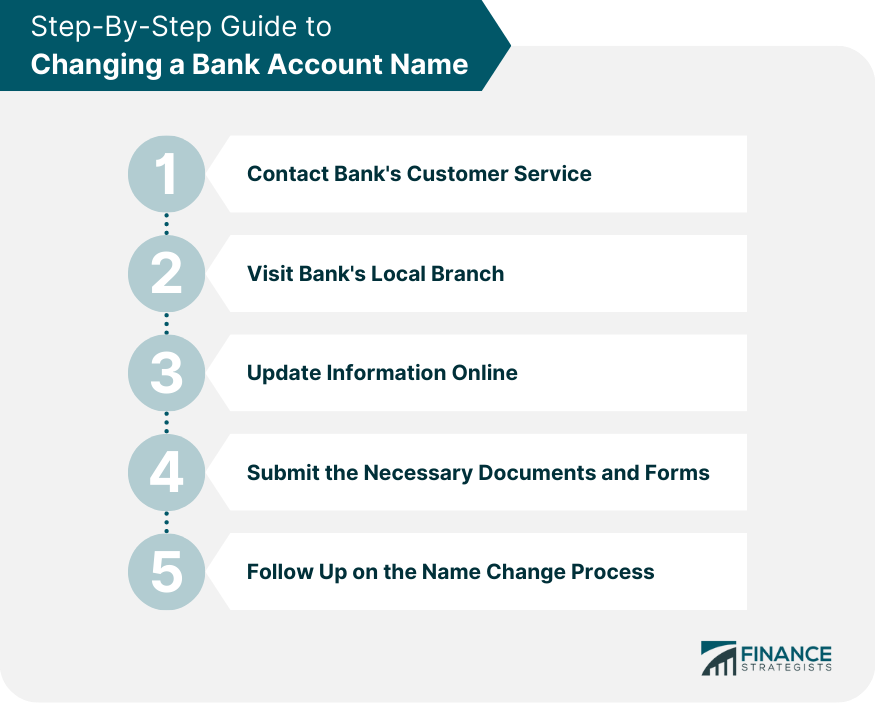
Changing your name on a bank account is a structured process that, while varying slightly between institutions, generally follows a common trajectory. Approaching it methodically can save you time, stress, and potential financial headaches.
Preliminary Steps: Laying the Groundwork for Your Financial Identity Shift
Before you even contact your bank, there are vital preparatory actions that will streamline the entire name change process. These steps are crucial for establishing a solid foundation for your new financial identity.
Prioritizing Legal Document Updates
The most critical preliminary step is to ensure your fundamental legal identification documents reflect your new name first. Banks will almost always require official, government-issued identification that matches your desired new name. This typically includes:
- Social Security Card: Begin by updating your name with the Social Security Administration (SSA). This is often the foundational step, as your bank will likely verify your new name against SSA records.
- Driver’s License or State ID: Your primary form of photo identification must bear your new name. This is almost universally required for in-person bank transactions and verification.
- Passport: If you have a passport, updating it is also highly recommended, especially for international travel or if it serves as a primary form of ID.
Without these updated legal documents, your bank will be unable to process your name change request, as they serve as the official proof of your new legal identity.
Gathering Essential Supporting Documentation
Once your primary identification is updated, you’ll need to gather the original legal document that explains your name change. This could be:
- Original Marriage Certificate: For name changes due to marriage.
- Certified Copy of a Divorce Decree: For name changes post-divorce.
- Certified Copy of a Court Order: For legal name changes initiated by a court.
Banks need these documents not just to see your new name, but to understand the legal basis for the change. Additionally, they may require proof of address (like a utility bill or lease agreement) and potentially your existing bank card or statements to verify your current account ownership.
Engaging with Your Financial Institution
With your updated legal documents and supporting evidence in hand, the next phase involves direct interaction with your bank. This stage requires understanding their specific protocols and choosing the most convenient and secure method for submission.
Understanding Bank-Specific Procedures
While general steps are consistent, each bank may have slightly different requirements and procedures. It’s highly recommended to visit your bank’s website or call their customer service line to inquire about their specific name change policy. Key questions to ask include:
- What specific documents do you require for a name change (e.g., original marriage certificate, specific IDs)?
- Can I submit my request online, via mail, or must it be in person?
- Are there any forms I need to complete, and can I access them beforehand?
- What is the estimated processing time?
- Will my account number change, or will I receive a new debit/credit card?
Being informed upfront can prevent multiple trips or delayed processing.
In-Person vs. Digital: Choosing Your Approach
Most banks offer multiple avenues for initiating a name change:
- In-Person at a Branch (Recommended): This is often the most straightforward and secure method. You can present your original documents directly, have them verified on the spot, and complete any necessary forms with the assistance of a bank representative. This minimizes the risk of documents being lost in transit and allows for immediate clarification of any questions.
- Via Mail: Some banks allow you to mail certified copies of your documents along with a completed form. If choosing this, use certified mail with tracking and consider only sending certified copies, not originals, unless explicitly instructed and comfortable with the security.
- Online/App: A growing number of financial institutions are beginning to offer digital solutions for name changes, though these are typically for more minor adjustments or require extensive digital identity verification. Always check if your bank provides this, and ensure the platform is secure.
For peace of mind and efficient verification, the in-person approach is generally preferred for such a critical identity update.
Completing the Necessary Paperwork
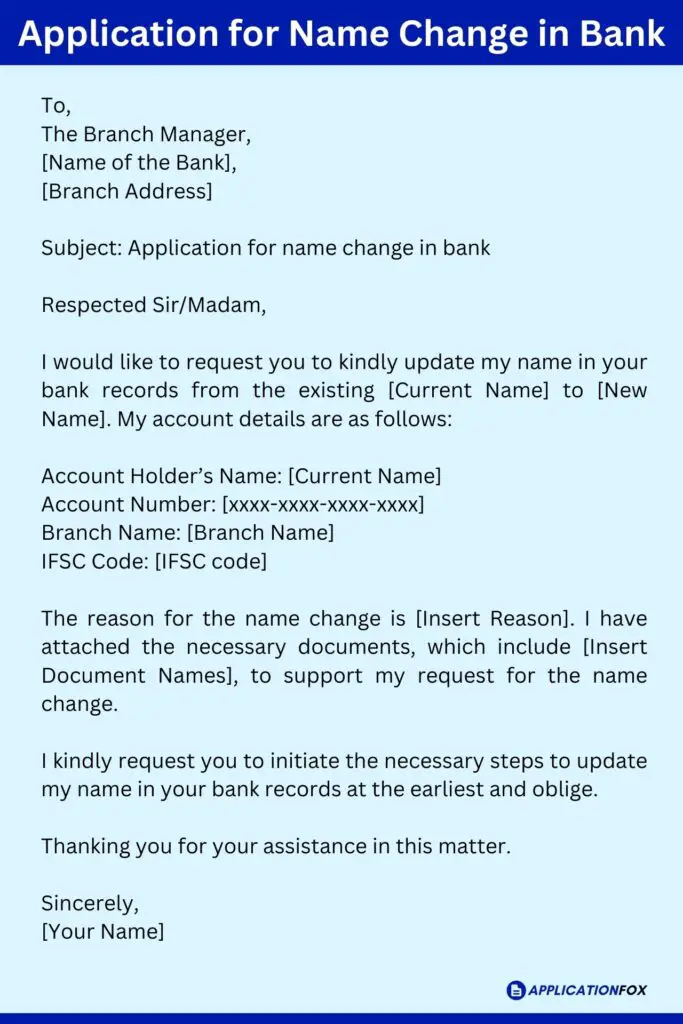
Regardless of the submission method, you will almost certainly need to complete a bank-specific “Name Change Request Form” or a similar document. This form typically asks for your old name, new name, account number(s), the reason for the change, and a declaration that all information is accurate. Fill this out meticulously, ensuring consistency with your legal documents. Any discrepancies can lead to delays or rejection of your request.
Essential Documentation: Proving Your New Financial Self
The cornerstone of a successful bank name change lies in providing irrefutable proof of your new legal identity. Without the correct documentation, your bank cannot legally alter your records.
Primary Legal Proof of Name Change
These documents are the linchpins of your name change request, establishing the legal basis for the alteration.
Marriage Certificates and Divorce Decrees
- Marriage Certificate: If your name change is due to marriage, an original or certified copy of your marriage certificate is universally required. This document officially links your old name to your new marital name.
- Divorce Decree: For those reverting to a maiden name or an alternative legal name post-divorce, a certified copy of the divorce decree, specifically the portion that grants the name change, is essential.
It’s critical to provide an official, government-issued document, not a ceremonial keepsake, as banks need verifiable legal proof.
Court Orders for Legal Name Changes
When a name change occurs outside of marriage or divorce (e.g., personal preference, correction of an error), a certified copy of the court order sanctioning the name change is the definitive legal document. This order demonstrates that the change has been legally recognized and approved by the appropriate authorities. Ensure the document is stamped and signed by the court clerk, confirming its authenticity.
Supplementary Identification and Verification
Beyond the legal justification for the name change, banks also need to confirm that you are the person requesting the change and that you are the legitimate owner of the account(s) in question.
Government-Issued Photo IDs
Your primary photo identification, updated with your new name, is non-negotiable. This typically includes:
- Driver’s License: The most common form of ID in many countries.
- State Identification Card: For non-drivers.
- Passport: A universally accepted form of identification.
These IDs must precisely match your new legal name as requested. An outdated ID will halt the process immediately.
Proof of Address and Account Ownership
To further verify your identity and current residency, banks may request:
- Utility Bill: A recent bill (e.g., electricity, water, gas) in your new name, showing your current address.
- Lease Agreement or Mortgage Statement: Another common form of address verification.
- Existing Bank Card or Statement: To confirm your current account relationship before the name change is processed.
These supplementary documents help the bank maintain robust security protocols and ensure compliance with anti-money laundering regulations.
The Role of the Social Security Administration (SSA)
As mentioned earlier, updating your name with the SSA is often the first and most crucial step. Financial institutions frequently verify customer names against SSA records. If your bank submits your new name for verification and the SSA still holds your old name, it can cause significant delays or even rejection of your bank’s name change request. This emphasizes the sequential nature of identity updates: SSA first, then driver’s license/passport, then bank accounts.
Beyond the Bank Account: Holistic Financial Identity Management
Changing your name on your bank account is a significant milestone, but it’s merely one piece of a larger financial puzzle. A truly responsible approach to personal finance dictates that this change triggers a broader review and update across all your financial touchpoints. Neglecting other accounts can lead to discrepancies, administrative headaches, and potential financial instability.
A Domino Effect: Updating All Financial Touchpoints
The name change on your bank account should be the beginning of a systematic update across your entire financial landscape.
Credit Cards and Loan Accounts
Every credit card you hold, from store cards to major bank cards, needs to reflect your new name. Similarly, all loan accounts – mortgages, auto loans, student loans, and personal loans – must be updated. Contact each lender directly, as their processes may differ from your bank’s. Outdated information can complicate identity verification for customer service, renewal of cards, or even impact your credit report if payments are mistakenly associated with an old identity.
Investment Portfolios and Retirement Funds
Your brokerage accounts, mutual funds, 401(k)s, IRAs, and any other investment vehicles must also be updated. Consistency across these accounts is vital for tax purposes, beneficiary designations, and ensuring you can access your funds without issue in the future. Investment firms will require similar legal documentation as banks. This step is particularly important for estate planning and ensuring your beneficiaries are correctly identified under your current legal name.
Insurance Policies and Employer Payroll
Your health, life, auto, and home insurance policies should all be updated. This ensures that claims can be processed smoothly and that there are no issues with policy validity due to mismatched names. Crucially, inform your employer’s HR or payroll department about your name change. This is essential for ensuring your paychecks, W-2 forms, and any retirement contributions are issued under your correct legal name, preventing tax discrepancies and ensuring proper benefit allocation.
Safeguarding Your Financial Ecosystem
A name change is an opportune moment to review and reinforce the security and functionality of your broader financial setup.
Managing Direct Deposits and Automatic Payments
Once your bank account name is updated, double-check all direct deposit sources (e.g., employer, government benefits) and automatic payment setups (e.g., utility bills, subscriptions, loan payments). While many systems link to account numbers rather than names, confirming that all linked entities recognize your new identity can prevent potential interruptions to these critical financial flows. It might involve re-entering details or simply informing the service provider of your updated identity.
Understanding Joint Account Implications
If you hold joint accounts, particularly those associated with marriage or domestic partnerships, the name change process may have additional considerations. For a name change due to marriage, the other account holder’s signature might be required, or the bank may need to verify their identity alongside yours. For divorce-related name changes, ensure a clear separation of joint accounts is executed in conjunction with the name update, if not already done, to avoid future liabilities.
Monitoring Your Accounts Post-Change
After submitting your name change request, keep a close eye on your bank statements and online banking portal for a few weeks. Confirm that your new name is correctly displayed. If you receive new debit or credit cards, ensure they arrive and that the name printed on them is accurate. Periodically check your credit report to ensure the name update has been consistently applied across credit bureaus and that no new discrepancies have emerged. This proactive monitoring is a cornerstone of robust personal financial management.
Common Pitfalls and Expert Advice for a Smooth Transition
Even with meticulous planning, the name change process can encounter bumps. Being aware of potential pitfalls and adopting proactive strategies can ensure a smoother, less stressful financial transition.
Anticipating Challenges and Delays
Understanding where issues commonly arise can help you prepare and mitigate their impact.
Incomplete Documentation and Rejection
The most frequent cause of delays or rejection is incomplete or incorrect documentation. Providing a photocopy instead of a certified copy, an outdated ID, or a legal document that doesn’t explicitly state the name change will invariably lead to your request being denied. Banks are legally bound by strict identity verification rules (Know Your Customer – KYC), so they cannot process changes without proper proof. Always double-check your bank’s specific requirements and bring originals or certified copies.
Varying Bank Policies and Processing Times
Each financial institution operates independently, meaning their internal processes and timelines can differ significantly. What takes one bank a few days might take another a few weeks, especially if your request needs to go through multiple departments or if it’s sent via mail. Be prepared for this variability and factor it into your personal timeline, particularly if the name change is urgent for other financial matters.
Proactive Strategies for Financial Peace of Mind
Adopting a few key habits can transform a potentially complex administrative task into a manageable financial process.
Communicating with Your Bank Proactively
Don’t wait for problems to arise. If you anticipate delays, or if you haven’t seen your name updated within the estimated timeframe, contact your bank. Follow up politely but persistently. Keep a record of who you spoke with, the date, and what was discussed. Proactive communication demonstrates your commitment to resolving the matter and can often expedite the process.
Keeping Meticulous Records
Throughout this entire process, maintain a comprehensive file. This should include:
- Copies of all submitted legal documents (marriage certificate, court order, etc.).
- Copies of all forms you filled out for the bank.
- Dates of submission and expected processing times.
- Notes from phone calls or in-person visits (who you spoke to, what they said).
- Any correspondence from the bank regarding your name change.
This meticulous record-keeping is invaluable if any disputes or unforeseen complications arise in the future, providing a clear audit trail of your efforts.
Leveraging Financial Tools for Tracking Updates
Modern personal finance tools and apps can help you monitor the impact of your name change across various accounts. Many allow you to link all your bank accounts, credit cards, and even investment portfolios, providing a unified view. Use these tools to track that your name has been updated everywhere, to monitor direct deposits and automatic payments for any disruptions, and to keep an eye on your credit score for any unexpected changes that might signal an issue.

Conclusion
Changing your name on a bank account is more than just an administrative chore; it’s a fundamental step in maintaining the integrity and security of your personal financial identity. Whether prompted by marriage, divorce, or a legal name change, approaching this process with diligence and foresight is paramount. By understanding the required documentation, adhering to proper procedures, and systematically updating all your financial accounts, you ensure transactional smoothness, safeguard against fraud, and uphold the accuracy of your financial records. This holistic approach not only simplifies your financial life but also reinforces a foundation of responsibility and control over your most vital assets. By taking these steps, you empower yourself to navigate life’s transitions with financial clarity and peace of mind.
aViewFromTheCave is a participant in the Amazon Services LLC Associates Program, an affiliate advertising program designed to provide a means for sites to earn advertising fees by advertising and linking to Amazon.com. Amazon, the Amazon logo, AmazonSupply, and the AmazonSupply logo are trademarks of Amazon.com, Inc. or its affiliates. As an Amazon Associate we earn affiliate commissions from qualifying purchases.