
Life is a journey marked by significant milestones—marriage, divorce, legal name changes, or gender affirmation—each bringing with it a cascade of administrative updates. Among the most critical, yet often underestimated, is updating your name across all your financial accounts, particularly your bank account. Failing to align your financial identity with your legal identity can lead to a myriad of complications, from rejected transactions and fraud alerts to challenges in accessing your own funds or applying for credit. This comprehensive guide delves into the precise steps, essential documentation, and crucial considerations required to smoothly change your name on your bank account, ensuring your financial life remains seamless and secure.
Understanding the Triggers for a Name Change
A name change is more than just a personal decision; it’s a legal event that necessitates a thorough update across all official records. Recognizing why and when this process becomes mandatory is the first step toward a smooth transition.
Life Events and Legal Mandates
Several common life events legally necessitate a name change on your financial records:
-
Marriage: One of the most frequent reasons, individuals often adopt their spouse’s surname, hyphenate their names, or sometimes even create a new combined surname. This update is crucial to ensure all future financial dealings reflect your new marital status and identity.
-
Divorce: Following a divorce, many individuals choose to revert to a maiden name or an earlier surname. The divorce decree will typically outline the legal authorization for this change, which then needs to be meticulously applied to bank accounts and other financial instruments.
-
Legal Name Change (Court Order): For reasons ranging from personal preference to rectifying a misspelled name on birth certificates, individuals may seek a formal court order to change their name. This court order is the primary document that validates your new legal identity.
-
Gender Affirmation: Individuals undergoing gender affirmation often update their legal name to align with their affirmed identity. This deeply personal and significant change requires updating all legal and financial documents to reflect their authentic self.
-
Correction of Errors: Although less common, a name change might be required to correct a persistent error on official documents that has been overlooked for years, ensuring consistency across all records.
The Ramifications of an Unchanged Name
Neglecting to update your name on your bank account can lead to significant headaches and financial vulnerabilities:
-
Discrepancies in Official Documents: Your bank account name must match your government-issued identification (driver’s license, passport) and other critical financial documents. Any mismatch can trigger flags and prevent you from completing transactions or verifying your identity.
-
Issues with Transactions: Trying to cash a check made out to your old name, receiving direct deposits under a name not on your account, or applying for a loan with inconsistent identification can all lead to delays, rejections, or even the freezing of funds. This can particularly impact significant financial events like buying a home or receiving an inheritance.
-
Fraud Risks and Identity Theft Complications: Inconsistent names across your financial records can complicate efforts to detect or recover from identity theft. It can also make it harder for financial institutions to verify your identity, potentially hindering legitimate access to your accounts while raising red flags.
-
Inability to Access Certain Financial Services: Banks may refuse to open new accounts, issue credit cards, or process loan applications if your existing account information does not align with your current legal name as per your identification. This can severely limit your financial flexibility and access to necessary services.
The Essential Pre-Requisites: Gathering Your Documentation
The foundation of a successful name change on your bank account is having all the necessary legal and identification documents in order. Without these, your bank cannot proceed. It’s crucial to gather original or certified copies of these documents.
Primary Identification Documents
These are fundamental for verifying your identity at the bank:
-
Updated Government-Issued Photo ID: This typically includes your driver’s license, state ID card, or national identification card. Ensure this ID already reflects your new legal name. Banks use these to confirm your identity and the validity of your name change.
-
Updated Passport: If you have one, your passport is another universally accepted form of identification. Like your driver’s license, it should also bear your new legal name.
Proof of Name Change
This is the legal document that officially authorizes your new name:
-
Marriage Certificate: An original or certified copy issued by the government agency that performed or registered your marriage. This is the official proof for changing to a married name.
-
Divorce Decree: A certified copy of the court order granting your divorce, especially if it explicitly states the restoration of a maiden name or another name change.
-
Court Order for Name Change: For all other legal name changes, a certified copy of the court order, signed by a judge, is the definitive proof of your new legal identity. This document will specify your old name and your new legal name.
-
Birth Certificate: While not typically used for changing a name, a certified copy of your birth certificate might be required as supplementary proof of your original identity, especially if there’s a need to correct a past error.
Supporting Documents
While the above are primary, these documents can further solidify your identity and address:
-
Proof of Address: A recent utility bill, lease agreement, or mortgage statement showing your new name and current address can be requested. This helps the bank verify your residency.
-
Social Security Card: Crucially, your Social Security Administration (SSA) record must be updated with your new name before you attempt to change your bank account name. The bank often needs to verify your identity and name against the SSA database for IRS tax reporting purposes. Presenting your updated Social Security card confirms this pre-requisite.
-
Old and New Signatures: Some banks may require a comparison of your old and new signatures for security purposes, especially if your new name significantly alters your signature style.
Navigating the Bank Account Name Change Process
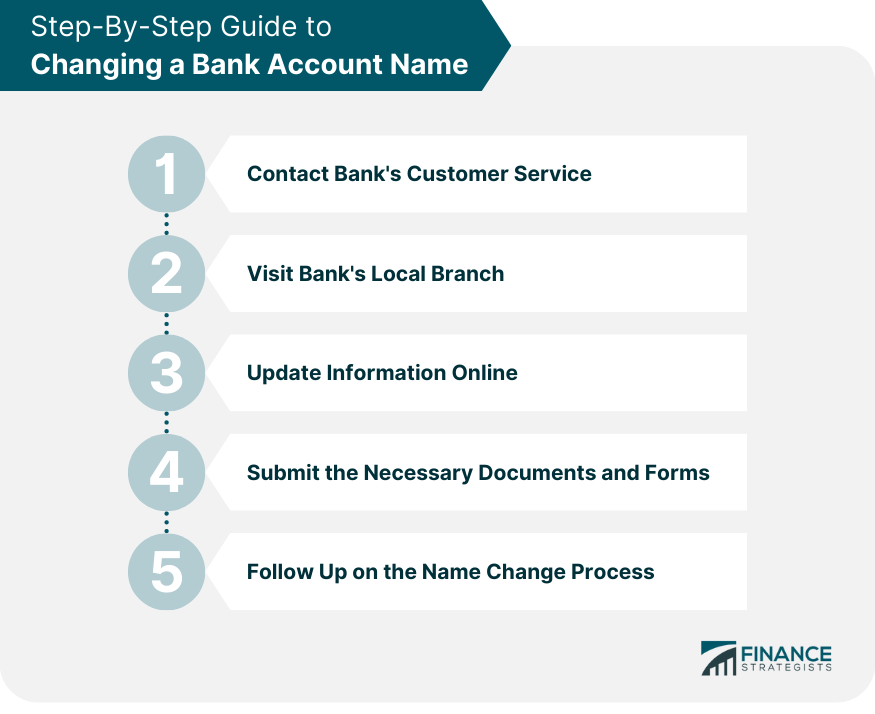
Once your documentation is in order, you can initiate the name change process with your bank. This typically involves a sequence of steps, often starting with federal agencies.
Step-by-Step Guide
Following these steps will streamline your name change process:
-
Step 1: Update Your Social Security Administration (SSA) Record: This is arguably the most critical first step. Your Social Security card links your name to your taxpayer identification number. Banks report interest income and other financial data to the IRS under the name associated with your SSN. If your bank account name doesn’t match your SSA record, it can cause significant issues with tax reporting and identity verification. Visit an SSA office or follow their instructions to submit Form SS-5, Application for a Social Security Card, with your legal name change document.
-
Step 2: Update Your Government IDs: After your SSA record is updated, proceed to update your driver’s license/state ID at your local Department of Motor Vehicles (DMV) or equivalent agency. If you have a passport, apply for a new one reflecting your updated name. These updated IDs will be your primary proof of identity at the bank.
-
Step 3: Contact Your Bank: Reach out to your bank to understand their specific procedures. Most banks require you to visit a branch in person, as they often need to verify original documents and update your signature on file. Some may allow initial inquiries or form downloads online, but typically, an in-person visit is mandatory.
-
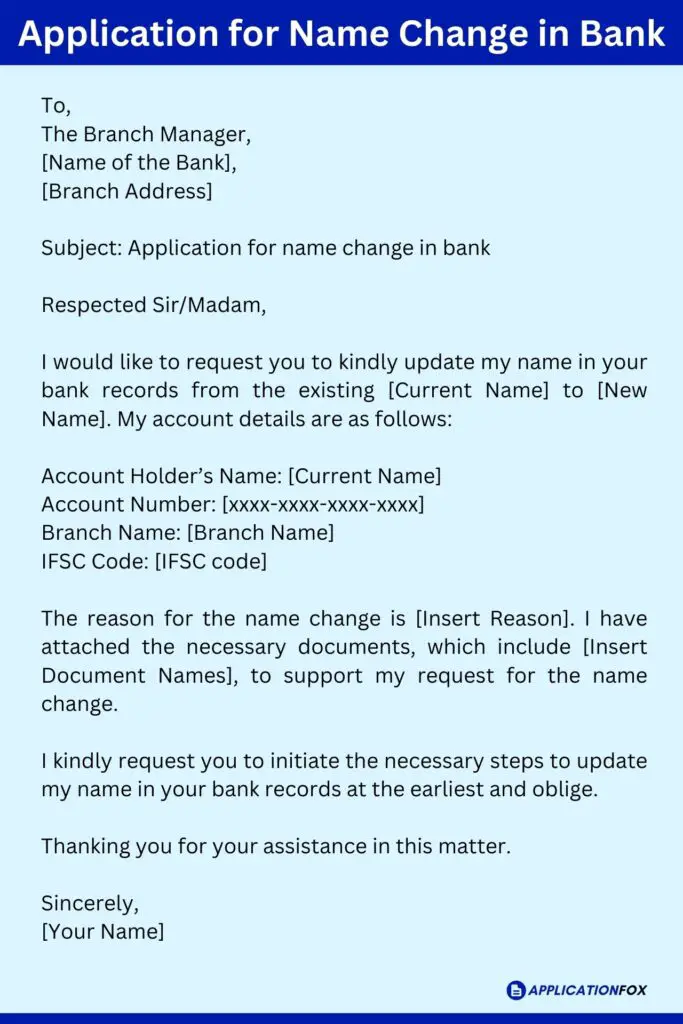
Step 4: Submitting Documentation: Bring all your original or certified copies of your updated IDs, proof of name change (marriage certificate, divorce decree, court order), and your updated Social Security card to the bank. A bank representative will review these documents, make copies for their records, and potentially have you fill out a “Change of Name” form.
-
Step 5: Verification and Confirmation: The bank will process your request, which might take a few business days. Once complete, they should confirm the change. You can verify this by checking your online banking portal, waiting for your next statement, or requesting a printed statement that reflects your new name.
-
Step 6: Updating Joint Accounts and Beneficiaries: If you have joint accounts, ensure both account holders are updated as needed. Similarly, review and update the beneficiaries on any accounts (e.g., Payable-on-Death accounts) to reflect current names and relationships.
Specific Considerations for Different Account Types
While the general process is similar, there can be nuances for various financial products:
-
Checking and Savings Accounts: These are usually the most straightforward, handled directly by your retail bank branch.
-
Joint Accounts: Both account holders may need to be present with their identification, or at least one present with the appropriate power of attorney or legal documents for the other.
-
Investment Accounts (Brokerage, Retirement): These are often managed by a separate department or a different financial institution. You’ll need to contact your brokerage firm (e.g., Fidelity, Schwab, Vanguard) or the administrator of your 401(k) or IRA directly. They will have their own specific forms and documentation requirements.
-
Loans and Mortgages: For mortgages, car loans, or personal loans, the name change might be handled by a different department within the bank, or by the specific lending institution if it’s separate from your primary bank. It’s crucial to ensure your name on all loan documents matches your legal identity, especially for credit reporting purposes.
Post-Change Management: Updating Your Financial Ecosystem
Changing your name on your primary bank account is a major step, but it’s only one piece of the puzzle. Your new legal name needs to be reflected across your entire financial and personal ecosystem to avoid future discrepancies.
Beyond Your Primary Bank
Systematically update your name with all other relevant organizations:
-
Credit Cards and Loan Providers: Contact all credit card companies (Visa, Mastercard, American Express, Discover) and any other lenders (student loans, personal loans) to update your name. This ensures your credit report accurately reflects your identity and new cards are issued correctly.
-
Investment Firms and Retirement Accounts: As mentioned, contact all brokerage firms, 401(k) administrators, IRA custodians, and any other investment platforms.
-
Utility Companies and Service Providers: Update your name with your electricity, gas, water, internet, and mobile phone providers. This helps ensure billing accuracy and consistent identity verification.
-
Employers and Payroll: Inform your employer’s HR or payroll department immediately. This is essential for accurate paychecks, tax documents (W-2), and benefits enrollment.
-
Insurance Policies: Update your name on all insurance policies—health, auto, home, life, disability—to ensure coverage remains valid and claims can be processed without issues.
-
Government Agencies: Beyond the SSA, consider updating your name with the Internal Revenue Service (IRS) for tax filing purposes (though SSA update largely covers this), voter registration, and any professional licensing boards.
-
Digital Wallets and Online Payment Services: Update your name on services like PayPal, Venmo, Apple Pay, Google Pay, and other peer-to-peer payment platforms.
Practical Tips for a Smooth Transition
A methodical approach can prevent common pitfalls:
-
Keep Certified Copies: Always maintain several certified copies of your marriage certificate, divorce decree, or court order. These are invaluable for submitting to various institutions.
-
Notify All Relevant Parties Systematically: Create a checklist of all institutions and services where your name needs to be updated. Go through it one by one to avoid missing anyone.
-
Monitor Bank Statements and Credit Reports: For several months after the change, diligently review your bank statements and credit reports. Ensure your new name is correctly displayed and that there are no unexpected activities or errors due to the name change. You can access free annual credit reports from Equifax, Experian, and TransUnion.
-
Order New Checks/Debit Cards: Once your name is updated with the bank, order new checks and debit cards that bear your new legal name. Dispose of old checks and cards securely.
-
Update Online Banking Logins and Bill Pay Information: If your bank’s system changes your login details or requires re-verification, ensure you update these immediately. Also, review any automatic bill payments or direct debits to confirm they are still functioning correctly with your new name.
-
Consider a Temporary “Hold” on Specific Transactions: If you anticipate a delay in processing your name change, you might consider pausing any major transactions or applications that require strict name matching until you receive confirmation from the bank.
Addressing Potential Challenges and FAQs
While the process is generally straightforward, unforeseen challenges can arise. Being prepared can alleviate stress.
Common Hurdles
-
Mismatch Between Documents: Ensure absolute consistency across all your legal documents. A minor discrepancy between your ID and your name change certificate can cause delays.
-
Lost or Expired Supporting Documents: If you’ve lost an original document, you’ll need to obtain a certified copy from the issuing authority (e.g., county clerk for marriage certificates, court clerk for court orders). Plan for the time this takes.
-
International Name Changes or Foreign Documents: If your name change occurred in another country, or your supporting documents are in a foreign language, you will likely need certified translations and potentially an apostille or other authentication. Contact your bank in advance for specific requirements.
-
Reluctance from Some Institutions: While most financial institutions are accustomed to name changes, some smaller or niche providers might require more explanation or unique documentation. Be patient and prepared to provide additional information.

Frequently Asked Questions
-
“Can I do this online?” While some banks allow you to initiate the process or download forms online, the physical submission of original legal documents and updated photo ID almost always requires an in-person visit to a branch for verification purposes.
-
“Do I need to close my old account and open a new one?” Generally, no. Banks prefer to update your existing account records. Closing and reopening accounts can complicate transaction history, credit score implications, and the re-establishment of direct deposits or automatic payments.
-
“What if my name is different on my Social Security card?” This is a critical issue that must be resolved first. Your name on your bank account and all other financial instruments should match the name on file with the Social Security Administration. Prioritize updating your SSA record before visiting your bank.
-
“How long does it typically take?” The actual processing time at the bank can range from a few business days to a couple of weeks, depending on the bank’s internal procedures and the complexity of your case. Factor in the time needed to update your SSA record and government IDs beforehand, which can add several weeks.
-
“Are there any fees?” Most banks do not charge a fee for a name change itself. However, you might incur costs for obtaining certified copies of legal documents, new government IDs, or for ordering new checks or debit cards.
Changing your name on a bank account is a pivotal administrative task that impacts your entire financial life. While it may seem daunting, a systematic, well-documented approach ensures a smooth and secure transition. By diligently gathering your documents, following the prescribed steps, and proactively updating all relevant financial and personal accounts, you can enjoy the peace of mind that comes with a perfectly aligned legal and financial identity. This meticulous effort safeguards your financial integrity and ensures uninterrupted access to your funds and financial services, allowing you to focus on the next chapter of your life with confidence.
aViewFromTheCave is a participant in the Amazon Services LLC Associates Program, an affiliate advertising program designed to provide a means for sites to earn advertising fees by advertising and linking to Amazon.com. Amazon, the Amazon logo, AmazonSupply, and the AmazonSupply logo are trademarks of Amazon.com, Inc. or its affiliates. As an Amazon Associate we earn affiliate commissions from qualifying purchases.