
Moving to a new home involves a complex checklist of logistical hurdles, from hiring movers to transferring utilities. However, one of the most critical—and often overlooked—tasks is updating your financial records. For Chase customers, keeping your address current is not just a matter of convenience; it is a fundamental component of maintaining account security, ensuring the continuity of your credit profile, and managing your personal tax liabilities.
A financial institution like Chase uses your residential address as a primary data point for identity verification, fraud prevention, and the delivery of sensitive documents such as new debit cards, tax forms (1099s or 1098s), and paper statements. Failing to update this information promptly can lead to missed payments, identity theft risks, or complications when applying for new lines of credit. This guide provides a comprehensive walkthrough of the process, the financial implications of the change, and the peripheral steps necessary to ensure your financial life remains seamless during a move.

Navigating the Update: Digital and Physical Methods
Chase provides several streamlined avenues for updating your contact information. In the modern era of fintech integration, most users will find the digital options the most efficient, but traditional methods remain available for those who prefer human interaction or have complex account structures.
Updating via the Chase Mobile App
The mobile app is the most accessible tool for the average personal banking customer. Because the app uses multi-factor authentication (MFA) and biometric security, it is a highly secure environment for changing sensitive data.
-
Log in to the Chase Mobile app.
-
Tap the profile icon (usually located in the top right corner).
-
Select “Settings” and then “Profile & settings.”
-
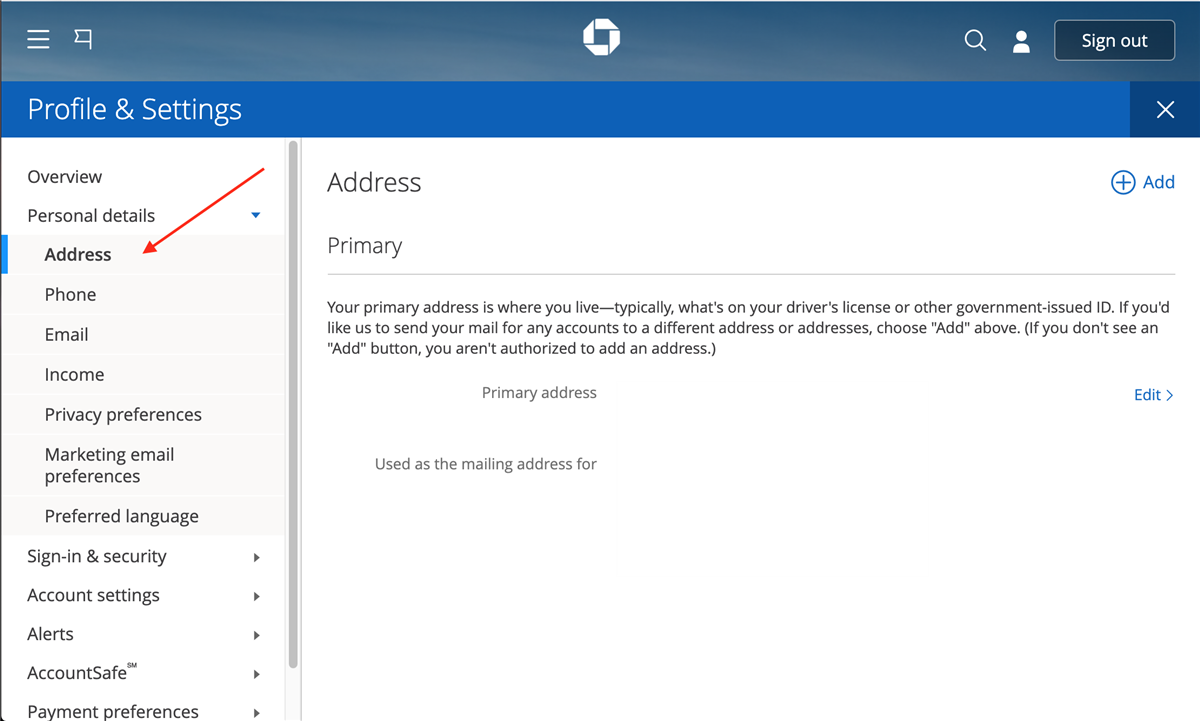
Navigate to “Personal details” and select “Address.”
-
From here, you can edit your residential and mailing addresses. You can choose to apply the change to all linked accounts or select specific ones.
Utilizing the Online Banking Portal
For business account holders or those managing complex investment portfolios through J.P. Morgan, the desktop portal offers a broader view of how the address change will affect various sub-accounts.
-
Sign in to Chase.com.
-
Click on the “Profile & settings” icon in the top right.
-
Select “Profile & settings” from the dropdown menu.
-
Choose “Phone, email & address” from the left-hand sidebar.
-
Click “Edit” next to the address you wish to update.
In-Person and Phone Support
For customers who may be moving internationally or those who have specific legal restrictions on their accounts, visiting a local branch or calling Chase customer service is often necessary. When visiting a branch, ensure you bring a government-issued ID and, if possible, a utility bill or lease agreement for the new location. This adds a layer of manual verification that can prevent your account from being flagged by automated fraud detection systems during a significant move.
The Financial Security Implications of an Address Change
From a personal finance perspective, your address is more than just a location; it is a key identifier in the “Know Your Customer” (KYC) protocols that banks are legally required to follow. When you change your address, you are effectively recalibrating your financial identity.
Fraud Prevention and the Address Verification System (AVS)
When you make an online purchase, merchants use the Address Verification System (AVS) to cross-reference the billing address you provide with the one on file at Chase. If these do not match, the transaction may be declined. By updating your address immediately, you prevent the frustration of declined transactions during a time when you are likely making significant purchases for your new home.
Protecting Sensitive Financial Data
The primary risk of a delayed address update is the exposure of “Personally Identifiable Information” (PII). If a new credit card or a year-end tax document is sent to your old address, it becomes a goldmine for identity thieves. Even if you have set up mail forwarding with the United States Postal Service (USPS), the USPS does not forward all types of financial mail. Some documents are marked “Return Service Requested” or “Do Not Forward,” meaning they will be returned to Chase rather than sent to your new home. This can trigger a security freeze on your account until Chase can verify your whereabouts.

Credit Bureau Synchronization
Chase reports your account activity to the three major credit bureaus: Equifax, Experian, and TransUnion. When you update your address with Chase, that information is eventually transmitted to these bureaus during the next reporting cycle. Consistency across your bank accounts and your credit report is vital. Discrepancies in addresses can sometimes cause “split files” at credit bureaus, which can lower your credit score or make it difficult for lenders to pull an accurate report when you apply for a mortgage or an auto loan in the future.
Beyond the Bank: Coordinating Your Financial Ecosystem
Changing your address with Chase is only one piece of the puzzle. To maintain a healthy financial profile, you must ensure that the change propagates through all connected systems.
Business and Investment Accounts
If you have a Chase Business account or an investment account with J.P. Morgan, the implications of an address change are even more significant. For business owners, your bank address must match the records held by the Secretary of State and the IRS to ensure that tax filings are consistent. For investors, changing your state of residence can change your state tax withholding requirements on dividends or capital gains distributions. It is often wise to consult with a tax professional if you are moving between states with different income tax structures.
Automated Payments and Digital Wallets
Most modern consumers have their Chase cards linked to various digital ecosystems. Once you update your address in the Chase system, you must manually update:
-
Digital Wallets: Apple Pay, Google Pay, and Samsung Pay often store billing addresses separately.
-
Subscription Services: Services like Amazon, Netflix, or utility providers often require the billing address to match the bank’s records for successful recurring billing.
-
The USPS Change of Address: While this doesn’t update your bank records, it is a necessary secondary step. Be aware that the USPS charges a small fee for online identity verification, which must be paid with a card that has an address matching either the old or new location.
Reordering Physical Assets
If you still use paper checks, an address change usually necessitates ordering a new checkbook. While some retailers accept checks with an old address if the ID matches, many financial institutions recommend using checks that reflect your current residence to avoid scrutiny or manual verification delays. Similarly, if you are nearing the expiration date of your debit or credit card, ensure the update is processed at least 30 days before the card is set to ship.
Legal and Tax Considerations for Interstate Moves
Moving across state lines introduces a new layer of financial complexity that Chase customers must manage. Your primary residence dictates your state tax residency, which in turn influences how your banking income is taxed.
Interest and Dividends
If you hold a high-yield savings account or certificates of deposit (CDs) with Chase, the interest earned is subject to state income tax. By updating your address, you ensure that Chase issues the correct 1099-INT forms at the end of the year, reflecting the time spent in each jurisdiction. This prevents the nightmare of “double taxation” or having to file amended returns in two different states.
Impact on Lending and Interest Rates
It is a little-known fact that some financial products and interest rates are “geo-fenced.” Lending rates for personal loans or the availability of certain promotional credit card offers can vary based on your zip code. Updating your address ensures you are receiving the most accurate and competitive financial products available in your new market. Furthermore, if you have a mortgage with Chase, moving your primary residence may have implications for your homeowners’ insurance and property tax escrow accounts, requiring close coordination with the Chase mortgage servicing department.
Summary of the Financial Transition
In the broader context of wealth management, the “how-to” of changing an address is simple, but the “why” is deeply rooted in financial health. An accurate address ensures that you remain in control of your financial narrative. It protects your credit score from the “noise” of inconsistent data, shields your sensitive information from potential fraudsters, and ensures that your relationship with the IRS and state tax authorities remains transparent.
As you finalize your move, treat your Chase address update as a high-priority task. Whether through the app, the website, or a physical branch, taking these ten minutes to align your digital and physical presence will save countless hours of administrative troubleshooting in the future. In the world of personal finance, precision is the greatest defense against volatility, and precision begins with knowing exactly where your financial identity resides.
aViewFromTheCave is a participant in the Amazon Services LLC Associates Program, an affiliate advertising program designed to provide a means for sites to earn advertising fees by advertising and linking to Amazon.com. Amazon, the Amazon logo, AmazonSupply, and the AmazonSupply logo are trademarks of Amazon.com, Inc. or its affiliates. As an Amazon Associate we earn affiliate commissions from qualifying purchases.