
In an age dominated by artificial intelligence, quantum computing, and hyper-connectivity, it might seem simplistic to dedicate an entire discussion to the humble calculator. Yet, this ubiquitous tool remains one of the most fundamental and frequently used pieces of technology across every facet of modern life. From balancing a budget to solving complex engineering equations, the calculator is an indispensable ally, often underestimated in its power and versatility. Far from being a mere number-crunching device, today’s calculators, whether physical gadgets or sophisticated software applications, embody decades of technological evolution, offering a gateway to precision, efficiency, and problem-solving.

This comprehensive guide aims to peel back the layers of this essential device, transforming the casual user into a calculator master. We’ll delve into its fascinating evolution, demystify its core functions, explore its specialized variants, and offer practical strategies to maximize its potential in an increasingly digital world. Understanding “how to calculator” isn’t just about punching numbers; it’s about harnessing a powerful technological extension of our own cognitive abilities.
The Evolution of Calculation: From Abacus to AI
The concept of aiding numerical computation is as old as civilization itself. What began as rudimentary counting tools has blossomed into the sophisticated digital devices we rely on today, showcasing a remarkable journey of human ingenuity.
A Historical Glimpse: Early Computation Devices
Long before microchips, humans sought ingenious ways to manage numbers. The abacus, dating back millennia, provided a tangible method for performing arithmetic operations, still used in some cultures today for its tactile efficiency. The 17th century saw advancements like Napier’s Bones, a set of rods used for multiplication and division, and the development of mechanical calculators by pioneers like Wilhelm Schickard, Blaise Pascal, and Gottfried Leibniz. These early machines, driven by gears and levers, laid the foundational principles for automated calculation. By the 19th century, Charles Babbage envisioned his Analytical Engine, a theoretical precursor to modern computers, demonstrating the enduring quest for automated and complex computation. The slide rule, popular from the 17th to the 20th century, offered rapid approximations for multiplication, division, logarithms, and trigonometry, becoming a staple for engineers and scientists until the advent of electronic devices.
The Digital Revolution: Handhelds and Software
The mid-20th century marked a paradigm shift with the invention of the transistor and integrated circuit. This miniaturization allowed for the creation of the first electronic calculators in the 1960s, a monumental leap from their bulky mechanical predecessors. Companies like Casio and Texas Instruments became household names, producing increasingly compact and affordable handheld calculators. These devices brought computational power directly to students, businesses, and individuals, revolutionizing education and professional fields.
Concurrently, the rise of personal computers in the 1980s introduced software calculators. Operating systems began to include built-in calculator applications, replicating the functions of their physical counterparts while leveraging the computer’s processing power and graphical interface. This marked the beginning of calculators transitioning from dedicated hardware to integrated software solutions.
The Modern Calculator Landscape: Apps and Advanced Functionality
Today, the calculator landscape is more diverse and powerful than ever. Your smartphone is a potent computational device, hosting an array of calculator apps ranging from basic arithmetic to advanced scientific and graphing functionalities. Operating systems like Windows, macOS, Android, and iOS all feature highly capable integrated calculators that are just a click or tap away, often offering standard, scientific, and programmer modes, alongside unit conversion and date calculation features.
Beyond simple arithmetic, modern calculators can handle complex algebraic expressions, matrix operations, calculus, statistics, and even symbolic computation. The lines between a calculator, a programming environment, and a data analysis tool are increasingly blurred. Some advanced applications even flirt with AI integration, offering natural language input for calculations or providing step-by-step solutions to problems, further enhancing their utility and accessibility for diverse users.
Fundamental Operations: Beyond the Basics
While the variety of calculators is vast, the core principles of operation remain consistent. Mastering these fundamentals is the first step towards confidently tackling more complex problems.
The Standard Calculator: Daily Utility
At its heart, every calculator performs basic arithmetic: addition (+), subtraction (-), multiplication (x or *), and division (÷ or /). These are the bedrock of daily calculations, from checking grocery bills to reconciling accounts. However, even these basic operations have nuances.
Percentage calculations (using the ‘%’ key) can sometimes trip users up. Typically, 100 + 10% will calculate 100 + (100 * 0.10) = 110. Similarly, 50 - 20% will result in 50 - (50 * 0.20) = 40. Understanding this context-dependent behavior is crucial.
Perhaps the most underutilized features are the memory functions:
- M+ (Memory Plus): Adds the current display value to the memory.
- M- (Memory Minus): Subtracts the current display value from the memory.
- MR (Memory Recall): Displays the value currently stored in memory.
- MC (Memory Clear): Clears the memory, setting its value back to zero.
- GT (Grand Total): (On some calculators) Sums the results of all previous calculations.
These functions are invaluable for multi-step calculations, preventing the need to write down intermediate results and re-enter them, significantly enhancing efficiency and reducing error.
Deciphering Display and Input Methods
The calculator’s display is your window into its operations. Understanding it is key. Display limits are common; very large or very small numbers are often shown in scientific notation (e.g., 1.23E+15 for 1.23 x 10^15 or 4.56E-8 for 4.56 x 10^-8). Recognizing this notation prevents misinterpretation of results.
Input order can also vary. Most standard calculators use an infix notation (e.g., 2 + 3 =). However, some advanced calculators, particularly older scientific models from HP, use RPN (Reverse Polish Notation), where operators follow their operands (e.g., 2 Enter 3 +). While RPN has its advocates for efficiency, it requires a different mental model.
Error messages like “E,” “Error,” “Math Error,” or “Divide by Zero” are crucial feedback. They indicate an impossible mathematical operation (e.g., dividing by zero, taking the square root of a negative number) or an incorrect input sequence. Learning to recognize and troubleshoot these messages is an important skill.
Essential Functions for Everyday Life
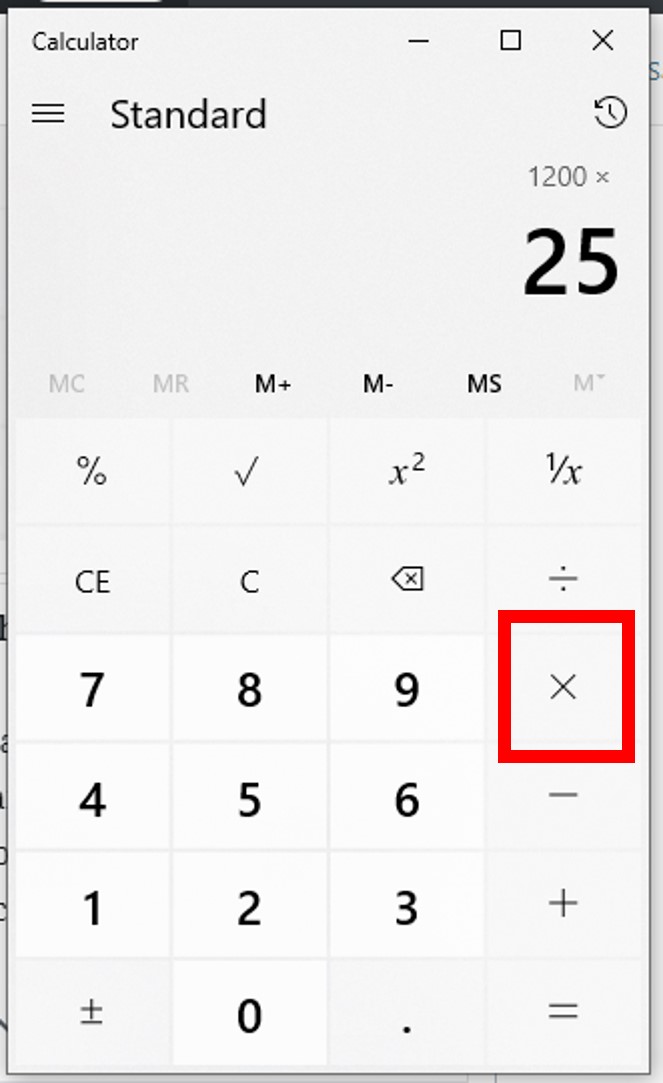
Beyond the four basic operations, several other functions are frequently used:
- Square Root (√): Finds the number that, when multiplied by itself, equals the input (e.g.,
√9 = 3). - Powers (x^y or x²): Calculates a number raised to a given exponent (e.g.,
2^3 = 8). - Reciprocals (1/x): Calculates the inverse of a number (e.g.,
1/5 = 0.2). - Parentheses (()): Critical for controlling the order of operations (often remembered by acronyms like PEMDAS or BODMAS). Operations inside parentheses are always performed first. Correctly using parentheses ensures your calculations adhere to mathematical rules and yield the correct results (e.g.,
(2 + 3) * 4 = 20vs.2 + 3 * 4 = 14).
Specialized Calculators: Tools for Every Domain
As computational needs grew, so did the specialization of calculators. From the classroom to the laboratory, specific tasks demand specific tools.
Scientific Calculators: The Academic Workhorse
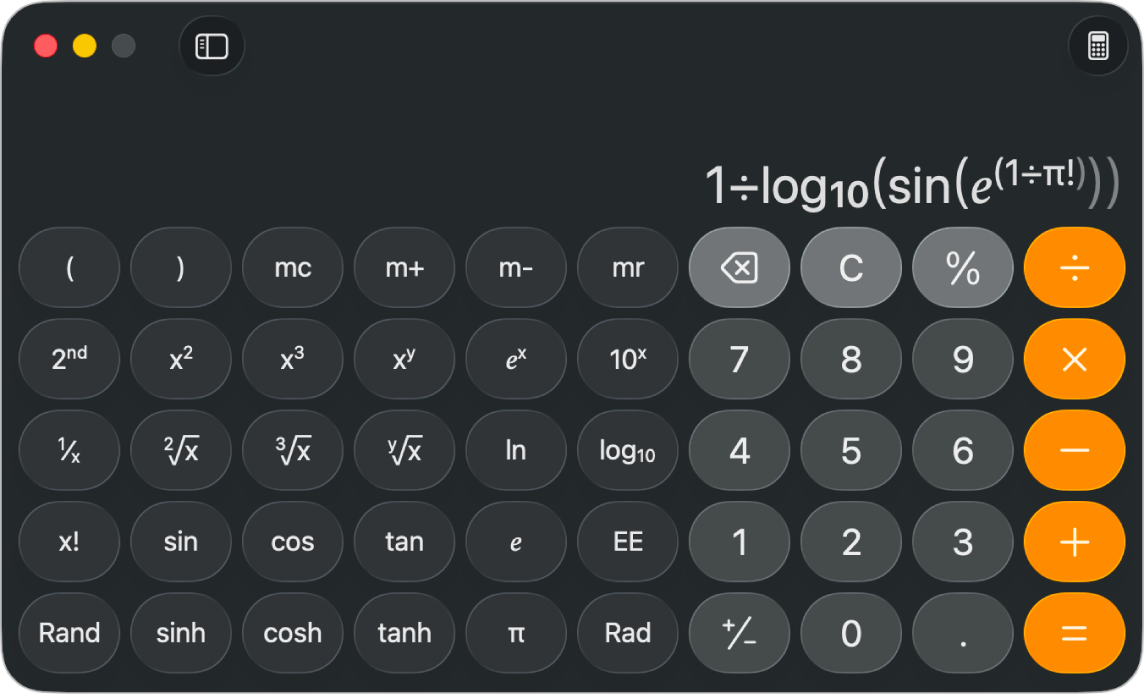
The scientific calculator is an indispensable tool for students and professionals in STEM fields. It extends basic arithmetic with functions crucial for algebra, geometry, trigonometry, and calculus:
- Trigonometric Functions (sin, cos, tan, and their inverses asin, acos, atan): Used for calculating angles and side lengths in triangles, wave analysis, and many physics applications. Understanding radians vs. degrees mode is vital here.
- Logarithms (log, ln) and Exponentials (e^x, 10^x): Essential for working with growth, decay, decibels, and pH values.
- Factorials (n!), Permutations (nPr), Combinations (nCr): Core functions in probability and statistics.
- Physical Constants and Unit Conversions: Many scientific calculators have built-in constants (e.g., pi, Avogadro’s number) and can convert between different units (e.g., meters to feet, Celsius to Fahrenheit).
Mastering a scientific calculator involves not just knowing what the buttons do, but understanding the underlying mathematical concepts and the correct input sequence for complex expressions.
Graphing Calculators: Visualizing Data
Taking a significant leap beyond scientific calculators, graphing calculators are miniature computers designed for advanced mathematical and scientific exploration. Their larger screens and enhanced processing power allow for:
- Plotting Functions and Equations: Users can input mathematical functions (e.g.,
y = x^2 + 2x - 3) and visualize their graphs, understanding their shape, intercepts, and turning points. - Solving Systems of Equations Graphically: By plotting multiple functions, users can visually identify points of intersection, which represent the solutions to systems of equations.
- Statistical Analysis Capabilities: Graphing calculators excel at handling datasets, performing regressions (linear, quadratic, exponential), calculating standard deviations, and generating statistical plots like histograms and scatter plots.
- Programmability: Many graphing calculators can be programmed, allowing users to write and execute custom scripts for repetitive tasks, complex algorithms, or interactive simulations. This feature makes them powerful learning tools and problem-solving machines.
Brands like Texas Instruments (TI) and Casio dominate this market, with models like the TI-84 Plus CE or Casio fx-CG50 being standard in high schools and colleges.
Unit Converters and Specialized Apps
Beyond the general-purpose scientific and graphing models, the digital age has spawned an array of highly specialized calculators:
- Unit Converters: Dedicated apps or functions within OS calculators simplify conversions for virtually any measurable quantity: length, weight, volume, temperature, speed, pressure, currency, and more.
- Time Zone Calculators: Indispensable for international communication and travel.
- Age Calculators: Simple yet fun tools.
- BMI (Body Mass Index) Calculators: Health and fitness aids.
- Financial Calculators: For loans, mortgages, investments, and compound interest.
- Engineering and Medical Calculators: Highly specialized tools for specific industry computations.
Many of these specialized calculators are readily available as smartphone apps, web widgets, or even integrated into voice assistants (e.g., “Hey Siri, what’s 50 miles in kilometers?”). This pervasive integration makes specialized calculations incredibly accessible, streamlining tasks that once required consulting reference tables.
Maximizing Your Calculator’s Potential: Tips and Best Practices
Having a powerful calculator is one thing; using it effectively and efficiently is another. Here are strategies to truly master your digital arithmetic companion.
Choosing the Right Tool for the Job
The first step to mastery is intelligent selection.
- For everyday tasks, a basic standard calculator (physical or software) is usually sufficient. Over-complicating with a scientific model can introduce unnecessary complexity.
- For academic or professional work in STEM, a scientific or graphing calculator is essential. Consider the specific functions you’ll need and whether a physical device (for exams) or a software solution (for flexibility) is more appropriate.
- For quick unit conversions or specific data analysis, specialized apps or web tools often offer a more streamlined experience than navigating complex menus on a general-purpose calculator. The ergonomics of a physical calculator (button feel, display clarity) can also be a crucial factor for prolonged use.
Enhancing Accuracy and Efficiency
Precision and speed are hallmarks of effective calculation.
- Double-checking inputs is paramount. A single misplaced digit can lead to wildly incorrect results. Many calculators allow you to review the entered expression before hitting “equals.”
- Understanding significant figures and rounding rules is crucial, especially in scientific contexts, to ensure your final answer reflects the precision of your input data.
- Utilizing memory functions (M+, M-, MR) effectively can significantly reduce the number of key presses and the chance of transcription errors in multi-step calculations. Practice breaking down complex problems into manageable sub-expressions that can be stored and recalled.
- For software calculators, learn keyboard shortcuts. For instance, pressing
Alt + =(Windows Calculator) orCtrl + CthenCtrl + V(copying results) can save valuable time.
Troubleshooting and Maintenance (for Physical Calculators)
Physical calculators, though durable, require some attention to remain reliable.
- Battery replacement: Keep spare batteries on hand for physical calculators, especially before exams or critical tasks. Many solar-powered calculators also have a small button cell for low-light conditions.
- Screen clarity: Keep the display clean and free from scratches.
- Button responsiveness: If buttons become sticky or unresponsive, a gentle cleaning around the edges might help. Avoid disassembling the device unless you are experienced.
- For app-based calculators, regular software updates ensure you have the latest features, bug fixes, and security patches.
Integrating Calculators into Digital Workflows
In a connected world, calculators are rarely isolated tools.
- Built-in OS calculators are perfect for quick, in-workflow calculations without switching applications.
- Browser extensions or desktop widgets provide immediate access to calculators without opening a full application.
- Accessibility features (e.g., screen readers, high-contrast modes) for software calculators ensure they are usable by everyone.
- Many productivity suites (like Microsoft Excel or Google Sheets) have powerful built-in calculation capabilities that often supersede dedicated calculators for data-heavy tasks, offering formula-based computation and visualization.
Conclusion
The journey from “how to calculator” to “mastering the calculator” is one of embracing a powerful technological assistant. Far from being an arcane device, the calculator, in all its forms, remains a cornerstone of efficiency and accuracy in a data-rich world. From its humble origins as an abacus to the sophisticated AI-enhanced apps on our smartphones, the calculator has consistently adapted and evolved, reflecting humanity’s perpetual drive to understand and manipulate numbers.
By understanding its history, demystifying its fundamental operations, exploring its specialized variants, and adopting best practices for its use, you can unlock the full potential of this essential tool. The calculator is not just a device that crunches numbers; it’s a problem-solving partner, an academic enabler, and a professional accelerator. Invest the time to truly know your calculator, and you’ll find it an invaluable ally in navigating the complexities of the digital age.
aViewFromTheCave is a participant in the Amazon Services LLC Associates Program, an affiliate advertising program designed to provide a means for sites to earn advertising fees by advertising and linking to Amazon.com. Amazon, the Amazon logo, AmazonSupply, and the AmazonSupply logo are trademarks of Amazon.com, Inc. or its affiliates. As an Amazon Associate we earn affiliate commissions from qualifying purchases.