
The era of estimating environmental impact through guesswork is over. As global regulatory frameworks tighten and consumer demand for transparency reaches an all-time high, the process of calculating a carbon footprint has evolved from a niche academic exercise into a sophisticated technological discipline. Today, calculating your carbon footprint—whether for an individual or a multinational enterprise—relies on a complex stack of software, data integrations, and artificial intelligence. By leveraging these digital tools, we can move beyond broad averages toward granular, real-time insights that drive actual behavioral and operational changes.
The Digital Architecture of Modern Carbon Calculation
At its core, a carbon footprint is the total amount of greenhouse gases (including carbon dioxide and methane) generated by our actions. In the past, calculation involved manual spreadsheets and outdated emission factors. Modern technology has replaced this with automated Software-as-a-Service (SaaS) platforms that integrate directly with our digital lives.
API Integrations and Automated Data Extraction
The most significant advancement in carbon tracking technology is the use of Application Programming Interfaces (APIs). For individuals, finance-tracking apps now connect to banking APIs to categorize spending. By analyzing a transaction—such as a purchase at a gas station or an airline ticket—software can apply specific emission factors to the dollar amount spent.
For businesses, this integration goes much deeper. Enterprise Resource Planning (ERP) systems now include modules that pull data directly from utility providers, logistics partners, and hardware sensors. This automated data extraction minimizes human error and provides a continuous stream of information, allowing for “live” carbon accounting rather than an annual retrospective report.
Cloud Computing and Scalable Data Processing
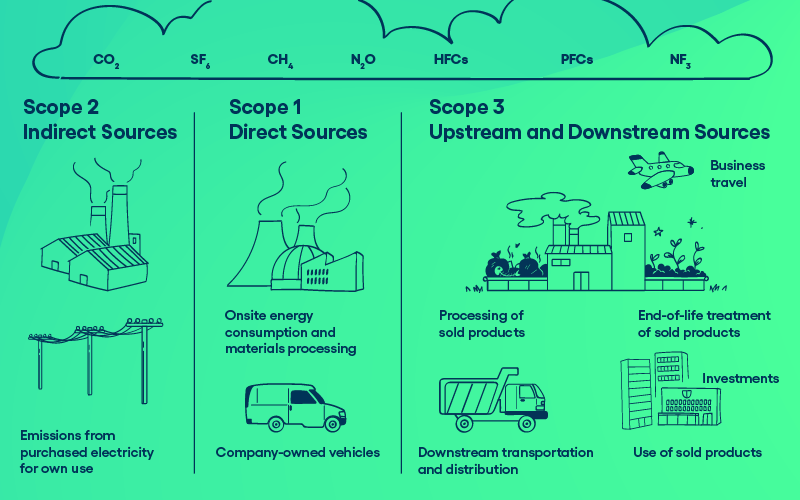
Calculating the footprint of a global supply chain involves processing millions of data points. Cloud computing provides the necessary infrastructure to handle these massive datasets. Digital platforms can now aggregate Scope 1 (direct emissions), Scope 2 (indirect emissions from purchased energy), and the notoriously difficult Scope 3 (value chain emissions) in a centralized cloud environment. This scalability ensures that as a company grows or an individual’s digital footprint expands, the calculation engine can maintain speed and accuracy without the need for localized high-performance hardware.
Artificial Intelligence and Machine Learning in Emission Modeling
While direct data is ideal, it is not always available. This is where Artificial Intelligence (AI) and Machine Learning (ML) have become indispensable. These technologies fill the gaps in the data pipeline, providing high-fidelity estimates where hard numbers are missing.
Predictive Analytics for Gap Filling
Machine learning algorithms are trained on vast repositories of environmental data to predict the carbon intensity of specific activities. If a company lacks specific energy usage data for a remote warehouse, AI can analyze variables such as square footage, local climate data, and building age to estimate the footprint with a high degree of confidence. For individuals, AI can look at dietary habits or commute patterns and compare them against regional benchmarks to refine the user’s footprint profile.
Natural Language Processing (NLP) for Supply Chain Transparency
One of the greatest challenges in calculating a footprint is the opacity of the supply chain. AI-powered Natural Language Processing (NLP) tools can scan thousands of supplier reports, shipping manifests, and public disclosures to extract relevant environmental data. This tech allows organizations to map their secondary and tertiary impacts by “reading” the digital paper trail left by their partners. By converting unstructured text into structured data, NLP enables a more comprehensive calculation of the total lifecycle of a product.
Optimized Algorithmic Life Cycle Assessment (LCA)
Life Cycle Assessment is the process of evaluating the environmental impact of a product from “cradle to grave.” Traditionally, this was a manual process that took months. Modern software uses ML algorithms to run thousands of simulations on product designs. Engineers can input different materials or manufacturing processes, and the software provides an instant carbon footprint projection. This “sustainability by design” approach is only possible through the high-speed processing power of modern environmental tech.
Essential Software Tools and Digital Platforms
The market for carbon management software—often referred to as “Climate Tech”—is expanding rapidly. These tools are designed to translate technical data into actionable insights for both personal and professional use.
Personal Footprint Applications and UX Design
For the individual, the barrier to entry for carbon calculation has been lowered by intuitive User Experience (UX) design. Apps like Joro, TerraPass, and various banking-integrated features use gamification and sleek interfaces to encourage consistent tracking. These platforms focus on high-impact areas: transportation, home energy, and diet. By providing a digital dashboard of one’s daily impact, these apps turn abstract numbers into a tangible metric that users can monitor as easily as their daily step count or screen time.
Enterprise Carbon Accounting Platforms
In the corporate world, specialized platforms like Watershed, Persefoni, and Salesforce Net Zero Cloud have become the gold standard. These platforms are designed to comply with rigorous international standards, such as the Greenhouse Gas (GHG) Protocol. They offer features like:
-
Audit-Ready Reporting: Generating documents that meet regulatory requirements for the SEC or European CSRD.
-
Scenario Planning: Digital twins of a business’s operations that allow executives to see how a shift to renewable energy or a change in shipping routes would impact their total footprint.
-
Supplier Portals: Digital interfaces where vendors can directly upload their own emissions data, creating a shared ecosystem of accountability.
Digital Security and Data Privacy in Carbon Tracking
As we automate the calculation of our carbon footprints, we create a new category of sensitive data. Carbon accounting requires access to financial records, travel history, and operational secrets. Consequently, digital security is a critical pillar of the carbon calculation process.
Protecting Sensitive Operational Data
For a corporation, their carbon footprint data can reveal strategic insights about their supply chain and production efficiency. If this data were compromised, competitors could reverse-engineer their operations. Therefore, carbon accounting software must employ enterprise-grade encryption and multi-factor authentication. Secure data silos ensure that while the “total footprint” might be shared in a public ESG report, the granular operational data remains protected.
Blockchain for Immutable Carbon Credits and Verification
A major issue in the carbon economy is “double counting”—where two entities claim the same carbon reduction. Blockchain technology is being deployed to solve this. By recording carbon offsets and footprint reductions on a decentralized ledger, the data becomes immutable and transparent. When an individual or company “retires” a carbon credit to offset their calculated footprint, the blockchain provides a digital certificate that cannot be forged or duplicated. This brings a necessary layer of trust to the digital accounting process.
The Future of Carbon Tech: IoT and Edge Computing
The next frontier in calculating your carbon footprint lies in the Internet of Things (IoT). We are moving away from reactive reporting toward proactive, real-time monitoring through hardware-software synergy.
Smart Sensors and Real-Time Data Streams
In smart homes and industrial facilities, IoT sensors can monitor electricity flow, gas consumption, and refrigerant leaks in real time. This data is fed directly into calculation software, eliminating the need for monthly utility bills as the primary data source. Edge computing allows this data to be processed locally on the device, reducing the energy cost of the calculation itself and providing instant feedback to the user.

Digital Twins for Urban and Industrial Environments
The concept of the “Digital Twin”—a virtual replica of a physical asset or system—is being used to calculate the footprints of entire cities. By simulating traffic flows, energy grids, and waste management systems, urban planners can use software to identify the most carbon-intensive “hotspots.” This macro-level calculation technology is essential for large-scale decarbonization efforts, allowing for precision interventions that were previously impossible.
The journey toward a sustainable future is paved with data. By utilizing sophisticated APIs, artificial intelligence, and secure cloud platforms, we have transformed carbon calculation from a vague estimate into a precise digital science. Whether through a mobile app that tracks your grocery carbon intensity or a global ERP system that monitors an international supply chain, technology provides the clarity needed to make informed, impactful decisions. As these tools continue to evolve, the “how” of calculating your carbon footprint will become increasingly seamless, turning data into the most powerful weapon we have in the fight against climate change.
aViewFromTheCave is a participant in the Amazon Services LLC Associates Program, an affiliate advertising program designed to provide a means for sites to earn advertising fees by advertising and linking to Amazon.com. Amazon, the Amazon logo, AmazonSupply, and the AmazonSupply logo are trademarks of Amazon.com, Inc. or its affiliates. As an Amazon Associate we earn affiliate commissions from qualifying purchases.