
In an increasingly data-driven world, understanding the nuances of financial calculations is not just a skill but a necessity. From personal budgeting and shopping smart to managing complex business finances and investment portfolios, the ability to derive a total value when only a percentage and its corresponding part are known is incredibly powerful. This fundamental mathematical concept underpins countless financial decisions, enabling individuals and businesses alike to make informed choices, avoid pitfalls, and uncover opportunities.
Whether you’re trying to figure out the original price of an item after a discount, calculate your true income before taxes, or reverse-engineer a profit margin, mastering this calculation empowers you with a deeper understanding of financial mechanics. This article delves into the core principles, practical applications across personal and business finance, and tools that can make this crucial calculation both simple and accurate.

Understanding the Core Principle: The Inverse of Percentage Calculation
At its heart, calculating the total from a percentage is about reversing the standard percentage calculation. When you normally calculate a percentage, you’re finding a part of a known total. Here, the total is unknown, and you’re working backwards.
Revisiting Percentage Basics
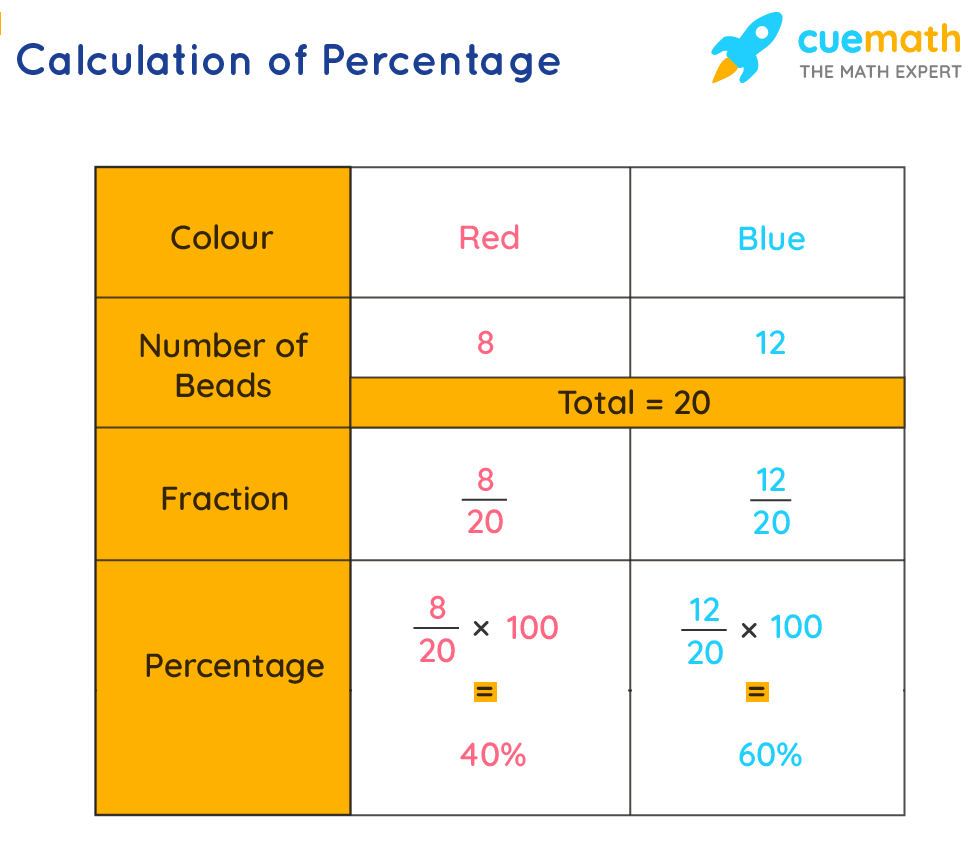
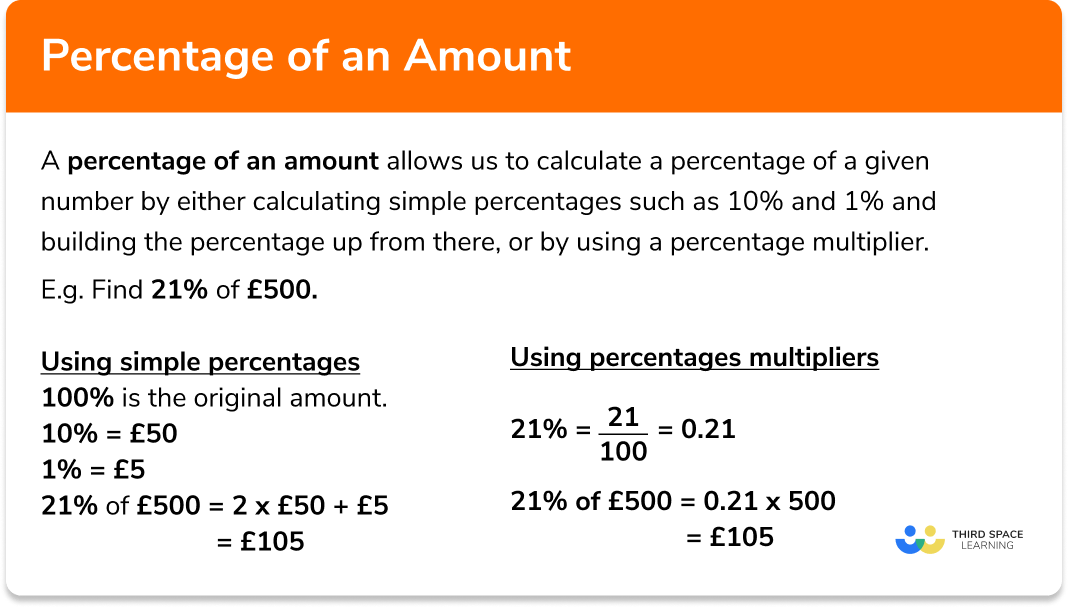
Before we dive into the inverse, let’s quickly recap what a percentage is. A percentage represents a fraction of 100. For example, 25% means 25 out of 100, or 25/100, which is 0.25 in decimal form. If you want to find 25% of a total like $200, you would multiply $200 * 0.25 = $50. Here, $50 is the part.
Now, imagine you know the part ($50) and the percentage (25%), but you don’t know the total ($200). This is precisely the problem we aim to solve. The challenge is to reconstruct the original whole from a known fraction of it. This process is crucial in scenarios where only partial information is available, but the complete picture is needed for financial clarity. It’s akin to seeing a piece of a puzzle and deducing the size of the entire puzzle board.
The Formula: Total = Part / (Percentage / 100)
The formula for calculating the total from a percentage is elegantly simple and incredibly versatile:
Total = Part / (Percentage as a Decimal)
Let’s break this down:
-
Identify the “Part”: This is the known value that represents a portion of the total. For example, if you know a discount saved you $15, and that discount was 10%, then $15 is the part.
-
Convert the “Percentage” to a Decimal: Divide the percentage by 100. So, 10% becomes 10/100 = 0.10. If it’s 25%, it becomes 0.25. This step is critical because percentages are relative values, and to perform arithmetic operations, they must be converted to their decimal equivalents. Failing to do so is a common mistake that leads to incorrect results.
-
Divide the Part by the Decimal Percentage: Perform the division. Using our example: Total = $15 / 0.10 = $150. This means the original price was $150.
Let’s try another example: You paid $80 for a service, which included a 20% tip. What was the base cost of the service before the tip?
Here, the part is $80, but this $80 includes the tip. So, $80 represents the original cost (100%) plus the tip (20%), making it 120% of the original cost.
So, the percentage is 120%.
Total = $80 / (120 / 100) = $80 / 1.20 = $66.67 (approximately). The base cost was $66.67, and the tip was $13.33.
Why This Calculation Matters in Finance
In finance, knowing the total when given a part and a percentage is indispensable. It allows you to:
-
Understand true costs: Beyond the advertised sale price.
-
Analyze performance: Determine original investment capital from returns.
-
Plan and budget: Estimate necessary revenue to meet profit targets.
-
Evaluate financial health: Uncover initial liabilities from partial payments.
This calculation provides a foundational layer for financial literacy, empowering individuals to look beyond surface-level figures and grasp the underlying financial realities.
Everyday Financial Applications of Calculating Total from Percentage
The formula isn’t just an abstract mathematical concept; its applications permeate our daily financial lives, helping us make smarter decisions as consumers and managers of personal wealth.
Unpacking Discounts and Sales
Perhaps the most common application is deciphering discounts. When a store advertises “Save 25%!” and shows the discount amount in dollars, you can quickly calculate the original price.
-
Scenario: You saved $10 on a shirt during a “20% off” sale. What was the original price?
-
Part: $10 (the amount saved)
-
Percentage: 20% (the discount rate)
-
Calculation: Total = $10 / (20/100) = $10 / 0.20 = $50. The original price of the shirt was $50.
This understanding prevents impulse buys driven by a perceived “deal” and allows for a clearer comparison of actual value. It enables consumers to verify if a deal is truly as good as it seems or if they are simply being swayed by marketing tactics.
Deciphering Taxes and Tips
Whether it’s sales tax on a purchase, income tax deductions, or calculating a tip at a restaurant, knowing the base amount is often critical.
-
Scenario 1 (Sales Tax): You paid $5.25 in sales tax, and the sales tax rate is 7.5%. What was the pre-tax price of the item?
-
Part: $5.25 (the tax amount)
-
Percentage: 7.5%
-
Calculation: Total = $5.25 / (7.5/100) = $5.25 / 0.075 = $70. The item cost $70 before tax.
-
Scenario 2 (Tips – inclusive): Your bill came to $120, and this amount included a mandatory 18% gratuity. What was the food and beverage subtotal before the tip?
-
Part: $120 (the total with tip)
-
Percentage: This total represents the original subtotal (100%) PLUS the tip (18%), so it’s 118%.
-
Calculation: Total = $120 / (118/100) = $120 / 1.18 = $101.69 (approximately). The pre-tip subtotal was about $101.69.
These calculations are vital for budgeting, verifying charges, and ensuring fairness in transactions. They provide transparency and accountability in financial exchanges that often include additional charges or deductions.
Estimating Original Prices After Markdowns
Sometimes, you only know the final price of a product and the percentage markdown, not the actual dollar amount of the discount.
-
Scenario: You bought a gadget for $240 after a 40% markdown. What was its original price?
-
Understanding: If it was marked down by 40%, then the $240 you paid represents 100% – 40% = 60% of the original price.
-
Part: $240 (the price you paid, which is 60% of the total)
-
Percentage: 60%
-
Calculation: Total = $240 / (60/100) = $240 / 0.60 = $400. The original price was $400.
This application is particularly useful for savvy shoppers, allowing them to compare prices across different sales or determine the true savings they achieved. It also helps in understanding the pricing strategies of retailers.
Business Finance and Strategic Planning
Beyond personal finance, this calculation is a cornerstone of business operations, financial analysis, and strategic decision-making.
Analyzing Profit Margins and Revenue Goals
Businesses constantly monitor profit margins. If they know their profit from a sale and their target profit margin, they can determine the revenue needed or the cost of goods sold.
-
Scenario: A company made a profit of $25,000 on a product line, and its target profit margin is 20% of revenue. What was the total revenue generated by that product line?
-
Part: $25,000 (the profit)
-
Percentage: 20% (the profit margin relative to revenue)
-
Calculation: Total Revenue = $25,000 / (20/100) = $25,000 / 0.20 = $125,000.
This helps set sales targets, evaluate product profitability, and make informed pricing decisions. It allows businesses to reverse-engineer their financial performance and align sales efforts with profitability goals.
Understanding Investment Returns and Portfolio Growth
Investors often see their portfolio’s percentage gain or loss. If they know the dollar amount of that gain/loss, they can calculate their initial investment.
-
Scenario: Your investment portfolio grew by $5,000, representing a 15% return on your initial investment. How much did you initially invest?
-
Part: $5,000 (the gain)
-
Percentage: 15% (the return rate)
-
Calculation: Total Initial Investment = $5,000 / (15/100) = $5,000 / 0.15 = $33,333.33 (approximately).
This calculation is vital for understanding true capital growth, assessing the effectiveness of investment strategies, and comparing performance against benchmarks. It provides a clear picture of the principal sum that generated the observed returns.
Budgeting and Expense Allocation
Organizations often allocate budgets based on percentages. If a department spent a certain amount and that amount represents a known percentage of their total budget, the total budget can be determined.
-
Scenario: The marketing department spent $12,000 on digital advertising, which constitutes 30% of their total quarterly budget. What is their total quarterly budget?
-
Part: $12,000 (spent on digital advertising)
-
Percentage: 30%
-
Calculation: Total Budget = $12,000 / (30/100) = $12,000 / 0.30 = $40,000.
This helps in tracking spending, identifying over/under budget situations, and forecasting future financial needs. It allows for effective resource allocation and ensures financial discipline within an organization.
Calculating Original Debt or Loan Amounts
In debt management, if you’ve paid off a certain percentage of a loan and know the dollar amount paid, you can determine the original loan principal.
-
Scenario: You’ve paid $7,500 towards your student loan, and this amount represents 25% of the original principal. What was the original loan amount?
-
Part: $7,500 (amount paid)
-
Percentage: 25%
-
Calculation: Original Loan Amount = $7,500 / (25/100) = $7,500 / 0.25 = $30,000.
This is useful for understanding the full scope of financial liabilities and planning repayment strategies.
Leveraging Tools for Accuracy and Efficiency
While the formula is straightforward, real-world financial scenarios can involve larger numbers, multiple steps, or the need for quick calculations. Fortunately, various tools can aid in accuracy and efficiency.
The Power of Spreadsheets (Excel, Google Sheets)
For anyone dealing with multiple calculations or wanting to automate the process, spreadsheets like Microsoft Excel or Google Sheets are invaluable.
-
How to use:
-
Enter the “Part” in one cell (e.g., A1).
-
Enter the “Percentage” (as a whole number) in another cell (e.g., B1).
-
In a third cell, type the formula:
=A1/(B1/100).
- Example: If A1 contains $1500 (the part) and B1 contains 15 (for 15%), the formula would output $10,000.
-
Spreadsheets allow for error-checking, scenario analysis, and easy adjustments, making them a cornerstone for financial professionals and diligent personal finance managers. They also offer the benefit of saving calculations and building complex financial models.
Online Calculators and Financial Apps
Numerous free online calculators and financial apps are designed specifically for percentage calculations. A quick search for “percentage total calculator” will yield many options.
-
Benefits: These tools are typically user-friendly, require no setup, and are great for one-off calculations when a spreadsheet might be overkill. Many financial apps also integrate these calculations into budgeting or investment tracking features.
-
Caution: Always double-check the inputs and understand the methodology of any third-party calculator to ensure it aligns with your specific needs. Relying solely on a black box calculator without understanding the underlying math can lead to critical errors.
When Mental Math Suffices (and When It Doesn’t)
For simple percentages (like 10%, 20%, 25%, 50%), mental math can be very quick.
-
Example (25%): If you know $50 is 25% of a total, you can think, “25% is one-quarter, so the total must be four times $50,” which is $200.
-
Example (10%): If $15 is 10%, you know the total is ten times $15, which is $150.
However, for complex percentages (e.g., 7.33% or 17.5%) or large numbers, relying on mental math is prone to errors. This is when a calculator or spreadsheet becomes essential to ensure accuracy. Developing a sense of estimation through mental math, however, can provide a valuable sanity check for calculator-derived results.
Avoiding Common Mistakes and Mastering the Skill
Even with a clear formula and helpful tools, certain pitfalls can lead to incorrect calculations. Being aware of these and adopting best practices will solidify your mastery.
The Importance of Accurate Input
The most common mistake is entering the wrong part or percentage. A slight error in transcription can drastically alter the final total.
- Best Practice: Always verify the numbers you are using. If dealing with financial documents, cross-reference them. For example, ensure you’re using the net profit rather than gross profit, or the correct tax rate for your specific jurisdiction. This meticulous approach minimizes the risk of propagating errors throughout your financial analysis.
Distinguishing Between Markups and Margins
In business finance, “markup” and “margin” are often confused, leading to significant calculation errors.
-
Markup: The percentage added to the cost of a product to determine its selling price.
-
Margin (Profit Margin): The profit as a percentage of the selling price (revenue).
-
Example: If an item costs $100 and you mark it up by 50%, the selling price is $150. Your profit is $50. Your profit margin is $50/$150 = 33.33%.
When calculating totals from a percentage, always be clear whether the percentage refers to a markup on cost or a margin on revenue. The formula “Total = Part / (Percentage as a Decimal)” applies to whatever “Total” the percentage is of. If the profit is 20% of revenue, use the revenue as the basis. If the profit is 50% markup on cost, you’ll need a slightly different approach or convert the markup to a margin first to use the formula directly for revenue.
Continuous Learning and Practice
Like any skill, financial calculation improves with practice. Regularly applying this formula in various scenarios – from understanding your grocery bill to analyzing a stock report – will build confidence and proficiency. The more you use it, the more intuitive it becomes. Seek out opportunities to apply these calculations in your daily life and professional role.
Double-Checking Your Calculations
Whenever possible, perform the calculation twice, perhaps using a different method or tool. If you manually calculated, use a spreadsheet to verify. This simple step can catch errors before they lead to significant financial consequences. Furthermore, developing a habit of “reverse-checking” your results (e.g., if you calculated an original price of $400 after a 40% markdown, then calculate 40% of $400 ($160) and subtract it to see if it matches the final price ($240)) provides an extra layer of confidence in your accuracy.
Mastering the calculation of a total from a percentage is a foundational skill that unlocks deeper financial understanding. From managing your personal budget to making critical business decisions and strategic investments, this capability empowers you to navigate the complexities of the financial world with greater clarity and confidence. Embrace the formula, leverage the tools, and practice regularly to become a more astute financial operator.
aViewFromTheCave is a participant in the Amazon Services LLC Associates Program, an affiliate advertising program designed to provide a means for sites to earn advertising fees by advertising and linking to Amazon.com. Amazon, the Amazon logo, AmazonSupply, and the AmazonSupply logo are trademarks of Amazon.com, Inc. or its affiliates. As an Amazon Associate we earn affiliate commissions from qualifying purchases.