
Understanding how to calculate the percentage of a total is a foundational skill that underpins nearly every aspect of personal finance, investing, and business operations. From evaluating discounts and budgeting expenses to analyzing investment returns and understanding loan interest, percentages provide a standardized and easily digestible way to compare parts to a whole, track changes, and assess financial health. Mastering this simple mathematical concept is crucial for making informed financial decisions and navigating the complexities of the modern economic landscape.
The Foundational Principle of Percentages in Finance
At its core, a percentage represents a portion of a whole expressed as a number out of 100. The term “percent” literally means “per one hundred.” This standardized approach allows for easy comparison, regardless of the absolute values involved. In the financial realm, where large and small numbers often coexist, percentages provide a universal language for comparison and analysis.

Understanding the Basics: Part, Whole, and Percentage
To calculate a percentage, you always need two key pieces of information: the “part” and the “whole” (or total). The relationship between these three elements is simple:
-
Part: The specific amount or value you are interested in.
-
Whole (Total): The entire amount or sum from which the part is taken.
-
Percentage: The proportion of the part relative to the whole, expressed as a fraction of 100.
The fundamental formula is:
Percentage = (Part / Whole) * 100
For instance, if you spent $300 on groceries this month from a total income of $3,000, the groceries represent a “part,” and your income is the “whole.” Calculating the percentage reveals how much of your income went towards groceries.
Why Percentages Matter in Your Financial Life
Percentages are more than just numbers; they are powerful tools for financial insight and decision-making.
-
Budgeting and Expense Management: They help you visualize how your income is allocated across different spending categories, making it easier to identify areas for adjustment or savings. Knowing that housing is 30% of your income versus 50% provides a clear picture of your financial burden.
-
Evaluating Deals and Discounts: Whether it’s a 20% off sale or a 5% cash-back credit card, understanding percentages allows you to quickly assess the real value and savings offered.
-
Understanding Interest Rates: Loan interest (e.g., mortgage, credit card) and savings account yields are almost always expressed as annual percentages. This determines the cost of borrowing or the return on your savings.
-
Investment Analysis: Percentages are critical for tracking the performance of your investments, calculating returns on investment (ROI), and understanding portfolio allocation.
-
Business Finance: From calculating profit margins to determining revenue share among partners, percentages are indispensable for financial reporting and strategic planning.
Without a solid grasp of percentage calculations, evaluating these financial scenarios would be cumbersome and prone to misinterpretation, leading to potentially suboptimal financial choices.
Step-by-Step Calculation Methods
While the underlying formula remains consistent, there are several practical ways to calculate percentages, catering to different scenarios and tools available.
Manual Calculation: The Basic Formula
The most direct way to calculate a percentage involves simple arithmetic:
-
Identify the Part: Determine the specific amount you are interested in.
-
Identify the Whole (Total): Determine the total amount or base from which the part is taken.
-
Divide the Part by the Whole: Perform the division
Part ÷ Whole. This will give you a decimal. -
Multiply by 100: Multiply the resulting decimal by 100 to convert it into a percentage.
Example: You have a savings goal of $10,000 and you’ve currently saved $2,500.
-
Part = $2,500
-
Whole = $10,000
-
2500 ÷ 10000 = 0.25 -
0.25 * 100 = 25%
You have reached 25% of your savings goal.
Using a Calculator for Efficiency
For quick calculations, a standard calculator simplifies the process. Most calculators have a percentage button (%) that can sometimes streamline the last step, but it’s often more straightforward to just multiply by 100.
Example: You want to find out what percentage $75 is of $300.
-
Enter
75 -
Press the division key (
/) -
Enter
300 -
Press the equals key (
=) – you’ll get0.25 -
Multiply by
100– you’ll get25
The result is 25%.
Leveraging Spreadsheets for Complex Scenarios
Spreadsheet software like Microsoft Excel or Google Sheets is incredibly powerful for calculating percentages, especially when dealing with multiple data points, budgets, or financial models.
-
Enter Data: Input your “part” and “whole” values into separate cells. For instance,
A1could be your part, andB1your whole. -
Apply the Formula: In a new cell (e.g.,
C1), type the formula:= (A1 / B1) * 100. -
Format as Percentage (Optional): Many spreadsheets also allow you to directly format the result of
=(A1/B1)as a percentage by clicking the “%” button in the formatting toolbar. This automatically multiplies by 100 and adds the percent symbol.
Example: Budgeting in a Spreadsheet
If C3 contains your monthly rent expense ($1,200) and C8 contains your total monthly income ($4,000), you can calculate the percentage of income spent on rent in cell D3 using the formula: = (C3 / C8) * 100. The result would be 30, or 30% if formatted directly. This makes it easy to see how different expenses relate to your overall income at a glance.
Practical Applications in Personal Finance
The ability to calculate percentages is a cornerstone of sound personal financial management. It empowers individuals to take control of their money, understand financial products, and plan for the future.
Budgeting and Expense Tracking
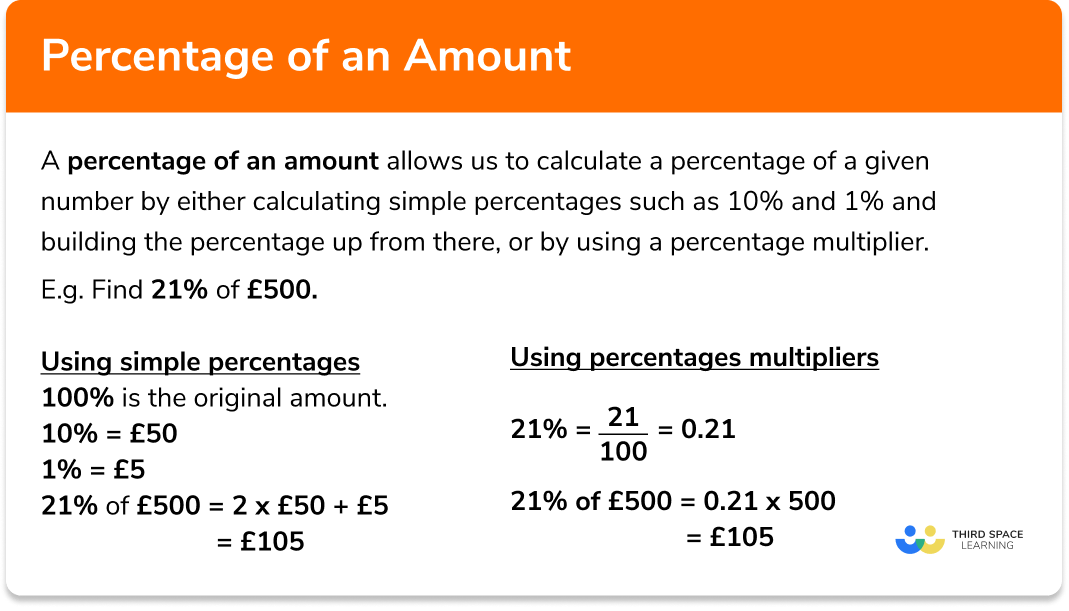
One of the most common applications of percentages in personal finance is in creating and maintaining a budget. By calculating what percentage each expense category consumes of your total income, you gain invaluable insight into your spending habits.
-
The 50/30/20 Rule: This popular budgeting guideline suggests allocating 50% of your after-tax income to needs (housing, utilities, food), 30% to wants (entertainment, dining out), and 20% to savings and debt repayment. Calculating the percentages of your actual spending helps you adhere to or adjust such rules.
-
Identifying Overspending: If you find that “dining out” accounts for 25% of your income, but your target was 10%, percentages immediately highlight an area for potential cuts.
Analyzing Discounts and Sales
Whether it’s a “25% off” sale at your favorite store or a “15% cash back” offer on a credit card, percentages define the value proposition.
-
Calculating the Discounted Price: To find the final price after a discount, multiply the original price by the percentage discount (as a decimal), then subtract that amount from the original price. Or, simply multiply the original price by
(1 - discount percentage as a decimal).-
Example: An item costs $150 with a 20% discount.
-
Discount amount:
$150 * 0.20 = $30 -
Final price:
$150 - $30 = $120 -
Alternatively:
$150 * (1 - 0.20) = $150 * 0.80 = $120
-
-
-
Comparing Deals: Percentages allow you to quickly compare different sales. A “buy one, get one 50% off” might translate to a 25% discount on two items, which you can then compare to a straight 30% off on a single item.
Understanding Interest Rates
Interest is the cost of borrowing money or the return on lending/saving money, and it is almost universally expressed as a percentage, typically an Annual Percentage Rate (APR) or Annual Percentage Yield (APY).
-
Loan Interest: If you have a credit card with an 18% APR and an outstanding balance of $1,000, the annual interest charged would be
$1,000 * 0.18 = $180. Monthly interest would be$180 / 12 = $15. -
Savings Account Yields: A savings account offering a 0.5% APY means that for every $1,000 deposited, you’d earn
$1,000 * 0.005 = $5in interest over a year (compounding might make this slightly higher).
Percentages in Investing and Business Finance
Beyond personal budgets, percentages are the backbone of financial analysis in investing and business. They allow for consistent comparisons across different scales and timeframes, making complex financial data more manageable.
Calculating Investment Returns (ROI)
Return on Investment (ROI) is a key metric for evaluating the profitability of an investment. It’s always expressed as a percentage.
-
Formula:
ROI = ((Current Value - Original Cost) / Original Cost) * 100-
Example: You invested $5,000 in stocks, and they are now worth $6,500.
-
ROI = (($6,500 - $5,000) / $5,000) * 100 -
ROI = ($1,500 / $5,000) * 100 -
ROI = 0.30 * 100 = 30%
-
-
-
Portfolio Allocation: Investors use percentages to define their asset allocation (e.g., 60% stocks, 30% bonds, 10% cash). Tracking these percentages ensures the portfolio remains aligned with their risk tolerance and financial goals.
Assessing Profit Margins and Revenue Share
In business, percentages are fundamental for evaluating performance and distributing earnings.
-
Gross Profit Margin: This tells you the percentage of revenue that remains after deducting the cost of goods sold.
-
Gross Profit Margin = ((Revenue - Cost of Goods Sold) / Revenue) * 100 -
Example: A product sells for $100, and its manufacturing cost is $40.
-
Gross Profit Margin = (($100 - $40) / $100) * 100 -
Gross Profit Margin = ($60 / $100) * 100 = 60%
-
-
-
Net Profit Margin: This is the percentage of revenue left after all expenses, including taxes and interest, have been deducted. It’s a key indicator of a company’s overall profitability.
-
Revenue Share: In partnerships or royalty agreements, revenue is often split based on predefined percentages (e.g., 70/30 split).
Debt-to-Income Ratios and Financial Health Metrics
Lenders frequently use percentages to assess an individual’s or business’s financial health and ability to repay debt.
-
Debt-to-Income (DTI) Ratio: This ratio compares your total monthly debt payments to your gross monthly income.
-
DTI = (Total Monthly Debt Payments / Gross Monthly Income) * 100 -
Example: If your total monthly debt payments (mortgage, car loan, credit cards) are $1,500 and your gross monthly income is $4,500.
DTI = ($1,500 / $4,500) * 100 = 33.33%
-
Lenders often look for DTI ratios below a certain threshold (e.g., 36% to 43%) when approving loans.
-
Common Pitfalls and How to Avoid Them
While calculating percentages seems straightforward, misinterpretations or common errors can lead to significant financial mistakes.
Confusing Basis Points with Percentages
In financial markets, especially for interest rates and yield changes, “basis points” (bps) are often used. One basis point is equal to 0.01% (one-hundredth of a percentage point). So, 100 basis points equal 1%.
-
Pitfall: Assuming a change of “50 basis points” is a 50% change.
-
Correction: A 50 basis point increase means an increase of 0.50% (e.g., from 2.00% to 2.50%). Always convert basis points to percentages for clear understanding.
Misinterpreting Percentage Increases/Decreases
A common error occurs when calculating subsequent percentage changes. A 10% increase followed by a 10% decrease does not return you to the original amount.
-
Example: An investment of $100 increases by 10%.
$100 * (1 + 0.10) = $110
-
Now, it decreases by 10%.
$110 * (1 - 0.10) = $99
-
Correction: Always apply percentage changes to the current value, not the original, unless specified. For overall change, compare the final value to the initial value.

The Importance of the ‘Total’ or ‘Whole’
The accuracy of your percentage calculation hinges entirely on correctly identifying the “whole” or the base amount.
-
Pitfall: Using an incorrect or inconsistent total for comparison. For example, comparing a bonus to your gross income versus your net income, depending on the context.
-
Correction: Clearly define the “total” you are using for your calculation. When comparing financial figures over time, ensure the base for your percentage calculation is consistent or appropriately adjusted for inflation or other factors.
Mastering the calculation of percentages of a total is a fundamental building block for financial literacy. It equips you with the tools to dissect financial data, evaluate opportunities, and make astute decisions that contribute to your overall financial well-being and success.
aViewFromTheCave is a participant in the Amazon Services LLC Associates Program, an affiliate advertising program designed to provide a means for sites to earn advertising fees by advertising and linking to Amazon.com. Amazon, the Amazon logo, AmazonSupply, and the AmazonSupply logo are trademarks of Amazon.com, Inc. or its affiliates. As an Amazon Associate we earn affiliate commissions from qualifying purchases.