
In the intricate world of personal finance, investing, and business operations, percentages are ubiquitous. From calculating discounts on your latest online purchase to deciphering investment returns, understanding these fundamental mathematical tools is crucial for making informed decisions. However, what happens when you encounter a “percent of a percent”? This seemingly simple extension can often trip up even the most financially savvy individuals, leading to miscalculations that can impact your budget, investments, or business profitability.
This article aims to demystify the concept of calculating a percent of a percent, providing a clear, step-by-step guide tailored specifically for financial contexts. We will explore why this calculation is essential, delve into its practical applications across personal and business finance, and equip you with the knowledge to confidently tackle these multi-layered percentage problems. Mastering this skill isn’t just about crunching numbers; it’s about gaining a deeper understanding of financial mechanics, empowering you to navigate complex scenarios with precision and foresight.

Understanding the Core Concept: Why Percent of a Percent Matters
At its heart, calculating a percent of a percent is about applying successive proportional changes to a value. It’s not simply adding or subtracting percentages, but rather taking a portion of a previously determined portion. This distinction is critical and forms the bedrock of many financial computations.
The Building Blocks: What is a Percentage?
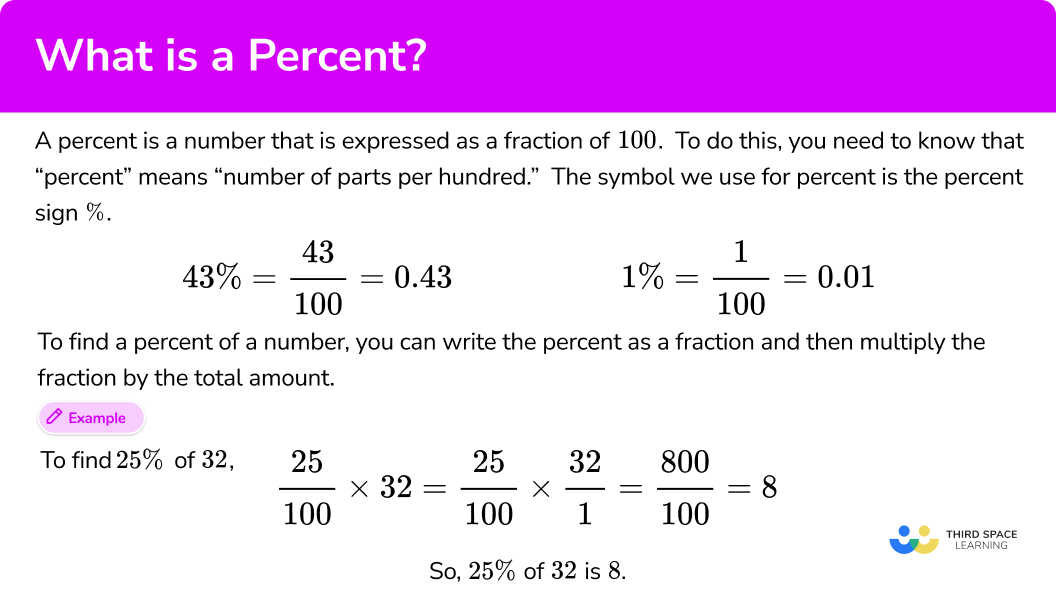
Before we dive into the complexities, let’s briefly revisit the basics. A percentage, derived from the Latin “per centum,” meaning “per hundred,” is a way of expressing a number as a fraction of 100. It’s a powerful tool for comparing parts to a whole, expressing ratios, and indicating change. For instance, 25% represents 25 out of 100, or a quarter of a whole.
The key to working with percentages in calculations is converting them into their decimal equivalents. To do this, simply divide the percentage by 100. So, 25% becomes 0.25, 5% becomes 0.05, and 120% becomes 1.20. This conversion is non-negotiable for accurate calculations involving multiplication or division, especially when dealing with multiple percentage layers.
Unpacking the “Percent of a Percent” Idea
When we talk about a “percent of a percent,” we’re referring to a situation where one percentage is applied to a value that is itself a percentage of an original amount, or where a percentage change is applied to a value that has already undergone a percentage change. For example, imagine you earn a 10% commission on a sale, and then a 5% service fee is deducted from that commission. You’re not paying 5% of the original sale; you’re paying 5% of the 10% commission you earned.
This concept extends far beyond simple deductions. It underpins compound interest, cumulative discounts, real investment returns after inflation, and multi-tiered bonus structures. Recognizing when you’re dealing with a percent of a percent is the first step towards accurate financial analysis.
Common Pitfalls: Why Intuition Can Be Misleading
One of the most common mistakes people make is to treat successive percentages as additive. For example, if a store offers a “20% off sale, plus an extra 10% off at checkout,” many might intuitively think this equates to a total of 30% off. This is incorrect. The “extra 10% off” is applied not to the original price, but to the already discounted price.
Consider a $100 item:
-
20% off: $100 – ($100 * 0.20) = $100 – $20 = $80
-
Then 10% off the new price: $80 – ($80 * 0.10) = $80 – $8 = $72
The total discount is $100 – $72 = $28, which is 28% of the original price, not 30%. This subtle difference can significantly impact your perceived savings or actual costs, highlighting why precise calculation is indispensable. Similarly, a 10% increase followed by a 10% decrease does not return you to the original amount, a concept critical for understanding investment volatility.
Practical Applications in Personal Finance and Investing
Understanding how to calculate a percent of a percent is not just an academic exercise; it’s a vital skill for managing your personal finances effectively and making savvy investment decisions.
Navigating Sales and Discounts: Layered Savings
As illustrated with the earlier example, cumulative discounts are a prime instance of “percent of a percent.” Whether it’s a “store-wide sale” combined with a “loyalty member discount” or a “promotional offer” stacked on an “already reduced item,” knowing how to correctly calculate the final price ensures you understand your true savings. This prevents buyer’s remorse and allows for accurate budgeting. Always remember to apply discounts sequentially, each time to the current reduced price.
Investment Returns and Compounding Growth
Compound interest, often hailed as the “eighth wonder of the world,” is perhaps the most powerful example of a percent of a percent in finance. It refers to earning returns not only on your initial principal but also on the accumulated interest from previous periods. If your investment grows by 7% annually, in the second year, you earn 7% on your original investment plus the 7% interest earned in the first year. This exponential growth showcases the long-term impact of successive percentage applications.
Similarly, analyzing portfolio performance over multiple periods involves this concept. A 5% gain in one quarter followed by a 2% loss in the next doesn’t result in a net 3% gain (5% – 2%). Instead, it’s (1 + 0.05) * (1 – 0.02) = 1.05 * 0.98 = 1.029, representing a 2.9% overall gain.
Understanding Taxes on Commissions and Royalties
For freelancers, agents, artists, or anyone earning income through commissions or royalties, understanding multi-layered percentages is essential for accurate income projection and tax planning.
Consider a scenario where you earn a 15% commission on a $1,000 sale, and your state then levies a 20% income tax on that commission.
-
First, calculate your commission: $1,000 * 0.15 = $150.
-
Next, calculate the tax on your commission: $150 * 0.20 = $30.
Your net commission, after tax, would be $150 – $30 = $120. This illustrates how the tax percentage is applied to the result of the first percentage calculation, not the original sale amount.
Inflation and Real Returns
Inflation, the rate at which the general level of prices for goods and services is rising, erodes the purchasing power of money. When considering investment returns, it’s crucial to account for inflation to determine your “real return” – the actual increase in your purchasing power. If your investment yields a nominal return of 7%, but inflation is 3%, your real return is not simply 7% – 3% = 4%. Instead, it’s a more complex “percent of a percent” calculation:
Real Return = [(1 + Nominal Rate) / (1 + Inflation Rate)] – 1
Using our example: [(1 + 0.07) / (1 + 0.03)] – 1 = (1.07 / 1.03) – 1 = 1.0388 – 1 = 0.0388 or 3.88%. This shows your true gain in purchasing power is slightly less than the simple subtraction would suggest.
Business Finance Scenarios: Beyond Personal Wallets
The concept of a percent of a percent is equally, if not more, critical in business finance, influencing everything from pricing strategies to employee compensation and performance analysis.
Multi-Tiered Commissions and Incentives
Many sales organizations employ multi-tiered commission structures or bonus programs that inherently involve percent of a percent calculations. For instance, a sales manager might earn a 10% override commission on the total sales generated by their team, and then, as part of an incentive program, 20% of their override commission is allocated to a junior sales associate for mentorship.
If the team generates $50,000 in sales:
-
Manager’s override: $50,000 * 0.10 = $5,000.
-
Junior associate’s share: $5,000 * 0.20 = $1,000.
This complex structure ensures that incentives cascade down the organization, but requires careful calculation to ensure correct payouts.
Pricing Strategies: Markups, Discounts, and Sales Tax
Businesses frequently layer percentages when setting prices, applying discounts, and collecting taxes. Consider a product that costs the company $50 to produce.
-
It’s marked up by 40% to determine the retail price: $50 * (1 + 0.40) = $50 * 1.40 = $70.
-
During a promotion, a 15% discount is applied to the retail price: $70 * (1 – 0.15) = $70 * 0.85 = $59.50.
-
Finally, a 7% sales tax is added to the discounted price: $59.50 * (1 + 0.07) = $59.50 * 1.07 = $63.66.
Each step is a percentage applied to the result of the previous step, showcasing the cumulative effect on the final consumer price. Miscalculating any of these layers could lead to incorrect pricing, reduced profit margins, or non-compliance with tax regulations.
Analyzing Financial Performance: Growth Rates of Ratios
When analyzing a company’s financial health, analysts often look at growth rates of various financial ratios, which are themselves percentages. For example, if a company’s profit margin (which is a percentage) was 10% last year and grew by 15% this year, the new profit margin is not 10% + 15% = 25%. Instead, it’s a “percent of a percent”:
New Profit Margin = 10% * (1 + 0.15) = 10% * 1.15 = 11.5%.
This distinction is crucial for understanding the true trajectory of key performance indicators and making accurate projections about a business’s future.
The Step-by-Step Calculation Guide
Calculating a percent of a percent boils down to a few fundamental steps. Once you understand the process, you can apply it to virtually any financial scenario.
Converting Percentages to Decimals
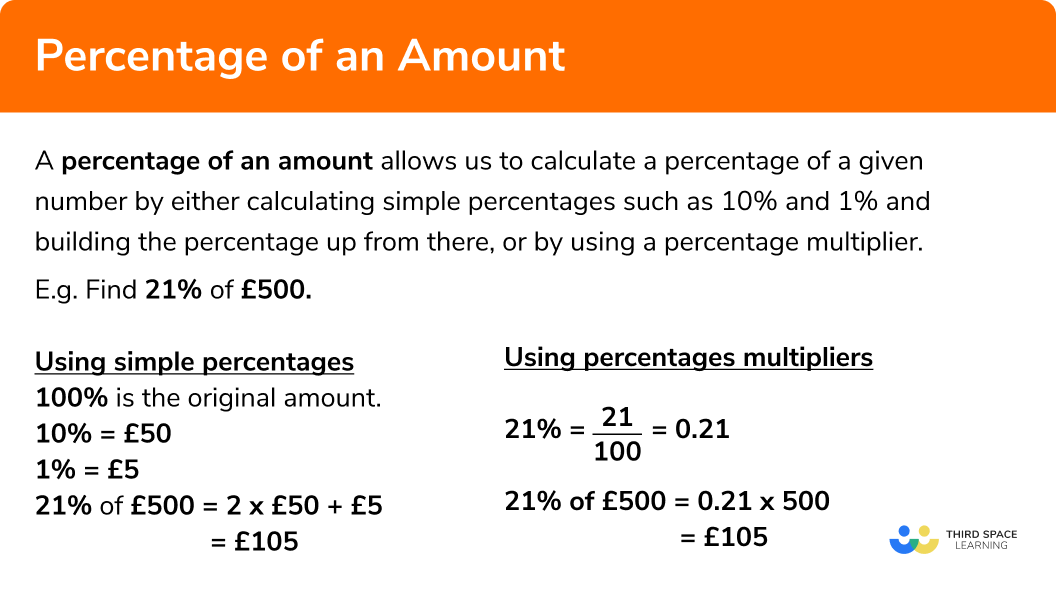
This is the golden rule for all percentage calculations. Before you can multiply or perform any arithmetic operation with percentages, you must convert them to their decimal equivalents. To do this, simply divide the percentage by 100 or move the decimal point two places to the left.
-
25% becomes 0.25
-
5% becomes 0.05
-
120% becomes 1.20
The Multiplication Method
The core principle for calculating a percent of a percent, or applying successive percentage changes, is multiplication.
Scenario 1: Finding X percent of Y percent (e.g., 10% of 20%)
-
Convert both percentages to decimals. (e.g., 10% = 0.10, 20% = 0.20)
-
Multiply the decimals. (e.g., 0.10 * 0.20 = 0.02)
-
Convert the result back to a percentage by multiplying by 100. (e.g., 0.02 * 100 = 2%)
So, 10% of 20% is 2%. This specific type of calculation often represents a smaller segment of a larger proportion.
Scenario 2: Applying Successive Percentage Changes (e.g., discount then another discount, or growth then decline)
This is more common in finance. Instead of just finding a fraction of a fraction, you are modifying an original amount by a series of percentages.
-
For each percentage change, convert it into a “multiplier”:
-
For a discount or decrease: (1 – decimal_rate). (e.g., 20% off = 1 – 0.20 = 0.80)
-
For an increase or markup: (1 + decimal_rate). (e.g., 10% increase = 1 + 0.10 = 1.10)
-
-
Multiply the original amount by each multiplier sequentially.
-
Example: $100 item, 20% off, then an additional 10% off.
-
$100 * (1 – 0.20) * (1 – 0.10)
-
$100 * 0.80 * 0.90 = $72
-
-
This method elegantly handles any number of successive percentage changes, whether they are increases, decreases, or a mix of both, always applying the next percentage to the result of the previous calculation.
Illustrative Examples Across Money Domains
Let’s revisit a couple of our earlier examples with the step-by-step method:
Example 1: Sales Tax on Discounted Price
Original Price: $120
Discount: 25%
Sales Tax: 8%
-
Calculate discounted price: $120 * (1 – 0.25) = $120 * 0.75 = $90.
-
Calculate final price with tax: $90 * (1 + 0.08) = $90 * 1.08 = $97.20.
Example 2: Investment Growth with Inflation (Real Return)
Nominal Return: 10% (0.10)
Inflation Rate: 4% (0.04)
-
Apply the nominal growth: (1 + 0.10) = 1.10
-
Adjust for inflation: (1.10) / (1 + 0.04) = 1.10 / 1.04 = 1.05769
-
Subtract 1 to find the real return as a decimal: 1.05769 – 1 = 0.05769
-
Convert to percentage: 0.05769 * 100 = 5.77%.
Always be clear about the base to which each percentage is applied. When it’s a “percent of a percent,” the base changes with each step.
Leveraging Financial Tools and Technology
While understanding the manual calculation is paramount, modern financial tools can significantly streamline the process, especially for complex or repetitive calculations.
Spreadsheet Formulas for Efficiency
Spreadsheets like Microsoft Excel or Google Sheets are indispensable. They allow you to set up formulas that automatically perform these calculations, reducing errors and saving time.
-
For successive discounts:
=A1*(1-B1)*(1-C1)where A1 is the original amount, B1 is the first discount rate (as a decimal), and C1 is the second discount rate. -
For compound growth:
=A1*(1+B1)^C1where A1 is principal, B1 is the annual rate (as a decimal), and C1 is the number of periods.
Learning basic spreadsheet functions is a powerful step towards advanced financial literacy.
Online Calculators and Apps
Numerous online calculators and mobile apps are designed for specific financial calculations like compound interest, real return, and discount stacking. These can provide quick answers for everyday scenarios. While convenient, it’s crucial to understand the underlying math to interpret the results correctly and verify that the calculator is using the correct methodology for your specific problem. They are great for speed but less so for building foundational understanding.
When to Seek Professional Advice (and why understanding it helps)
For highly complex financial planning, large investments, intricate tax situations, or business financial modeling, a qualified financial advisor, accountant, or business consultant is invaluable. However, even when seeking professional advice, having a solid grasp of concepts like “percent of a percent” empowers you. You can ask more pertinent questions, better understand the explanations provided, and critically evaluate the strategies and calculations presented to you. It transforms you from a passive recipient of information into an active participant in your financial journey.
In conclusion, the ability to accurately calculate a percent of a percent is far more than a mathematical trick; it’s a fundamental financial literacy skill. From maximizing personal savings to optimizing business profits and understanding the true impact of investments, this concept underpins countless financial decisions. By converting percentages to decimals, applying changes sequentially through multiplication, and leveraging available tools, you can navigate the complex world of finance with greater confidence and precision, ensuring your financial calculations are always spot on. Embrace the power of these seemingly small numbers, and unlock a clearer, more insightful view of your financial landscape.
aViewFromTheCave is a participant in the Amazon Services LLC Associates Program, an affiliate advertising program designed to provide a means for sites to earn advertising fees by advertising and linking to Amazon.com. Amazon, the Amazon logo, AmazonSupply, and the AmazonSupply logo are trademarks of Amazon.com, Inc. or its affiliates. As an Amazon Associate we earn affiliate commissions from qualifying purchases.