
Navigating the complexities of purchasing a car can be daunting, but understanding how to calculate your car loan doesn’t have to be. For most people, a car represents one of the largest purchases they will make, second only to a home. Securing the right financing is crucial for a healthy financial future. A car loan isn’t just a monthly payment; it’s a commitment that impacts your budget, savings, and overall financial well-being for several years. By understanding the core components and calculation methods, you can approach car dealerships and lenders with confidence, negotiate effectively, and ultimately make a financially sound decision. This comprehensive guide will break down the process, empowering you to accurately calculate your car loan and secure a deal that truly fits your financial situation.

Understanding the Core Components of a Car Loan
Before you can accurately calculate a car loan, it’s essential to grasp the individual elements that contribute to your total cost and monthly payments. Each component plays a significant role, and a small change in any one can have a substantial impact on the overall loan.
The Principal Amount: The Cost of Your Vehicle
The principal amount is the initial sum of money you borrow to purchase the car. This isn’t just the sticker price of the vehicle. It’s the negotiated sale price minus any down payment, trade-in value, and potentially including any additional fees or extended warranties that you decide to roll into the loan. A lower principal means less money borrowed, which directly translates to lower interest paid over the life of the loan. It’s always wise to negotiate the car’s price first, before discussing financing, to ensure you’re borrowing the least amount necessary.
Interest Rate (APR): The Cost of Borrowing
The interest rate, often expressed as Annual Percentage Rate (APR), is the cost you pay to the lender for borrowing their money. It’s a percentage of the principal that you pay back over the loan term. A lower APR means less money you’ll pay in interest, significantly reducing the total cost of the loan. Your credit score is a major determinant of the interest rate you’ll be offered. Lenders typically reserve the lowest rates for borrowers with excellent credit histories, while those with lower scores may face higher rates due to perceived higher risk. It’s imperative to shop around for the best APR, as even a seemingly small difference can save you hundreds, if not thousands, of dollars over the loan’s duration.
Loan Term: The Duration of Your Commitment
The loan term refers to the length of time, typically in months (e.g., 36, 48, 60, 72, or even 84 months), you have to repay the loan. A longer loan term generally results in lower monthly payments, which can be attractive to buyers looking to keep their immediate outflow low. However, a longer term also means you’ll pay more in total interest over the life of the loan. Conversely, a shorter term will lead to higher monthly payments but will save you money on interest and allow you to pay off the debt faster. Balancing affordability with total cost is key when choosing a loan term.
Down Payment and Trade-in Value: Reducing Your Borrowed Amount
A down payment is a lump sum of money you pay upfront towards the purchase of the car. Similarly, if you trade in an old vehicle, its agreed-upon value is deducted from the car’s price. Both a down payment and trade-in value effectively reduce the principal amount you need to borrow. The larger your down payment or trade-in value, the less you borrow, which translates to lower monthly payments and less interest paid over the loan term. Financial experts often recommend aiming for at least a 20% down payment to avoid being “upside down” (owing more than the car is worth) and to secure better loan terms.
Methods for Calculating Your Car Loan Payments
Once you understand the basic components, you can move on to the actual calculation. There are several ways to determine your potential monthly payments and overall loan cost, ranging from manual calculations to leveraging sophisticated digital tools.
Manual Calculation: The Amortization Formula
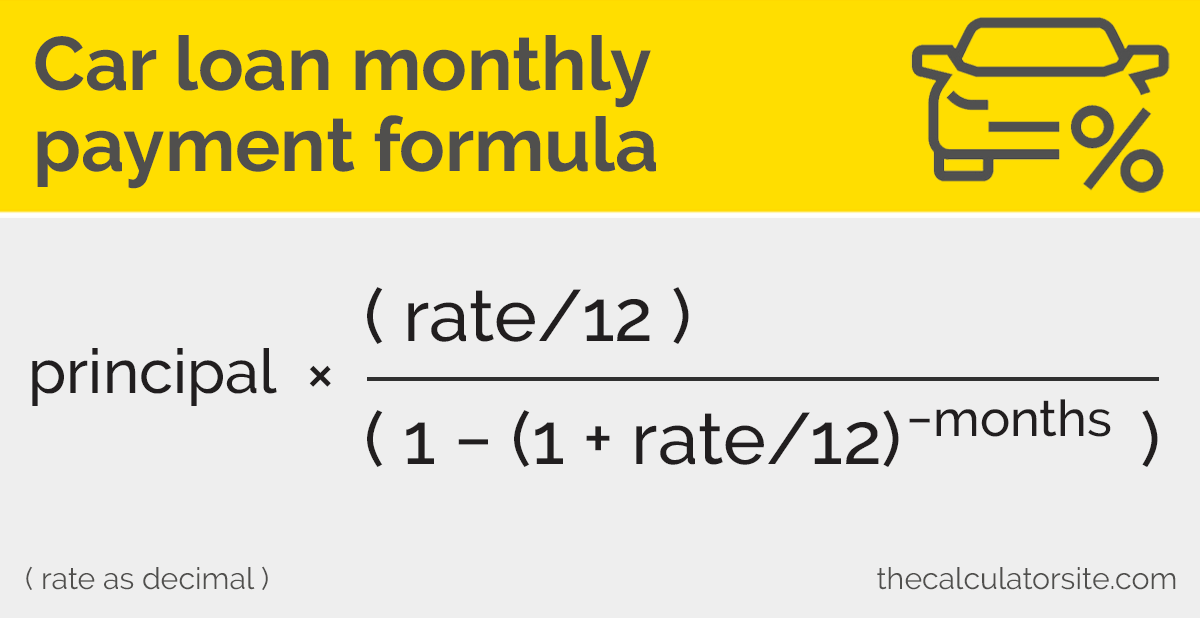
For those who prefer a hands-on approach, the standard amortization formula can calculate your monthly car loan payment. While it may seem intimidating, understanding its components provides a deep insight into how your payments are structured.
The formula is:
$M = P [ i(1 + i)^n ] / [ (1 + i)^n – 1]$
Where:
- M = Monthly payment
- P = Principal loan amount
- i = Monthly interest rate (annual rate divided by 12)
- n = Number of months (loan term in years multiplied by 12)
Example:
Let’s say you borrow $25,000 (P) at an annual interest rate of 5% (i = 0.05/12 = 0.004167) for a 60-month term (n = 60).
$M = 25000 [ 0.004167(1 + 0.004167)^60 ] / [ (1 + 0.004167)^60 – 1]$
$M = 25000 [ 0.004167(1.283359) ] / [ 1.283359 – 1]$
$M = 25000 [ 0.0053478 ] / [ 0.283359]$
$M = 133.695 / 0.283359$
$M approx 471.84$
So, your estimated monthly payment would be approximately $471.84. This manual method, while precise, can be time-consuming and prone to calculation errors without careful attention.
Using Online Car Loan Calculators
The most straightforward and widely used method today is leveraging online car loan calculators. Virtually every bank, credit union, and automotive website offers a free car loan calculator. These tools simplify the process by allowing you to input the principal amount, interest rate, and loan term. With a click of a button, they instantly provide your estimated monthly payment. Many advanced calculators also allow you to factor in down payments, trade-in values, sales tax, and even additional fees, giving you a more comprehensive picture. These calculators are excellent for quickly comparing different scenarios, such as the impact of a higher down payment or a longer loan term on your monthly payment.
Working with a Spreadsheet (e.g., Excel or Google Sheets)
For those who want a blend of control and automation, a spreadsheet program like Microsoft Excel or Google Sheets is an invaluable tool. You can set up your own loan amortization schedule. Spreadsheets allow you to see exactly how much principal and interest you pay each month over the entire loan term.
Using the PMT function in Excel/Google Sheets:
=PMT(rate, nper, pv)
Where:
rate= monthly interest rate (annual rate / 12)nper= total number of payments (loan term in months)pv= present value, or the principal loan amount
For the example above: =PMT(0.05/12, 60, -25000) would return $471.84.
The negative sign for the principal amount (pv) is because it’s a cash outflow from the lender’s perspective.
Spreadsheets offer the flexibility to modify variables and see immediate changes, making them powerful for detailed financial planning.
Factors Influencing Your Car Loan Calculation
Beyond the core components, several external factors can significantly impact the terms and overall cost of your car loan. Being aware of these can help you better prepare and negotiate.
Your Credit Score: The Ultimate Game Changer
Your credit score is arguably the most critical factor influencing your car loan’s interest rate. Lenders use it to assess your creditworthiness and the likelihood of you repaying the loan. A higher credit score (generally 700+) signals to lenders that you are a low-risk borrower, qualifying you for the most competitive interest rates. Conversely, a lower credit score might result in a higher interest rate, increasing your monthly payments and the total cost of the loan. It’s highly advisable to check your credit score and report several months before applying for a car loan, allowing time to correct any errors or improve your score if necessary.
Lender Type: Where You Get Your Loan Matters
Different types of lenders offer varying rates and terms.
- Banks: Traditional banks often offer competitive rates to their existing customers, and generally have a wide range of loan products.
- Credit Unions: Credit unions are member-owned and non-profit, often resulting in lower interest rates and more flexible terms than traditional banks. It’s often worth exploring credit union options.
- Dealership Financing: While convenient, dealership financing can sometimes be more expensive. They often work with multiple lenders and may mark up the interest rate for profit. However, they can also offer promotional rates (e.g., 0% APR) on specific new models, which can be an excellent deal if you qualify.
- Online Lenders: A growing number of online lenders specialize in auto loans, often providing quick approvals and competitive rates, especially for those with good credit.
Shopping around and getting pre-approved from multiple lenders can give you leverage when negotiating at the dealership.
Additional Fees and Charges
The price of the car isn’t the only thing you finance. Be mindful of various fees and charges that can be rolled into your loan, increasing the principal. These can include:
- Documentation Fees (Doc Fees): Administrative fees charged by dealerships for processing paperwork. These vary by state and dealership.
- Registration and License Plate Fees: Mandatory government fees for vehicle registration.
- Sales Tax: A percentage of the car’s purchase price, varying by state and locality.
- Extended Warranties and Service Contracts: Optional add-ons that can significantly increase your loan amount. While they offer peace of mind, carefully evaluate if they are necessary and if their cost justifies the benefits.
- Gap Insurance: Covers the difference between what you owe on your loan and what your insurance pays out if your car is totaled or stolen. Often recommended, especially if you have a small down payment.
Always ask for an itemized list of all fees and understand what you are paying for before signing.
Beyond the Monthly Payment: Total Cost and Affordability
Focusing solely on the monthly payment can be a common pitfall. A lower monthly payment might seem attractive, but it often disguises a much higher total cost over the loan’s lifetime. A holistic view is essential for true financial health.
Calculating Total Interest Paid
This is where the true cost of borrowing becomes apparent. While your monthly payment is easy to see, the total interest paid over the life of the loan can be substantial.
Using our earlier example:
Monthly payment = $471.84
Loan term = 60 months
Total payments = $471.84 * 60 = $28,310.40
Principal loan amount = $25,000
Total interest paid = Total payments – Principal loan amount = $28,310.40 – $25,000 = $3,310.40
This calculation highlights why a lower interest rate and a shorter loan term are financially advantageous, even if they result in slightly higher monthly payments. Over the years, that extra interest can add up to thousands of dollars that could have been used for savings or other investments.
Understanding the Total Cost of Ownership
A car loan calculation is only one piece of the puzzle. The true cost of owning a vehicle extends far beyond your monthly payment. Consider these ongoing expenses:
- Fuel: Based on your driving habits and the car’s fuel efficiency.
- Insurance: Premiums vary significantly based on your age, driving record, vehicle type, and location.
- Maintenance and Repairs: Regular oil changes, tire rotations, and unexpected repairs are inevitable. Newer cars might have lower immediate maintenance costs but could incur higher repair costs post-warranty.
- Registration and Licensing: Annual fees to keep your vehicle legal.
- Depreciation: The decrease in your car’s value over time. While not an out-of-pocket expense, it’s a significant financial consideration, especially if you plan to sell or trade in the car in the future.
Factoring these costs into your budget ensures you can comfortably afford not just the car, but also its upkeep.
Budgeting for Car-Related Expenses
Before committing to a car loan, create a comprehensive budget that includes all potential car-related expenses. Use the 20/4/10 rule as a guideline: aim for at least a 20% down payment, finance the car for no more than four years, and ensure your total monthly car expenses (payment, insurance, fuel, maintenance) do not exceed 10% of your gross monthly income. Adhering to such guidelines helps prevent financial strain and ensures your car purchase is sustainable within your overall financial plan.
Leveraging Tools and Professional Advice
Making an informed decision about a car loan doesn’t mean you have to go it alone. There are numerous resources and professionals available to guide you through the process.
Comparing Loan Offers: Empowering Your Negotiations
Never accept the first loan offer you receive. Apply for pre-approvals from at least 2-3 different lenders (banks, credit unions, online lenders) before visiting a dealership. This strategy provides you with concrete loan offers, including interest rates and terms, that you can use as leverage. When a dealership knows you’re pre-approved elsewhere, they are more likely to offer you their best rates to win your business. Comparing offers side-by-side allows you to identify the most favorable terms and avoid paying unnecessary interest.
The Role of Pre-Approval
Getting pre-approved for a car loan means a lender has conditionally agreed to lend you a specific amount of money at a certain interest rate before you even choose a car. This is immensely powerful for several reasons:
- Budget Clarity: You know exactly how much car you can afford.
- Buyer Confidence: You can shop like a cash buyer, focusing on the car price rather than getting caught up in monthly payment discussions.
- Negotiation Power: It allows you to separate the car price negotiation from the financing negotiation, giving you an advantage.
Pre-approval often involves a “hard inquiry” on your credit report, which can slightly ding your score. However, multiple hard inquiries for the same type of loan within a short period (typically 14-45 days, depending on the credit bureau) are usually counted as a single inquiry, so shopping around for pre-approvals within a concentrated timeframe is advisable.
When to Seek Financial Advice
If the car loan process still feels overwhelming, or if you have a particularly complex financial situation (e.g., poor credit, high debt-to-income ratio), consider seeking advice from a financial advisor or credit counselor. These professionals can provide personalized guidance, help you understand your financial standing, and strategize the best approach for securing an affordable car loan. They can also assist in budgeting and ensuring your car purchase aligns with your broader financial goals, helping you avoid common pitfalls and make a truly wise investment.

Conclusion
Calculating a car loan is more than just plugging numbers into a formula; it’s a critical step in responsible personal finance. By understanding the core components—principal, interest rate, loan term, down payment, and trade-in value—and by leveraging various calculation methods, you gain clarity and control. Recognizing the influence of your credit score, lender type, and hidden fees further refines your understanding. Most importantly, looking beyond the tempting low monthly payment to the total cost of interest and overall ownership expenses will empower you to make a decision that supports your long-term financial health. Armed with this knowledge and the right tools, you can confidently navigate the car buying process, secure favorable financing, and drive away with peace of mind. Your car loan is a significant financial commitment; approach it with the diligence it deserves, and your wallet will thank you.
aViewFromTheCave is a participant in the Amazon Services LLC Associates Program, an affiliate advertising program designed to provide a means for sites to earn advertising fees by advertising and linking to Amazon.com. Amazon, the Amazon logo, AmazonSupply, and the AmazonSupply logo are trademarks of Amazon.com, Inc. or its affiliates. As an Amazon Associate we earn affiliate commissions from qualifying purchases.