
For many retirees, Social Security benefits represent a cornerstone of their financial stability, providing a reliable income stream after years of contributing to the system. However, a common misconception is that these benefits are entirely tax-free. In reality, a significant portion of Social Security recipients discover that their benefits are, in fact, subject to federal income tax, and sometimes state taxes too. Understanding how to calculate taxes on Social Security benefits is crucial for effective financial planning in retirement, helping individuals avoid unpleasant surprises and make informed decisions about their income streams.
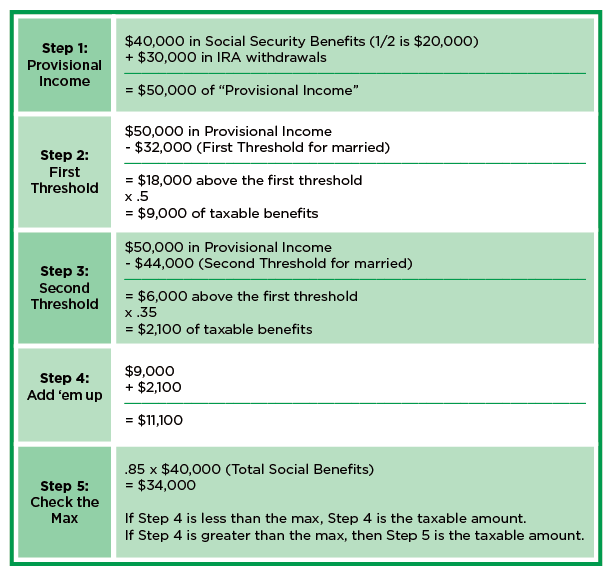
The taxation of Social Security benefits began with the 1983 amendments to the Social Security Act. These changes introduced a system where benefits could be taxed based on a recipient’s total income from all sources. This guide will demystify the process, breaking down the calculation method, identifying key thresholds, and offering strategies to help manage your tax liability. By the end, you’ll have a clearer picture of how the Internal Revenue Service (IRS) views your Social Security income and how to prepare for it.
Understanding Provisional Income: The Key to Taxation
The most critical concept in determining whether your Social Security benefits are taxable, and to what extent, is “Provisional Income.” This isn’t a term you’ll typically find on your standard tax forms, but it’s the IRS’s internal calculation that dictates your tax bracket for Social Security benefits. Ignoring this calculation means you’re guessing at your tax liability, which is never a good financial strategy.
What is Provisional Income?
Provisional income is a unique metric used exclusively for Social Security taxation. It’s calculated by adding your:
- Adjusted Gross Income (AGI): This is your gross income minus certain deductions, as reported on your tax return. It includes wages, self-employment income, pensions, capital gains, traditional IRA withdrawals, interest income (both taxable and non-taxable), and other taxable income.
- Tax-Exempt Interest: This includes interest from municipal bonds, which is typically not taxed at the federal level, but is included in provisional income for Social Security purposes.
- One-Half of Your Social Security Benefits: This is half of the total Social Security benefits you received during the tax year.
The formula looks like this:
Provisional Income = AGI + Tax-Exempt Interest + (0.50 * Your Total Social Security Benefits)
Why Provisional Income Matters
Provisional income acts as a gatekeeper, determining which of three taxation tiers your Social Security benefits fall into. It’s not about how much Social Security you receive alone, but rather how that benefit amount combines with all your other income sources. The higher your provisional income, the higher the percentage of your Social Security benefits that could be subject to federal income tax.
Your filing status—single, married filing jointly, married filing separately, or head of household—also plays a crucial role as it dictates the specific provisional income thresholds that apply to you. This means that a couple with the same combined income as a single individual might face different tax implications for their Social Security benefits.
Components of Provisional Income
To calculate your provisional income accurately, you need to gather information on all your income sources. Let’s break down the components:
- Adjusted Gross Income (AGI): This is reported on Line 11 of your IRS Form 1040. It encompasses nearly all forms of taxable income, such as:
- Wages, salaries, and tips
- Taxable interest and ordinary dividends
- Capital gains and losses
- Business income or loss
- Rental real estate, royalties, partnerships, S corporations, and trusts
- Farm income or loss
- Unemployment compensation
- Pensions, annuities, and IRA distributions (excluding qualified Roth distributions)
- Tax-Exempt Interest: While this income source, typically from municipal bonds, is exempt from federal income tax, it is not exempt from the provisional income calculation. You can find this amount on Form 1099-INT.
- Total Social Security Benefits: This is the gross amount of Social Security benefits you received in the calendar year, reported on Box 5 of Form SSA-1099, “Social Security Benefit Statement.” Remember, only 50% of this amount is added to your provisional income for calculation purposes.
Understanding these components and meticulously gathering the relevant documentation (W-2s, 1099s, etc.) is the foundational step in accurately determining your taxable Social Security benefits.
The Tiers of Social Security Taxation
Once you’ve calculated your provisional income, you can determine how much of your Social Security benefits will be subject to federal income tax. The IRS uses a tiered system based on your filing status and provisional income thresholds. It’s important to note that up to 85% of your benefits can be taxed; your benefits are never 100% taxable.
The 50% Taxation Threshold
This is the first tier where Social Security benefits become taxable. If your provisional income falls within a specific range, up to 50% of your benefits may be subject to federal income tax.
- For Single, Head of Household, or Qualifying Widow(er) filers: If your provisional income is between $25,000 and $34,000, you may have to pay tax on up to 50% of your Social Security benefits.
- For Married Filing Jointly filers: If your provisional income is between $32,000 and $44,000, you may have to pay tax on up to 50% of your Social Security benefits.
- For Married Filing Separately filers: If you lived with your spouse at any time during the year, your benefits are generally 85% taxable if your provisional income is above $0. If you lived apart for the entire year, the thresholds for single filers apply.
The actual taxable amount in this tier is the lesser of:
- 50% of your Social Security benefits, OR
- 50% of the amount your provisional income exceeds the lower threshold for your filing status.
The 85% Taxation Threshold
This is the second, higher tier of taxation. If your provisional income exceeds the upper threshold of the 50% tier, then a larger portion—up to 85%—of your Social Security benefits could be taxable.
- For Single, Head of Household, or Qualifying Widow(er) filers: If your provisional income is above $34,000, you may have to pay tax on up to 85% of your Social Security benefits.
- For Married Filing Jointly filers: If your provisional income is above $44,000, you may have to pay tax on up to 85% of your Social Security benefits.
The calculation for the 85% tier is more complex, typically involving a combination of 85% of your benefits and 85% of the amount your provisional income exceeds the higher threshold, but capped at 85% of your total benefits. The IRS provides specific worksheets in Publication 915, “Social Security and Equivalent Railroad Retirement Benefits,” to help navigate this calculation precisely.
When Benefits Are Not Taxed
Good news for some: if your provisional income is below the lowest threshold for your filing status, then none of your Social Security benefits will be subject to federal income tax.
- For Single, Head of Household, or Qualifying Widow(er) filers: If your provisional income is less than $25,000, your benefits are not taxable.
- For Married Filing Jointly filers: If your provisional income is less than $32,000, your benefits are not taxable.
This “tax-free zone” provides an important planning consideration, especially for individuals whose retirement income consists primarily of Social Security and other low-income sources.

Step-by-Step Calculation of Taxable Benefits
Calculating your taxable Social Security benefits might seem daunting at first, but by following a systematic approach, you can accurately determine your tax liability. The IRS provides a specific worksheet in Publication 915 to guide you, which is highly recommended for precision.
Gathering Your Financial Information
Before you begin any calculations, ensure you have all necessary documents at hand:
- Form SSA-1099: This statement from the Social Security Administration shows the total benefits you received for the year. Look for the amount in Box 5.
- Form 1099-INT: This form details any interest income, including tax-exempt interest (municipal bonds), which is crucial for provisional income calculation.
- Other Income Statements: W-2s (wages), 1099-R (pensions, annuities, IRA distributions), Schedule K-1 (partnership income), and any other forms reporting your taxable income that contributes to your AGI.
- Your Previous Year’s Tax Return (Form 1040): This can help you identify sources of income and deductions that typically affect your AGI.
Calculating Your Provisional Income
With your documents ready, follow these steps:
- Start with your AGI: From your other income sources (wages, pensions, etc.), calculate your Adjusted Gross Income.
- Add Tax-Exempt Interest: Take any interest from tax-exempt bonds and add it to your AGI.
- Add Half of Your Social Security Benefits: Take the amount from Box 5 of your SSA-1099 and divide it by two. Add this result to the sum from steps 1 and 2.
- Example: AGI = $20,000, Tax-Exempt Interest = $1,000, Total SS Benefits = $18,000.
- Provisional Income = $20,000 + $1,000 + ($18,000 / 2) = $20,000 + $1,000 + $9,000 = $30,000.
- Example: AGI = $20,000, Tax-Exempt Interest = $1,000, Total SS Benefits = $18,000.
Determining Your Taxable Percentage
Now compare your provisional income to the thresholds based on your filing status:
- Using our example above ($30,000 provisional income) for a single filer:
- Since $30,000 is between $25,000 and $34,000, up to 50% of the Social Security benefits could be taxable.
- To calculate the taxable amount:
- Amount over $25,000 threshold = $30,000 – $25,000 = $5,000
- 50% of this amount = $5,000 * 0.50 = $2,500
- 50% of total SS benefits = $18,000 * 0.50 = $9,000
- The taxable amount is the lesser of these two: $2,500.
- Therefore, $2,500 of the $18,000 Social Security benefits would be subject to federal income tax.
The actual calculation involves precise steps outlined in IRS Publication 915’s worksheet, which handles the nuances of both the 50% and 85% thresholds.
Completing IRS Form 1040 (or 1040-SR)
Once you’ve calculated the taxable portion of your Social Security benefits, you’ll report it on your federal income tax return.
- On Form 1040 or Form 1040-SR (for seniors), you’ll typically find lines designated for Social Security benefits.
- Line 6a will show your total (gross) Social Security benefits from Box 5 of Form SSA-1099.
- Line 6b will show the taxable amount of your Social Security benefits that you calculated. This amount then contributes to your total taxable income.
Accurate completion of these lines is vital to ensure compliance with IRS regulations and to avoid underpaying or overpaying your taxes.
Strategies to Potentially Reduce Social Security Taxes
While you can’t control the federal tax rules, there are strategies you can employ to potentially reduce the amount of your Social Security benefits subject to taxation. These strategies primarily focus on managing your provisional income.
Managing Other Income Sources
The key to reducing your Social Security tax liability often lies in controlling your AGI.
- Roth IRA Distributions: Unlike distributions from traditional IRAs or 401(k)s, qualified distributions from Roth IRAs are tax-free and do not count towards your AGI or provisional income. This makes Roth accounts an excellent tool for managing future provisional income.
- Qualified Charitable Distributions (QCDs): If you are 70½ or older and have a traditional IRA, you can make direct transfers (QCDs) up to $105,000 per year (for 2024) to eligible charities. These distributions are excluded from your gross income, thereby reducing your AGI and, consequently, your provisional income.
- Timing Capital Gains: If you have investments that could generate capital gains, consider timing their sale strategically. Spreading out sales over several years or offsetting gains with losses can help keep your AGI lower in any given tax year.
Considering Tax-Exempt Investments
As established, interest from municipal bonds is tax-exempt at the federal level, but it is included in the provisional income calculation. For some retirees, investing in certain types of municipal bonds that are also exempt from state and local taxes (triple-tax-exempt) might offer a better overall after-tax return, even if the interest counts towards provisional income, compared to fully taxable investments that push you into a higher Social Security tax bracket. It’s a careful balancing act that requires evaluating your overall tax situation.
Working with a Financial Advisor
Navigating the complexities of retirement income and taxation is often best done with professional guidance. A qualified financial advisor can:
- Help you project your provisional income in future years.
- Develop a personalized strategy for drawing down retirement assets (e.g., sequencing withdrawals from taxable, tax-deferred, and tax-free accounts).
- Advise on strategies like Roth conversions, which, while taxable in the year of conversion, can lead to tax-free income in retirement and keep provisional income lower.
- Ensure you are taking advantage of all available deductions and credits.
Their expertise can be invaluable in creating a comprehensive financial plan that minimizes your tax burden while maximizing your retirement income.
State-Level Taxation and Other Considerations
Beyond federal taxation, it’s crucial to remember that some states also tax Social Security benefits. This adds another layer of complexity to the overall tax picture for retirees.
States That Tax Social Security Benefits
While the majority of states do not tax Social Security benefits, a handful do. These states often have their own thresholds and rules, which may or may not align with federal guidelines. As of recent updates, states like Colorado, Connecticut, Kansas, Minnesota, Missouri, Montana, Nebraska, New Mexico, Rhode Island, Utah, Vermont, and West Virginia tax Social Security benefits to some extent, though many offer exemptions or deductions based on income level or age. It is imperative to check your specific state’s tax laws or consult a local tax professional if you reside in one of these states.
Impact of Filing Status
Your filing status is not merely a formality; it has direct and significant implications for your Social Security tax liability.
- Married Filing Separately: If you are married but file separately, and you lived with your spouse at any point during the year, up to 85% of your Social Security benefits will automatically be taxable if your provisional income is above zero. This is one of the least favorable filing statuses for Social Security taxation and should generally be avoided unless there’s a compelling reason (e.g., separating from an abusive spouse, or very specific income situations).
- Joint vs. Single Thresholds: As demonstrated, the provisional income thresholds for married filing jointly are higher than those for single filers, reflecting the assumption of higher combined household income. Understanding these differences is crucial for couples planning their retirement income.
Withholding Taxes from Benefits
Many retirees prefer not to deal with estimated tax payments. If you anticipate that your Social Security benefits will be taxable, you have the option to have federal income tax withheld directly from your benefit payments. You can request this by filing IRS Form W-4V, Voluntary Withholding Request, with the Social Security Administration. You can choose to have 7%, 10%, 12%, or 22% of your total benefit withheld. This can help you avoid a large tax bill at the end of the year and potential underpayment penalties.
In conclusion, calculating taxes on Social Security is a fundamental aspect of retirement financial planning that demands attention. It’s not a simple yes-or-no question but rather a nuanced calculation driven by your total provisional income. By understanding the thresholds, meticulously calculating your provisional income, and exploring available strategies to manage your other income sources, you can effectively plan for and potentially minimize your tax liability. Always consider consulting with a qualified financial advisor or tax professional to ensure your plan is tailored to your unique circumstances and compliant with current tax laws.
aViewFromTheCave is a participant in the Amazon Services LLC Associates Program, an affiliate advertising program designed to provide a means for sites to earn advertising fees by advertising and linking to Amazon.com. Amazon, the Amazon logo, AmazonSupply, and the AmazonSupply logo are trademarks of Amazon.com, Inc. or its affiliates. As an Amazon Associate we earn affiliate commissions from qualifying purchases.