
Understanding how to calculate Social Security wages is a fundamental aspect of personal finance, tax compliance, and business operations in the United States. Whether you are an employee checking your pay stub, an employer processing payroll, or a self-employed individual managing your taxes, correctly identifying and calculating Social Security taxable wages is crucial. This calculation directly impacts an individual’s future Social Security benefits and ensures that businesses and self-employed individuals meet their federal tax obligations. This guide will demystify the process, breaking down the components of Social Security wages and offering clear methodologies for different employment scenarios.

The Foundation: What is Social Security and Why Does it Matter?
Before delving into the specifics of calculation, it’s essential to grasp the purpose and scope of the Social Security system. This understanding underscores the critical importance of accurate wage reporting.
Understanding the Social Security System
Social Security, officially known as Old-Age, Survivors, and Disability Insurance (OASDI), is a comprehensive federal program designed to provide a safety net for millions of Americans. It offers financial benefits to retirees, disabled workers, and survivors of deceased workers. The system is primarily funded through payroll taxes, also known as FICA (Federal Insurance Contributions Act) taxes, which are deducted from wages. A portion of FICA taxes goes towards Social Security, and another portion funds Medicare. For our discussion, we will focus exclusively on the Social Security component.
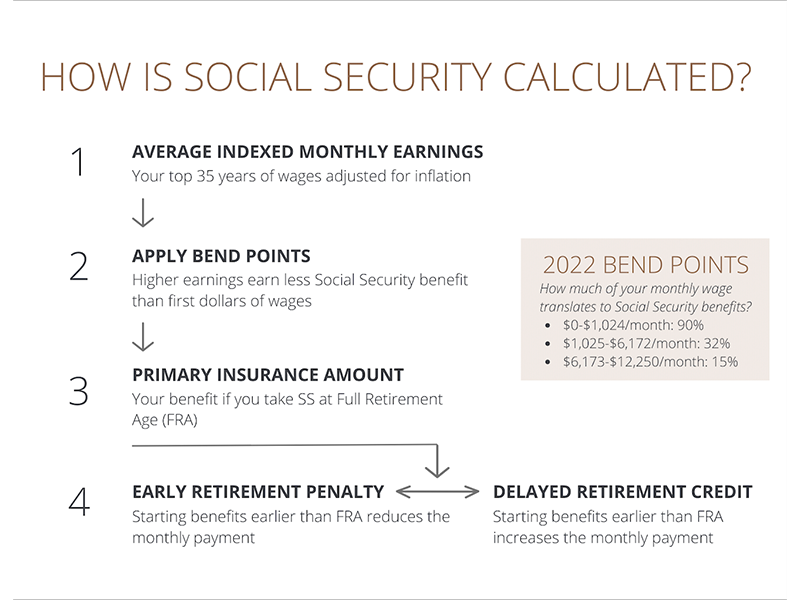
The core principle is simple: current workers pay taxes into the system, and those funds are used to pay benefits to current retirees and other beneficiaries. In return, today’s workers earn credits that will qualify them for benefits in the future. The amount of your future Social Security benefits is directly tied to your lifetime earnings, specifically your “average indexed monthly earnings” (AIME), which is calculated using your highest 35 years of Social Security taxable wages. This direct link makes accurate wage calculation not just a matter of compliance but a cornerstone of long-term financial planning.
The Importance of Accurate Wage Calculation
For individuals, correctly calculated Social Security wages ensure that your contributions are accurately recorded, forming the basis for your future retirement, disability, or survivor benefits. Errors can lead to discrepancies that impact your eligibility or benefit amount. For example, under-reporting earnings could result in lower benefits, while over-reporting (though less common for employees) might not offer proportional returns due to benefit calculation formulas.
For employers, accurate calculation and remittance of Social Security taxes are non-negotiable legal obligations. Miscalculations can lead to penalties, interest, and audits from the IRS. Moreover, maintaining proper payroll records and ensuring timely deposits are vital for a business’s financial health and compliance reputation.
Self-employed individuals bear the full responsibility for both the employer and employee portions of Social Security taxes, known as the Self-Employment Tax. Correctly calculating these wages and taxes is paramount to avoiding underpayment penalties and ensuring their own future benefits are properly credited.
Defining “Social Security Wages” and Key Limits
The term “wages” for Social Security purposes isn’t always identical to an employee’s gross pay or a business’s total income. There are specific inclusions, exclusions, and crucially, an annual wage base limit that significantly affects the calculation.
What Counts as Taxable Wages?
Generally, most forms of compensation for services performed as an employee are considered Social Security taxable wages. This includes:
- Base Salary and Hourly Wages: Your regular earnings are the primary component.
- Commissions: Payments based on sales or performance.
- Bonuses: Additional payments given for good performance or as an incentive.
- Tips: Cash tips of $20 or more in a calendar month must be reported to the employer, and they are subject to Social Security taxes. Non-cash tips are generally not taxable for Social Security.
- Severance Pay: Payments made to an employee upon termination of employment.
- Sick Pay: Payments made by an employer or a third party (like an insurance company) for periods when an employee is out due to illness.
- Vacation Pay: Payments for accrued but unused vacation time.
- Certain Fringe Benefits: While some fringe benefits are tax-exempt, many are considered taxable wages, such as personal use of a company car, non-accountable expense reimbursements, or certain group term life insurance premiums over a specific limit.
It’s important to note that certain types of income are generally not subject to Social Security taxes, even if they are taxable for income tax purposes. Examples include specific types of deferred compensation, certain employer contributions to retirement plans (like 401(k)s, before they are withdrawn), and some health insurance premiums.
The Social Security Wage Base Limit
One of the most critical elements in calculating Social Security wages is the Social Security wage base limit. This is an annual cap on the amount of earnings subject to Social Security tax. Any wages earned above this limit in a given year are not subject to Social Security tax.
The wage base limit is adjusted annually by the Social Security Administration (SSA) to account for changes in average wages in the economy. For instance, if the wage base for a given year is $168,600, an individual earning $200,000 will only pay Social Security tax on the first $168,600 of their income. Wages earned between $168,601 and $200,000 are not taxed for Social Security purposes, though they would still be subject to Medicare tax (which generally has no wage base limit for employees/employers).
The purpose of the wage base limit is to maintain progressivity within the Social Security system and ensure its long-term solvency by focusing contributions on a substantial portion of, but not all, higher incomes. Understanding this limit is essential for both individuals and businesses to avoid overpaying or underpaying Social Security taxes.
Current Social Security Tax Rates
The Social Security tax rate is split between employees and employers:
- Employee Portion: 6.2%
- Employer Portion: 6.2%
- Total: 12.4% (up to the annual wage base limit)
Self-employed individuals are responsible for paying both portions, totaling 12.4% of their net earnings from self-employment, up to the annual wage base limit. This combined rate is part of their Self-Employment Tax.
Step-by-Step Calculation for Different Employment Scenarios
The method for calculating Social Security wages and the corresponding tax varies depending on whether you are a W-2 employee, an employer, or a self-employed individual.
For W-2 Employees
For most W-2 employees, the calculation is handled automatically by your employer’s payroll system. However, it’s crucial to understand how it works and to verify your deductions.
How to Verify Your Deductions:
Check your pay stub. You will typically see a deduction labeled “FICA-SS,” “OASDI,” or “Social Security Tax.” This amount should be 6.2% of your gross wages for that pay period, up to the point you hit the annual wage base limit.
Example:
- Gross Bi-weekly Pay: $3,000
- Social Security Taxable Wages: $3,000 (assuming you haven’t hit the annual wage base yet)
- Employee Social Security Tax Withheld: $3,000 * 0.062 = $186
Impact of Exceeding the Wage Base:
If your annual income exceeds the Social Security wage base limit, your employer will stop withholding Social Security taxes once your year-to-date earnings reach that limit.
- Example: If the wage base is $168,600 and you earn $10,000 per month, your employer will withhold Social Security tax for the first 16.86 months of the year. After your cumulative earnings hit $168,600, your Social Security tax deductions will cease for the remainder of the year.
Multiple Employers:
If you work for multiple employers in the same year, each employer is legally obligated to withhold Social Security taxes up to the wage base limit, regardless of earnings from other employers. This can lead to a situation where you overpay Social Security tax if your combined income from all employers exceeds the wage base. Don’t worry, you can claim a credit for any excess Social Security tax withheld when you file your annual federal income tax return (Form 1040).
For Employers
Employers have a dual responsibility: to withhold the employee’s share of Social Security tax and to pay their own matching share.
Calculation Process:
For each employee, the employer calculates:
- Employee Portion: 6.2% of the employee’s gross wages, up to the annual wage base limit. This amount is withheld from the employee’s paycheck.
- Employer Portion: A matching 6.2% of the employee’s gross wages, up to the annual wage base limit. This is an additional payroll expense for the business.
Example:
- Employee Gross Monthly Pay: $5,000
- Social Security Taxable Wages: $5,000 (assuming wage base not met)
- Employee Social Security Tax Withheld: $5,000 * 0.062 = $310
- Employer Social Security Tax Contribution: $5,000 * 0.062 = $310
- Total Social Security Tax Paid to IRS for this employee: $310 (employee) + $310 (employer) = $620
Reporting Requirements:
Employers must regularly deposit these withheld and matched taxes with the IRS. They also report these wages and taxes:
- Form 941, Employer’s Quarterly Federal Tax Return: Filed quarterly to report wages, tips, and other compensation, and to declare the total Social Security and Medicare taxes.
- Form W-2, Wage and Tax Statement: Provided to employees annually, detailing their total wages, Social Security wages (Box 3), and Social Security tax withheld (Box 4).
Accurate payroll processing systems are crucial for employers to manage these complex calculations, withholdings, and reporting requirements.
For Self-Employed Individuals
Self-employed individuals, such as independent contractors, freelancers, and small business owners (sole proprietors or partners), are responsible for paying the Self-Employment Tax (SE Tax). This tax covers both Social Security and Medicare taxes for which an employee and employer would normally be responsible.
Components of SE Tax:
- Social Security Portion: 12.4% of net earnings from self-employment, up to the annual wage base limit.
- Medicare Portion: 2.9% of net earnings from self-employment, with no wage base limit.
Calculation Process for Social Security Wages:
- Determine Net Earnings from Self-Employment: This is your gross income from your business or freelance work minus allowable business expenses.
- Calculate the Social Security Taxable Amount: For SE tax purposes, you multiply your net earnings from self-employment by 92.35% (this adjustment accounts for the fact that you can deduct one-half of your SE tax from your gross income when calculating your adjusted gross income).
- Apply the Social Security Tax Rate: Multiply the result from step 2 by 12.4% for the Social Security portion. Remember to apply the annual wage base limit here.
Example:
- Net Earnings from Self-Employment: $70,000
- Social Security Taxable Amount: $70,000 * 0.9235 = $64,645
- Social Security Tax (SE Tax portion): $64,645 * 0.124 = $8,016.00 (assuming this is below the wage base)
Reporting and Payment:
Self-employed individuals report their Social Security wages and taxes on Schedule SE (Form 1040), Self-Employment Tax. They also generally need to make estimated tax payments throughout the year (Form 1040-ES) to cover their income tax and self-employment tax obligations, as no taxes are automatically withheld.
Tools, Resources, and Avoiding Common Errors
Accurate Social Security wage calculation is critical, but it can be complex. Utilizing the right tools and being aware of common pitfalls can save significant time and prevent costly mistakes.
Essential Tools for Accurate Calculation
- Payroll Software: For businesses, comprehensive payroll software (e.g., QuickBooks Payroll, ADP, Gusto, Paychex) automates the calculation, withholding, reporting, and payment of Social Security taxes, along with other payroll taxes. This significantly reduces the risk of human error.
- SSA.gov Resources: The official website of the Social Security Administration (SSA.gov) is an invaluable resource. It provides current wage base limits, tax rates, detailed guides, and even online calculators to estimate future benefits.
- IRS.gov Publications: The IRS website offers numerous publications (e.g., Publication 15, Circular E, Employer’s Tax Guide; Publication 334, Tax Guide for Small Business; Publication 505, Tax Withholding and Estimated Tax) that provide detailed guidance on payroll and self-employment taxes.
- Professional Accountants and Payroll Services: For complex situations, or simply to ensure accuracy and compliance, consulting with a certified public accountant (CPA) or utilizing a professional payroll service provider is highly recommended. These experts stay updated on the latest tax laws and regulations.
Common Pitfalls to Avoid
- Misclassifying Workers: Incorrectly classifying an employee as an independent contractor is a common and serious error. If the IRS determines a worker was an employee, the business can face significant back taxes, penalties, and interest for unpaid Social Security (and Medicare) taxes.
- Incorrectly Applying the Wage Base Limit: Especially problematic for individuals with multiple jobs or employers who fail to coordinate, this can lead to either overpayment (for employees) or underpayment (if the limit is ignored by a business/self-employed).
- Failing to Report All Taxable Wages: Overlooking certain types of compensation, such as taxable fringe benefits or reported tips, can lead to an underpayment of Social Security taxes and potential penalties.
- Not Staying Updated on Annual Changes: The Social Security wage base limit and other tax parameters change annually. Failing to account for these updates can lead to incorrect calculations.
- Poor Record Keeping: Maintaining meticulous records of wages, deductions, payments, and forms is essential for audits, reconciling discrepancies, and ensuring accurate reporting.
Best Practices for Compliance and Financial Health
- Regular Review: Employees should regularly review their pay stubs to ensure Social Security deductions are accurate. Employers should routinely audit their payroll reports.
- Meticulous Record Keeping: Keep all payroll records, tax forms, and payment confirmations organized and accessible for at least three to seven years, or longer, as recommended by tax professionals.
- Proactive Planning for Self-Employed: Self-employed individuals should set aside a portion of their income for estimated tax payments and monitor their earnings throughout the year to adjust payments as needed.
- Seek Professional Advice: When in doubt, consult a tax professional. Their expertise can prevent costly errors and provide peace of mind.
Calculating Social Security wages is more than just a numbers game; it’s about contributing to a vital social safety net and securing your own financial future. By understanding the definitions, limits, and methods discussed, individuals and businesses can navigate their responsibilities with confidence and accuracy. Staying informed and utilizing available resources are your best defense against errors and the foundation for solid financial planning.
aViewFromTheCave is a participant in the Amazon Services LLC Associates Program, an affiliate advertising program designed to provide a means for sites to earn advertising fees by advertising and linking to Amazon.com. Amazon, the Amazon logo, AmazonSupply, and the AmazonSupply logo are trademarks of Amazon.com, Inc. or its affiliates. As an Amazon Associate we earn affiliate commissions from qualifying purchases.