
Social Security is the cornerstone of the American retirement system, providing a safety net for millions of retirees, disabled individuals, and survivors. Funding this expansive program requires a steady stream of revenue, which is primarily collected through payroll taxes under the Federal Insurance Contributions Act (FICA) and the Self-Employment Contributions Act (SECA). For employees, business owners, and the self-employed, understanding how to calculate these taxes is not merely a matter of compliance—it is an essential component of financial planning and cash flow management.
Calculating Social Security taxes might seem straightforward at first glance, but several variables, including annual wage bases, varying tax rates for different employment statuses, and specific income exemptions, add layers of complexity. This guide provides a detailed breakdown of the mechanics of Social Security tax calculation, ensuring you can accurately project your liabilities and understand where your hard-earned money is going.
Understanding the Components of Social Security Tax
To calculate Social Security taxes accurately, one must first understand the legislative framework that governs them. Social Security tax is technically referred to as the Old-Age, Survivors, and Disability Insurance (OASDI) tax. It is separate from Medicare tax, although both are often bundled together under the umbrella of “payroll taxes.”
The FICA Framework for Employees and Employers
For the vast majority of workers in the United States, Social Security taxes are managed through FICA. This system is designed as a shared responsibility between the employer and the employee. As of the current tax year, the Social Security tax rate is 6.2% for the employee and 6.2% for the employer, resulting in a total contribution of 12.4% of the employee’s gross taxable wages.
It is important to note that this percentage only applies to “covered” earnings. Most forms of compensation, including hourly wages, salaries, bonuses, and commissions, are subject to this tax. However, certain fringe benefits and employer-sponsored health insurance premiums are typically excluded from the taxable base.
The SECA Framework for the Self-Employed
If you are a freelancer, independent contractor, or small business owner operating as a sole proprietor or partner, you are responsible for the entirety of the Social Security tax. Under SECA, the self-employed individual acts as both the employer and the employee. Consequently, the tax rate is the full 12.4%.
While this double burden can seem daunting, the tax code provides a level of relief. Self-employed individuals are permitted to deduct the “employer” half of their self-employment tax (6.2%) when calculating their adjusted gross income for federal income tax purposes. Furthermore, the tax is not calculated on gross revenue, but rather on net earnings from self-employment, which involves a specific adjustment factor.
What Income is Subject to Social Security Tax?
Not all money received is considered “taxable wages.” To calculate the tax, you must identify your gross pay before any “pre-tax” deductions are applied—with some exceptions. For Social Security purposes, contributions to a traditional 401(k) or 403(b) do not reduce your Social Security tax liability, even though they reduce your federal income tax liability. Conversely, premiums paid for qualifying “Section 125” cafeteria plans (like health insurance or flexible spending accounts) are generally excluded from the Social Security tax base.
The Critical Role of the Wage Base Limit
The most significant variable in calculating Social Security tax is the Social Security Wage Base. Unlike Medicare tax, which applies to all earned income regardless of the amount, Social Security tax is capped.
How the Cap Affects High Earners
The Social Security Administration (SSA) sets a maximum limit on the amount of earnings subject to the OASDI tax each year. For 2024, this limit is $168,600. For 2025, the limit increases to $176,100 to account for inflation and changes in national average wages.
Once an individual’s year-to-date earnings surpass this threshold, neither the employee nor the employer is required to pay any additional Social Security tax for the remainder of that calendar year. This “cap” is why many high-earning professionals notice a sudden increase in their take-home pay during the latter months of the year; their payroll system automatically stops withholding the 6.2% once the limit is reached.
Annual Adjustments and Inflation
The wage base limit is not static. It is adjusted annually based on the National Average Wage Index. For financial planning purposes, it is vital to check the new limit every October when the SSA announces changes for the upcoming year. Failing to account for a rising wage base can lead to underestimating tax liabilities for the following fiscal year, particularly for business owners budgeting for payroll expenses.
Step-by-Step Guide to Calculating Your Tax Liability
To visualize how these rules apply in practice, let’s walk through the calculation process for different employment scenarios.
Calculating for W-2 Employees
For a standard employee, the calculation is a simple two-step process:
-
Determine Gross Taxable Wages: Start with the total gross pay for the period. Subtract any non-taxable benefits like health insurance premiums (pre-tax).
-
Apply the Percentage: Multiply the remaining amount by 0.062 (6.2%).

Example: If an employee earns $5,000 in a monthly pay period and pays $200 for health insurance, the taxable base is $4,800.
$4,800 x 0.062 = $297.60.
The employer would also pay $297.60, totaling $595.20 sent to the IRS for that employee.
If that same employee has already earned $168,600 earlier in the year (based on 2024 limits), any subsequent paychecks for that year would result in $0 of Social Security tax.
Calculating for the Self-Employed
Calculating for self-employment income involves an extra step to account for the fact that you are paying both halves.
-
Calculate Net Earnings: Determine your net profit from your business (Gross Income minus Business Expenses).
-
Adjust for the 92.35% Factor: The IRS allows you to calculate tax on only 92.35% of your net earnings. This is intended to mirror the fact that employees don’t pay tax on the employer’s half of the contribution.
-
Apply the 12.4% Rate: Multiply the adjusted net earnings by 0.124.
Example: If a freelancer has a net profit of $100,000.
$100,000 x 0.9235 = $92,350.
$92,350 x 0.124 = $11,451.40 in Social Security tax.
Handling Multiple Jobs
A common complication arises when an individual works two or more jobs. Each employer is required to withhold Social Security tax until the employee reaches the wage base limit at that specific company. They have no way of knowing what you earned elsewhere.
If your combined income from Job A and Job B exceeds the annual wage base, you will likely overpay your Social Security taxes. Fortunately, this excess is not lost. When you file your annual federal income tax return (Form 1040), you can claim the overpayment as a credit against your total income tax liability, effectively receiving a refund for the excess Social Security tax withheld.
Business Owner Responsibilities and Payroll Management
For business owners, the calculation of Social Security tax is only the first step. The administrative burden of collecting, reporting, and depositing these funds is a critical legal obligation.
Depositing and Reporting Requirements
Employers must aggregate the 6.2% withheld from employees and the 6.2% employer match. These funds must be deposited with the IRS on either a monthly or semi-weekly schedule, depending on the total tax liability of the business.
Accuracy in these calculations is paramount. Employers report these totals quarterly using Form 941 (Employer’s Quarterly Federal Tax Return). Discrepancies between the amounts withheld and the amounts reported can trigger audits, penalties, and interest charges. Because the IRS views payroll taxes as “trust fund” taxes—meaning you are holding the employees’ money in trust for the government—the penalties for mismanagement are among the most severe in the tax code.
Common Pitfalls in Payroll Calculations
One of the most frequent errors in Social Security tax calculation involves misclassifying workers. If a business treats a worker as an independent contractor (1099) when the IRS deems them an employee (W-2), the business may be held liable for both the employee and employer shares of unpaid Social Security taxes, often going back several years.
Another pitfall is the failure to monitor the wage base cap for high-salaried employees. While most modern payroll software handles this automatically, manual systems or fragmented payroll processes across multiple subsidiaries can lead to over-withholding, which requires complex corrective filings to resolve.
Strategic Financial Planning and Social Security
Calculating Social Security taxes is not just about meeting current obligations; it is a vital part of long-term wealth management.
Impact on Net Income and Budgeting
For high-income earners and business owners, the Social Security tax “disappearance” in the latter half of the year can create a significant boost in cash flow. Smart financial planning involves earmarking those “extra” funds for other goals, such as maximizing retirement contributions or building a cash reserve, rather than letting the increase disappear into lifestyle creep.
For the self-employed, accurately estimating these taxes is essential for making correct quarterly estimated tax payments. Underestimating self-employment tax is one of the primary reasons small business owners find themselves with a large, unexpected tax bill—and associated underpayment penalties—come April.
Projecting Future Benefits
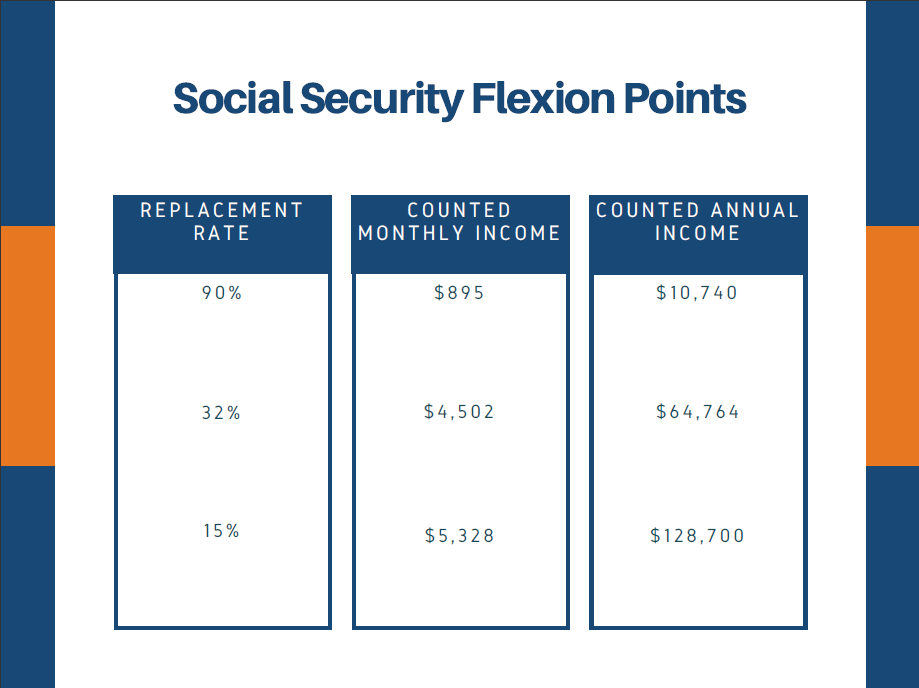
The taxes you calculate today directly determine the benefits you receive tomorrow. The SSA uses your “highest 35 years” of indexed earnings to calculate your Primary Insurance Amount (PIA). By understanding how much of your income is being taxed and ensuring it is correctly reported, you protect your future retirement security.
Regularly reviewing your Social Security Statement (available via the “my Social Security” account on the SSA website) allows you to verify that the amounts you calculated and paid match the government’s records. If a year of earnings is missing or incorrectly reported, your future monthly benefit could be permanently reduced.
In conclusion, while the core math of Social Security taxation involves a few fixed percentages, the nuances of the wage base limit, employment status, and taxable income definitions require diligent attention. Whether you are an employee looking at a pay stub or a business owner managing a workforce, mastering these calculations ensures financial accuracy, legal compliance, and a clearer path toward a secure retirement.
aViewFromTheCave is a participant in the Amazon Services LLC Associates Program, an affiliate advertising program designed to provide a means for sites to earn advertising fees by advertising and linking to Amazon.com. Amazon, the Amazon logo, AmazonSupply, and the AmazonSupply logo are trademarks of Amazon.com, Inc. or its affiliates. As an Amazon Associate we earn affiliate commissions from qualifying purchases.