
For millions of Americans, Social Security benefits represent a vital component of their retirement income, providing a financial safety net after years of contribution. However, a common misconception is that these benefits are entirely tax-free. In reality, a significant portion of Social Security income can be subject to federal income tax, a fact that often catches retirees by surprise and can significantly impact their financial planning. Understanding “how to calculate Social Security taxable income” is not just an administrative task; it’s a critical aspect of effective personal finance management in retirement.
This guide delves into the specifics of Social Security taxation, breaking down the calculation process, outlining the income thresholds, and offering insights into strategies that can help manage your tax liability. By gaining a clear understanding of these rules, you can better prepare for your financial future, avoid unexpected tax bills, and make more informed decisions about your income sources during retirement.
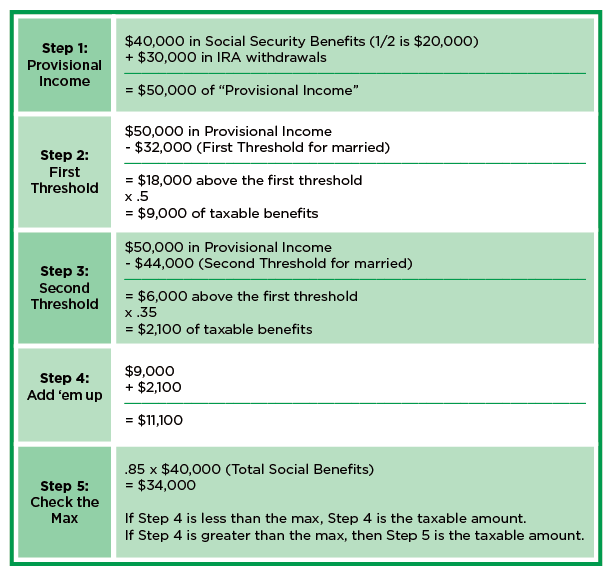
Understanding Social Security Benefits and Taxation Basics
The concept of taxing Social Security benefits might seem counterintuitive to those who’ve paid into the system their entire working lives. However, the taxation of these benefits has been a part of the U.S. tax code for decades, initially introduced in 1983 and expanded in 1993, primarily to help ensure the long-term solvency of the Social Security program. It’s a mechanism designed to have higher-income retirees contribute more to the system.
The Rationale Behind Social Security Taxation
Prior to 1983, Social Security benefits were not subject to federal income tax. However, facing looming financial challenges, Congress passed amendments that year to begin taxing a portion of benefits for individuals whose “provisional income” exceeded certain thresholds. This move aimed to generate additional revenue for the Social Security trust funds. The rules were further expanded in 1993, lowering the income thresholds and increasing the maximum taxable percentage for certain high-income beneficiaries. The underlying principle is a progressive taxation approach, where those with higher overall incomes are expected to pay taxes on a larger share of their Social Security benefits.
Who is Affected? The Role of Provisional Income
The taxability of your Social Security benefits hinges entirely on your “provisional income.” This is not a term you’ll typically find on your tax return, but it’s a specific calculation used by the IRS to determine your benefits’ tax status. Provisional income is essentially a modified version of your Adjusted Gross Income (AGI) and is the cornerstone of determining whether any of your Social Security benefits will be subject to federal tax.
This taxation primarily impacts retirees receiving Social Security retirement benefits, but it also applies to individuals receiving Social Security disability benefits, as well as survivor benefits. The key differentiator for everyone is their provisional income level.
The Provisional Income Formula: Your First Step
The most crucial step in calculating your Social Security taxable income is accurately determining your provisional income. This figure acts as the gatekeeper, deciding whether you’ll owe taxes on a portion of your benefits or not.
Defining Provisional Income
The formula for provisional income is relatively straightforward:
Provisional Income = Your Adjusted Gross Income (AGI) + Tax-Exempt Interest + One-Half of Your Social Security Benefits
Let’s break down each component:
- Adjusted Gross Income (AGI): This is a key figure from your federal income tax return (Form 1040). It includes most of your taxable income sources, such as wages, salaries, pensions, capital gains, traditional IRA or 401(k) distributions, rental income, and self-employment income, before you subtract any standard or itemized deductions.
- Tax-Exempt Interest: This primarily refers to interest earned from municipal bonds. While this interest is generally exempt from federal income tax, it is included in your provisional income calculation. This is a common pitfall for retirees who invest in “muni bonds” assuming they are entirely tax-free.
- One-Half of Your Social Security Benefits: This is exactly what it sounds like – 50% of the total Social Security benefits you received during the tax year. You’ll find the total amount of benefits paid to you on Form SSA-1099, “Social Security Benefit Statement.”
Why Provisional Income Matters
The provisional income calculation is paramount because it directly compares your total income (as defined by the IRS for this specific purpose) against set thresholds. If your provisional income falls below these thresholds, none of your Social Security benefits are taxable. As your provisional income crosses these thresholds, increasing percentages of your Social Security benefits become subject to federal income tax.
AGI Explained: A Closer Look
To reiterate, AGI is a critical component. It includes virtually all your taxable income for the year. For retirees, common AGI contributors include:
- Distributions from traditional IRAs, 401(k)s, and other employer-sponsored retirement plans.
- Pension income.
- Any wages earned if you’re working part-time.
- Taxable interest and dividends from investments.
- Capital gains from the sale of assets.
- Rental income.
Understanding what makes up your AGI is essential for managing your provisional income and, consequently, your Social Security tax liability.
Taxability Thresholds and How They Work
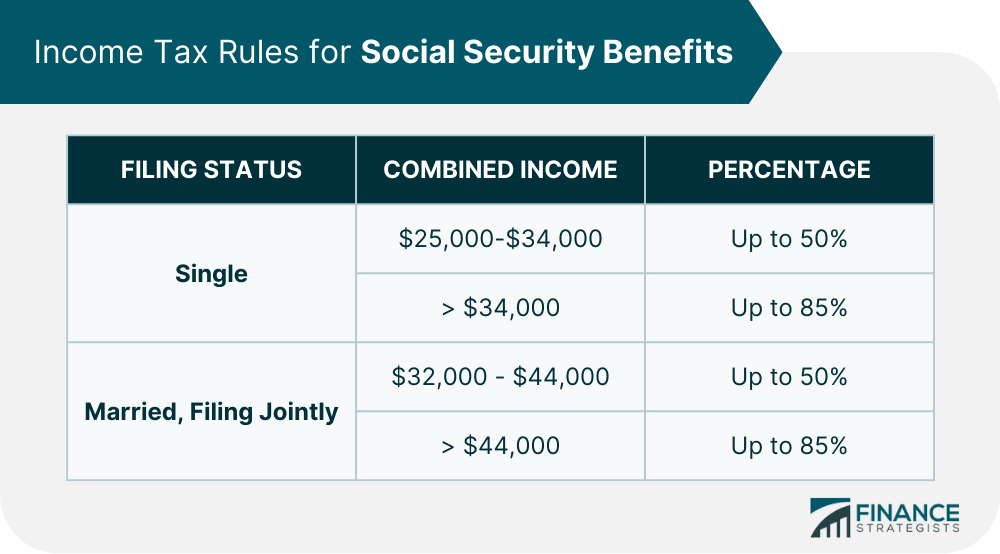
Once you’ve calculated your provisional income, the next step is to compare it against the IRS thresholds. These thresholds determine what percentage of your Social Security benefits (0%, 50%, or 85%) will be included in your taxable income. Importantly, these thresholds are not indexed for inflation, meaning they remain static even as the cost of living and average incomes rise, potentially pushing more retirees into the taxable tiers over time.
The 50% Rule (First Tier)
This rule applies when your provisional income falls within a specific range:
- For single filers, head of household, or qualifying widow(er): Provisional income between $25,000 and $34,000.
- For married filing jointly: Provisional income between $32,000 and $44,000.
- For married filing separately and living with your spouse: $0 (meaning any provisional income makes 50% of benefits taxable).
If your provisional income falls into these ranges, up to 50% of your Social Security benefits may be taxable. The exact amount taxable is the lesser of:
- 50% of your Social Security benefits, or
- 50% of the amount by which your provisional income exceeds the lower threshold for your filing status.
The 85% Rule (Second Tier)
This rule applies when your provisional income exceeds the higher threshold:
- For single filers, head of household, or qualifying widow(er): Provisional income above $34,000.
- For married filing jointly: Provisional income above $44,000.
- For married filing separately and living with your spouse: $0.
If your provisional income exceeds these higher thresholds, up to 85% of your Social Security benefits may be taxable. The calculation here is a bit more complex. The taxable amount is the lesser of:
- 85% of your Social Security benefits, or
- The sum of:
- The amount that would have been taxable under the 50% rule (which is $4,500 for single filers and $6,000 for married filing jointly, representing 50% of the difference between the two thresholds), PLUS
- 85% of the amount by which your provisional income exceeds the second-tier threshold.
Zero Taxability
The good news is that if your provisional income is below the lowest thresholds, none of your Social Security benefits will be subject to federal income tax:

- For single filers: Provisional income below $25,000.
- For married filing jointly: Provisional income below $32,000.
- For married filing separately and living with your spouse: Any provisional income will trigger taxability.
It’s crucial to understand these tiers, as even a small increase in other income sources can push you into a higher tax bracket for your Social Security benefits, significantly impacting your overall tax liability.
Step-by-Step Calculation Guide with Examples
Let’s walk through some practical examples to solidify your understanding of how to calculate Social Security taxable income.
Gather Your Documents
Before you begin, ensure you have the necessary tax documents:
- Form SSA-1099: This statement from the Social Security Administration shows the total benefits you received for the year.
- Forms W-2, 1099-R, 1099-INT, 1099-DIV, etc.: These documents detail your other income sources needed to calculate your AGI and tax-exempt interest.
Example 1: Single Filer Below Threshold (0% Taxable)
Scenario: Sarah is single.
- Social Security Benefits: $18,000
- AGI (from a small pension): $8,000
- Tax-Exempt Interest: $0
Calculation:
- Provisional Income = AGI + Tax-Exempt Interest + (0.5 * Social Security Benefits)
Provisional Income = $8,000 + $0 + (0.5 * $18,000)
Provisional Income = $8,000 + $9,000 = $17,000
Conclusion: Sarah’s provisional income of $17,000 is below the single-filer threshold of $25,000. Therefore, 0% of her Social Security benefits are taxable.
Example 2: Married Filing Jointly – 50% Taxable
Scenario: Mark and Lisa are married, filing jointly.
- Social Security Benefits (combined): $30,000
- AGI (from various sources): $20,000
- Tax-Exempt Interest: $4,000
Calculation:
-
Provisional Income = AGI + Tax-Exempt Interest + (0.5 * Social Security Benefits)
Provisional Income = $20,000 + $4,000 + (0.5 * $30,000)
Provisional Income = $24,000 + $15,000 = $39,000 -
Compare to Thresholds: Their provisional income of $39,000 falls between the married filing jointly thresholds of $32,000 and $44,000. Thus, up to 50% of their benefits are taxable.
-
Calculate Taxable Amount (Lesser of):
- Option A: 50% of Social Security Benefits = 0.5 * $30,000 = $15,000
- Option B: 50% of (Provisional Income – Lower Threshold) = 0.5 * ($39,000 – $32,000) = 0.5 * $7,000 = $3,500
The lesser of $15,000 and $3,500 is $3,500.
Conclusion: $3,500 of Mark and Lisa’s Social Security benefits are taxable. This amount will be added to their other taxable income.
Example 3: Single Filer – 85% Taxable
Scenario: John is single.
- Social Security Benefits: $25,000
- AGI (from substantial pension and investments): $38,000
- Tax-Exempt Interest: $2,000
Calculation:
-
Provisional Income = AGI + Tax-Exempt Interest + (0.5 * Social Security Benefits)
Provisional Income = $38,000 + $2,000 + (0.5 * $25,000)
Provisional Income = $40,000 + $12,500 = $52,500 -
Compare to Thresholds: John’s provisional income of $52,500 is above the single-filer second-tier threshold of $34,000. Thus, up to 85% of his benefits are taxable.
-
Calculate Taxable Amount (Lesser of):
- Option A: 85% of Social Security Benefits = 0.85 * $25,000 = $21,250
- Option B: Calculate using the two-tier formula:
- Amount from the first tier (50% rule): 0.5 * ($34,000 – $25,000) = 0.5 * $9,000 = $4,500
- Amount from the second tier (85% rule): 0.85 * (Provisional Income – Second Tier Threshold) = 0.85 * ($52,500 – $34,000) = 0.85 * $18,500 = $15,725
- Total for Option B = $4,500 + $15,725 = $20,225
The lesser of $21,250 and $20,225 is $20,225.
Conclusion: $20,225 of John’s Social Security benefits are taxable. This will be added to his other taxable income.
These examples highlight the nuances of the calculation and the significant impact provisional income can have on your overall tax picture.
Strategies to Potentially Reduce Your Taxable Social Security Benefits
While the taxability rules for Social Security benefits are fixed, there are proactive strategies you can employ to manage your provisional income and potentially reduce the amount of your benefits subject to tax. This requires thoughtful financial planning, especially during your pre-retirement and early retirement years.
Manage Your Adjusted Gross Income (AGI)
Since AGI is a major component of provisional income, controlling it is key:
- Delaying IRA/401(k) Distributions: If you have other income sources and don’t immediately need funds from your traditional retirement accounts, delaying distributions can keep your AGI lower in earlier retirement years, potentially allowing your Social Security benefits to remain untaxed or taxed at the lower 50% rate.
- Qualified Charitable Distributions (QCDs): If you are age 70.5 or older and have a traditional IRA, you can make a QCD directly from your IRA to a qualified charity. This distribution counts towards your Required Minimum Distribution (RMD) but is not included in your AGI, thereby reducing your provisional income.
- Tax-Loss Harvesting: Selling investments at a loss to offset capital gains and potentially up to $3,000 of ordinary income can lower your AGI.
- Strategic Roth Conversions: In early retirement, before you start Social Security benefits or RMDs, you might consider converting a portion of your traditional IRA/401(k) to a Roth IRA. While the conversion itself is taxable, future qualified withdrawals from the Roth IRA are tax-free and do not count towards your AGI or provisional income. This can provide a source of tax-free income later, keeping future provisional income lower.
Control Non-Taxable Interest
Be mindful of investments that generate tax-exempt interest, such as municipal bonds. While these are often attractive for their federal tax exemption, the interest does count towards your provisional income for Social Security tax purposes. If you have substantial investments in municipal bonds, they could inadvertently push you into a higher Social Security taxation tier. Always evaluate the overall tax efficiency and your specific provisional income level when considering such investments.
Tax Planning Throughout Retirement
Effective tax planning is an ongoing process throughout your retirement years.
- Work with a Financial Advisor: A knowledgeable financial planner or tax advisor can help you model different income scenarios, anticipate future tax liabilities, and devise a comprehensive strategy to minimize taxes on all your retirement income, including Social Security. They can help you coordinate withdrawals from various accounts (taxable, tax-deferred, tax-free) to maintain a lower provisional income.
- Consider a Roth Conversion Strategy: As mentioned earlier, a Roth conversion strategy in the years before you claim Social Security can be powerful. By paying taxes on converted funds when your income (and thus tax bracket) might be lower, you create a future stream of tax-free income that won’t contribute to your provisional income calculation. This can give you greater control over your taxable income in later retirement.
- Monitor Your Income Annually: Your income sources and amounts can change year to year. Regularly calculating your provisional income (or having your advisor do so) will help you stay informed and make timely adjustments to your income strategy.
Understanding how to calculate Social Security taxable income is more than just a numbers game; it’s a vital component of holistic retirement planning. By grasping the rules and proactively managing your income streams, you can exert greater control over your tax obligations and ensure your Social Security benefits provide the financial support you expect, without unexpected tax surprises. Don’t wait until tax season to discover your benefits are taxable; incorporate this knowledge into your long-term financial strategy today and consider seeking professional guidance to navigate these complex waters effectively.
aViewFromTheCave is a participant in the Amazon Services LLC Associates Program, an affiliate advertising program designed to provide a means for sites to earn advertising fees by advertising and linking to Amazon.com. Amazon, the Amazon logo, AmazonSupply, and the AmazonSupply logo are trademarks of Amazon.com, Inc. or its affiliates. As an Amazon Associate we earn affiliate commissions from qualifying purchases.