
In the intricate world of finance, understanding how to calculate a rate increase is not just a useful skill; it’s an essential competency for individuals and businesses alike. From managing personal budgets and assessing investment performance to setting business prices and negotiating contracts, the ability to accurately quantify changes in rates directly impacts financial health and strategic decision-making. A rate increase, fundamentally, is the upward adjustment of a percentage or ratio over a specific period. It could be an increase in your loan’s interest rate, the growth rate of an investment, a utility company raising its charges, or a supplier adjusting their prices.
Ignoring or miscalculating these increases can lead to significant financial repercussions, such as unexpected expenses, diminished profits, or missed opportunities. Conversely, a clear understanding empowers you to anticipate changes, plan proactively, and make informed choices. This article will demystify the process, breaking down the core formulas and providing practical applications across various financial scenarios, ensuring you’re well-equipped to navigate the ever-changing economic landscape.
Understanding the Fundamentals of Rate Increases
Before diving into specific applications, it’s crucial to grasp the foundational mathematical concepts behind calculating any rate increase. At its heart, a rate increase is a measure of percentage change, expressed relative to an initial value.
The Core Formula: Percentage Change
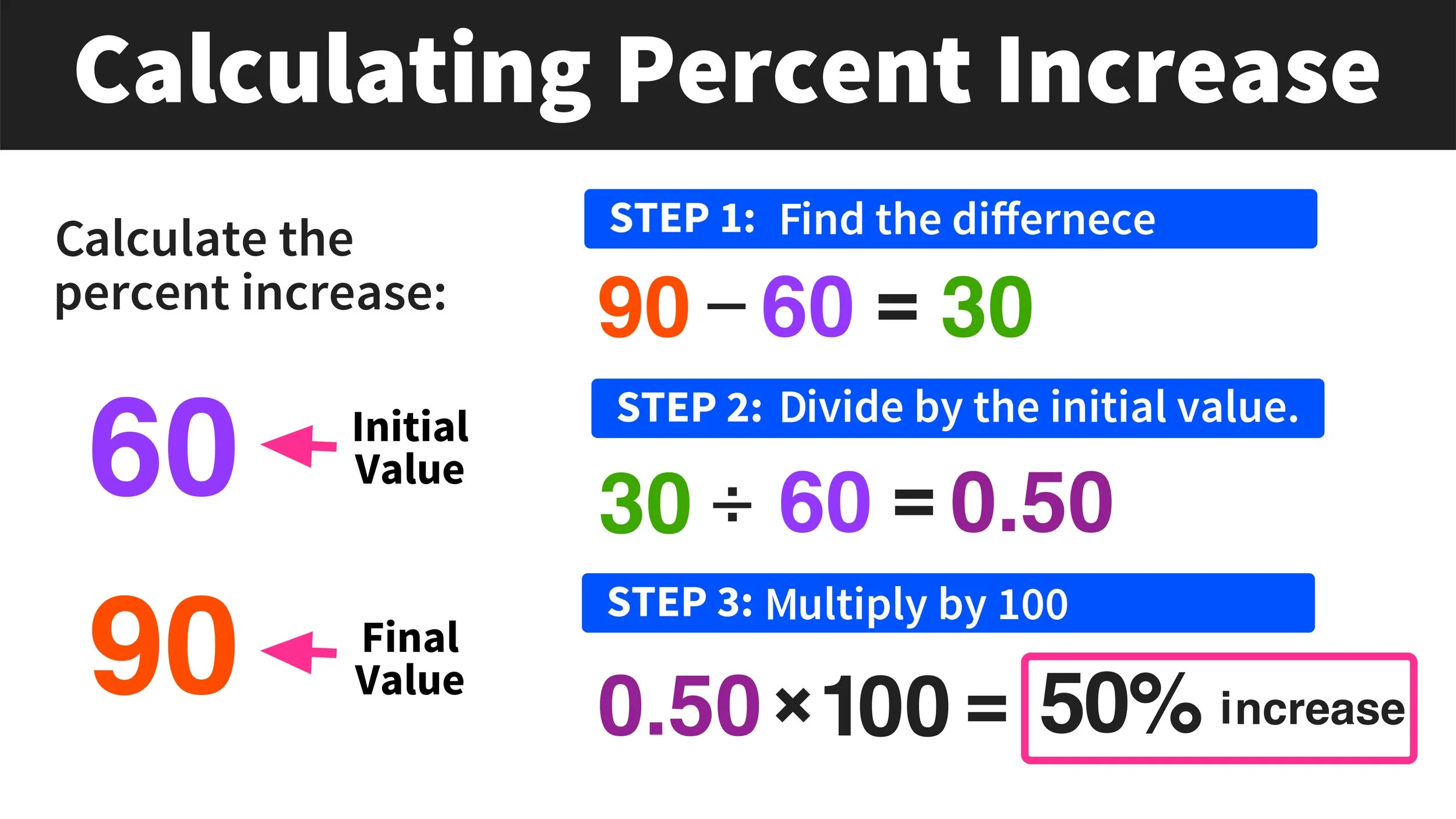
The most common and straightforward way to calculate a rate increase is using the percentage change formula. This formula allows you to determine by what percentage a value has increased from its original state.
The formula is:
Rate Increase (%) = [ (New Value – Original Value) / Original Value ] * 100
Let’s break down each component:
- Original Value: This is the starting point, the rate or amount before the increase.
- New Value: This is the rate or amount after the increase has occurred.
- Difference (New Value – Original Value): This calculates the absolute amount of the increase.
- Divide by Original Value: This normalizes the absolute increase by expressing it as a proportion of the starting value.
- Multiply by 100: This converts the decimal proportion into a percentage, making it easier to understand and compare.
Example: If your electricity rate increased from $0.12 per kWh to $0.15 per kWh:
- Original Value = $0.12
- New Value = $0.15
- Rate Increase (%) = [ ($0.15 – $0.12) / $0.12 ] * 100
- Rate Increase (%) = [ $0.03 / $0.12 ] * 100
- Rate Increase (%) = 0.25 * 100 = 25%
This means your electricity rate increased by 25%.
Absolute vs. Relative Increase
It’s important to distinguish between absolute and relative increases, as both provide different but valuable perspectives.
-
Absolute Increase: This is the raw numerical difference between the new value and the original value (New Value – Original Value). In the electricity example, the absolute increase was $0.03 per kWh. While straightforward, the absolute increase alone doesn’t always convey the full impact without context. An increase of $0.03 might seem small, but if the original value was very low, the relative impact could be significant.
-
Relative Increase (Percentage Increase): This expresses the absolute increase as a percentage of the original value. This is what the core formula calculates. The relative increase provides context and allows for meaningful comparisons across different scenarios, regardless of the magnitude of the original values. A 25% increase is easily understood as a substantial jump, whether applied to a small base or a large one.
Understanding both allows for a more holistic assessment of the impact of any rate change. A nominal absolute increase might represent a critical percentage hike if the base rate was low.
Interpreting the Result
Once you’ve calculated the percentage rate increase, interpretation is key. A positive percentage indicates an increase, while a negative percentage would indicate a decrease (though for this article, we’re focusing on increases). The magnitude of the percentage tells you how significant the change is in proportion to the original. A small percentage increase on a large base can still lead to substantial absolute increases, while a large percentage increase on a small base can escalate rapidly. Always consider the context and the base value when evaluating the impact of a calculated rate increase.
Calculating Rate Increases in Personal Finance
The principles of rate increase calculation are highly applicable to personal finance, where understanding these changes can directly impact your budget, savings, and debt management.
Loan Interest Rate Adjustments
Many personal loans, mortgages, and credit lines come with variable interest rates. When the base rate (like the prime rate) changes, your interest rate can adjust, leading to higher monthly payments.
Example: You have a variable-rate mortgage with an initial interest rate of 3.5%. The rate then increases to 4.25%.
- Original Rate = 3.5%
- New Rate = 4.25%
- Rate Increase (%) = [ (4.25 – 3.5) / 3.5 ] * 100
- Rate Increase (%) = [ 0.75 / 3.5 ] * 100
- Rate Increase (%) ≈ 21.43%
This means your mortgage interest rate has increased by approximately 21.43% relative to its original value. While the absolute change is 0.75 percentage points, the relative increase highlights the proportional shift. Knowing this allows you to re-evaluate your budget for higher mortgage payments.
Credit Card APR Changes
Credit card Annual Percentage Rates (APRs) can also increase, particularly for those with variable rates or if promotional periods end.
Example: Your credit card’s introductory APR of 15% expires, and it reverts to a standard APR of 22%.
- Original APR = 15%
- New APR = 22%
- Rate Increase (%) = [ (22 – 15) / 15 ] * 100
- Rate Increase (%) = [ 7 / 15 ] * 100
- Rate Increase (%) ≈ 46.67%
A nearly 47% relative increase in your APR is substantial and will significantly impact the cost of carrying a balance. This calculation underscores the importance of paying off balances or finding lower-interest alternatives.
Utility Bill Hikes
Utility companies (electricity, gas, water) frequently adjust their rates due to operational costs, infrastructure investments, or regulatory changes.
Example: Your water service charges increase from a base rate of $50 per month to $57 per month.
- Original Charge = $50
- New Charge = $57
- Rate Increase (%) = [ ($57 – $50) / $50 ] * 100
- Rate Increase (%) = [ $7 / $50 ] * 100
- Rate Increase (%) = 0.14 * 100 = 14%
A 14% increase in a recurring utility bill directly affects your monthly household budget, necessitating adjustments elsewhere or efforts to conserve.
Inflation and Cost of Living Increases
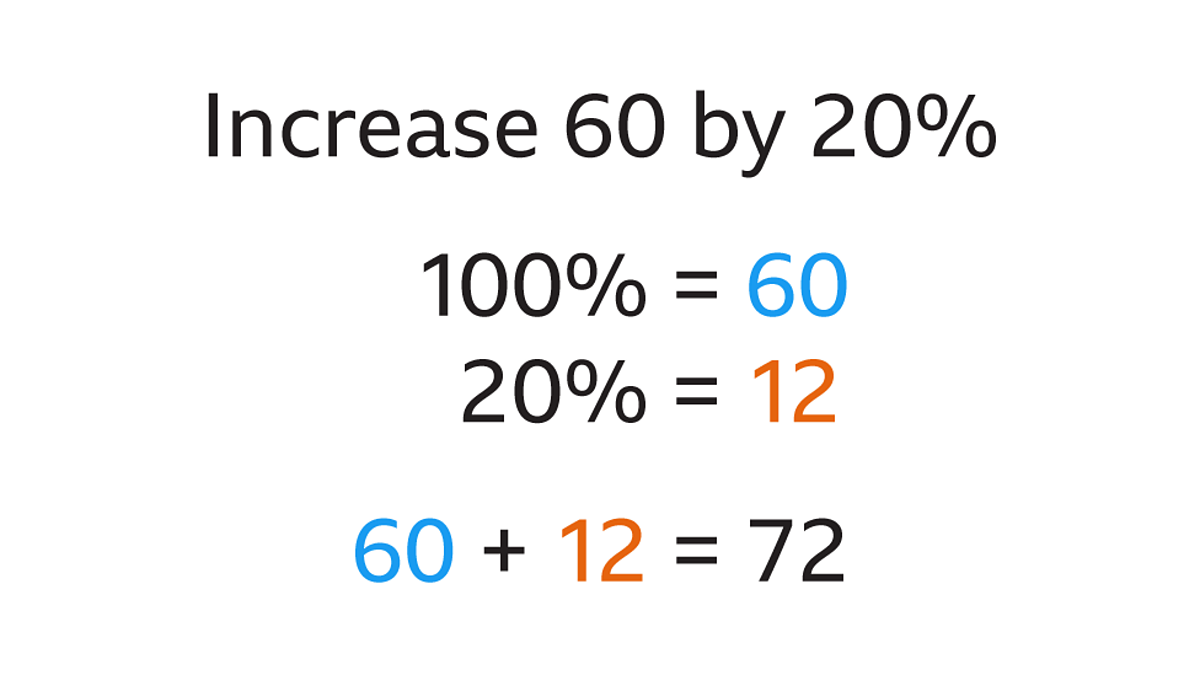
Inflation is a pervasive rate increase that affects nearly every aspect of personal finance. It represents the rate at which the general level of prices for goods and services is rising, and subsequently, purchasing power is falling. While usually reported by government agencies, understanding its calculation helps contextualize its impact.
Example: The average cost of a basket of goods was $1000 last year, and this year it’s $1035.
- Original Cost = $1000
- New Cost = $1035
- Inflation Rate (%) = [ ($1035 – $1000) / $1000 ] * 100
- Inflation Rate (%) = [ $35 / $1000 ] * 100
- Inflation Rate (%) = 0.035 * 100 = 3.5%
This 3.5% inflation rate means that, on average, your purchasing power has decreased by 3.5% for those goods. To maintain the same standard of living, your income would ideally need to increase by at least this much.
Rate Increases in Business and Investment
Beyond personal finances, calculating rate increases is critical for businesses in pricing, cost management, and evaluating investments.
Pricing Adjustments and Profit Margins
Businesses must frequently adjust their product or service prices to account for rising operational costs, market demand, or to improve profit margins.
Example: A company’s manufacturing cost for a product increases from $20 to $22 per unit. To maintain its profit margin, it needs to increase its selling price.
- Original Cost = $20
- New Cost = $22
- Cost Increase (%) = [ ($22 – $20) / $20 ] * 100
- Cost Increase (%) = [ $2 / $20 ] * 100
- Cost Increase (%) = 0.10 * 100 = 10%
If the original selling price was $30, a 10% cost increase means the company’s expenses have risen by 10%. To maintain the same absolute profit of $10 ($30 – $20), the new selling price would need to be $32 ($22 cost + $10 profit). However, to maintain the same profit margin percentage, the calculation becomes more complex, often requiring a new pricing strategy based on the cost increase. If they simply passed on the 10% cost increase to the selling price, the new selling price would be $30 * 1.10 = $33, which would increase the absolute profit as well. Businesses often carefully calculate these to balance competitiveness with profitability.
Investment Returns and Growth Rates
For investors, calculating the rate of return (or growth rate) is fundamental to assessing performance and making future decisions. While typically representing a gain, it’s still a form of rate increase calculation.
Example: You invest $5,000 in a stock, and after one year, its value grows to $5,600.
- Original Value = $5,000
- New Value = $5,600
- Rate of Return (%) = [ ($5,600 – $5,000) / $5,000 ] * 100
- Rate of Return (%) = [ $600 / $5,000 ] * 100
- Rate of Return (%) = 0.12 * 100 = 12%
This investment yielded a 12% rate of return over the year. Comparing this rate to other investments or benchmarks helps you understand its relative performance.
Vendor Cost Increases
Businesses rely on suppliers for raw materials, services, and components. Vendor cost increases directly impact a company’s cost of goods sold (COGS) and, consequently, its profitability.
Example: A key raw material’s price from a vendor increases from $1.50 per unit to $1.65 per unit.
- Original Price = $1.50
- New Price = $1.65
- Cost Increase (%) = [ ($1.65 – $1.50) / $1.50 ] * 100
- Cost Increase (%) = [ $0.15 / $1.50 ] * 100
- Cost Increase (%) = 0.10 * 100 = 10%
A 10% increase in raw material costs might necessitate negotiating with the vendor, finding alternative suppliers, or adjusting product pricing to absorb or pass on the increase.
Tools and Tips for Effective Rate Increase Calculation
While the formula is straightforward, real-world scenarios can sometimes be more complex. Leveraging the right tools and understanding certain nuances can enhance accuracy and efficiency.
Leveraging Spreadsheets and Online Calculators
For repetitive or complex calculations involving multiple items or periods, spreadsheets (like Microsoft Excel or Google Sheets) are invaluable. You can set up templates that automatically calculate rate increases simply by inputting original and new values.
Spreadsheet Formula Example:
If your original value is in cell A2 and your new value is in cell B2, the formula for the percentage rate increase would be:
=( (B2 - A2) / A2 ) * 100
Many online financial calculators are also available, specifically designed for calculating percentage changes, compound interest, or inflation rates, often providing instant results without manual formula input.
Considering Compounding Effects
In some financial contexts, rate increases can compound over time, meaning the increase itself earns further increases. This is particularly relevant for investments, savings accounts, and certain types of loans. While the basic percentage change formula calculates a single period’s increase, understanding compounding requires iterative calculations or specific compound interest formulas.
Example: If an investment grows by 10% per year, and the earnings are reinvested, the base for the next year’s 10% growth is higher. Calculating the total rate increase over multiple periods with compounding will yield a different result than simply adding up the annual increases. For example, two consecutive 10% increases do not result in a 20% total increase, but rather (1.10 * 1.10 – 1) * 100 = 21%.
When dealing with long-term financial planning, always consider if the rate increase applies to a new, larger base.
When to Seek Professional Advice
While calculating a simple rate increase is accessible to everyone, complex financial situations may warrant professional advice. This includes:
- Significant business pricing strategies: Where multiple cost factors, market elasticity, and competitor pricing are involved.
- Complex investment performance analysis: Especially with diverse portfolios, various fee structures, and different time horizons.
- Mortgage or loan restructuring: When evaluating the long-term impact of variable rate changes.
- Tax implications: How rate changes affect taxable income or deductions.
A financial advisor, accountant, or business consultant can provide tailored insights and help you navigate the broader financial implications of rate increases that go beyond a simple calculation.

Conclusion
The ability to accurately calculate a rate increase is a fundamental financial skill that empowers individuals and businesses to make informed decisions. From tracking personal expenses and assessing investment performance to managing business costs and setting competitive prices, understanding the percentage change between an original and a new value provides invaluable clarity.
By mastering the core formula – [ (New Value - Original Value) / Original Value ] * 100 – and applying it across various scenarios, you gain a crucial tool for financial literacy and strategic planning. Remember to distinguish between absolute and relative increases, interpret results within their specific context, and leverage tools like spreadsheets for efficiency. In a dynamic economic environment where rates are constantly shifting, being proficient in calculating these changes isn’t just a matter of numbers; it’s a cornerstone of proactive and successful financial management.