
Navigating the path to a career in education requires more than just pedagogical knowledge; it requires a strategic approach to professional certification. The Praxis series of exams, administered by the Educational Testing Service (ETS), serves as a critical gatekeeper for entry into the teaching profession in the United States. For many, the Praxis is not merely a test but a high-stakes financial and professional investment. Understanding how to calculate your Praxis score is essential for managing your career trajectory, budgeting for potential retakes, and ensuring you meet the licensing requirements of your specific state.
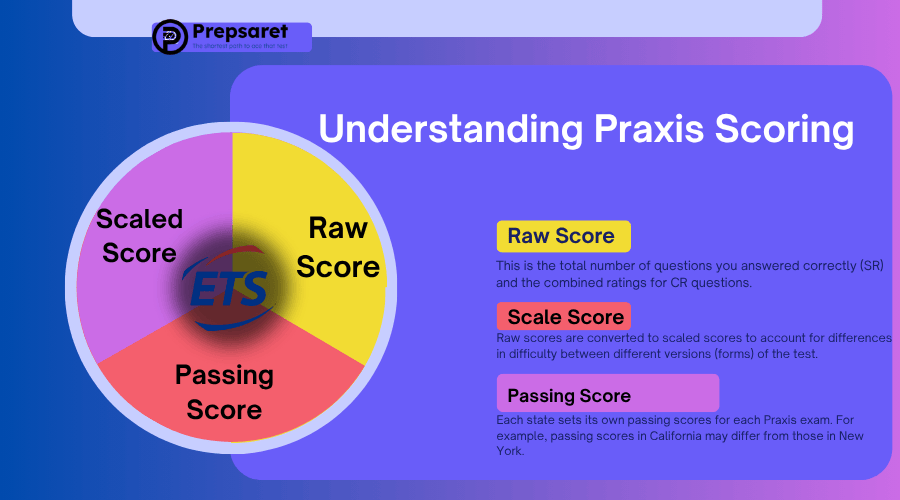
The scoring process can often seem opaque, involving raw scores, scaled scores, and complex statistical weighting. However, by breaking down the mechanics of the ETS scoring system, prospective educators can better project their performance and protect their investment in their professional future.
The Economics of Teacher Certification: Why the Praxis Score Matters
Before diving into the mathematical nuances of score calculation, it is vital to understand the financial implications of these exams. Teacher certification is a multi-step investment. From the registration fees—which typically range from $130 to $210 per test—to the costs of study materials and the opportunity cost of time spent preparing, the financial stakes are significant.
Certification as a Gatekeeper to Income
In the context of personal finance and career growth, your Praxis score is the key that unlocks your earning potential. Without a passing score, you cannot obtain the state license necessary to secure a full-time teaching position, which often provides stable income, comprehensive benefits, and a defined-benefit pension plan. A delay in passing the Praxis is not just a setback in timing; it is a delay in accessing a professional salary. Calculating your score accurately allows you to assess whether you are ready to sit for the exam or if you need to allocate more resources toward preparation to avoid the cost of a retake.
Budgeting for the Certification Process
A strategic approach to the Praxis involves financial planning. Many candidates fail to account for the possibility of a retake in their initial budget. By understanding how scores are calculated, you can perform a “risk assessment” based on your practice test performance. If your practice scores are hovering at the lower end of the passing range, it may be more cost-effective to invest in a high-quality prep course or additional tutoring rather than risking the $150+ registration fee on an unsuccessful attempt.
Demystifying the Raw Score: Your Initial Performance Data
The journey from answering questions to receiving an official score report begins with the “raw score.” This is the most transparent part of the calculation process and serves as the foundation for your final result.
The Raw Point System
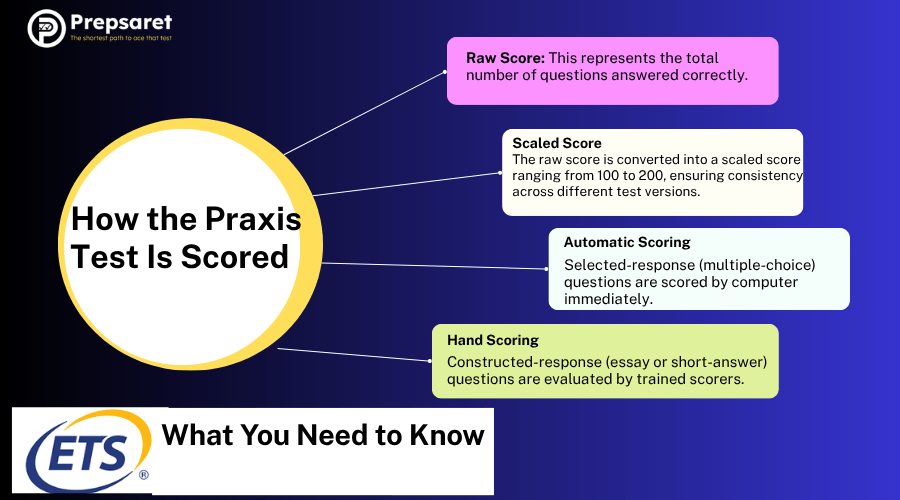
On most Praxis exams, particularly the Core Academic Skills for Educators and the Subject Assessments, your raw score is simply the number of questions you answered correctly. Unlike some older standardized tests, there is no penalty for incorrect answers. If a test has 100 multiple-choice questions, and you answer 75 correctly, your raw score is 75.
For exams that include constructed-response questions (essays or short answers), the raw score calculation is slightly more complex. These sections are graded by at least two trained scorers who use a standardized rubric. The scores from these human graders are combined to form the raw score for the written portion of the exam. Understanding this distinction is crucial: multiple-choice questions provide immediate, objective data, while constructed responses involve a level of qualitative assessment.
Weighting the Sections
In exams that feature both multiple-choice and constructed-response sections, the raw scores are not always weighted equally. For example, the multiple-choice section might account for 75% of your total score, while the essay section accounts for 25%. When calculating your projected score, you must identify the weighting specific to your exam code. This allows you to prioritize your study time based on which sections offer the highest return on investment for your final score.
The Scaling Algorithm: Converting Performance into Professional Standing
The number that ultimately determines your certification status is the “scaled score.” Praxis scaled scores range from 100 to 200. This conversion process is necessary because different versions (or “forms”) of the same test may vary slightly in difficulty.

The Purpose of Equating
To ensure fairness across all test-takers, ETS uses a statistical process called “equating.” If one form of the Praxis Biology test is slightly more difficult than another, the raw score required to pass will be slightly lower for the harder version. This ensures that a score of 160 on one test date represents the same level of proficiency as a 160 on a different date. From a professional standpoint, this standardization protects the integrity of the credential, ensuring that all teachers met the same rigorous bar regardless of when they tested.
The Conversion Formula
While the exact equating formula is proprietary to ETS, the general conversion follows a predictable pattern. To estimate your scaled score, you can use the following general framework:
-
Determine your percentage of correct answers (Raw Score / Total Questions).
-
Map that percentage to the 100–200 scale.
Generally, a score of 100 represents 0% correct, and a 200 represents 100% correct. However, because the scale starts at 100, each percentage point is worth more than one scaled point. A common rule of thumb is that scoring between 60% and 75% correct will result in a passing scaled score for most states, which typically require a score between 150 and 165.
Estimating Your Score: A Practical Framework for Test-Takers
While you won’t know the exact scaled score until your official report is released, you can use a systematic approach to estimate your performance immediately after taking a practice test or the actual exam.
Step-by-Step Calculation
To conduct a “financial audit” of your test performance, follow these steps:
-
Identify the Total Possible Raw Points: Look at the test specifications for your specific Praxis exam. Note how many multiple-choice questions are “scored” (some questions are pre-test items and do not count toward your score).
-
Calculate Your Raw Percentage: If you got 60 out of 80 questions right, your percentage is 75%.
-
Apply the Scaling Range: Subtract the base score (100) from the maximum score (200), which gives you a range of 100 points.
-
Estimate the Scaled Score: Multiply your percentage (0.75) by the range (100) and add it to the base (100). In this scenario, 75 + 100 = 175.
Keep in mind that this is an estimate. The equating process may shift this number up or down by several points. If your state requires a 160 and your estimate is a 175, you have a comfortable “margin of safety.” If your estimate is a 162, you are in a higher-risk category and should prepare for the possibility of a retake.
Factoring in Constructed Responses
If your test includes essays, estimating becomes more difficult. Most rubrics are on a scale of 1 to 6. If you expect to receive a 4 from both graders, your raw points for that section would be 8. You must then find the weight of that section. If the essay is 25% of the total, you must convert those 8 points into the proportional percentage of your final score. High-performing professionals often use conservative estimates for their essay scores to ensure their overall score projection remains realistic.
Maximizing Your Career ROI: Navigating State Requirements and Retakes
The final step in calculating your Praxis score is comparing it against the benchmark set by your state’s department of education. Every state sets its own “cut score,” which is the minimum scaled score required for licensure.
State Standards and Economic Mobility
The variation in state requirements can impact your career flexibility. For instance, if you score a 155 on a test where State A requires a 150 and State B requires a 160, you are qualified to work in State A but not State B. If you are considering a move to a higher-paying district in a different state, your Praxis score becomes a mobile asset. Achieving a higher score than the bare minimum can provide you with broader geographic options, potentially leading to higher lifetime earnings.
When to Re-Invest: The Decision to Retake
If your official score falls short of the state requirement, you face a financial decision: when and how to retake the exam. ETS requires a waiting period (usually 28 days) before you can test again. This delay can result in missing hiring windows for the upcoming school year.
To maximize your ROI when retaking:
-
Analyze the Category Scores: Your score report provides a breakdown of how you performed in specific sub-categories. Use this data to target your study efforts, ensuring that your next investment in a registration fee yields a passing result.
-
Evaluate Prep Tools: If your self-study method resulted in a failing score, it may be time to pivot to professional prep software or AI-driven diagnostic tools. While these have an upfront cost, they are often cheaper than the lost wages associated with a delayed teaching contract.
Ultimately, calculating your Praxis score is about more than just math; it is about professional readiness and financial foresight. By mastering the mechanics of the raw-to-scaled conversion and understanding the state-specific requirements, you can navigate the certification process with confidence, ensuring that your transition into the classroom is as efficient and profitable as possible.
aViewFromTheCave is a participant in the Amazon Services LLC Associates Program, an affiliate advertising program designed to provide a means for sites to earn advertising fees by advertising and linking to Amazon.com. Amazon, the Amazon logo, AmazonSupply, and the AmazonSupply logo are trademarks of Amazon.com, Inc. or its affiliates. As an Amazon Associate we earn affiliate commissions from qualifying purchases.