
In the world of personal and business finance, the percentage is more than just a mathematical concept; it is the fundamental language of growth, risk, and value. Whether you are tracking the performance of a stock portfolio, determining the impact of inflation on your purchasing power, or simply trying to figure out the discount on a retail purchase, knowing how to calculate the percentage of something is an essential skill for financial literacy.
To navigate the complexities of wealth management, one must move beyond basic arithmetic and understand how these figures influence long-term financial health. This guide provides a comprehensive breakdown of percentage calculations through the lens of money, investing, and business strategy.
1. The Core Mechanics: Calculating Percentages in a Financial Context
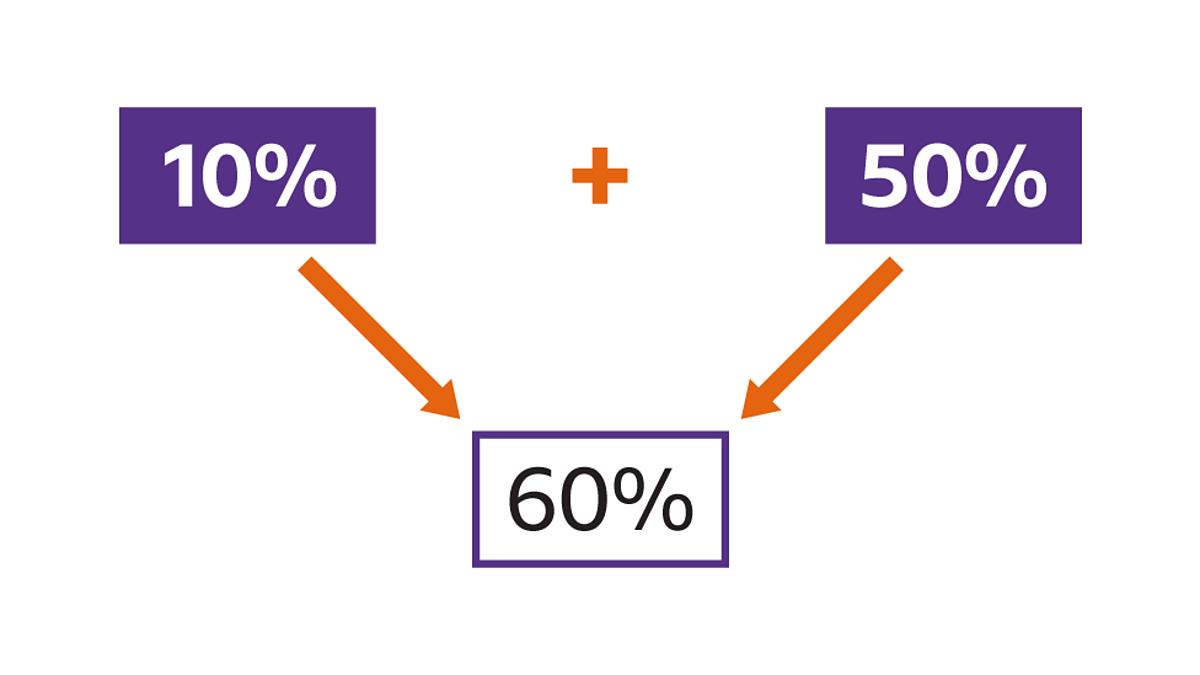
Before diving into complex investment yields or corporate margins, it is vital to master the foundational formulas. In finance, a percentage represents a portion of a whole, expressed as a fraction of 100. This allow investors and savers to compare different financial products on an equal playing field.
The Basic Percentage Formula
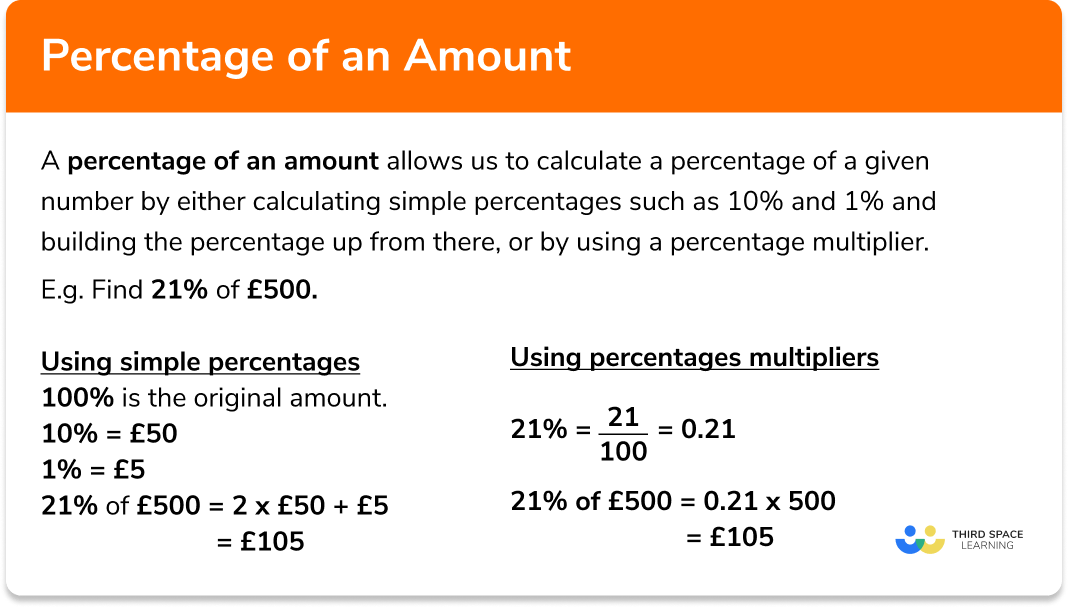
The most frequent calculation you will encounter is finding a specific percentage of a known total. For instance, if you want to set aside 15% of your $5,000 monthly income for retirement, you need the basic formula:
Formula: (Percentage / 100) × Total Amount = Result
Example: (15 / 100) × 5,000 = $750
Determining the Percentage Difference
In the markets, we often need to know the “percent change”—how much an asset has grown or shrunk relative to its original price. This is the primary way we measure capital gains or losses.
Formula: [(New Value – Old Value) / Old Value] × 100 = Percentage Change
If you bought a share of a tech company for $150 and it is now worth $180, the calculation would be: [(180 – 150) / 150] × 100 = 20%. Understanding this allows you to objectively evaluate whether an investment is meeting your benchmarks.
Reverse Percentage: Finding the Original Value
Frequently in business finance, you are presented with a final price that includes a tax or a fee, and you need to work backward to find the base cost. If a business expense was $1,080 including an 8% sales tax, you cannot simply subtract 8% from the total. Instead, you divide the total by (1 + the tax rate).
Formula: Total / (1 + Rate) = Original Value
Example: 1,080 / 1.08 = $1,000
2. Percentages in Personal Finance and Budgeting
Personal finance is built on ratios. Financial advisors often use percentage-based rules to help individuals maintain a healthy balance between spending, saving, and debt management.
The 50/30/20 Budgeting Rule
One of the most effective ways to manage wealth is the 50/30/20 rule. This framework allocates 50% of your after-tax income to “Needs” (housing, utilities, groceries), 30% to “Wants” (entertainment, dining out), and 20% to “Financial Goals” (debt repayment, savings, investments). By calculating these percentages monthly, you ensure that your lifestyle does not outpace your financial security.
Understanding Debt-to-Income (DTI) Ratio
When applying for a mortgage or a loan, lenders look at your Debt-to-Income ratio. This percentage represents how much of your gross monthly income goes toward paying debts.
Calculation: (Total Monthly Debt Payments / Gross Monthly Income) × 100
A DTI ratio of 36% or lower is generally considered healthy. If your DTI climbs toward 43% or 50%, it signals to lenders that you may be over-leveraged, which can lead to higher interest rates or loan denials.
The Impact of Interest Rates: APR vs. APY
Interest is almost always expressed as a percentage. However, the way that percentage is calculated changes the actual dollar amount.
- Annual Percentage Rate (APR): This is the simple interest rate charged on loans.
- Annual Percentage Yield (APY): This accounts for compound interest.
When you are a borrower, you want a low APR. When you are a saver, you want a high APY. Calculating the difference between these two allows you to see the real cost of debt over time.

3. Strategic Investing: Measuring Growth and Risk
For the serious investor, percentages are the primary metrics used to determine where capital should be allocated. Without these calculations, it is impossible to compare a real estate investment to a dividend-paying stock.
Calculating Return on Investment (ROI)
ROI is the “gold standard” of financial metrics. it tells you the efficiency of an investment.
Formula: [(Current Value – Initial Cost) / Initial Cost] × 100
If you invested $10,000 in a mutual fund and it grew to $12,500 over two years, your ROI is 25%. However, sophisticated investors also calculate the Annualized ROI to see how much the investment earned per year, allowing for a fair comparison against other annual benchmarks like the S&P 500.
Portfolio Allocation and Rebalancing
Risk management is largely an exercise in percentage tracking. An investor might decide on a target allocation of 60% stocks and 40% bonds. Over time, if the stock market performs exceptionally well, the portfolio might shift to 70% stocks and 30% bonds. This shift increases risk. By calculating the current percentage of each asset class, the investor knows exactly how much to sell or buy to return to their original, safer 60/40 split.
The Expense Ratio: The Hidden Cost of Investing
In the world of ETFs and Mutual Funds, the “Expense Ratio” is a percentage that can make or break a retirement plan. A 1% fee might sound small, but when calculated over 30 years, it can eat away nearly 25-30% of your total potential gains. Calculating the impact of these percentages is crucial for long-term wealth preservation.
4. Business Finance: Margins, Markup, and Profitability
For entrepreneurs and business owners, understanding how to calculate percentages is the difference between a thriving enterprise and bankruptcy. Two of the most commonly confused but vital metrics are margin and markup.
Gross Profit Margin vs. Net Profit Margin
Profit margin measures how much out of every dollar of sales a company actually keeps in earnings.
- Gross Margin: (Revenue – Cost of Goods Sold) / Revenue. This shows the efficiency of production.
- Net Margin: (Total Revenue – Total Expenses) / Revenue. This shows the bottom-line health of the entire company after taxes and overhead.
A company with high revenue but a low net margin percentage is “thinly capitalized” and at high risk if market conditions change.
The Markup Trap
Many business owners confuse markup with margin. Markup is the percentage added to the cost to reach the selling price, while margin is the percentage of the selling price that is profit.
- If an item costs $100 and you want a 25% markup, the price is $125.
- However, a price of $125 on a $100 item only yields a 20% margin ($25 profit / $125 price).
Failing to calculate this correctly can lead to underpricing services and products, ultimately hurting the business’s cash flow.
5. Advanced Financial Tools for Percentage Calculation
While manual calculation is essential for understanding, modern financial management relies on tools to handle complex, multi-variable percentages.
Leveraging Excel and Google Sheets
Spreadsheets are the ultimate financial tools. Using the “Percent” format allows users to input decimals (like 0.05) and see them as percentages (5%).
- The PMT Function: Uses interest rate percentages to calculate monthly loan payments.
- The IRR (Internal Rate of Return) Function: Calculates the percentage rate of return for a series of cash flows, which is essential for evaluating business projects or real estate deals.
Inflation and Purchasing Power Calculators
Money loses value over time due to inflation, which is measured as an annual percentage. If inflation is 3%, your money needs to earn at least a 3% return just to “break even” in terms of purchasing power. Using online CAGR (Compound Annual Growth Rate) calculators helps you determine if your savings are actually growing in “real” terms or if they are shrinking relative to the cost of living.
Tax Brackets and Effective Tax Rates
In many regions, taxes are progressive. This means you don’t pay a single percentage on all your income. Calculating your effective tax rate (Total Tax Paid / Total Income) provides a much more accurate picture of your financial obligations than simply looking at your top marginal bracket.
Conclusion: Numerical Literacy as a Wealth-Building Tool
Mastering the calculation of percentages is perhaps the highest-leverage skill an individual can develop in the realm of money. It moves the conversation from vague notions of “doing well” to concrete data. When you can calculate your ROI, understand your DTI, and distinguish between markup and margin, you gain a level of control over your financial destiny that few possess.
Percentages allow us to strip away the noise of raw numbers and see the underlying trends. Whether you are a retail investor, a corporate executive, or someone simply trying to get their personal budget in order, the ability to calculate the percentage of something is the first step toward a more secure and prosperous financial future.
aViewFromTheCave is a participant in the Amazon Services LLC Associates Program, an affiliate advertising program designed to provide a means for sites to earn advertising fees by advertising and linking to Amazon.com. Amazon, the Amazon logo, AmazonSupply, and the AmazonSupply logo are trademarks of Amazon.com, Inc. or its affiliates. As an Amazon Associate we earn affiliate commissions from qualifying purchases.