
In an increasingly data-driven world, the ability to understand and calculate percentages is not just a mathematical skill but a fundamental literacy essential for navigating personal finance, business, and investment landscapes. From deciphering discounts on a shopping spree to evaluating investment returns, and from managing a household budget to analyzing corporate profit margins, percentages are the ubiquitous language of financial comparison and growth. They allow us to express proportions, changes, and relationships in a standardized way, making complex financial information digestible and actionable.
At its core, a percentage is a way of expressing a number as a fraction of 100. The term “percent” literally means “per hundred.” This simple concept unlocks a powerful tool for financial analysis, enabling individuals and businesses to make informed decisions, track progress, and plan for the future with greater precision. Without a solid grasp of percentage calculations, one risks misinterpreting financial statements, making poor investment choices, or failing to optimize personal spending and savings. This guide will demystify the process, provide practical applications within the money niche, and empower you to leverage this crucial skill for financial success.
The Fundamentals of Percentage Calculation
Before diving into real-world financial applications, it’s crucial to establish a firm understanding of the basic mechanics behind calculating percentages. This foundation ensures accuracy and builds confidence in handling more complex scenarios.
Understanding What a Percentage Means (Part of a Whole)
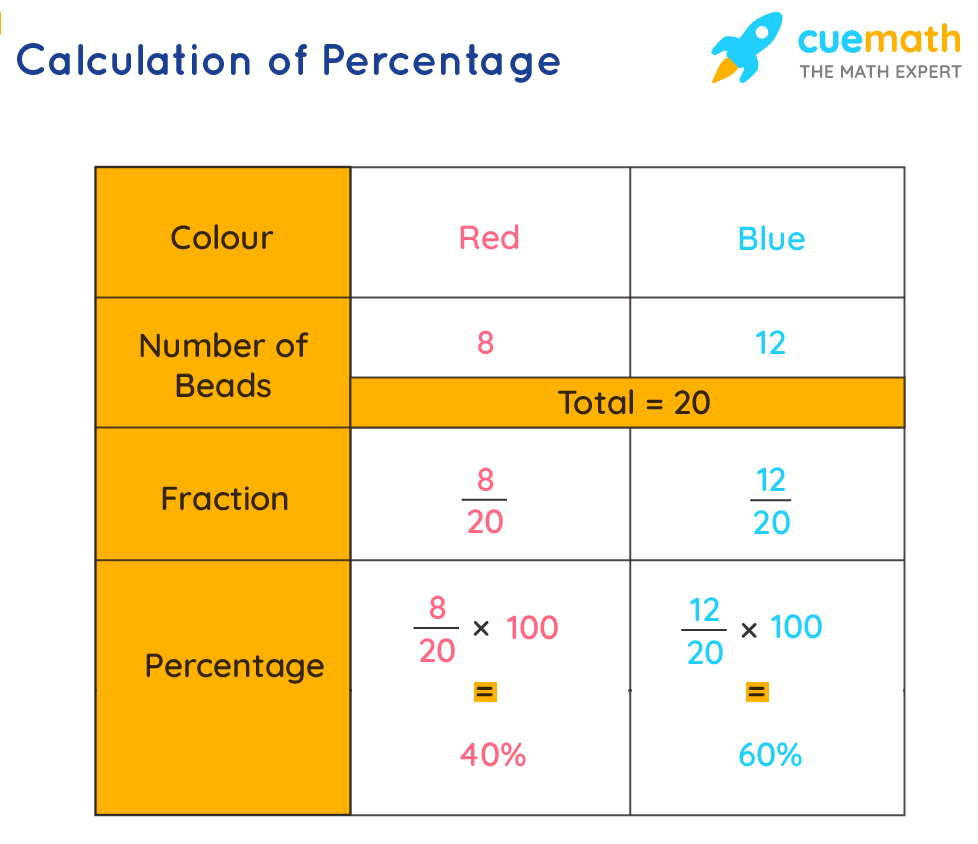
A percentage inherently represents a part of a whole. Imagine a pie cut into 100 slices; if you have 25 slices, you have 25 percent of the pie. The “whole” always represents 100%. This concept is vital because every percentage calculation starts with identifying the ‘part’ and the ‘whole’ in any given financial situation. For example, if you earned $50 in interest on a $1,000 investment, the $50 is the ‘part,’ and the $1,000 is the ‘whole’ (your principal investment).
The Basic Formula: Part/Whole x 100
The universally accepted formula for calculating a percentage is straightforward:
Percentage = (Part / Whole) × 100
Let’s break this down:
-
Part: This is the specific amount or quantity you want to express as a percentage. It could be the discount amount, the interest earned, the increase in revenue, or a specific expense category.
-
Whole: This is the total amount or the base figure against which the part is being compared. It might be the original price, the principal investment, total revenue, or your gross income.
-
× 100: Multiplying by 100 converts the decimal result of the division into a percentage figure.
For instance, if a $20 item is on sale for $15, the discount is $5. To find the percentage discount:
-
Part = $5 (the discount amount)
-
Whole = $20 (the original price)
-
Percentage Discount = (5 / 20) × 100 = 0.25 × 100 = 25%
Converting Percentages to Decimals for Easier Calculation (and vice versa)
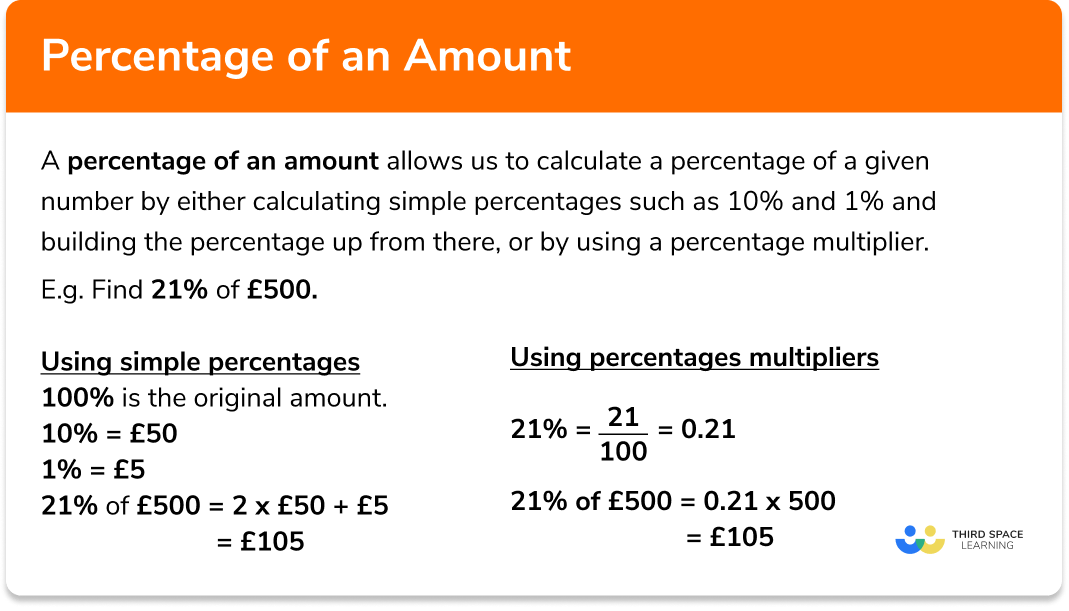
While the formula above calculates a percentage, often in financial calculations, you’ll need to work with percentages, which means converting them to decimals first. This is particularly true when calculating “X percent of Y amount.”
To convert a percentage to a decimal: Divide the percentage by 100.
-
25% = 25 / 100 = 0.25
-
5% = 5 / 100 = 0.05
-
120% = 120 / 100 = 1.20
Conversely, to convert a decimal to a percentage: Multiply the decimal by 100.
-
0.75 = 0.75 × 100 = 75%
-
0.03 = 0.03 × 100 = 3%
Knowing this conversion is crucial for operations like calculating 15% interest on $500. You’d convert 15% to 0.15 and then multiply: 0.15 × $500 = $75.
Essential Applications in Personal Finance
Percentages are the bedrock of sound personal financial management. They empower individuals to understand the impact of their spending, saving, and borrowing habits.
Calculating Discounts and Sales Prices (Saving Money)
One of the most common applications of percentages in daily life is shopping. Discounts are almost always expressed as percentages (e.g., “20% off!”).
To calculate the final price after a discount:
-
Calculate the discount amount: Original Price × (Discount Percentage / 100)
-
Subtract the discount from the original price: Original Price – Discount Amount
Example: A shirt costs $60, and there’s a 25% discount.
-
Discount Amount = $60 × (25 / 100) = $60 × 0.25 = $15
-
Sales Price = $60 – $15 = $45
Understanding this allows you to quickly compare deals and determine true savings.
Understanding Interest Rates (Loans, Savings, Credit Cards)
Interest rates, whether for loans, savings accounts, or credit cards, are always expressed as an annual percentage rate (APR).
To calculate the interest on a principal amount:
Interest Amount = Principal Amount × (Interest Rate / 100) × Time (in years or fraction of a year)
Example: You take out a $10,000 loan at an annual interest rate of 5% for one year.
Interest Amount = $10,000 × (5 / 100) × 1 = $10,000 × 0.05 = $500
For savings accounts, it’s the same principle in reverse. For credit cards, understanding the high percentage rates helps illustrate the cost of carrying a balance.
Budgeting and Expense Tracking (Percentage of Income)
Effective budgeting involves allocating a percentage of your income to various categories like housing, food, savings, and entertainment. This provides a clear picture of how your money is being spent relative to what you earn.
To find the percentage of income spent on a category:
Percentage of Income = (Expense Amount / Total Monthly Income) × 100
Example: Your monthly income is $4,000, and you spend $1,200 on rent.
Percentage on Rent = ($1,200 / $4,000) × 100 = 0.30 × 100 = 30%
Common budgeting rules, like the 50/30/20 rule (50% for needs, 30% for wants, 20% for savings/debt repayment), are built entirely on percentage allocations.
Taxes and Gratuities (Calculating Mandated or Expected Additions)
Sales tax, income tax, and gratuities (tips) are all calculated as a percentage of a base amount.
To calculate the total cost including tax or tip:
-
Calculate the tax/tip amount: Base Amount × (Tax/Tip Percentage / 100)
-
Add to the base amount: Base Amount + Tax/Tip Amount
Example: A restaurant bill is $80, and you want to leave a 15% tip.
-
Tip Amount = $80 × (15 / 100) = $80 × 0.15 = $12
-
Total Payment = $80 + $12 = $92

This ensures you can accurately estimate final costs and tip appropriately.
Leveraging Percentages in Investing and Business Finance
Beyond personal finance, percentages are the backbone of analysis in the investment world and critical for evaluating business performance. They provide standardized metrics for comparison across different scales and timeframes.
Measuring Investment Returns (ROI, Capital Gains)
One of the most critical uses of percentages for investors is calculating the return on investment (ROI) or capital gains. This metric shows the profitability of an investment relative to its cost.
ROI = ((Current Value – Original Cost) / Original Cost) × 100
Example: You bought shares for $1,000, and they are now worth $1,200.
ROI = (($1,200 – $1,000) / $1,000) × 100 = ($200 / $1,000) × 100 = 0.20 × 100 = 20%
This allows investors to compare the performance of different assets, even if their initial costs were vastly different.
Analyzing Profit Margins and Business Growth (Key Performance Indicators)
For businesses, percentages are vital for assessing financial health and growth. Profit margins (gross, operating, net) are expressed as percentages and indicate how much profit a company makes for every dollar of revenue.
Net Profit Margin = (Net Profit / Revenue) × 100
Example: A company has $1,000,000 in revenue and a net profit of $150,000.
Net Profit Margin = ($150,000 / $1,000,000) × 100 = 0.15 × 100 = 15%
Growth rates (e.g., year-over-year revenue growth) are also calculated using percentages, allowing businesses to track their expansion and set future targets.
Understanding Portfolio Allocation and Diversification
Investors use percentages to understand the distribution of their assets across different categories (stocks, bonds, real estate, cash) and industries. This is known as portfolio allocation and is crucial for diversification and risk management.
Allocation Percentage = (Value of Asset Type / Total Portfolio Value) × 100
Example: If your total portfolio is worth $50,000 and you have $20,000 in stocks.
Stock Allocation = ($20,000 / $50,000) × 100 = 0.40 × 100 = 40%
This helps investors ensure their portfolio aligns with their risk tolerance and financial goals.
Calculating Commissions and Royalties for Online Income
For those earning online income through sales, affiliate marketing, or content creation, commissions and royalties are frequently calculated as a percentage of sales or revenue.
Commission/Royalty = Total Sales/Revenue × (Percentage Rate / 100)
Example: You earn a 10% commission on $500 worth of affiliate sales.
Commission = $500 × (10 / 100) = $500 × 0.10 = $50
This is essential for accurately tracking online earnings and forecasting income.
Practical Tips and Tools for Accuracy
While the core concepts are simple, accuracy is paramount in financial calculations. Several tools and practices can help minimize errors and enhance efficiency.
Using Online Calculators and Spreadsheet Functions (Excel, Google Sheets)
For complex calculations or large datasets, digital tools are invaluable.
-
Online Percentage Calculators: Quick and easy for single calculations. A simple web search for “percentage calculator” yields many options.
-
Spreadsheets (Excel, Google Sheets): Ideal for managing budgets, tracking investments, and performing repetitive calculations.
-
To calculate a percentage in Excel:
= (Part / Whole) * 100(then format as percentage if desired). -
To calculate a percentage of an amount:
= Amount * Percentage_as_Decimal(e.g.,=A1*0.25for 25%). -
These tools reduce manual error and allow for dynamic adjustments.
-
Mental Math Shortcuts for Quick Estimates
While precision is key, the ability to quickly estimate percentages can be incredibly useful for on-the-spot decisions, like checking a discount or estimating a tip.
-
Finding 10%: Move the decimal one place to the left (e.g., 10% of $80 is $8.00).
-
Finding 5%: Find 10% and divide by two (e.g., 5% of $80 is $8 / 2 = $4).
-
Finding 1%: Move the decimal two places to the left (e.g., 1% of $80 is $0.80).
-
Building up: To find 20%, find 10% and double it. To find 15%, find 10% and add 5%.
Common Mistakes to Avoid When Working with Percentages
-
Forgetting to convert percentages to decimals: Always convert percentages to decimals (by dividing by 100) before multiplying them by an amount, or you’ll get drastically incorrect results.
-
Confusing “percentage point” with “percentage increase/decrease”: A change from 10% to 12% is a 2 percentage point increase, but a (2/10)*100 = 20% *percentage increase*. These are different and important distinctions in finance.
-
Using the wrong “whole”: Ensure you’re dividing by the correct base amount. For a discount, it’s the original price, not the discounted price. For a salary increase, it’s the original salary, not the new one.
Mastering Percentages for Financial Empowerment
The ability to calculate percentages isn’t merely an academic exercise; it’s a critical life skill that underpins financial literacy. By mastering this fundamental concept, individuals can transform their relationship with money, moving from passive recipients of financial information to active participants in their own financial journey.
From Consumer to Financially Savvy Individual
Understanding percentages allows you to look beyond the flashy sales signs and understand the true cost or saving of a product. It helps you dissect complex financial products, like mortgages or investment funds, and truly grasp the implications of their terms and fees. This transformation from a purely transactional consumer to a financially savvy individual is key to building wealth and achieving long-term financial security.
Making Informed Decisions with Confidence
Whether you’re negotiating a salary, evaluating a business opportunity, planning for retirement, or simply choosing between two competing offers, the confidence derived from accurate percentage calculations is invaluable. It equips you with the tools to critically analyze data, challenge assumptions, and make decisions that are truly in your best financial interest. In a world saturated with financial jargon and complex terms, a solid grasp of percentages acts as your personal decoder ring, simplifying the seemingly complicated and illuminating the path to better financial outcomes.
Conclusion
Calculating the percentage of an amount is a fundamental mathematical skill with profound implications for personal and business finance. From navigating daily transactions like discounts and tips to making strategic decisions about investments, budgeting, and business growth, percentages provide a universal language for understanding proportions, changes, and comparative values. By mastering the basic formulas, recognizing their diverse applications, and utilizing appropriate tools, anyone can unlock greater financial clarity and confidence. In an economy where every dollar counts, the power to precisely calculate and interpret percentages is not just an advantage—it’s an indispensable component of financial empowerment and a cornerstone for building a secure and prosperous future.
aViewFromTheCave is a participant in the Amazon Services LLC Associates Program, an affiliate advertising program designed to provide a means for sites to earn advertising fees by advertising and linking to Amazon.com. Amazon, the Amazon logo, AmazonSupply, and the AmazonSupply logo are trademarks of Amazon.com, Inc. or its affiliates. As an Amazon Associate we earn affiliate commissions from qualifying purchases.