
In the world of finance, numbers tell a story. Whether tracking the growth of an investment portfolio, analyzing a salary increase, or evaluating the expansion of a business, the ability to accurately calculate percentage increases is an indispensable skill. It allows individuals and organizations to understand changes, measure performance, and make informed decisions, translating raw data into meaningful insights. Without this fundamental comprehension, navigating financial landscapes—from personal budgeting to corporate strategy—becomes significantly more challenging. This guide will demystify the process, demonstrating not just how to perform the calculation, but also how to apply it across various critical financial scenarios.
Understanding the Basics: What is a Percentage Increase?
At its core, a percentage increase quantifies the relative change between an initial value and a new, larger value, expressed as a fraction of 100. It provides a standardized way to compare growth or change across different contexts, irrespective of the absolute magnitudes involved. For instance, knowing that your investment grew by $1,000 is useful, but knowing it grew by 10% tells you more about its performance relative to the initial capital and potentially other investments. This concept is fundamental because it moves beyond mere absolute differences, allowing for proportional understanding.
Definition and Importance in Finance
A percentage increase is the extent to which a quantity has grown over time or in comparison to another value, normalized to a per-hundred basis. In financial contexts, this normalization is crucial. For an investor, it helps assess the rate of return on an asset. For a business owner, it measures the pace of revenue expansion. For an employee, it quantifies the impact of a raise on their overall compensation. Without the ability to contextualize changes as percentages, financial figures remain isolated data points, rather than components of a broader narrative of growth, decline, or stability. It’s the metric that allows for true comparison and trend analysis.
The Core Formula: Step-by-Step Breakdown
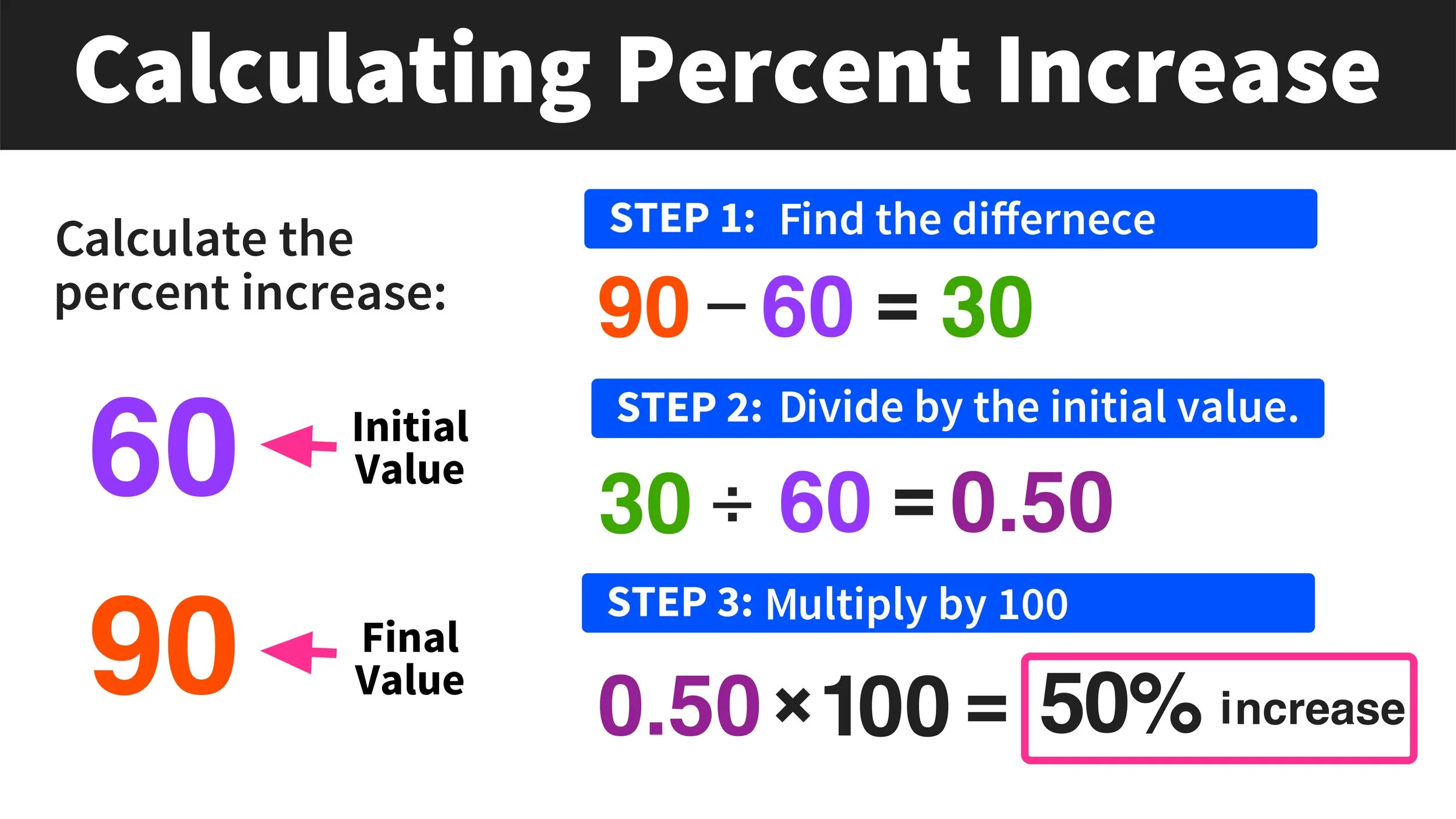
Calculating a percentage increase involves a straightforward formula that can be broken down into three simple steps:
-
Find the Difference: Subtract the original value from the new value. This tells you the absolute amount of the increase.
- Formula: Difference = New Value – Original Value
-
Divide by the Original Value: Divide the difference (the result from step 1) by the original value. This gives you the increase as a decimal. This step determines the proportional change relative to the starting point.
- Formula: Decimal Increase = Difference / Original Value
-
Multiply by 100: Multiply the decimal increase by 100 to convert it into a percentage.
- Formula: Percentage Increase = Decimal Increase × 100
Putting it all together, the consolidated formula is:
Percentage Increase = ((New Value - Original Value) / Original Value) × 100
Example: If your initial investment was $5,000 and it grew to $5,750:
- Difference: $5,750 – $5,000 = $750
- Decimal Increase: $750 / $5,000 = 0.15
- Percentage Increase: 0.15 × 100 = 15%
This means your investment saw a 15% increase.
Practical Applications in Personal Finance and Investing
The utility of percentage increases extends across virtually every facet of personal finance and investing. It’s not merely an academic exercise but a practical tool for everyday financial management and strategic planning.
Tracking Investment Growth and Returns
Perhaps one of the most common applications is in evaluating investment performance. Whether it’s a stock, a mutual fund, real estate, or a retirement account, understanding the percentage increase (or decrease) allows investors to gauge success, compare different assets, and make informed decisions about their portfolios. A 7% annual return on an investment means a very different growth trajectory than a 2% return, directly impacting long-term wealth accumulation. It’s the standard metric for discussing ROI (Return on Investment).
Analyzing Salary Raises and Income Growth
When you receive a salary raise, knowing the percentage increase helps you understand its real impact on your purchasing power and overall financial standing. A $5,000 raise might feel substantial, but if your previous salary was $50,000, it’s a 10% increase, whereas if it was $100,000, it’s only a 5% increase. This distinction is crucial for budgeting, financial planning, and negotiating future compensation. Similarly, understanding the percentage growth of an online income stream or side hustle provides clarity on its scalability and potential.
Understanding Inflation and Cost Increases
Inflation is a critical economic concept that directly impacts personal finance. It represents the rate at which the general level of prices for goods and services is rising, and subsequently, the purchasing power of currency is falling. Expressed as a percentage, inflation figures help individuals understand how much more they need to earn just to maintain their current standard of living. Similarly, analyzing percentage increases in utility bills, grocery costs, or rent allows for proactive budget adjustments and highlights areas where spending efficiency might be needed.
Evaluating Loan Interest and Debt Accumulation
While often discussed as interest rates, the concept is fundamentally about percentage increases in the cost of borrowing money. Understanding how interest compounds and leads to a percentage increase in the total amount owed is vital for managing debt responsibly. Whether it’s a mortgage, a car loan, or credit card debt, grasping the percentage increase in your financial obligations over time empowers you to make smarter borrowing decisions and accelerate debt repayment strategies.
Business Finance Insights: Driving Growth and Profitability
For businesses, percentage increases are indispensable for measuring operational efficiency, market performance, and overall financial health. They provide the quantitative basis for strategic planning, resource allocation, and stakeholder reporting.
Measuring Revenue and Sales Growth
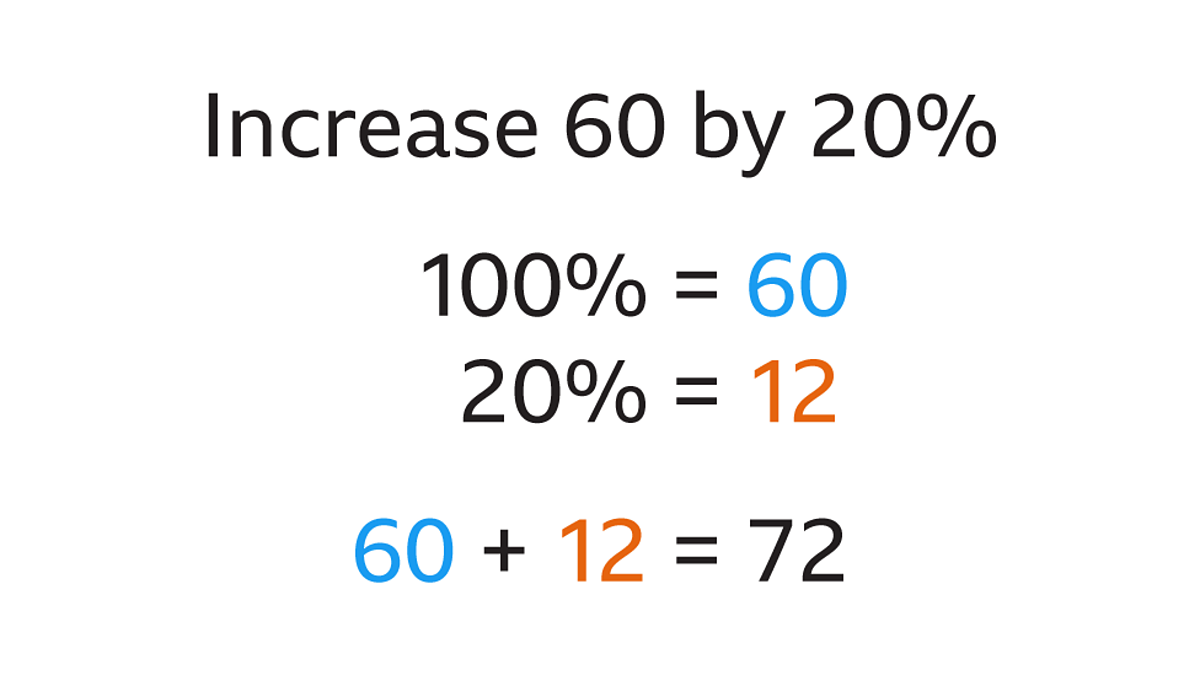
The growth in revenue and sales is a primary indicator of a business’s success and market penetration. Calculating the percentage increase in sales from quarter to quarter or year over year helps management identify trends, assess the effectiveness of marketing campaigns, and forecast future performance. A consistent percentage increase in revenue is often a sign of a healthy, expanding business.
Assessing Profit Margin Improvements
Beyond just top-line revenue, profit margins—the percentage of revenue that translates into profit—are critical. Businesses constantly strive to increase their gross, operating, and net profit margins. Understanding the percentage increase in these margins signifies improvements in cost management, pricing strategies, or operational efficiency. For instance, a percentage increase in the net profit margin indicates that the company is retaining more of each sales dollar after all expenses.
Analyzing Budget Variances and Expense Control
Budgets are financial roadmaps, and deviations from them are known as variances. Calculating the percentage increase (or decrease) in actual expenses versus budgeted expenses is vital for expense control. A significant percentage increase in a particular expense category compared to the budget might trigger an investigation into inefficiencies or unforeseen costs, allowing for corrective action. This continuous monitoring helps maintain financial discipline.
Strategic Planning with Growth Projections
Business expansion, market entry, and new product development all rely heavily on growth projections, which are inherently expressed as percentage increases. Forecasting future revenue, market share, or customer acquisition rates involves setting realistic percentage growth targets. These targets then guide strategic decisions, investment in resources, and overall business direction, ensuring that goals are quantifiable and measurable.
Common Pitfalls and Advanced Considerations
While the basic calculation is straightforward, its application in finance often requires nuanced understanding to avoid misinterpretations and ensure accurate analysis.
Distinguishing Between Simple and Compounded Growth
A critical distinction lies between simple percentage increases and compounded percentage increases. Simple interest/growth applies the percentage only to the original principal amount. Compound interest/growth, however, applies the percentage to the original principal plus any accumulated interest from previous periods. In investing, compounding is a powerful force, leading to exponential growth. Understanding this difference is paramount, especially when evaluating long-term investments or loans, as a small percentage increase compounded over many years can lead to vastly different outcomes.
The Impact of Base Value on Perception
The base value (the original value) plays a significant role in how a percentage increase is perceived. A $100 increase on a $1,000 base is a 10% increase, which sounds substantial. The same $100 increase on a $100,000 base is only a 0.1% increase, which is negligible. While the absolute increase is the same, the percentage highlights the proportional significance. Financial analysts must always consider the base when interpreting percentage changes to avoid making disproportionate judgments or being misled by large percentage changes on small base numbers.
When to Use Percentage Points vs. Percentage Increase
Sometimes, financial discussions refer to “percentage points” instead of “percentage increases.” This distinction is crucial, particularly when dealing with rates or percentages themselves. For example, if an interest rate increases from 5% to 7%, this is an increase of 2 percentage points, not a 2% increase. A 2% increase on a 5% rate would mean (5% * 1.02) = 5.1%. Using percentage points avoids ambiguity when discussing changes in rates or percentages.
Leveraging Financial Tools for Seamless Calculations
While understanding the manual calculation is essential for conceptual grasp, financial tools can streamline the process, especially when dealing with large datasets or complex scenarios.
Spreadsheets (Excel/Google Sheets) for Automation
Spreadsheet software like Microsoft Excel or Google Sheets are invaluable. They allow users to input original and new values, and then use formulas to automatically calculate percentage increases across multiple rows or columns. This is particularly useful for tracking investment portfolios over time, analyzing quarterly sales data, or managing budget variances for various departments. Functions such as ((B2-A2)/A2)*100 can be easily replicated, saving significant time and reducing errors.
Online Calculators and Mobile Apps
Numerous online percentage calculators and mobile finance apps are available, offering quick and accurate calculations. These tools are convenient for on-the-spot calculations, such as determining the percentage increase of a specific stock price movement or figuring out the percentage impact of a recent purchase on your budget. While user-friendly, it’s always wise to understand the underlying formula to verify results and build intuition.
The Value of Manual Calculation for Understanding
Despite the availability of automated tools, the process of manually calculating percentage increases—even just occasionally—reinforces understanding. It helps to internalize the relationship between the original value, the new value, and the resulting percentage change. This deeper comprehension is invaluable for critical thinking, error checking, and truly grasping the financial implications behind the numbers, rather than just accepting a figure generated by software.

Conclusion: Empowering Your Financial Decisions
The ability to calculate percentage increases is far more than a mathematical trick; it is a critical skill for anyone engaging with financial data. From personal budgeting and investment tracking to corporate financial analysis and strategic planning, this fundamental calculation provides the lens through which we interpret growth, assess performance, and forecast future outcomes. By mastering the core formula, understanding its diverse applications, and being aware of common pitfalls, individuals and businesses can gain a profound advantage, making more informed, insightful, and ultimately, more successful financial decisions. Embrace this powerful tool, and you empower yourself to navigate the complexities of the financial world with greater clarity and confidence.
aViewFromTheCave is a participant in the Amazon Services LLC Associates Program, an affiliate advertising program designed to provide a means for sites to earn advertising fees by advertising and linking to Amazon.com. Amazon, the Amazon logo, AmazonSupply, and the AmazonSupply logo are trademarks of Amazon.com, Inc. or its affiliates. As an Amazon Associate we earn affiliate commissions from qualifying purchases.