
In the world of finance, numbers are the language of progress, but not all numbers tell a story of growth. Understanding how to calculate a percentage drop is perhaps one of the most vital skills for any investor, business owner, or personal finance enthusiast. Whether you are tracking a dip in the stock market, measuring a reduction in monthly business overhead, or evaluating the depreciation of an asset, the “percentage drop” provides a standardized way to quantify loss and volatility.
While a raw dollar amount tells you what happened, a percentage tells you the magnitude of what happened relative to where you started. A $100 loss on a $1,000 investment is a manageable 10% dip; the same $100 loss on a $200 investment is a catastrophic 50% wipeout. This article provides a comprehensive guide to mastering this calculation and applying it within a professional financial framework.
The Fundamentals of Percentage Change in Finance
At its core, calculating a percentage drop is an exercise in determining the relative change between two points in time. In financial terms, we are usually looking at an “Original Value” (the starting point) and a “New Value” (the current or ending point).
Defining Percentage Drop vs. Percentage Increase
In finance, “change” is the umbrella term, but we categorize it based on direction. A percentage increase measures growth, while a percentage drop measures contraction or loss. It is important to distinguish these because the psychological and strategic responses to a 20% drop are vastly different from those of a 20% gain. In accounting, a percentage drop is often referred to as a “variance,” specifically an unfavorable variance when dealing with revenue or a favorable variance when dealing with expenses.
The Step-by-Step Formula for Manual Calculation
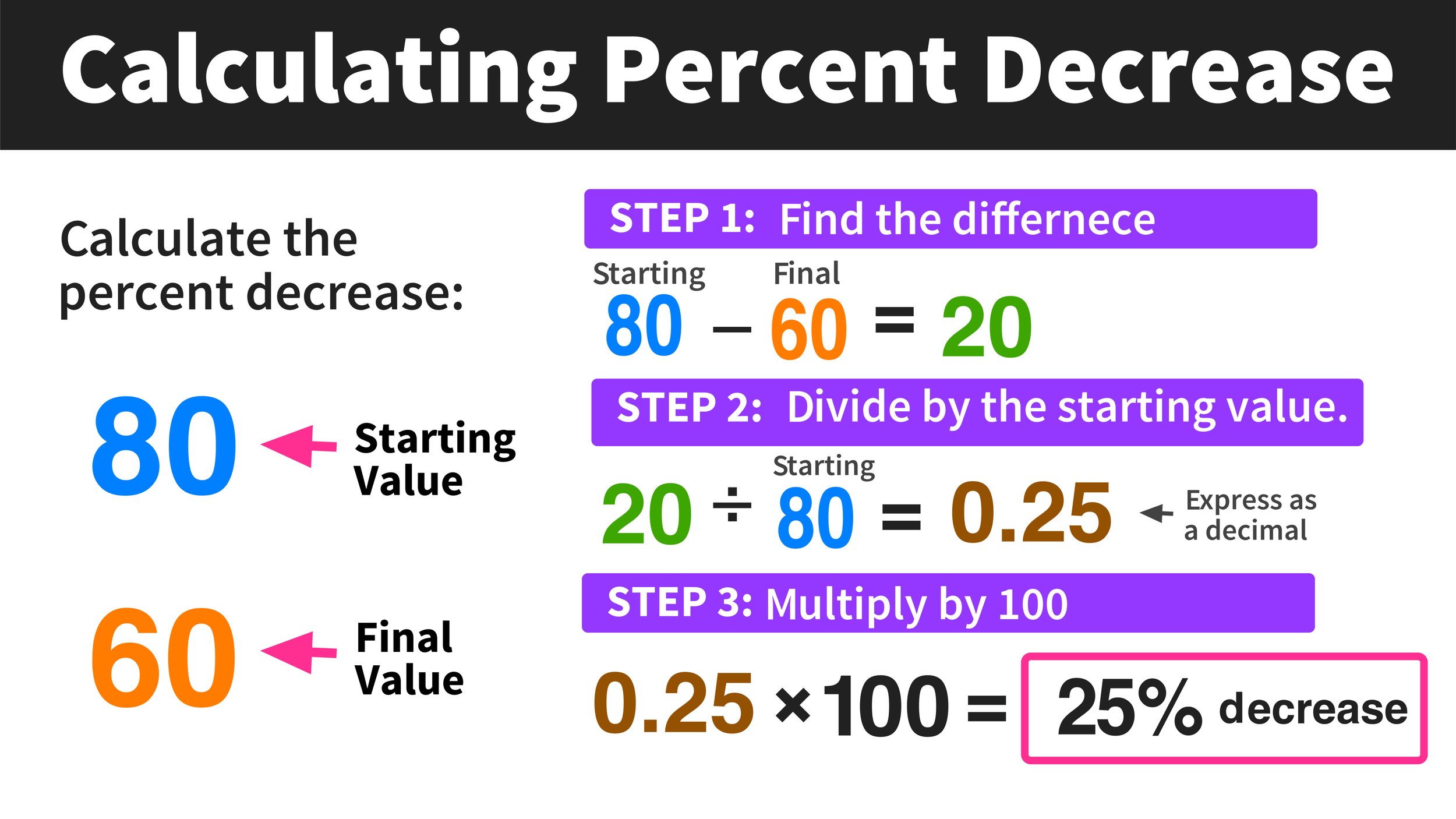
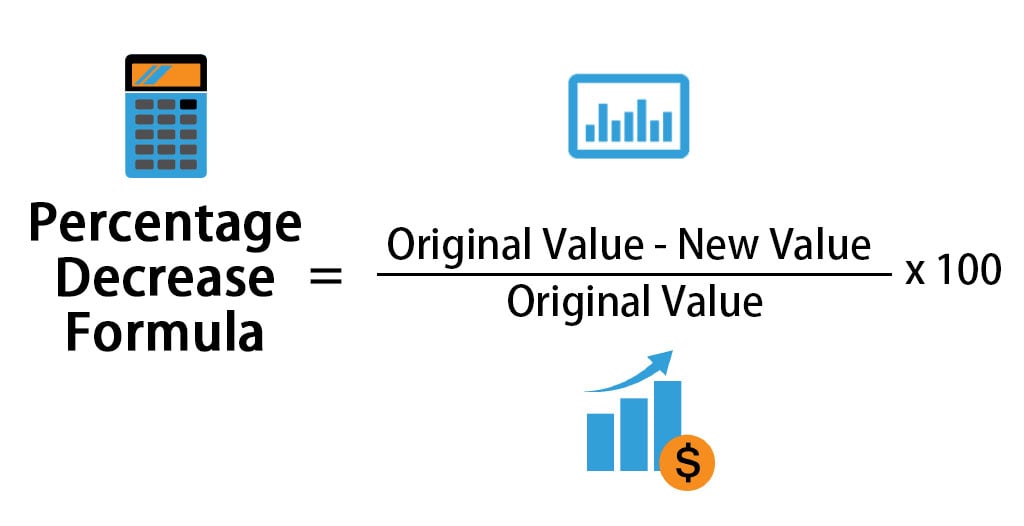
To calculate the percentage drop manually, you follow a simple three-step mathematical process. The formula is:
((Original Value – New Value) / Original Value) × 100
- Find the Difference: Subtract the New Value from the Original Value. This gives you the absolute decrease in currency or units.
- Divide by the Original: Divide that difference by the Original Value. This creates a decimal representing the “portion” of the original value that was lost.
- Convert to Percentage: Multiply the result by 100 to move the decimal point two places to the right, giving you the final percentage.
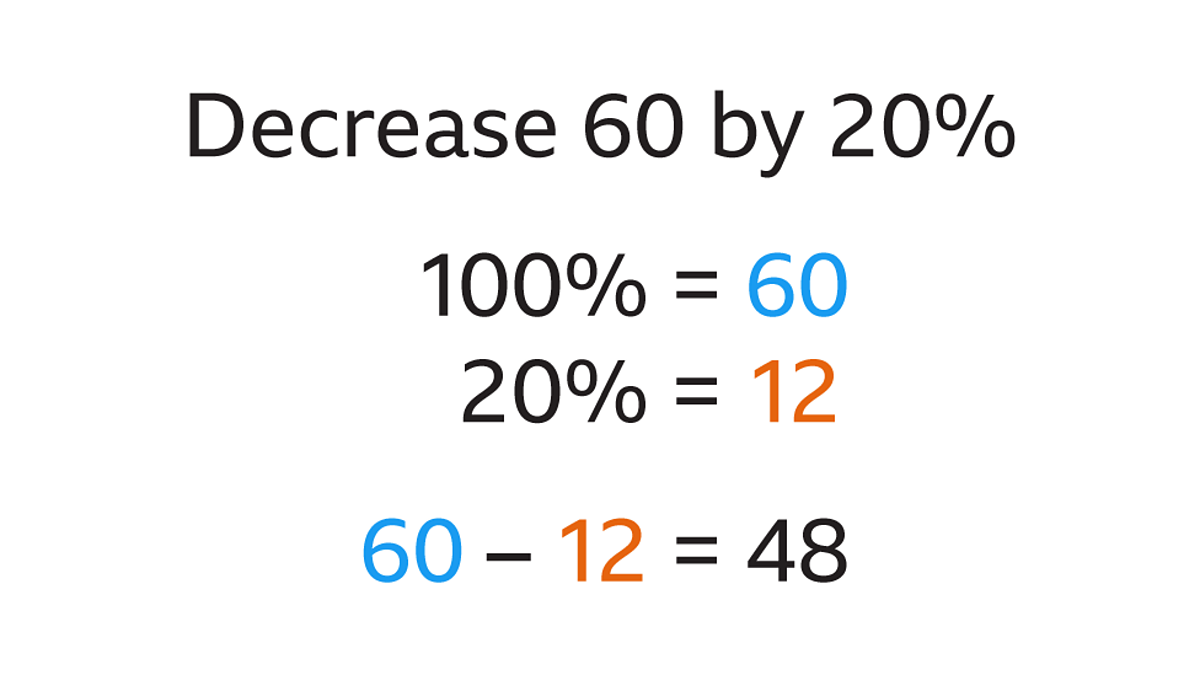
Example: If you bought a share of a tech company at $150 and it is now trading at $120:
- $150 – $120 = $30 (The absolute drop)
- $30 / $150 = 0.2
- 0.2 × 100 = 20%
The stock has experienced a 20% drop.
Applying Percentage Drop to Investment Performance
In the realm of investing, the percentage drop is the primary metric for measuring risk and volatility. Investors use it to set “stop-loss” orders and to evaluate the historical “drawdown” of a fund or asset class.
Measuring Portfolio Drawdowns
A “drawdown” is a specific type of percentage drop that measures the decline from a peak to a trough during a specific period. For institutional investors, understanding the maximum drawdown of a portfolio is critical for risk management. If a portfolio has a history of 30% drops during market corrections, an investor must decide if they have the “stomach” or the liquidity to withstand such a dip without panic-selling.
Calculating these drops regularly allows you to rebalance your portfolio. If one asset class drops by 15% while another remains stagnant, your asset allocation has shifted. By calculating these drops, you can identify when it is time to buy more of the “dropped” asset to return to your target allocation—a strategy known as “buying the dip.”
Understanding the “Recovery Gap”
One of the most profound lessons in financial mathematics is the asymmetry between percentage drops and the gains required to recover. This is often called the “Recovery Gap.” Because a percentage drop reduces the principal balance (the base), you need a higher percentage gain to return to your original starting point.
Consider this:
- If your investment drops 10%, you need an 11.1% gain to break even.
- If it drops 20%, you need a 25% gain to break even.
- If it drops 50%, you need a 100% gain (a doubling of your money) just to get back to zero.
This mathematical reality is why professional wealth managers focus so heavily on “downside protection.” By minimizing the percentage drop during market downturns, you significantly lower the hurdle required for future growth.
Business Finance: Tracking Revenue and Cost Reductions
Outside of the stock market, percentage drop calculations are essential for maintaining the fiscal health of a business. Corporate finance teams use this metric to track everything from seasonal sales fluctuations to the effectiveness of lean operating initiatives.
Analyzing Month-over-Month (MoM) Revenue Declines
For a business, a drop in revenue is a signal that requires immediate investigation. By calculating the percentage drop in revenue from one month to the next (MoM) or one year to the next (YoY), leadership can determine if a decline is a minor fluctuation or a systemic trend.
For instance, if a retail business sees a 15% drop in sales in January compared to December, this might be expected due to the post-holiday slowdown. However, if the percentage drop is 15% compared to the previous January, it indicates a loss in market share or a change in consumer behavior. Percentage drops provide the context necessary to distinguish between “seasonal noise” and “structural signals.”
Calculating the Success of Cost-Cutting Initiatives
Not all percentage drops are negative. In business finance, a drop in “Operating Expenses” (OPEX) or “Cost of Goods Sold” (COGS) is a sign of increased efficiency. When a CFO sets a goal to “reduce overhead by 10%,” they are using the percentage drop formula to set a KPI (Key Performance Indicator).
If a company spends $50,000 a month on cloud computing services and, through optimization, reduces that to $42,000, they have achieved a 16% drop in costs. In this context, the percentage drop is a measure of success and improved profit margins.
Strategic Financial Tools and Automation
While manual calculation is important for understanding the underlying logic, modern financial management relies on automation to track percentage drops across thousands of data points simultaneously.
Leveraging Excel and Google Sheets for Real-Time Analysis
Spreadsheets are the workhorse of financial analysis. To calculate a percentage drop in Excel, you don’t need to do the three-step manual process; you can use a streamlined formula.
If your Original Value is in cell A2 and your New Value is in cell B2, the formula for the percentage change is:
=(B2-A2)/A2
Note: This formula will return a negative decimal if there is a drop. To display it as a positive percentage drop for a report, you can wrap it in an absolute value function or simply reverse the cells: =(A2-B2)/A2.
By using these formulas, investors can create “watchlists” that automatically highlight assets that have dropped by more than a certain percentage, triggering a “buy” or “sell” signal based on their specific financial strategy.
Using Financial Dashboards for Risk Mitigation
Today’s fintech tools—ranging from personal apps like Mint or Rocket Money to professional platforms like Bloomberg Terminal or QuickBooks—provide real-time visualizations of percentage drops. These dashboards often use “Heat Maps” where deeper shades of red indicate larger percentage drops.
The strategic value of these tools lies in “Exception Reporting.” Rather than looking at every single expense or investment, a financial manager can set an alert for any line item that experiences a percentage drop of more than 5%. This allows for “Management by Exception,” where human intervention is reserved for significant deviations from the financial plan.
Conclusion: The Power of Relative Perspective
In finance, raw numbers are often a distraction. A “one-thousand-dollar loss” means nothing without the context of the total capital. By mastering the calculation of percentage drops, you shift your perspective from absolute values to relative performance.
This skill allows you to understand the severity of market volatility, recognize the steep hill of recovery after a loss, and accurately measure the efficiency of business operations. Whether you are protecting your retirement nest egg or scaling a multinational corporation, the ability to quantify “how far things have fallen” is the first step in determining “how to help them rise again.”
aViewFromTheCave is a participant in the Amazon Services LLC Associates Program, an affiliate advertising program designed to provide a means for sites to earn advertising fees by advertising and linking to Amazon.com. Amazon, the Amazon logo, AmazonSupply, and the AmazonSupply logo are trademarks of Amazon.com, Inc. or its affiliates. As an Amazon Associate we earn affiliate commissions from qualifying purchases.