
In an increasingly complex financial world, the ability to understand and calculate percentages is not just a useful skill – it’s an indispensable cornerstone of financial literacy. From dissecting loan interest rates and understanding investment returns to navigating sales tax, discounts, and budgeting effectively, percentages permeate nearly every aspect of our economic lives. Mastering percentage calculations empowers individuals and businesses to make informed decisions, identify opportunities, and mitigate risks, ultimately leading to greater financial control and success.
This guide will demystify percentage calculations, breaking down the core concepts and providing practical applications rooted firmly in the world of money. Whether you’re managing personal finances, evaluating business proposals, or simply trying to understand your paycheck, a solid grasp of percentages is your key to clarity and confidence.
The Core Concept of Percentages in Finance
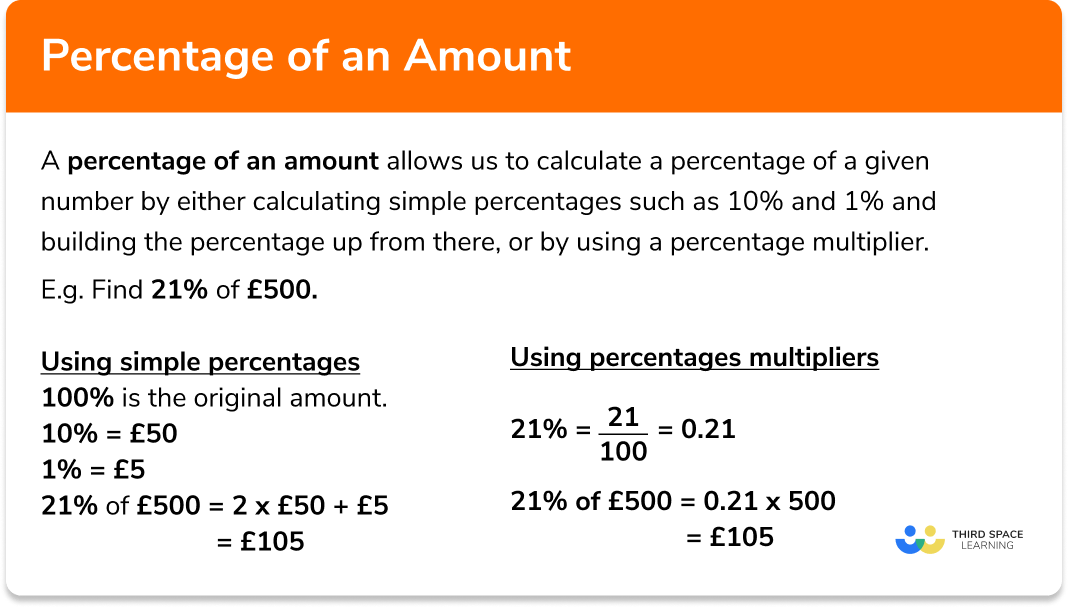
At its heart, a percentage is simply a way to express a number as a fraction of 100. The word “percent” itself comes from the Latin per centum, meaning “by the hundred.” This standardized way of comparing parts of a whole makes percentages incredibly versatile and universally understood in financial contexts.
Defining the Percentage: A Financial Lens
In finance, percentages serve as a common language to quantify relationships and changes. For example, an interest rate of 5% means you pay or earn 5 units for every 100 units of capital. A 20% discount means you save 20 units for every 100 units of the original price. A 3% inflation rate signifies that the general price level of goods and services has increased by 3 units for every 100 units of their previous value.
This consistent “out of 100” framework allows for easy comparison across different scales and magnitudes. You can compare the profit margin of a small startup to that of a multinational corporation, or the investment return of a small individual portfolio to a large institutional fund, all thanks to the unifying power of percentages.
Why Percentages Matter in Your Financial Life
The ubiquity of percentages in finance cannot be overstated. Consider these scenarios:
- Budgeting and Spending: Understanding what percentage of your income goes towards housing, food, or savings helps you allocate resources effectively and identify areas for adjustment.
- Saving and Investing: Interest rates on savings accounts, Certificates of Deposit (CDs), and bonds are expressed as percentages. Investment returns, such as stock gains or mutual fund performance, are almost always presented as percentage changes, allowing you to gauge growth and compare opportunities.
- Debt Management: Loan interest rates (mortgages, credit cards, personal loans) are crucial percentages that determine the true cost of borrowing. Understanding them helps you calculate payments and identify the most affordable options.
- Taxes: Income tax rates, sales tax, property tax rates – these are all percentage-based calculations that directly impact your disposable income and purchasing power.
- Business Finance: Profit margins, revenue growth, cost reductions, market share – all vital business metrics are routinely calculated and analyzed using percentages.
Without a firm grasp of percentage calculations, individuals and businesses are left guessing, making it difficult to plan for the future, evaluate opportunities, or understand the financial landscape around them.
Mastering the Foundational Percentage Calculations
At the core of all percentage analysis are a few fundamental calculations. Once these are understood, more complex financial scenarios become much easier to tackle.
Calculating a Percentage of a Number: Discounts, Taxes, and Commissions
One of the most common applications is finding a specific percentage of a given amount. This is crucial for calculating sales tax, discounts, tips, or commissions.
Formula: (Percentage / 100) × Whole Amount
Example 1: Calculating a Discount
You want to buy a new laptop that costs $1,200. It’s currently on sale for 15% off. How much is the discount?
- Percentage = 15
- Whole Amount = $1,200
- Discount Amount = (15 / 100) × $1,200 = 0.15 × $1,200 = $180
- The laptop is $180 off. The final price would be $1,200 – $180 = $1,020.
Example 2: Calculating Sales Tax
You purchase an item for $75, and the sales tax rate is 8%. How much sales tax will you pay?
- Percentage = 8
- Whole Amount = $75
- Sales Tax Amount = (8 / 100) × $75 = 0.08 × $75 = $6
- You will pay $6 in sales tax. The total cost would be $75 + $6 = $81.
Determining the Percentage of a Whole: Performance and Allocation
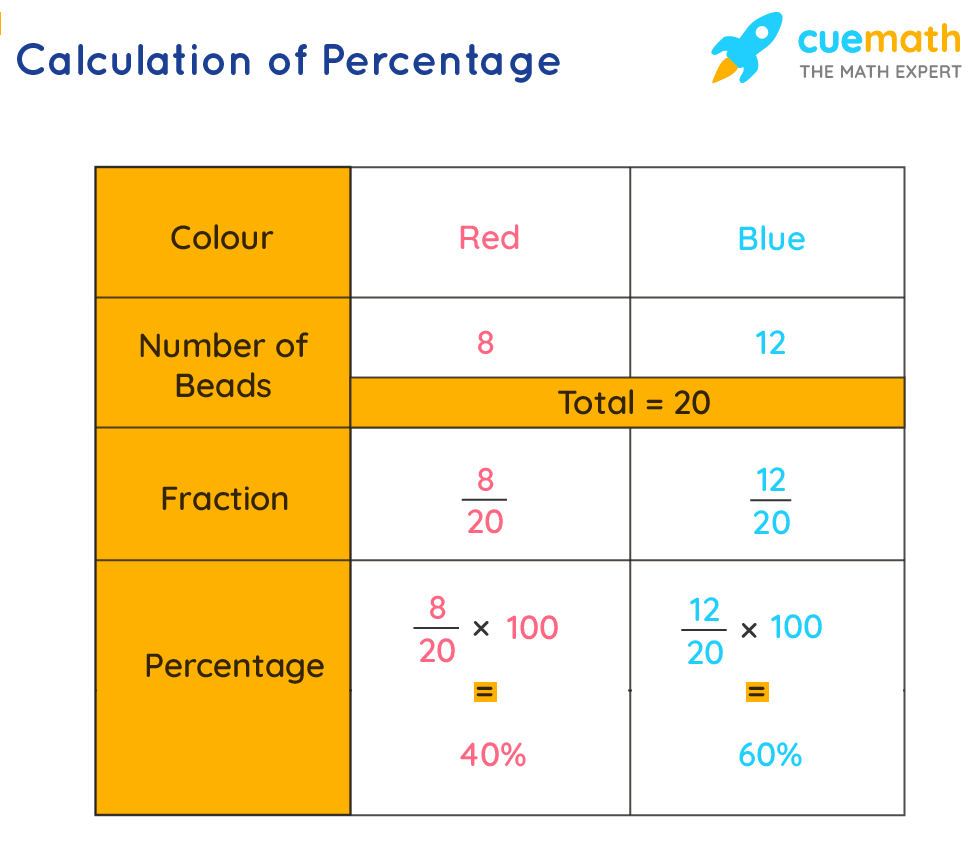
Another vital calculation is figuring out what percentage one number is of another. This is used for understanding financial allocations, performance metrics, and comparing different components to a total.
Formula: (Part / Whole) × 100
Example 1: Budget Allocation
Your monthly income is $4,000, and you spend $1,200 on rent. What percentage of your income goes to rent?
- Part = $1,200 (rent)
- Whole = $4,000 (total income)
- Percentage = ($1,200 / $4,000) × 100 = 0.30 × 100 = 30%
- 30% of your income is allocated to rent.
Example 2: Investment Portfolio Allocation
You have an investment portfolio worth $50,000, and $15,000 of it is invested in a specific tech stock. What percentage of your portfolio is in that tech stock?
- Part = $15,000 (tech stock investment)
- Whole = $50,000 (total portfolio value)
- Percentage = ($15,000 / $50,000) × 100 = 0.30 × 100 = 30%
- 30% of your portfolio is in the tech stock.
Understanding Percentage Change: Growth, Loss, and Market Volatility
Financial markets, economic indicators, and personal wealth are constantly in flux. Percentage change allows us to quantify the magnitude of these movements, whether an increase or a decrease, relative to an initial value. This is critical for assessing performance, growth, or decline over time.
Calculating Percentage Increase: Investment Returns and Revenue Growth
When an amount grows, we calculate the percentage increase to understand the rate of growth.
Formula: ((New Value – Old Value) / Old Value) × 100
Example 1: Investment Return
You invested $5,000 in a stock, and it grew to $5,750. What is the percentage increase (return)?
- New Value = $5,750
- Old Value = $5,000
- Percentage Increase = (($5,750 – $5,000) / $5,000) × 100 = ($750 / $5,000) × 100 = 0.15 × 100 = 15%
- Your investment saw a 15% increase.
Example 2: Revenue Growth
A business’s revenue increased from $150,000 last year to $180,000 this year. What is the percentage growth?
- New Value = $180,000
- Old Value = $150,000
- Percentage Growth = (($180,000 – $150,000) / $150,000) × 100 = ($30,000 / $150,000) × 100 = 0.20 × 100 = 20%
- The business experienced a 20% revenue growth.
Calculating Percentage Decrease: Expense Reductions and Depreciation
Conversely, when an amount shrinks, we calculate the percentage decrease to quantify the reduction.
Formula: ((Old Value – New Value) / Old Value) × 100
Example 1: Expense Reduction
Your monthly utility bill decreased from $120 last month to $96 this month. What is the percentage decrease?
- Old Value = $120
- New Value = $96
- Percentage Decrease = (($120 – $96) / $120) × 100 = ($24 / $120) × 100 = 0.20 × 100 = 20%
- Your utility bill decreased by 20%.
Example 2: Asset Depreciation
A company vehicle was valued at $30,000 at the beginning of the year and is now valued at $25,500 due to depreciation. What is the percentage depreciation?
- Old Value = $30,000
- New Value = $25,500
- Percentage Depreciation = (($30,000 – $25,500) / $30,000) × 100 = ($4,500 / $30,000) × 100 = 0.15 × 100 = 15%
- The vehicle depreciated by 15%.
Advanced Applications and Common Financial Scenarios
Beyond the basic calculations, percentages form the backbone of more complex financial analyses and situations.
Reverse Percentage Calculations: Finding the Original Amount
Sometimes you know the final amount after a percentage change (like a discount or tax) and need to find the original amount.
Formula for finding original amount after a percentage decrease (e.g., discount):
Original Amount = Final Amount / (1 – (Percentage Decrease / 100))
Example: Original Price Before Discount
You bought a shirt on sale for $40, which was 20% off the original price. What was the original price?
- Final Amount = $40
- Percentage Decrease = 20
- Original Price = $40 / (1 – (20 / 100)) = $40 / (1 – 0.20) = $40 / 0.80 = $50
- The original price of the shirt was $50.
Formula for finding original amount after a percentage increase (e.g., tax):
Original Amount = Final Amount / (1 + (Percentage Increase / 100))
Example: Price Before Sales Tax
You paid $53 total for an item, including an 6% sales tax. What was the price of the item before tax?
- Final Amount = $53
- Percentage Increase = 6
- Original Price = $53 / (1 + (6 / 100)) = $53 / (1 + 0.06) = $53 / 1.06 = $50
- The item’s price before sales tax was $50.
Compound Interest and Growth: The Power of Percentages Over Time
Perhaps one of the most powerful financial concepts underpinned by percentages is compound interest. This is where interest is earned not only on the initial principal but also on the accumulated interest from previous periods. Understanding this concept is crucial for long-term saving, investing, and debt management. While the full formula for compound interest is more complex, the underlying principle relies on repeated percentage calculations.
For instance, an investment growing at 7% annually doesn’t just grow by 7% of the original amount each year; it grows by 7% of the new, larger amount each year, leading to exponential growth. The same principle, unfortunately, applies to debt, where interest can compound rapidly if not managed.
Understanding Financial Ratios and Metrics
Many standard financial analysis tools are expressed as percentages:
- Profit Margins: Gross Profit Margin, Operating Profit Margin, Net Profit Margin – these show what percentage of revenue turns into profit at different stages.
- Return on Investment (ROI): This metric expresses the profitability of an investment as a percentage of its cost, allowing for easy comparison across different investment opportunities.
- Debt-to-Income Ratio: A critical personal finance metric for lenders, indicating what percentage of your gross monthly income goes towards debt payments.
- Return on Assets (ROA) & Return on Equity (ROE): Key performance indicators for businesses, showing how efficiently a company is using its assets or equity to generate profits, expressed as percentages.
Tools and Best Practices for Accuracy
While the calculations themselves are straightforward, applying them correctly in real-world financial scenarios requires attention to detail and sometimes the right tools.
Leveraging Calculators and Spreadsheets
For everyday calculations, a basic calculator is sufficient. However, for more complex financial planning, budgeting, or business analysis, spreadsheet software like Microsoft Excel or Google Sheets is invaluable. Spreadsheets allow you to:
- Automate calculations: Set up formulas once and apply them to multiple data sets.
- Model scenarios: Easily change variables (e.g., interest rates, growth percentages) to see their impact on outcomes.
- Organize data: Keep financial figures structured and easy to analyze.
- Visualize data: Create charts and graphs to illustrate percentage trends and allocations.
Many online percentage calculators are also available for quick checks or specific financial calculations (e.g., mortgage calculators, tip calculators).
Common Pitfalls and How to Avoid Them
Even with the right tools, mistakes can happen. Be aware of these common pitfalls:
- Misinterpreting the Base Value: Always be clear about what the “whole” or “old value” is for your percentage calculation. Forgetting to subtract a discount before calculating tax, for example, is a common error.
- Confusing Percentage Points with Percentage Changes: A stock going from 10% market share to 12% is an increase of 2 percentage points, but a (12-10)/10 * 100 = 20% percentage change in market share. These are very different.
- Rounding Errors: Rounding too early in multi-step calculations can lead to significant inaccuracies in the final financial figures, especially with large sums.
- Neglecting the Context: A 10% return might sound good, but if inflation is 8%, the real return is much lower. Always consider the broader financial context.

Conclusion
Understanding “how to calculate percentage amount” is more than just an arithmetic exercise; it’s a foundational pillar of financial literacy. From the smallest personal budgeting decision to the largest corporate investment strategy, percentages provide the indispensable framework for quantification, comparison, and informed decision-making. By mastering these core calculations – finding a percentage of a number, determining a part’s percentage of a whole, calculating percentage changes, and tackling reverse percentages – you equip yourself with the analytical power to navigate the financial world with confidence and insight. Embrace percentages, and unlock a clearer, more empowered financial future.
aViewFromTheCave is a participant in the Amazon Services LLC Associates Program, an affiliate advertising program designed to provide a means for sites to earn advertising fees by advertising and linking to Amazon.com. Amazon, the Amazon logo, AmazonSupply, and the AmazonSupply logo are trademarks of Amazon.com, Inc. or its affiliates. As an Amazon Associate we earn affiliate commissions from qualifying purchases.