
In the intricate world of money, numbers tell a story, and percentages are the crucial grammar that helps us understand that narrative. From personal budgeting and investment returns to business profitability and economic indicators, the ability to calculate a percentage of a total isn’t just a mathematical exercise; it’s a fundamental financial superpower. It allows us to compare, analyze, and make informed decisions, transforming raw data into actionable insights. Without a solid grasp of percentages, navigating the complexities of modern finance can feel like sailing without a compass.

This guide will demystify the calculation of a percent of a total, demonstrating its profound relevance across various financial landscapes. We’ll break down the core formula, explore its diverse applications in both personal and business finance, delve into the tools that simplify these calculations, and highlight common pitfalls to ensure your financial insights are always accurate and reliable. Mastering percentages is not merely about arithmetic; it’s about cultivating a deeper understanding of your financial health and the economic forces around you, empowering you to make smarter, more strategic choices.
The Fundamental Formula: Unlocking Financial Insights
At its heart, calculating a percentage of a total is a simple yet powerful mathematical concept that quantifies a part of a whole in relation to 100. This universal language allows for easy comparison, regardless of the absolute numbers involved.
Deconstructing the Percentage Formula
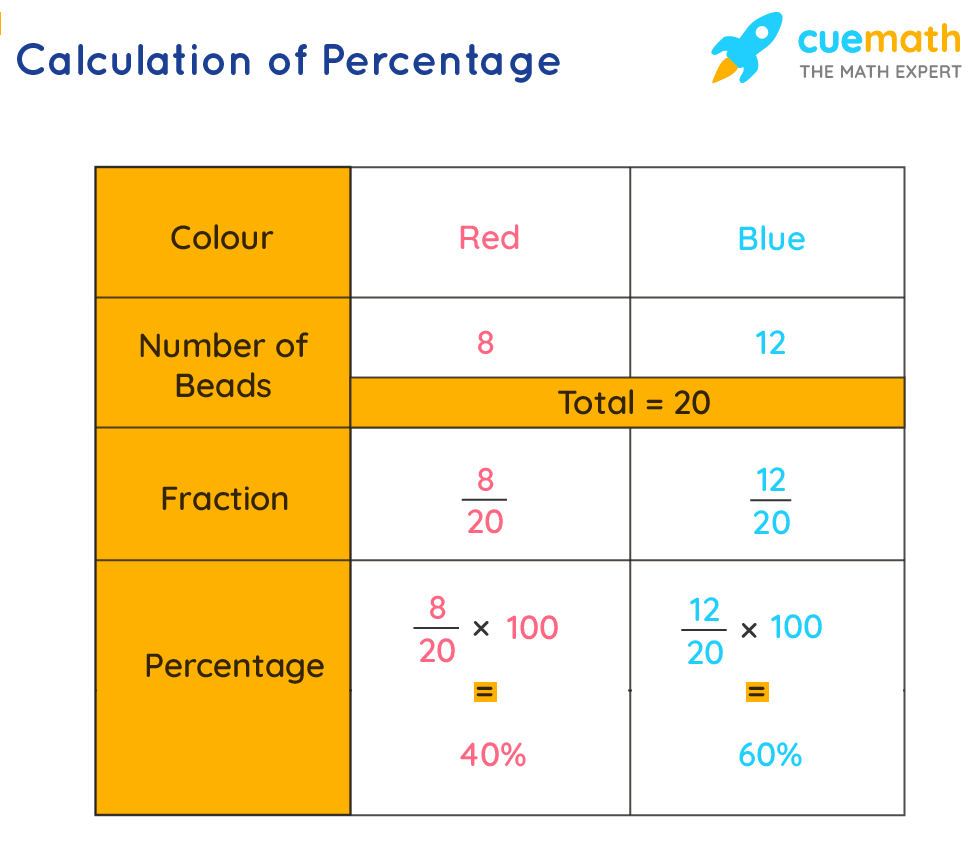
The core formula for calculating a percentage is remarkably straightforward:
$$text{Percentage} = left( frac{text{Part}}{text{Total}} right) times 100$$
Let’s break down each component:
-
Part: This is the specific amount or quantity you are interested in, representing a portion of the larger whole. In financial terms, this could be your monthly rent payment, the profit from a single sale, or the interest earned on an investment.
-
Total: This represents the entire amount, the comprehensive whole against which the “part” is being measured. Financially, this might be your gross monthly income, total sales revenue for a quarter, or the initial capital invested in a project.
-
× 100: Multiplying the resulting decimal or fraction by 100 converts it into a percentage, expressing it as a number “out of one hundred.” For instance, 0.25 becomes 25%, indicating 25 parts for every 100 parts of the total.
To illustrate with a non-financial example first for clarity: If you have 20 apples (Total) and 5 of them are red (Part), the percentage of red apples is $(5 / 20) times 100 = 0.25 times 100 = 25%$. This basic understanding forms the bedrock for all financial percentage calculations.
Practical Application in Personal Finance
The ability to calculate a percent of a total is indispensable for managing your personal finances effectively:
-
Budgeting and Expense Analysis: By calculating what percentage of your total income goes to housing, food, transportation, or entertainment, you gain a clear picture of your spending habits. For example, if your monthly income is $4,000 (Total) and your rent is $1,200 (Part), your housing takes up $($1,200 / $4,000) times 100 = 30%$ of your income. This allows you to identify areas for potential savings or reallocate funds more efficiently.
-
Debt Management: Understanding your debt-to-income ratio (DTI) is critical. If your total monthly debt payments (Part) amount to $1,000 and your gross monthly income (Total) is $5,000, your DTI is $($1,000 / $5,000) times 100 = 20%$. Lenders often use this percentage to assess your creditworthiness, and a lower DTI generally indicates better financial health.
-
Savings and Investment Goals: Whether you’re aiming to save 10% of every paycheck or allocate a certain percentage of your portfolio to a specific asset class, percentages guide your progress. For instance, if you save $400 (Part) from a $4,000 (Total) paycheck, you’re saving $($400 / $4,000) times 100 = 10%$.
-
Discounts and Sales: Calculating the actual price after a percentage discount is a daily financial skill. A $50 item with a 20% discount means you save $$50 times 0.20 = $10$, making the new price $$50 – $10 = $40$.
-
Taxes: Understanding your effective tax rate – the percentage of your total income paid in taxes – helps you grasp the true impact of taxation on your take-home pay.
Beyond Basic Calculations: Advanced Financial Applications
The utility of percentages extends far beyond simple personal finance, becoming a critical analytical tool in more complex financial landscapes such as investing, business operations, and economic analysis.
Investment Performance and Returns
For investors, percentages are the primary metric for evaluating performance and making strategic decisions:
-
Return on Investment (ROI): This vital metric measures the profitability of an investment relative to its cost. The formula is: $((text{Current Value} – text{Original Cost}) / text{Original Cost}) times 100$. If you invested $10,000 and it grew to $12,000, your ROI is $(($12,000 – $10,000) / $10,000) times 100 = 20%$. This allows for direct comparison of different investment opportunities.
-
Portfolio Allocation: Investors use percentages to define the strategic distribution of their assets across different categories (e.g., 60% stocks, 30% bonds, 10% real estate). This diversification strategy helps manage risk and optimize returns based on individual financial goals and risk tolerance.
-
Compound Interest: The magic of compound interest relies entirely on percentage rates. Understanding how a small percentage gain, compounded over time, can lead to exponential growth is fundamental to long-term wealth building.
Business Finance and Profitability
In business, percentages are the language of financial health, efficiency, and growth:
-
Profit Margins: Businesses constantly track various profit margins (Gross, Operating, Net) as a percentage of revenue. Gross Profit Margin $= ((text{Revenue} – text{Cost of Goods Sold}) / text{Revenue}) times 100$. If a company generates $1,000,000 in revenue and has a gross profit of $400,000, its gross margin is $40%$. These percentages indicate how efficiently a company converts sales into profit.
-
Revenue Growth Rate: $(((text{Current Period Revenue} – text{Previous Period Revenue}) / text{Previous Period Revenue})) times 100$ measures how quickly a business is expanding. A 15% annual growth rate sounds much more impressive and comparable than saying revenue grew from $1M to $1.15M.
-
Expense Ratios: Businesses monitor what percentage of their revenue is consumed by specific expenses like marketing, research and development, or administrative costs. This helps in cost control and strategic resource allocation.
Economic Indicators and Market Analysis
Economists and market analysts rely heavily on percentages to interpret broad economic trends:
-
Inflation Rates: The percentage increase in the general price level of goods and services over a period (e.g., 3% annual inflation) is a critical indicator of purchasing power and economic stability.
-
Unemployment Rates: The percentage of the total labor force that is unemployed and actively seeking work provides insights into the health of the job market and the broader economy.
-
Market Share: Companies calculate their market share as the percentage of total sales within a specific industry that they capture. This helps assess competitive position and industry dominance.
Tools and Techniques for Effortless Percentage Calculations
While the basic formula is simple, various tools and techniques can make percentage calculations faster, more accurate, and less daunting, especially when dealing with complex financial scenarios.
Manual Calculation and Mental Math Tricks
Developing a knack for mental percentage calculations can be incredibly useful for quick financial decisions:
-
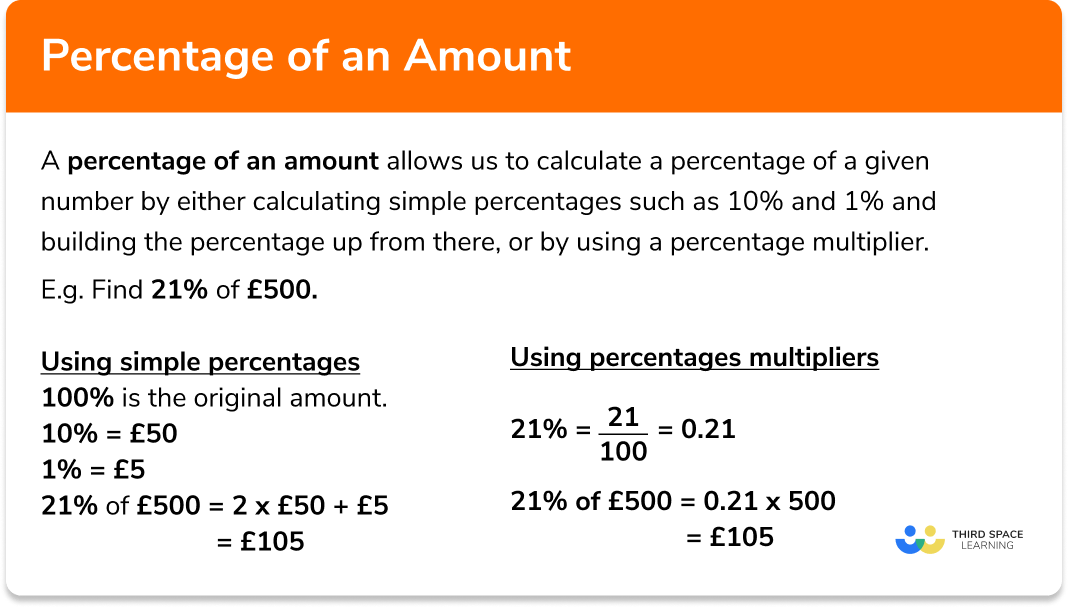
Fractions: Many common percentages translate easily to fractions. Knowing that 25% is 1/4, 50% is 1/2, or 10% is 1/10 allows for rapid estimation. To find 25% of $200, you just divide $200 by 4, which is $50.
-
Moving the Decimal Point: To find 10% of a number, simply move the decimal point one place to the left (e.g., 10% of $350 is $35). For 1%, move it two places to the left (e.g., 1% of $350 is $3.50). These quick calculations can help you estimate tips, discounts, or interest payments on the fly.
-
Estimating: For rough calculations, rounding numbers can help. If an item costs $98 and is 30% off, you can quickly estimate 30% of $100, which is $30, giving you an approximate sale price of $70.
Utilizing Spreadsheets and Financial Software
For more complex calculations, large datasets, or recurring analyses, spreadsheets and specialized financial software are indispensable:
-
Excel and Google Sheets: These powerful tools allow you to set up formulas that automatically calculate percentages. If your “Part” is in cell A1 and your “Total” is in cell B1, you can simply type
= (A1/B1)*100into another cell to get the percentage. Many spreadsheet programs also have built-in percentage formatting that displays the result directly as a percentage after calculating the decimal value. This is incredibly useful for creating budgets, tracking investment performance, or analyzing business financials over time. -
Budgeting and Investment Apps: Many personal finance apps (e.g., Mint, YNAB) and investment platforms automatically calculate and display percentages for your spending categories, portfolio allocation, and investment returns, simplifying financial tracking and analysis significantly.
-
Business Accounting Software: Enterprise Resource Planning (ERP) systems and accounting software (e.g., QuickBooks, SAP) generate financial reports with key performance indicators already presented as percentages, such as profit margins, growth rates, and expense ratios.
The Role of Calculators and Online Converters
For quick, accurate calculations without the need for a spreadsheet, a good calculator or an online tool is your best friend:
-
Basic Calculators: Most standard calculators have a percentage button (%). To find 20% of $150, you can typically enter
150 * 20 %. Ensure you understand how your specific calculator handles this function. -
Online Percentage Calculators: Numerous websites offer free percentage calculators that can solve various percentage-related problems, from calculating simple percentages to determining percentage increase/decrease, or finding the original number after a percentage change. These are handy for specific, one-off calculations.
Common Pitfalls and How to Avoid Them
While calculating percentages seems straightforward, certain nuances can lead to misinterpretations or errors, especially in financial contexts. Being aware of these common pitfalls can ensure your financial analyses are always sound.
Misinterpreting the “Total”
One of the most frequent mistakes is incorrectly identifying the “Total” or the base amount for the percentage calculation:
-
Percent Change vs. Percent of Total: These are often confused. If your income increased from $4,000 to $5,000, that’s a 25% increase ($($1,000 / $4,000) times 100$). However, if your rent is $1,200 and your new income is $5,000, your rent is now 24% of the total income ($($1,200 / $5,000) times 100$). The base changes, and so does the meaning of the percentage.
-
“Percentage Points” vs. “Percent Increase/Decrease”: This is a critical distinction, especially in financial news. If an interest rate goes from 5% to 7%, it’s an increase of 2 percentage points. However, it’s a 40% percent increase in the interest rate itself ($( (7-5) / 5 ) times 100 = 40%$). Confusing these can lead to wildly different conclusions about financial impacts.
Overlooking the Context
A percentage, in isolation, can be misleading. Always consider the absolute numbers and the underlying context:
-
Relative vs. Absolute Values: A 10% increase in a $100 investment (a gain of $10) is vastly different from a 10% increase in a $1,000,000 portfolio (a gain of $100,000). While the percentage is the same, the absolute financial impact is not. Always ask: “10% of what?”
-
Beware of Misleading Statistics: Financial reports or marketing claims often highlight percentages that sound impressive without providing the full context. For example, “Sales jumped 50%!” might sound great, but if sales were only $100 initially, that’s just a $50 increase. Always scrutinize the base from which the percentage is calculated.
Rounding Errors and Precision
While convenience often dictates rounding, it’s crucial to understand when precision is paramount:
-
When Precision is Crucial: In areas like calculating interest on loans, investment returns over long periods, or complex financial models, even small rounding errors can compound significantly, leading to material differences. Using more decimal places or relying on software that maintains high precision is vital.
-
When Estimation is Acceptable: For daily budgeting or quick mental checks, rounding to the nearest whole percentage or even to simpler fractions is usually sufficient and aids rapid decision-making without getting bogged down in minute details.
Mastering Percentages for Financial Empowerment
The journey from simply knowing how to calculate a percent of a total to truly mastering its application in finance is one of increasing financial literacy and strategic acumen. This skill is a cornerstone of sound financial health, enabling better decision-making and a clearer understanding of the financial world.
Cultivating Financial Literacy
Proficiency with percentages empowers you to become a more informed and discerning participant in the financial world:
-
Critical Analysis of Financial News: You’ll be able to dissect reports on inflation, economic growth, company earnings, and market fluctuations with greater understanding, distinguishing between significant trends and statistical noise.
-
Informed Decision-Making: Whether you’re comparing loan interest rates, evaluating investment opportunities, analyzing the true cost of a discount, or understanding the impact of salary raises and taxes, a strong grasp of percentages ensures your decisions are grounded in solid data.
-
Understanding Financial Products: From credit card interest rates and mortgage terms to retirement plan contributions and insurance premiums, nearly every financial product is described and evaluated using percentages.
Strategic Decision-Making
Beyond mere comprehension, mastering percentages enables strategic financial planning and action:
-
Identifying Opportunities: You can quickly spot high-ROI investments, advantageous savings rates, or opportunities to optimize spending based on percentage breakdowns.
-
Mitigating Risks: By calculating your debt-to-income ratio, understanding the percentage allocation of your portfolio, or assessing the percentage impact of potential financial shocks, you can proactively manage and mitigate financial risks.
-
Effective Negotiation: Armed with percentage-based insights, you can negotiate more effectively for salary increases (understanding the percentage boost to your total compensation), loan terms, or even large purchases by evaluating discounts and add-on costs.
Conclusion
Calculating a percent of a total is far more than a basic math problem; it is a fundamental pillar of financial literacy and empowerment. From the minutiae of a personal budget to the grand scale of global economic indicators, percentages provide the context, clarity, and comparative power needed to navigate the financial landscape effectively.
By understanding the simple formula, applying it diligently across personal and business finance, utilizing available tools, and carefully avoiding common pitfalls, you equip yourself with an invaluable skill. This mastery allows you to move beyond merely observing numbers to truly understanding their implications, enabling you to make more intelligent, strategic, and confident financial decisions. Embrace the power of percentages, and unlock a clearer path to achieving your financial goals.
aViewFromTheCave is a participant in the Amazon Services LLC Associates Program, an affiliate advertising program designed to provide a means for sites to earn advertising fees by advertising and linking to Amazon.com. Amazon, the Amazon logo, AmazonSupply, and the AmazonSupply logo are trademarks of Amazon.com, Inc. or its affiliates. As an Amazon Associate we earn affiliate commissions from qualifying purchases.