
In the world of finance, percentages are the universal language. Whether you are analyzing the volatility of the stock market, determining the interest rate on a mortgage, or calculating the net profit margin of a startup, the ability to calculate the percent of a number is a foundational skill. Understanding these figures is not merely an academic exercise; it is a critical component of professional financial management and personal wealth building.
Percentages allow us to compare disparate values on a level playing field. They transform raw data into actionable insights, helping investors and consumers alike make informed decisions about where their money goes. This guide explores the mathematical mechanics of percentage calculations and applies them specifically to the realms of personal finance, investment strategy, and business operations.

The Mathematical Foundation of Financial Percentages
Before diving into complex financial models, one must master the basic formula. The word “percent” originates from the Latin per centum, meaning “by the hundred.” Essentially, a percentage is a fraction where the denominator is always 100.
The Basic Percentage Formula
To find the percentage of a specific number, the formula is straightforward:
Percentage = (Rate / 100) × Total Value
For example, if you want to find 15% of a $2,000 investment dividend, you convert the percentage into a decimal (0.15) and multiply it by the total ($2,000), resulting in $300. In a financial context, this simple calculation is used daily to determine everything from sales tax on a purchase to the initial down payment required for a real estate acquisition.
Calculating Percentage Increase and Decrease
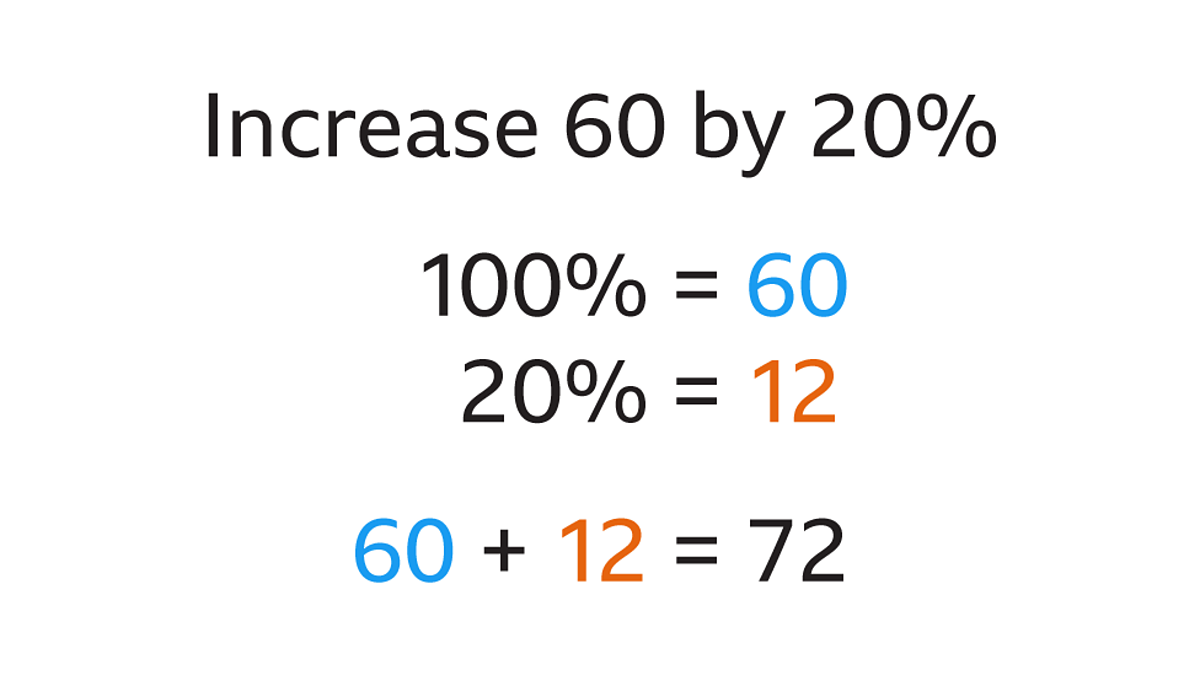
In the volatile world of finance, numbers rarely stay the same. Knowing how to calculate the percentage change between two values is vital for tracking portfolio growth or inflation.
Formula: [(New Value – Old Value) / Old Value] × 100
If a stock you purchased for $50 rises to $75, the percentage increase is 50%. Conversely, if your monthly utility bill drops from $200 to $180, you have achieved a 10% decrease in expenses. Mastery of these shifts allows individuals to measure progress against their financial goals with precision.
The Reverse Percentage Calculation
Sometimes, you know the part and the percentage, but you need to find the original total. This is common when calculating the original price of a discounted item or determining the total value of a portfolio based on a single asset’s weight.
Formula: (Part / Percentage) × 100
If a $40 withdrawal represents 5% of your total savings account balance, you can determine that your total savings are $800 ($40 / 5 * 100). This “working backward” approach is essential for reverse-engineering financial targets.
Percentages in Personal Finance and Budgeting
Effective money management relies heavily on the strategic allocation of resources, which is almost always expressed in percentages. By viewing your income through the lens of percentages rather than raw dollars, you create a scalable financial plan that works regardless of how much you earn.
The 50/30/20 Rule
One of the most popular budgeting frameworks is the 50/30/20 rule. This strategy suggests that 50% of your after-tax income should go toward “Needs” (housing, groceries, insurance), 30% toward “Wants” (dining out, hobbies, travel), and 20% toward “Financial Goals” (debt repayment, savings, investments). To implement this, you must calculate the exact percentage of your monthly paycheck for each category. If you earn $5,000 a month, calculating these percentages tells you exactly how much “wiggle room” you have for lifestyle expenses versus long-term security.
Understanding Debt-to-Income (DTI) Ratio
Lenders and mortgage brokers use the Debt-to-Income ratio to assess your creditworthiness. This percentage represents the portion of your gross monthly income that goes toward paying debts.
Formula: (Total Monthly Debt Payments / Gross Monthly Income) × 100
A DTI of 36% or lower is generally considered healthy. If your DTI exceeds 43%, most lenders will view you as a high-risk borrower. By calculating this percentage yourself, you can take proactive steps to reduce debt or increase income before applying for a major loan.
The Impact of Interest Rates (APR)
When you borrow money, the cost is expressed as an Annual Percentage Rate (APR). Calculating the percentage of interest you pay over time is crucial for understanding the true cost of credit. For instance, a $10,000 credit card balance with a 20% APR will accrue approximately $2,000 in interest annually if left unpaid. Understanding how these percentages compound can be the difference between financial freedom and a cycle of debt.
Investment Mathematics: ROI and Portfolio Allocation
For the sophisticated investor, percentages are the primary metric for performance. They provide a standardized way to compare the success of a high-yield savings account against the returns of a tech-heavy index fund.

Calculating Return on Investment (ROI)
ROI is the ultimate measure of an investment’s efficiency. It tells you how much profit or loss you’ve made relative to the amount of money you invested.
Formula: [(Current Value – Initial Investment) / Initial Investment] × 100
If you invest $10,000 in a mutual fund and its value grows to $11,200 over a year, your ROI is 12%. Comparing the ROI of different assets helps you decide where to reallocate capital for maximum growth.
Strategic Asset Allocation and Rebalancing
A balanced portfolio is usually divided into different asset classes (stocks, bonds, real estate) based on percentages. A common moderate-risk strategy is the 60/40 split—60% in equities and 40% in fixed-income securities.
Over time, as the market fluctuates, these percentages will shift. If your stocks perform exceptionally well, they might grow to represent 70% of your portfolio. To maintain your original risk profile, you must calculate the “percent of the total” each asset now holds and sell off the excess to return to your target 60/40 allocation. This process, known as rebalancing, ensures that your financial exposure remains aligned with your risk tolerance.
Compound Interest: The Power of Percentage Growth
Compound interest is often called the “eighth wonder of the world” because it involves calculating a percentage not just on your initial principal, but also on the interest accumulated from previous periods. The formula for compound interest—A = P(1 + r/n)^nt—relies heavily on the interest rate (r) expressed as a percentage. Even a 1% difference in annual return can result in hundreds of thousands of dollars in difference over a 30-year investment horizon.
Business Finance and Profitability Metrics
For entrepreneurs and business leaders, calculating percentages is essential for maintaining a healthy bottom line. From determining the price of a product to evaluating the efficiency of operations, percentages provide the necessary clarity.
Gross and Net Profit Margins
A business may have high revenue, but if its margins are low, it is at risk.
- Gross Profit Margin: Measures the percentage of revenue that exceeds the cost of goods sold (COGS).
- Net Profit Margin: Measures the percentage of revenue left over after all operating expenses, interest, and taxes have been paid.
Formula: (Net Profit / Total Revenue) × 100
If a company earns $1,000,000 in revenue but only keeps $100,000 as profit, its net margin is 10%. Investors look for consistent or improving margins as a sign of a well-managed, competitive business.
Markup vs. Margin: Avoiding Common Errors
Many business owners confuse markup with margin, which can lead to pricing errors.
- Markup is the percentage added to the cost to get the selling price.
- Margin is the percentage of the selling price that is profit.
If an item costs $80 and you want a 20% margin, you cannot simply add 20% to the cost ($96). To achieve a 20% margin, the item must be sold for $100. Calculating the correct percentage ensures that the business covers its overhead and remains sustainable.
Tax Obligations and Withholdings
In business and personal income, taxes are almost always calculated as a percentage. Understanding progressive tax brackets involves calculating different percentages for different portions of your income. Furthermore, businesses must calculate payroll tax percentages (such as FICA in the United States) to ensure legal compliance. Failing to accurately calculate these percentages can lead to significant financial penalties.
Leveraging Digital Tools for Financial Accuracy
While manual calculations are vital for understanding the “why” behind the numbers, modern financial management utilizes technology to ensure precision and efficiency.
Spreadsheet Functions (Excel and Google Sheets)
Spreadsheets are the backbone of financial analysis. To calculate the percentage of a number in Excel, you simply use the formula =Cell1 * Cell2. If Cell A1 contains the total ($5,000) and Cell B1 contains the percentage (0.20), the result will automatically update if the input values change. This allows for “what-if” scenario planning, such as seeing how a 2% increase in interest rates would affect a long-term loan.
Financial Calculators and Apps
Dedicated financial calculators—both physical devices like the HP 12C and digital apps—are designed to handle complex percentage-based calculations like internal rate of return (IRR) and net present value (NPV). Using these tools reduces the margin for human error, which is essential when dealing with large-scale corporate finance or personal retirement planning.
Conclusion: The Value of Numerical Literacy
Calculating the percent of a number is more than a mathematical chore; it is a vital tool for navigating the modern economic landscape. From the simple act of calculating a gratuity at a business dinner to the complex task of rebalancing a multi-million dollar investment portfolio, percentages provide the context we need to value our time and our capital.
By mastering these calculations, you gain the ability to look past raw numbers and see the trends, risks, and opportunities they represent. In the realm of money, those who understand percentages are the ones who control their financial destiny. Whether you are aiming for debt-free living, aggressive wealth accumulation, or business mastery, the path to success is measured in percent.
aViewFromTheCave is a participant in the Amazon Services LLC Associates Program, an affiliate advertising program designed to provide a means for sites to earn advertising fees by advertising and linking to Amazon.com. Amazon, the Amazon logo, AmazonSupply, and the AmazonSupply logo are trademarks of Amazon.com, Inc. or its affiliates. As an Amazon Associate we earn affiliate commissions from qualifying purchases.