
In the realm of personal and business finance, the ability to quickly and accurately calculate a “percentage off” is more than just a convenient math trick—it is a fundamental pillar of fiscal literacy. Whether you are a consumer navigating the aisles of a seasonal sale, a small business owner structuring a promotional campaign, or an investor analyzing a sudden dip in asset valuation, understanding the mechanics of percentages is essential.
Percentages represent a ratio or a fraction of 100. When we speak of a “percentage off,” we are essentially discussing a reduction in the total value of an item or an amount. While digital calculators have made the process instantaneous, grasping the underlying logic allows for faster mental estimates and more sophisticated financial planning. This guide explores the diverse applications of percentage calculations, ranging from everyday shopping to complex business financial modeling.

1. The Core Mechanics: Understanding the Percentage Off Formula
At its heart, calculating a percentage off is a two-step mathematical process. However, to master this in a financial context, one must understand both the “amount off” and the “final price.” These figures tell two different parts of a financial story: how much you are saving and how much capital you are actually parting with.
The Standard Subtraction Method
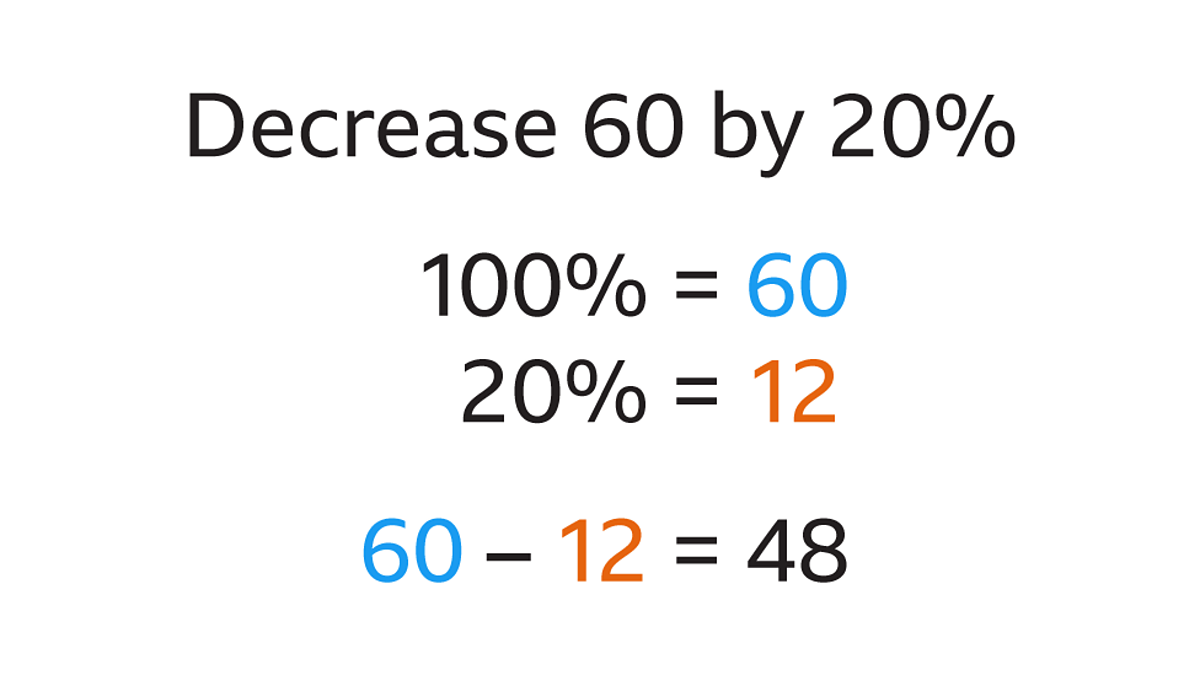
The most common way to calculate a discount is to first find the value of the discount and then subtract it from the original price. The formula is expressed as:
[Original Price] x ([Discount Percentage] / 100) = [Discount Amount]
[Original Price] – [Discount Amount] = [Final Price]
For example, if you are looking at a financial software subscription originally priced at $250 with a 15% discount, you would calculate 15% of $250 ($37.50) and subtract it from the total to arrive at $212.50. This method is particularly useful when you need to track exactly how much money is being “saved” for budgeting or accounting purposes.
The Complementary Multiplication Method
For faster mental calculations or more efficient spreadsheet modeling, the “complementary” method is often preferred. This method focuses on the percentage of the price you are paying rather than the percentage you are taking off. If an item is 20% off, you are paying 80% of the original price.
The formula is:
[Original Price] x (1 – [Discount Percentage in Decimal Form]) = [Final Price]
Using the previous example: $250 x 0.85 = $212.50. This one-step process is the industry standard for financial analysts who need to project net revenue after various discount tiers are applied.
Calculating the Original Price from a Discounted Value
Occasionally, in financial auditing or personal expense tracking, you may know the final price and the discount percentage, but need to find the original value. This is known as reverse percentage calculation.
The formula is:
[Final Price] / (1 – [Discount Percentage in Decimal Form]) = [Original Price]
If you purchased an investment course for $120 after a 40% discount, the original value would be $120 / 0.60, which equals $200. Mastering this allows you to assess the true value of “deals” and ensure that marketing claims align with financial reality.
2. Strategic Consumerism: Percentages in Personal Finance
For the individual investor or the budget-conscious household, “percentage off” is the primary language of the marketplace. However, a lack of deep understanding can lead to “discount fatigue” or “spending to save,” which are detrimental to long-term wealth building.
The Psychology of “Percent Off” vs. “Dollar Off”
In financial marketing, the “Rule of 100” is often applied. This rule suggests that for items priced under $100, a percentage discount (e.g., 25% off) sounds more appealing to the consumer than a dollar amount (e.g., $10 off a $40 item). Conversely, for items over $100, a dollar amount often feels more significant. As a savvy financial actor, you must ignore the psychological framing and calculate the absolute impact on your cash flow. Is the 15% off a $1,000 laptop ($150) more beneficial to your budget than a flat $50 off a $100 peripheral? Obviously, yes, but the way these numbers are presented can often skew a consumer’s perception of value.

Understanding Stacked Discounts and Compounding Reductions
One of the most common pitfalls in personal finance is the misunderstanding of “stacked” percentages. Many retailers offer an “extra 20% off” on items already marked down by 30%. A common mistake is to add these together and assume a 50% total discount.
In reality, the second discount is applied to the already reduced price.
- Original Price: $100
- First Discount (30%): $100 – $30 = $70
- Second Discount (20% of $70): $70 – $14 = $56
The actual total discount is 44%, not 50%. Understanding this nuance prevents budget overruns and ensures that your financial projections remain accurate.
The Impact of Sales Tax on Discounted Totals
In many jurisdictions, sales tax is calculated on the post-discount price. This is a vital calculation for high-ticket items. If you are buying a piece of machinery for your small business originally priced at $5,000 with a 10% discount, your taxable base drops from $5,000 to $4,500. Depending on your local tax rate, this “percentage off” provides a secondary saving by reducing the tax liability, a factor that should be included in any comprehensive cost-benefit analysis.
3. Business Finance: Margins, Markdowns, and Profitability
For business owners and financial managers, calculating “off percentages” is not just about saving money—it is about managing the lifeblood of the company: the profit margin. Every percentage point “off” a retail price is a direct deduction from the gross profit.
The Relationship Between Markdown and Margin
A common error in business finance is confusing a “30% markdown” with a “30% loss in margin.” If your product has a 50% profit margin and you offer a 20% discount off the retail price, your margin does not simply drop to 30%.
Suppose a product costs $50 to make and sells for $100 (50% margin). A 20% discount brings the sale price to $80. Your profit is now $30 on an $80 sale, resulting in a 37.5% margin. Financial professionals must use these calculations to determine the “break-even” point of any promotional campaign to ensure that high volume actually compensates for the reduced margin.
Inventory Liquidation and the “Holding Cost” Calculation
In business finance, calculating the percentage off is often used to decide when to liquidate inventory. If a product is not selling, it incurs “holding costs” (warehousing, insurance, opportunity cost of capital).
A business manager might calculate that offering 40% off to clear stock immediately is more financially sound than keeping the item at full price for another six months. By calculating the percentage reduction in price against the percentage cost of holding the inventory, businesses can optimize their cash flow and reinvest capital into higher-yielding assets.
Volume Discounts and B2B Negotiations
In the world of corporate procurement, “off percentages” are usually tiered based on volume. A vendor might offer 5% off for 100 units, 10% off for 500 units, and 15% off for 1,000 units. A financial officer must calculate the “incremental discount.” Is the jump from 10% to 15% worth the extra storage costs and the risk of obsolescence associated with doubling the order? This requires a sophisticated application of percentage-off math combined with inventory turnover ratios.
4. Advanced Applications: Percentages in Investing and Wealth Management
The concept of “percentage off” extends far into the world of investing, particularly when discussing market corrections, expense ratios, and the “real” rate of return.
Market Drawdowns and the Recovery Math
In investing, a “percentage off” in your portfolio value requires a higher “percentage up” to break even. This is one of the most critical lessons in financial literacy. If your stock portfolio drops by 20% (it is 20% “off” its peak), you do not need a 20% gain to get back to where you started.
- Starting Value: $10,000
- 20% Loss: $8,000
- To return to $10,000, you need a $2,000 gain on an $8,000 base.
- $2,000 / $8,000 = 25%.
Understanding this “asymmetry of loss” helps investors appreciate the importance of risk management and the true cost of market volatility.
The Impact of Investment Fees (The “Silent” Percentage Off)
Wealth management often involves “percentage off” in the form of expense ratios and management fees. While a 1% annual fee might seem negligible, it is effectively a “percentage off” your total compounding growth. Over a 30-year investment horizon, a 1% fee can take “off” nearly 25% of your final portfolio value compared to a zero-fee alternative. Calculating the long-term impact of these percentages is the difference between a comfortable retirement and a strained one.
Inflation: The Percentage Off Your Purchasing Power
Inflation is perhaps the most pervasive “off percentage” in the financial world. If inflation is 5%, your cash is essentially 5% “off” its value from the previous year. Financial planning requires calculating the “Real Rate of Return,” which is the nominal interest rate minus the inflation percentage. If your savings account offers 4% interest but inflation is 5%, you are effectively seeing a 1% reduction in purchasing power annually.
Conclusion: The Value of Numerical Precision
Mastering how to calculate a percentage off is more than an academic exercise; it is a vital skill for navigating the modern economic landscape. From the simple act of checking a grocery receipt to the complex task of managing corporate margins or investment portfolios, these calculations provide clarity in a world of fluctuating values.
By moving beyond simple mental shortcuts and understanding the deeper implications of percentages—such as the difference between margin and markup, the reality of stacked discounts, and the asymmetry of investment losses—you empower yourself to make decisions based on logic rather than marketing or emotion. In finance, every percentage point matters. Whether you are saving them, earning them, or protecting them, being able to calculate them with precision is the hallmark of financial intelligence.
aViewFromTheCave is a participant in the Amazon Services LLC Associates Program, an affiliate advertising program designed to provide a means for sites to earn advertising fees by advertising and linking to Amazon.com. Amazon, the Amazon logo, AmazonSupply, and the AmazonSupply logo are trademarks of Amazon.com, Inc. or its affiliates. As an Amazon Associate we earn affiliate commissions from qualifying purchases.