
Understanding how your Social Security benefits are calculated is a critical component of robust retirement planning. For many, Social Security represents a substantial portion of their post-career income, making accurate estimation vital for financial stability. While the system can appear complex, breaking down the calculation into its core components demystifies the process, empowering you to make informed decisions about your financial future. This article delves into the intricacies of Social Security benefit calculation, offering a clear, step-by-step guide to help you estimate your potential retirement income.
The Foundation: AIME and PIA
At the heart of your Social Security retirement benefit calculation are two key concepts: Average Indexed Monthly Earnings (AIME) and Primary Insurance Amount (PIA). These foundational elements dictate the base amount you are eligible to receive before any adjustments for claiming age or other factors.

What is Average Indexed Monthly Earnings (AIME)?
Your AIME is a measure of your average earnings over your working lifetime, adjusted for inflation. The Social Security Administration (SSA) doesn’t simply average your nominal earnings; instead, it indexes your past earnings to reflect the general increase in wages over time. This ensures that your benefits are based on your earnings’ value in today’s dollars, rather than the lower nominal values from decades past.
To calculate your AIME, the SSA first looks at your entire earnings record, which includes all wages subject to Social Security taxes. From this record, it identifies your 35 highest-earning years. If you have fewer than 35 years of earnings, the remaining years will be counted as zeros, which can significantly reduce your average. Each of these 35 years’ earnings is then “indexed” to account for national wage growth. The indexing factor for a given year is determined by comparing the national average wage index in the year you turn 60 to the national average wage index in that specific earning year. Once all 35 years (or fewer, if applicable) are indexed, these amounts are summed and then divided by 420 (the number of months in 35 years) to arrive at your Average Indexed Monthly Earnings. This figure represents your average monthly earnings over your highest 35 years, adjusted for inflation up to the year you turned 60.
What is Primary Insurance Amount (PIA)?
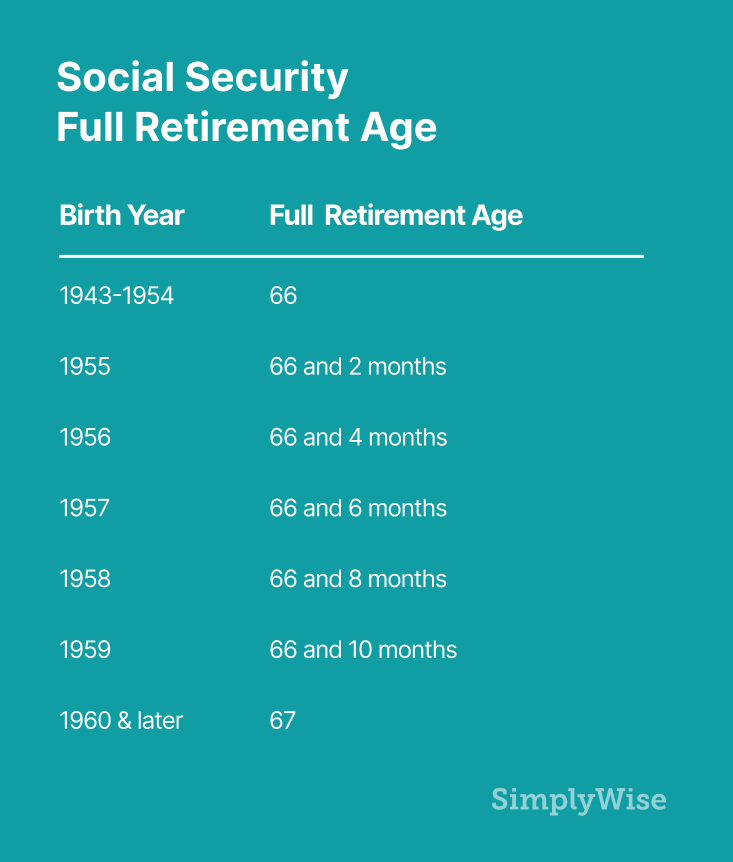
Your Primary Insurance Amount (PIA) is the monthly benefit you would receive if you start collecting Social Security at your Full Retirement Age (FRA). Your FRA depends on your birth year, typically ranging from 66 to 67. The PIA is calculated using a progressive formula that applies different percentages to different segments of your AIME. This formula is designed to provide a higher replacement rate for lower-income earners, ensuring a safety net for those with more modest earnings histories.
The PIA formula uses “bend points” – specific dollar amounts that divide your AIME into segments. For example, for someone reaching age 62 in 2024, the formula is:
-
90% of the first $1,174 of AIME, plus
-
32% of AIME between $1,174 and $7,078, plus
-
15% of AIME above $7,078.
These bend points are adjusted annually to keep pace with changes in the national average wage index. The progressive nature of this formula means that while higher earners receive a larger absolute benefit, lower earners receive a larger percentage of their pre-retirement income from Social Security. Your PIA is the starting point for all benefit calculations, forming the base upon which all adjustments are made.
Key Factors Influencing Your Benefits
Beyond AIME and PIA, several other critical factors play a significant role in determining the final amount of your monthly Social Security check. Understanding these variables allows for strategic planning to maximize your retirement income.
Your Earnings History
As established with AIME, your earnings history is paramount. The SSA requires 35 years of earnings to calculate your maximum benefit. If you work more than 35 years, your lowest earning years will be replaced by higher earning years, increasing your AIME. Conversely, if you work fewer than 35 years, each year short of that mark will be counted as a zero, which can substantially lower your AIME and, consequently, your PIA. This highlights the importance of consistent employment and earning at or above the Social Security earnings limit throughout your career. Regularly reviewing your Social Security earnings statement, available through your mySocialSecurity account, is crucial to ensure accuracy and address any discrepancies.
Your Claiming Age
The age at which you decide to start receiving Social Security benefits is perhaps the most significant variable you can control and has a profound impact on your monthly payment.
-
Full Retirement Age (FRA): This is the age at which you are entitled to 100% of your PIA. As mentioned, it ranges from 66 to 67, depending on your birth year.
-
Early Claiming: You can start receiving benefits as early as age 62. However, claiming before your FRA results in a permanent reduction of your monthly benefit. The reduction is approximately 5/9 of 1% for each month before your FRA, up to 36 months, and 5/12 of 1% for each additional month. This can lead to a reduction of up to 30% if you claim at age 62 with an FRA of 67.
-
Delayed Claiming: For each month you delay claiming benefits past your FRA, up to age 70, you earn Delayed Retirement Credits (DRCs). These credits increase your monthly benefit by 8% per year (or 2/3 of 1% per month). Delaying claiming from age 67 to 70 can result in a 24% increase in your monthly benefit. No additional credits are earned after age 70.
The decision of when to claim involves weighing your current financial needs, health status, and life expectancy against the desire for a higher monthly payment later on.
Cost-of-Living Adjustments (COLAs)
Once you start receiving benefits, your monthly payment will be subject to annual Cost-of-Living Adjustments (COLAs). These adjustments are designed to help Social Security benefits retain their purchasing power in the face of inflation. COLAs are determined each year based on the Consumer Price Index for Urban Wage Earners and Clerical Workers (CPI-W). If the CPI-W increases from the third quarter of the previous year to the third quarter of the current year, a COLA is applied to all benefits the following January. While not directly part of the initial calculation, COLAs are a vital factor in understanding the long-term value of your Social Security income.
The Calculation Process: Step-by-Step
Calculating your Social Security benefits manually can be intricate, but understanding the steps provides invaluable insight into how your benefit amount is derived.
Step 1: Gather Your Earnings Record
The first essential step is to obtain your complete Social Security earnings record. The easiest way to do this is by creating a mySocialSecurity account on the SSA website (ssa.gov). This online portal allows you to view your entire earnings history, year by year, which is crucial for accurate calculation. Verify that all your earnings are correctly reported, as errors can impact your benefits.
Step 2: Calculate Your Average Indexed Monthly Earnings (AIME)
With your earnings record in hand, identify your 35 highest-earning years. For each of these years, you’ll need to apply an indexing factor. The SSA provides tables of indexing factors for various birth years. For example, if you were born in 1962 and reach age 62 in 2024, you would use the indexing factors for 1962. Each year’s actual earnings are multiplied by its corresponding indexing factor to get the indexed earnings. Sum these 35 indexed earnings amounts and divide the total by 420 (35 years * 12 months) to arrive at your AIME. Remember, if you have fewer than 35 years of earnings, the remaining years are counted as zeros.
Step 3: Determine Your Primary Insurance Amount (PIA) Using Bend Points
Once you have your AIME, apply the current year’s bend point formula to calculate your PIA. As an example, for someone turning 62 in 2024:
-
Multiply the first $1,174 of your AIME by 90%.
-
Multiply the portion of your AIME between $1,174 and $7,078 by 32%.
-
Multiply the portion of your AIME above $7,078 by 15%.
Sum these three amounts to get your PIA. This is the monthly benefit you would receive at your Full Retirement Age.
Step 4: Adjust for Claiming Age
Your final step is to adjust your PIA based on your planned claiming age.
-
If you claim at FRA: Your monthly benefit is your PIA.
-
If you claim early (between 62 and FRA): Your PIA will be reduced. Calculate the total number of months you are claiming early. For the first 36 months, apply a reduction of 5/9 of 1% per month. For any months beyond 36, apply a reduction of 5/12 of 1% per month. Sum these monthly reductions to find the total percentage reduction and subtract it from your PIA.
-
If you delay claiming (between FRA and 70): Your PIA will be increased. For each month you delay past your FRA, add 2/3 of 1% to your PIA (this accumulates to 8% per year). Multiply your PIA by (1 + total percentage increase from delayed credits) to find your increased benefit.
Strategies to Maximize Your Benefits
Understanding the calculation process enables you to implement strategies designed to enhance your Social Security benefits, complementing your broader financial planning.
Working Longer
Extending your career, particularly if you have fewer than 35 years of substantial earnings, can significantly boost your AIME. Each additional year you work, especially if it’s a high-earning year, can replace a lower-earning year (or a zero) in your 35-year average, increasing your overall AIME and thus your PIA. Even if you already have 35 high-earning years, continuing to work can increase your total indexed earnings, potentially replacing one of your lowest indexed years with a higher one.
Delaying Claiming Age
As highlighted earlier, delaying your Social Security benefits past your Full Retirement Age, up to age 70, is one of the most effective ways to increase your monthly payout. The 8% annual increase from Delayed Retirement Credits is a guaranteed return, far exceeding typical bond yields and offering a predictable boost to your retirement income. For many, this strategy acts as an inflation-protected annuity, providing a higher stream of income for the rest of their lives.
Coordinating with Spousal Benefits
If you are married, divorced, or widowed, there are often strategies involving spousal or survivor benefits that can maximize the total household Social Security income. For instance, a spouse can sometimes claim benefits based on their partner’s work record (if it yields a higher amount than their own), subject to certain rules. Widow(er)s can often switch between claiming their own reduced benefit and a larger survivor benefit at a later age. Understanding these options, potentially with the help of a financial advisor specializing in Social Security, can lead to thousands of extra dollars over a lifetime.
Using Online Tools and Resources
While manual calculation provides insight, the most accurate and convenient way to estimate your benefits is through the official resources provided by the Social Security Administration.
Social Security Administration’s Online Calculator
Your mySocialSecurity account on ssa.gov is your most valuable resource. Once logged in, you can view your personalized Social Security statement, which provides estimates of your retirement benefits at various claiming ages (62, Full Retirement Age, and 70), as well as disability and survivor benefits. These estimates are based on your actual earnings record and projected future earnings, offering a highly personalized and reliable forecast. The SSA also offers online calculators that allow you to plug in different earnings scenarios to see how they might impact your benefits.

Third-Party Financial Planning Tools
Many reputable financial planning websites and software platforms offer Social Security calculators that can integrate with your broader retirement plan. These tools often allow for more complex scenario planning, such as factoring in different inflation rates, life expectancies, and investment returns alongside your Social Security income. While useful for comprehensive planning, always cross-reference their outputs with the SSA’s official estimates to ensure accuracy. Consulting with a certified financial planner can also provide expert guidance, particularly for complex situations involving spousal benefits, taxation of benefits, or coordination with other retirement income sources.
By proactively understanding how your Social Security benefits are calculated and leveraging available resources, you can confidently integrate this crucial income stream into your overall financial strategy, ensuring a more secure and predictable retirement.
aViewFromTheCave is a participant in the Amazon Services LLC Associates Program, an affiliate advertising program designed to provide a means for sites to earn advertising fees by advertising and linking to Amazon.com. Amazon, the Amazon logo, AmazonSupply, and the AmazonSupply logo are trademarks of Amazon.com, Inc. or its affiliates. As an Amazon Associate we earn affiliate commissions from qualifying purchases.