
Understanding how your pay is calculated is a fundamental aspect of personal finance that far too many people overlook. It’s not merely about glancing at the net figure that hits your bank account; it’s about dissecting your gross earnings, comprehending the labyrinth of deductions, and ultimately knowing what you’re truly bringing home. This knowledge empowers you to budget effectively, plan for your future, identify potential errors, and even optimize your financial strategies. Whether you’re a seasoned professional, a new hire, or someone considering a career change, mastering the mechanics of your paycheck is an invaluable skill.

Decoding Your Gross Pay: The Starting Point
Your journey to understanding your pay begins with gross pay – the total amount of money your employer agrees to pay you before any deductions are taken out. This is your salary, your hourly wages before taxes, or your commission before expenses. It’s the headline figure, but rarely the amount you see in your bank account.
Hourly vs. Salaried Employees
The calculation of gross pay fundamentally differs based on your employment status:
-
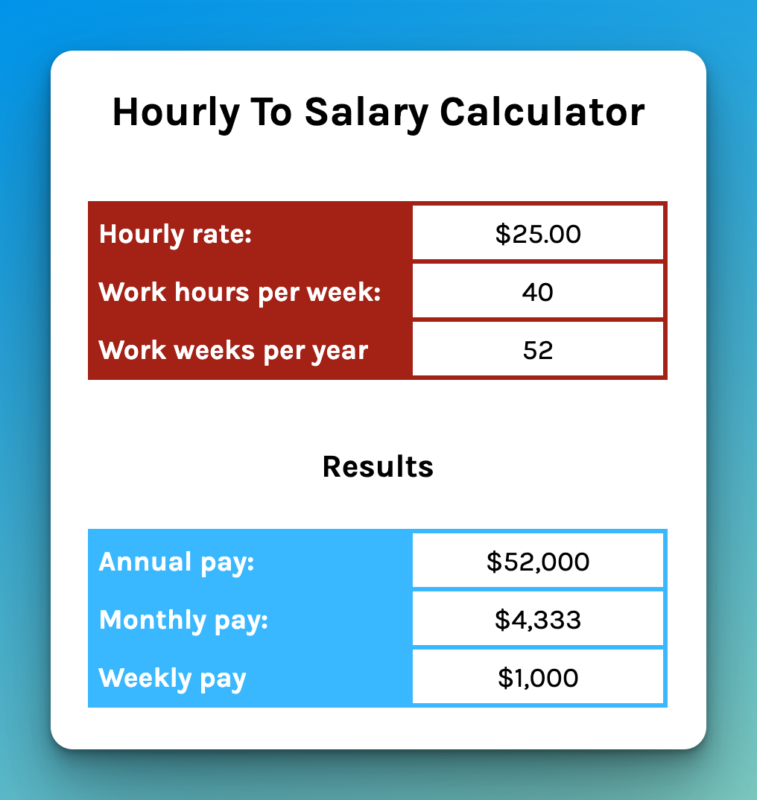
Hourly Employees: For those paid an hourly wage, your gross pay is typically calculated by multiplying your hourly rate by the total number of hours you worked during the pay period. For example, if you earn $20 per hour and work 40 hours in a week, your gross pay for that week would be $800. It’s crucial for hourly employees to track their hours accurately, especially if overtime is involved. Overtime rules usually dictate that hours worked beyond a standard threshold (e.g., 40 hours in a workweek) are paid at a higher rate, commonly 1.5 times your regular rate (time and a half).
-
Salaried Employees: Salaried employees are paid a fixed amount for fulfilling their job responsibilities, regardless of the exact number of hours worked, as long as they meet their obligations. Your annual salary is divided by the number of pay periods in a year to determine your gross pay for each period. For instance, an annual salary of $60,000 paid bi-weekly (26 pay periods per year) would result in a gross pay of approximately $2,307.69 per paycheck ($60,000 / 26).
Commissions, Bonuses, and Other Additions
Beyond regular wages, many individuals earn additional forms of compensation that contribute to their gross pay. These variable components can significantly impact your overall earnings:
-
Commissions: Often seen in sales roles, commissions are a percentage of sales revenue or profit. They can be structured in various ways, such as a base salary plus commission, or commission-only. The calculation depends on the specific commission structure outlined in your employment agreement.
-
Bonuses: These are additional payments made to employees, often as a reward for performance, company profitability, or retention. Bonuses can be discretionary, performance-based, or signing bonuses.
-
Tips: Common in service industries, tips are direct payments from customers. While some are reported directly to the employer, others may be tracked by the employee. Employers are generally responsible for withholding taxes from reported tips.
-
Per Diem: Payments made to employees to cover expenses for travel, lodging, or meals while away from home on business. While often untaxed if used for legitimate expenses, understanding their impact on overall compensation is important.
Understanding Different Pay Periods
The frequency with which you receive your paychecks also influences how your gross pay appears on each statement. Common pay periods include:
-
Weekly: 52 paychecks per year.
-
Bi-weekly: Every two weeks, resulting in 26 paychecks per year. This is a very common schedule.
-
Semi-monthly: Twice a month (e.g., on the 15th and 30th), resulting in 24 paychecks per year.
-
Monthly: 12 paychecks per year.
While the total annual gross pay remains the same, the amount per paycheck will differ based on the frequency. It’s important to be aware of your pay schedule for budgeting purposes, especially if your bills are due at different times of the month.
Navigating Deductions: What Comes Out of Your Paycheck
Once your gross pay is established, the next step is to understand the various deductions that reduce this amount to your net, or take-home, pay. Deductions fall into two main categories: mandatory and voluntary, and can be pre-tax or post-tax.
Mandatory Pre-Tax Deductions
These are legally required deductions that are taken out of your gross pay before income taxes are calculated. This means these deductions reduce your taxable income.
-
Federal Income Tax: The largest deduction for most individuals. The U.S. has a progressive tax system, meaning higher earners pay a higher percentage of their income in taxes. The amount withheld depends on your income, filing status, and the information provided on your W-4 form.
-
State Income Tax: Applicable in most, but not all, U.S. states. The rates and rules vary significantly by state. Some states have flat taxes, while others have progressive systems.
-
Local Income Tax: A few cities and localities also impose their own income taxes, adding another layer of deduction.
-
Social Security Tax (FICA): This funds retirement, disability, and survivor benefits. Employees generally pay 6.2% of their gross wages up to an annual limit (which changes each year). Your employer pays an equal 6.2%.
-
Medicare Tax (FICA): This funds hospital insurance for the elderly and disabled. Employees generally pay 1.45% of all gross wages, with no income limit. Your employer also pays an equal 1.45%. For high-income earners, an additional Medicare tax applies.
Voluntary Pre-Tax Deductions
These are deductions you elect to have taken from your pay, which also reduce your taxable income, offering a tax advantage.
-
Health Insurance Premiums: Your share of the cost for health, dental, and vision insurance provided through your employer is commonly deducted pre-tax.
-
Retirement Contributions: Contributions to employer-sponsored retirement plans like 401(k)s, 403(b)s, or government-sponsored 457(b)s are typically pre-tax, meaning your contributions are deducted from your gross pay before income taxes are calculated. This lowers your current taxable income and allows your investments to grow tax-deferred until retirement.
-
Flexible Spending Accounts (FSAs) and Health Savings Accounts (HSAs): These accounts allow you to set aside pre-tax money for eligible healthcare or dependent care expenses. HSAs, available with high-deductible health plans, offer a triple tax advantage: pre-tax contributions, tax-free growth, and tax-free withdrawals for qualified medical expenses.
-
Commuter Benefits: Funds set aside pre-tax for public transportation or parking costs related to commuting to work.
Post-Tax Deductions
These deductions are taken out after all pre-tax deductions and income taxes have been calculated and withheld. They do not reduce your taxable income.
-
Roth 401(k)/IRA Contributions: While Traditional 401(k) contributions are pre-tax, Roth contributions are post-tax. The benefit is that qualified withdrawals in retirement are tax-free.
-
Life Insurance and Disability Insurance Premiums: If your employer offers these benefits and you elect to pay for them, your share of the premiums might be deducted post-tax, especially if they are for supplemental coverage.
-
Wage Garnishments: These are court-ordered deductions from your wages to satisfy a debt, such as child support, alimony, student loans, or unpaid taxes.
-
Union Dues: If you are a member of a labor union, your monthly or periodic dues are typically deducted post-tax.
-
Loan Repayments: If you have taken a loan from your employer, repayments might be automatically deducted from your paycheck post-tax.
Calculating Your Net Pay: What You Actually Take Home
After navigating the complexities of gross pay and the various deductions, we arrive at the most anticipated figure: net pay. This is the amount that is actually deposited into your bank account or paid to you via check.
The Formula for Net Pay
The calculation is straightforward once you have all the necessary components:
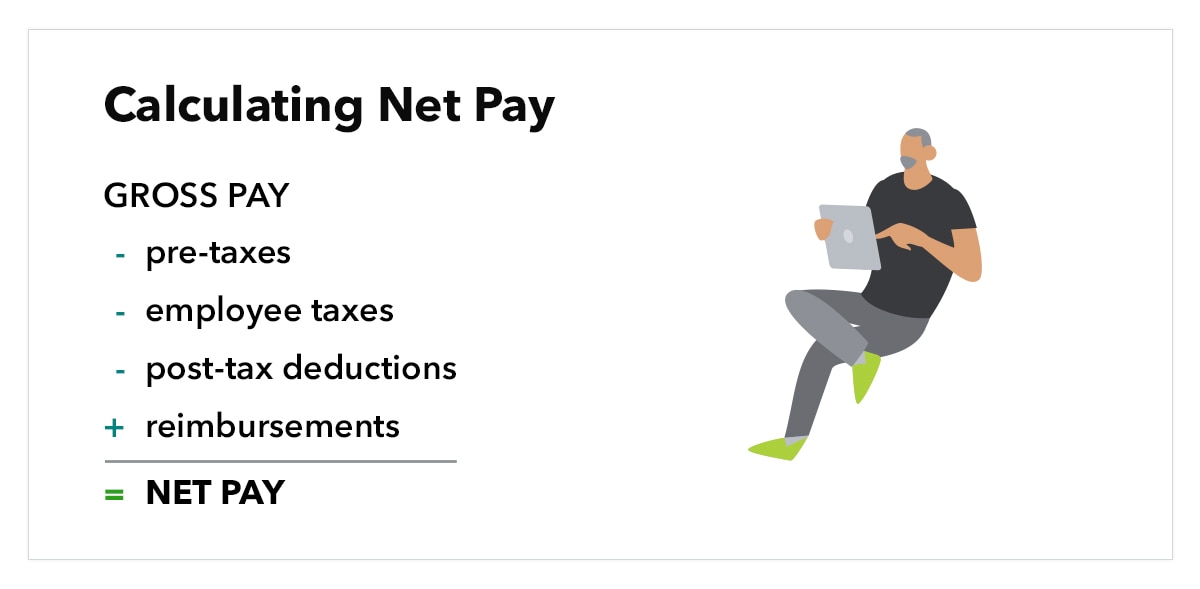
Gross Pay – Total Mandatory Pre-Tax Deductions – Total Voluntary Pre-Tax Deductions – Total Post-Tax Deductions = Net Pay
For example, if your gross pay is $2,000, and you have:
-
$200 in federal income tax
-
$50 in state income tax
-
$124 in Social Security tax
-
$29 in Medicare tax
-
$100 for health insurance (pre-tax)
-
$150 for 401(k) (pre-tax)
-
$20 for union dues (post-tax)
Your total pre-tax deductions would be $100 + $150 = $250.
Your adjusted taxable gross would be $2,000 – $250 = $1,750.
Taxes would then be calculated on $1,750. Let’s assume the example tax figures are correct for that adjusted gross: $200 + $50 + $124 + $29 = $403.
Total deductions would be $250 (pre-tax) + $403 (taxes) + $20 (post-tax) = $673.
Your net pay would be $2,000 – $673 = $1,327.
Why Net Pay Matters More
While gross pay sounds impressive, it’s your net pay that truly dictates your financial reality. This is the money you have available for:
-
Budgeting: All your household expenses, rent/mortgage, groceries, utilities, transportation, and discretionary spending must come from your net pay.
-
Savings and Investments: Beyond your pre-tax retirement contributions, any additional savings, investments, or debt repayments (outside of garnishments) are funded by your net pay.
-
Financial Planning: Understanding your net pay is critical for long-term financial planning, as it reflects your actual cash flow.
Focusing solely on gross pay can lead to overestimating your financial capacity and can result in budgeting shortfalls.
Common Paycheck Discrepancies and How to Spot Them
Errors on paychecks, while hopefully rare, do occur. It’s your responsibility to review your pay stub meticulously each pay period.
-
Check Hours Worked/Rate: For hourly employees, ensure the hours reported match your records. Verify your hourly rate is correct.
-
Verify Gross Pay: Confirm your gross pay aligns with your expected salary or calculated hourly wages.
-
Review Deduction Amounts: Compare the deducted amounts for taxes, insurance, and retirement contributions against your expectations or previous pay stubs. Ensure pre-tax deductions are indeed taken before taxes, and post-tax deductions after.
-
Confirm Year-to-Date Totals: These totals help you track your annual earnings and contributions, which are vital for tax season.
If you spot an error, contact your HR or payroll department immediately with documentation (e.g., your time sheet, offer letter, previous pay stubs). Prompt action can prevent further issues and ensure you receive the correct compensation.
Tools and Resources for Pay Calculation
Fortunately, you don’t have to manually calculate every detail of your paycheck. Several tools and resources can help you understand and verify your earnings.
Online Paycheck Calculators
These widely available tools can be incredibly helpful for estimating your take-home pay.
-
Benefits: They allow you to input your gross pay, filing status, exemptions, and common deductions to get an estimate of your net pay. This is useful for planning, comparing job offers, or understanding the impact of changes (like increasing 401(k) contributions). Many calculators are state-specific, accounting for varying state income taxes.
-
Limitations: While helpful, they are estimates. They may not account for every specific deduction, unusual pay structures, or unique local taxes. Always rely on your official pay stub for actual figures.
Payroll Software and HR Portals
Most employers utilize sophisticated payroll software that provides detailed pay stubs and year-to-date information.
-
Access to Pay Stubs: You typically access these through an online HR portal or receive them electronically. These official documents are your most accurate source of information.
-
Year-to-Date Information: These portals also show your cumulative earnings and deductions, which are crucial for tax preparation and financial planning. Take advantage of these resources to review your pay history regularly.
Financial Planners and Tax Professionals
For more complex financial situations, or if you’re looking to optimize your tax strategy, professional advice can be invaluable.
-
Complex Situations: If you have multiple income streams, are self-employed, have significant investment income, or intricate deduction scenarios, a financial planner or tax advisor can provide tailored guidance.
-
Tax Optimization: These professionals can help you understand how different deductions and credits impact your overall tax liability, not just your paycheck withholding, and help you make informed decisions about retirement contributions, FSA/HSA utilization, and other tax-advantaged strategies.
Strategies for Optimizing Your Take-Home Pay (Legally!)
Understanding how your pay is calculated is the first step; the next is to use that knowledge to make informed decisions that can legally increase your net pay or improve your long-term financial standing.
Adjusting W-4 Forms
Your W-4 form (Employee’s Withholding Certificate) is critical as it tells your employer how much federal income tax to withhold from each paycheck.
-
Understanding Allowances and Withholdings: While the W-4 form has been updated to be more straightforward, it still allows you to specify additional withholding or claim exemptions.
-
Avoiding Under or Over-Withholding:
-
Under-withholding: Can lead to a tax bill at the end of the year and potential penalties.
-
Over-withholding: Means you’re giving the government an interest-free loan throughout the year, missing out on that money that could be earning interest or paying down high-interest debt. Aim to withhold an amount that results in a minimal refund or balance due at tax time. You can adjust your W-4 at any time, especially after major life events like marriage, divorce, or having a child.
-
Maximizing Pre-Tax Benefits
Leveraging pre-tax deduction opportunities is one of the most effective ways to increase your take-home pay and build wealth simultaneously.
-
Leveraging 401(k), FSA, HSA Contributions: By contributing to these accounts, you reduce your taxable income, meaning less money is subject to income tax withholding. This directly increases your net pay while simultaneously funding your retirement or covering future expenses with tax-advantaged dollars. For 401(k)s, aim to contribute at least enough to receive any employer match, which is essentially free money.
-
Understanding the Long-Term Financial Impact: These aren’t just short-term boosts to your paycheck; they are powerful tools for long-term financial growth and tax efficiency. The money saved on taxes now, combined with tax-deferred or tax-free growth, can significantly enhance your financial future.
Understanding Tax Credits and Deductions
While these don’t directly change your paycheck deductions, they impact your overall tax liability, which is the amount you ultimately owe to the government each year.
-
How They Impact Your Overall Tax Liability: Tax deductions reduce your taxable income, lowering the amount of tax you owe. Tax credits directly reduce the amount of tax you owe, dollar for dollar. Both can lead to a larger tax refund or a smaller tax bill come tax season.
-
Seeking Tax Advice for Eligibility: Many credits and deductions have specific eligibility requirements (e.g., child tax credit, education credits, student loan interest deduction). Consulting a tax professional can help ensure you are taking advantage of all applicable tax benefits, ultimately improving your overall financial standing even if it doesn’t immediately change your net paycheck.
Conclusion
The journey from your agreed-upon salary or hourly wage to the final amount that lands in your bank account is multifaceted. It involves understanding gross pay calculations, navigating a myriad of mandatory and voluntary deductions, and ultimately arriving at your true spending power – net pay. By taking the time to thoroughly review your pay stubs, utilizing available online tools, and strategically leveraging pre-tax benefits and tax planning, you gain invaluable control and insight into your personal finances. This financial literacy is not just about avoiding errors; it’s about empowering yourself to make smarter decisions, budget more effectively, and build a more secure financial future. Your paycheck isn’t just a number; it’s a critical financial document that deserves your informed attention.
aViewFromTheCave is a participant in the Amazon Services LLC Associates Program, an affiliate advertising program designed to provide a means for sites to earn advertising fees by advertising and linking to Amazon.com. Amazon, the Amazon logo, AmazonSupply, and the AmazonSupply logo are trademarks of Amazon.com, Inc. or its affiliates. As an Amazon Associate we earn affiliate commissions from qualifying purchases.