
Understanding the mechanics of interest calculation is a cornerstone of financial literacy. While modern banking apps provide real-time updates on your balance, the actual math behind how your money grows often remains obscured behind digital interfaces. For the savvy investor or the disciplined saver, knowing exactly how to calculate monthly interest is not just an academic exercise—it is a vital tool for auditing bank statements, comparing financial products, and projecting future wealth.
When you deposit money into a savings account, you are essentially lending that money to the bank. In exchange, the bank pays you interest. However, the amount you receive depends on several variables, including the interest rate, the compounding frequency, and your average daily balance. By mastering these calculations, you gain a clearer perspective on how small adjustments in interest rates or deposit schedules can significantly impact your long-term financial trajectory.
The Fundamentals: APY, APR, and Compounding Frequency
Before diving into the formulas, it is essential to distinguish between the various terms banks use to describe interest. Misinterpreting these terms can lead to significant discrepancies between your expected returns and your actual earnings.
Nominal Interest Rate vs. Annual Percentage Yield (APY)
The nominal interest rate, or Annual Percentage Rate (APR), is the “sticker price” of the interest. It represents the percentage of interest earned on the principal over a year, without taking compounding into account.
However, most savings accounts utilize compound interest, which is interest earned on both the initial principal and the interest that has accumulated from previous periods. This is where the Annual Percentage Yield (APY) comes in. The APY reflects the real rate of return on your savings, accounting for the effect of compounding. If a bank compounds interest monthly, your APY will be slightly higher than your nominal interest rate because you earn interest on your interest every 30 days.
The Role of Compounding Frequencies
Compounding can occur daily, monthly, quarterly, or annually. Most high-yield savings accounts (HYSAs) compound interest daily but credit it to your account monthly. This means the bank calculates a small slice of interest every single day based on that day’s balance and adds it to the “accrued” pile, which is then officially deposited into your account at the end of the statement cycle. The more frequent the compounding, the faster your wealth grows, even if the nominal rate remains the same.
The Mathematical Formulas for Monthly Interest
Calculating interest is not a one-size-fits-all process. Depending on how your bank structures its products, you may need to use different mathematical models.
The Simple Monthly Interest Formula
For a quick estimate, many people use the simple interest formula. While it is not perfectly accurate for accounts that compound daily, it provides a solid “ballpark” figure for monthly planning.
The formula is:
Monthly Interest = (Account Balance × Annual Interest Rate) / 12
For example, if you have $10,000 in an account with a 4.00% annual interest rate:
- Convert the percentage to a decimal: 0.04.
- Multiply the balance by the rate: $10,000 × 0.04 = $400 (Annual Interest).
- Divide by 12: $400 / 12 = $33.33.
In this scenario, you would earn approximately $33.33 in interest for that month.
The Average Daily Balance Method
Most commercial banks use the “Average Daily Balance” method to ensure fairness, especially if you make multiple deposits or withdrawals throughout the month. This method calculates interest based on the actual balance in the account each day.
The formula is:
(Average Daily Balance × Interest Rate × Number of Days in Month) / 365
To find your average daily balance, you add up the closing balance of your account for every day of the month and divide it by the number of days in that month. This method is more precise because it accounts for the exact timing of your transactions. If you deposit a large sum on the 2nd of the month, you will earn more interest than if you deposited that same sum on the 28th.
The Compound Interest Formula
If you want to project growth over several months or years while accounting for the “interest on interest” effect, you use the standard compound interest formula:

A = P (1 + r/n)^(nt)
Where:
- A = The future value of the money
- P = The principal amount
- r = The annual interest rate (decimal)
- n = The number of times interest compounds per year
- t = The time the money is invested for (in years)
For a single month of growth with daily compounding, n would be 365, and t would be 1/12.
Factors That Influence Your Monthly Earnings
While the formulas provide the mathematical framework, several real-world factors can shift the outcome of your interest calculations.
Timing of Deposits and Withdrawals
Because of the average daily balance method, the timing of your movements of capital is critical. To maximize monthly interest, it is mathematically advantageous to deposit funds as early in the statement cycle as possible. Conversely, if you must withdraw funds, doing so toward the end of the cycle allows the larger balance to accrue interest for a longer duration.
Federal Reserve Policy and Variable Rates
Most savings accounts offer variable interest rates, meaning the bank can change the rate at any time. These rates are heavily influenced by the Federal Funds Rate set by the Federal Reserve. When the Fed raises rates to combat inflation, banks generally increase the interest they pay on savings. When the Fed cuts rates to stimulate the economy, your monthly interest earnings will likely decrease. Monitoring the macroeconomic environment helps you anticipate changes in your passive income.
Tax Implications on Earned Interest
It is a common mistake to view the interest deposited into your account as “pure profit.” In the eyes of the IRS (and most international tax authorities), interest earned on a savings account is considered taxable income.
At the end of the year, if you earned more than a certain threshold (usually $10 in the U.S.), your bank will issue a Form 1099-INT. You are required to report this interest on your tax return, and it will be taxed at your marginal income tax rate. If you are in the 22% tax bracket, a $100 interest payment is effectively worth only $78 after taxes. Serious savers often factor this “tax drag” into their calculations when comparing savings accounts to tax-advantaged vehicles like Roth IRAs or municipal bonds.
Strategic Tools for Maximizing Your Savings
Once you understand how to calculate your interest, the next step is optimizing the environment in which your money sits.
High-Yield Savings Accounts (HYSA) vs. Traditional Accounts
The most significant variable in your interest calculation is the rate itself. Traditional “brick-and-mortar” banks often offer interest rates as low as 0.01% or 0.05%. In contrast, online-first banks often offer High-Yield Savings Accounts with rates 10 to 100 times higher.
On a $25,000 balance:
- At 0.05%, you earn $1.04 per month.
- At 4.50%, you earn $93.75 per month.
The difference is staggering. Auditing your rate monthly ensures you aren’t leaving significant money on the table due to “rate creep” or institutional inertia.
Leveraging Spreadsheets for Financial Forecasting
For those managing multiple “sinking funds” or complex savings goals, a spreadsheet is an invaluable tool. By setting up a simple Excel or Google Sheets model, you can automate your monthly interest calculations.
You can create columns for “Date,” “Transaction Amount,” “Running Balance,” and “Daily Interest Earned.” Using the formula = (Balance * Annual_Rate) / 365, you can see exactly how much each day of savings contributes to your end-of-month total. This level of granularity encourages better financial habits, as the direct correlation between saving and earning becomes visible in real-time.
The Power of Automation
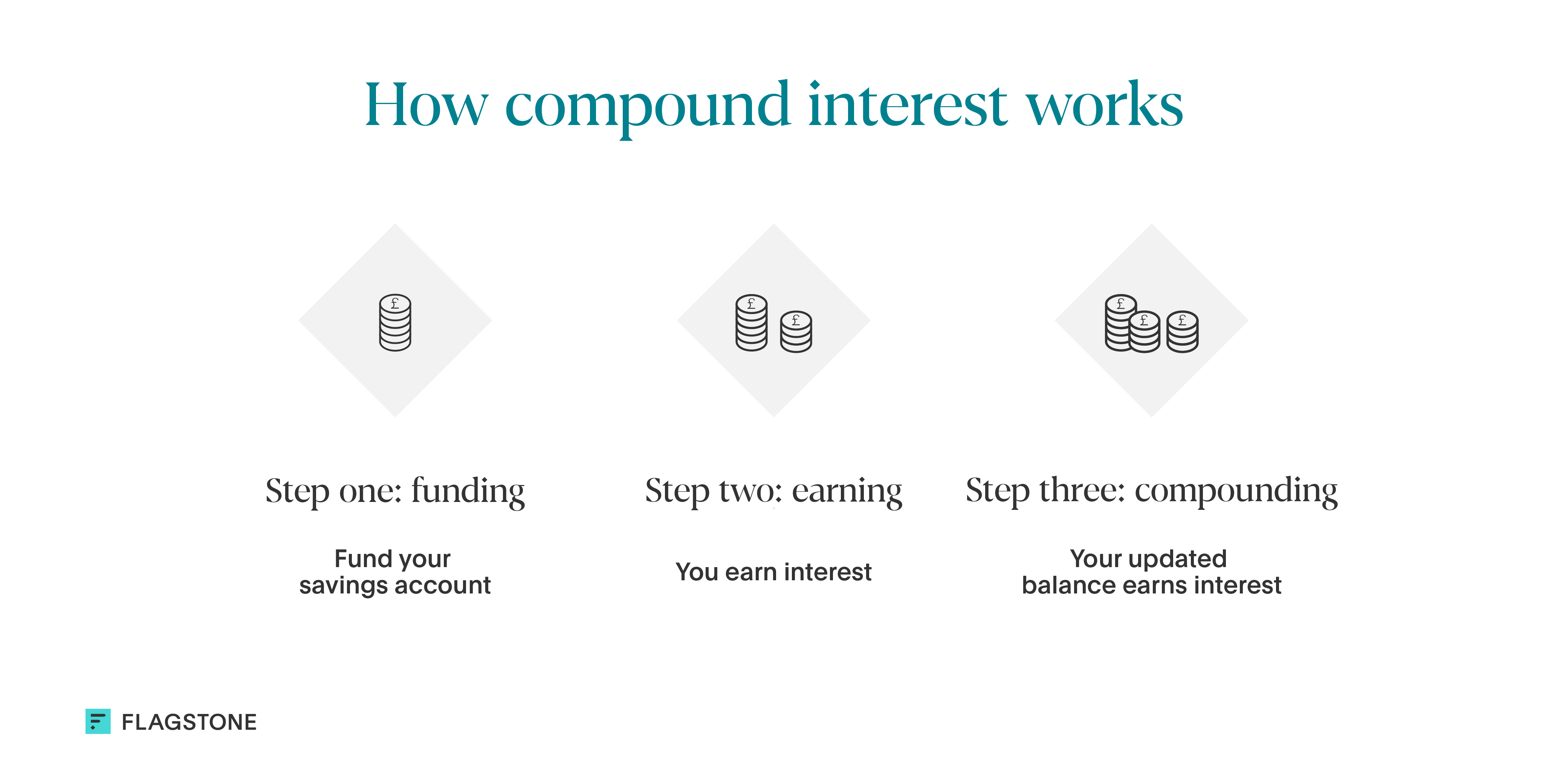
Finally, the most effective way to grow your monthly interest is to increase the principal consistently. By setting up an automated transfer from your checking account to your savings account on payday, you ensure that the “Average Daily Balance” is consistently rising.
Calculating your monthly interest should not just be a retrospective look at what you earned; it should be a forward-looking strategy. By understanding the math, you can set specific targets—such as wanting to earn $100 or $500 a month in passive interest—and work backward to determine exactly how much principal is required to reach that goal. This shift from passive saving to active financial engineering is what separates casual savers from those building true wealth.
aViewFromTheCave is a participant in the Amazon Services LLC Associates Program, an affiliate advertising program designed to provide a means for sites to earn advertising fees by advertising and linking to Amazon.com. Amazon, the Amazon logo, AmazonSupply, and the AmazonSupply logo are trademarks of Amazon.com, Inc. or its affiliates. As an Amazon Associate we earn affiliate commissions from qualifying purchases.