
Navigating the world of personal and business finance requires more than just an understanding of how much you can afford to borrow; it requires a deep dive into the mechanics of how that debt grows. Whether you are eyeing a new home, financing a vehicle, or seeking capital for a startup, the most critical number in your contract is often the interest rate. However, most lenders quote interest in annual terms (APR), while your payments occur monthly.
Understanding how to calculate the interest rate per month is the key to demystifying your bank statements and taking full control of your financial health. By mastering this calculation, you can accurately predict your monthly outlays, compare different loan offers on an even playing field, and develop strategies to pay off your debt faster.
The Fundamentals of Interest Rates: APR vs. Monthly Periodic Rates
To calculate monthly interest, one must first understand the terminology used by financial institutions. Most borrowers are familiar with the Annual Percentage Rate (APR), which represents the yearly cost of borrowing funds. However, the APR is often a “sticker price” that masks the granular reality of monthly compounding.
Nominal vs. Effective Interest Rates
The nominal interest rate is the percentage stated in your loan agreement before considering compounding. For example, a 6% APR is a nominal rate. The effective interest rate, however, takes into account the frequency of compounding. If your interest compounds monthly, your effective annual rate is actually slightly higher than the nominal rate. When calculating your monthly interest, you are essentially finding the “periodic rate”—the portion of the annual rate applied to your balance each month.
Why the APR Isn’t Always the Full Story
Lenders are legally required to disclose the APR, which includes not just the interest but also certain fees associated with the loan. This makes it a great tool for comparing two different loans, but it can be confusing when you are trying to calculate exactly how many dollars of your next payment are going toward interest versus the principal balance. To get your monthly periodic rate, the simplest starting point is dividing the annual interest rate by 12. However, as we will explore, the way that rate is applied to your balance depends heavily on the type of loan you have.
Step-by-Step Guide: Calculating Your Monthly Interest
The method for calculating interest varies depending on whether you are dealing with a simple interest loan or an amortized loan (like a mortgage or car loan). While the math remains consistent, the balance to which the math is applied changes over time.
The Simple Interest Formula
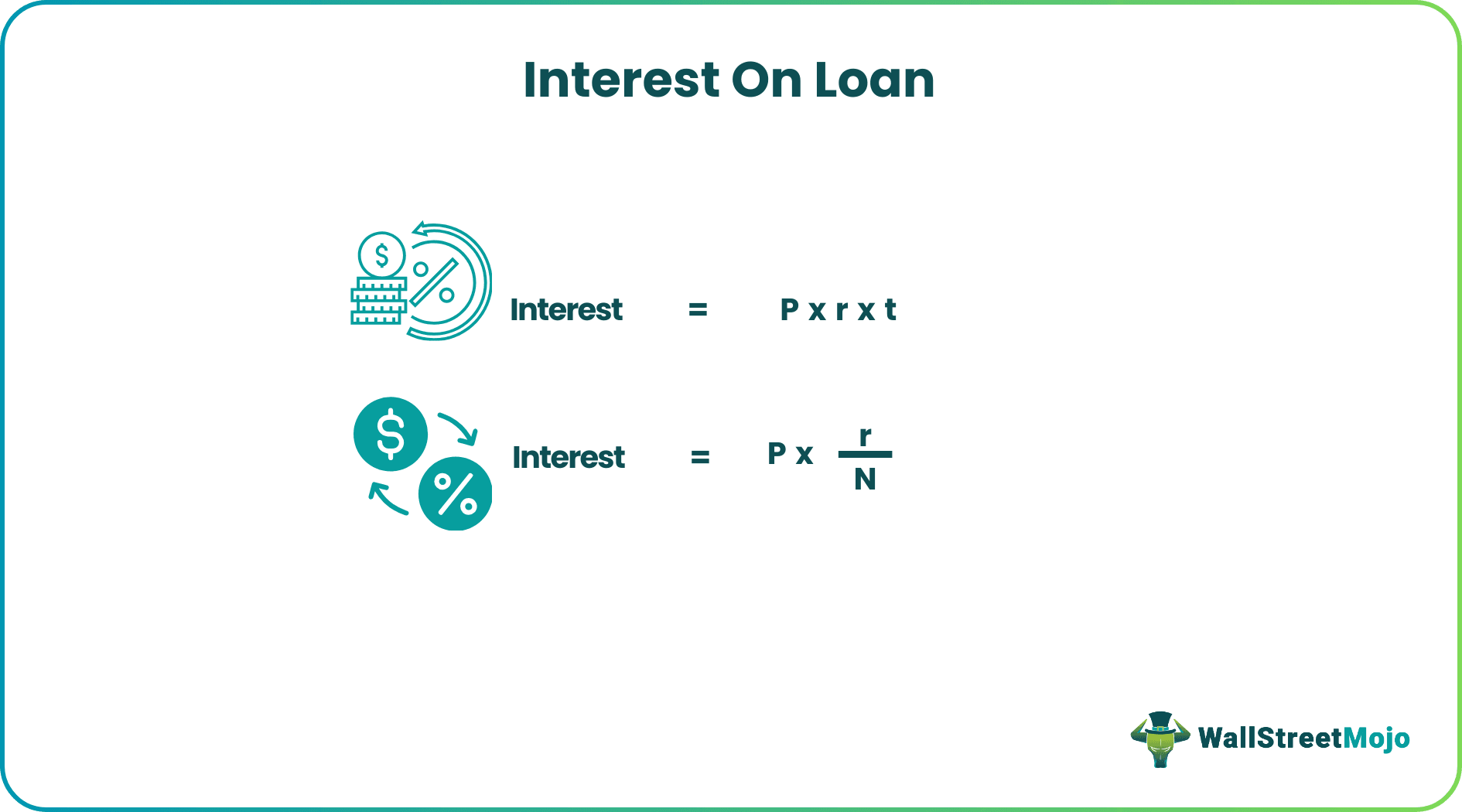
Simple interest is the easiest to calculate. It is common in short-term personal loans or certain types of private lending. The formula is:
Interest = Principal × Rate × Time
To find the monthly interest on a simple interest loan:
- Identify the Principal: This is the total amount you currently owe.
- Convert the Annual Rate to Decimal: If your rate is 12%, use 0.12.
- Divide by 12: This gives you your monthly periodic rate (0.12 / 12 = 0.01).
- Multiply: Multiply the principal by the monthly periodic rate.
For example, on a $10,000 loan at 12% interest, your first month’s interest would be $10,000 × 0.01 = $100.
The Amortization Schedule and the Declining Balance
Most consumer loans—specifically mortgages and auto loans—use an amortization schedule. In these cases, your monthly payment remains the same, but the ratio of interest to principal shifts every month.
To calculate the interest portion of your monthly payment on an amortized loan, you must use the remaining balance of the loan, not the original principal.
- Month 1: Interest = $Total Loan Amount × (Annual Rate / 12)$
- Month 2: Interest = $(Total Loan Amount – Principal Paid in Month 1) × (Annual Rate / 12)$
Because you are paying down the principal each month, the amount of interest you owe decreases over time. This is why, in the early years of a 30-year mortgage, almost your entire payment goes toward interest, while in the final years, almost all of it goes toward the principal.

Dealing with Daily Compounding
Some loans, particularly credit cards, calculate interest on a daily basis. To find your monthly interest in this scenario, you first find the Daily Periodic Rate (DPR) by dividing your APR by 365. You then multiply this DPR by the number of days in the billing cycle and your average daily balance. While this adds a layer of complexity, the core principle remains the same: the rate is a fraction of the annual total.
Factors That Influence Your Monthly Interest Costs
Calculation is only half the battle; the other half is understanding why your rate is what it is. Financial institutions do not pick numbers out of a hat; they use complex risk-based pricing models.
Credit Score and Risk Assessment
Your credit score is the single most significant factor in determining your interest rate. From a lender’s perspective, the interest rate is a “risk premium.” Borrowers with high credit scores (740+) represent low risk and are rewarded with lower monthly interest rates. Conversely, “subprime” borrowers may face rates that are three or four times higher. Even a 1% difference in your annual rate can result in thousands of dollars in extra interest over the life of a loan.
Loan Term and Payment Frequency
The length of your loan (the term) also dictates how much interest you pay each month. Generally, longer-term loans (like a 30-year mortgage) have higher interest rates than shorter-term loans (like a 15-year mortgage). Furthermore, the frequency of your payments can impact the math. Some savvy borrowers choose bi-weekly payments. By paying half of your monthly bill every two weeks, you make 26 half-payments a year—effectively making 13 full payments. This reduces the principal faster, which in turn reduces the amount of monthly interest calculated on the declining balance.
Fixed vs. Variable Rates
In a fixed-rate loan, your monthly interest calculation remains stable because the rate never changes. However, with Variable or Adjustable-Rate Mortgages (ARMs), your monthly interest is tied to a financial index (like the SOFR or Prime Rate). When the index goes up, your monthly interest calculation must be recalculated based on the new, higher rate, which can significantly increase your monthly debt obligation.
Practical Strategies to Minimize Monthly Interest
Once you know how to calculate your interest, the next logical step is to find ways to pay less of it. Reducing your interest expense is one of the most effective ways to increase your net worth and free up cash flow for investing.
Principal-Only Extra Payments
Since interest is calculated based on your remaining balance, any reduction in that balance directly lowers your next interest charge. Most lenders allow for “principal-only” payments. Even an extra $50 or $100 a month applied directly to the principal can shave years off a loan and save you a staggering amount in interest. When you make an extra payment, your next month’s interest calculation will be based on a smaller number, ensuring more of your regular payment goes toward the principal.
Refinancing and Consolidation
If market interest rates have dropped since you took out your loan, or if your credit score has improved significantly, you may be a candidate for refinancing. Refinancing involves taking out a new loan at a lower interest rate to pay off the old one. By lowering the annual rate, you automatically lower the monthly periodic rate used in your calculations. Similarly, debt consolidation can take high-interest debt (like credit cards) and move it into a lower-interest personal loan, drastically reducing the monthly interest “drain” on your finances.
The Impact of Early Payoff
In the world of finance, time is money. The longer a loan lasts, the more “cycles” of interest the lender gets to calculate. By understanding the math of monthly interest, you can see the tangible benefit of paying a 5-year car loan off in 4 years. The “interest saved” is essentially a guaranteed, tax-free return on your money.
Leveraging Digital Tools and Financial Literacy
While manual calculation is vital for understanding the concept, modern financial tools can help you manage your loans with professional-grade precision.
Using Spreadsheets for Loan Modeling
Microsoft Excel and Google Sheets are powerful allies for anyone managing debt. The PMT function helps you calculate total payments, while the IPMT function specifically calculates the interest portion of any given monthly payment. Creating your own amortization table in a spreadsheet allows you to visualize exactly how much interest you are paying each month and how extra payments will impact your “payoff date.”

The Role of Financial Empowerment
Calculating interest is more than just a math exercise; it is an act of financial empowerment. When you can look at a loan offer and see past the “low monthly payment” to the actual cost of the interest, you become a sophisticated consumer. You transition from being a passive borrower to an active manager of your capital.
In conclusion, calculating the interest rate per month on a loan is a foundational skill in personal finance. By dividing your annual rate by twelve and applying it to your current balance, you gain clarity on where your money is going. This transparency allows you to make better decisions regarding refinancing, extra payments, and new debt acquisitions. In the complex landscape of modern finance, the ability to do the math yourself is the best insurance policy against overpaying for the money you borrow.
aViewFromTheCave is a participant in the Amazon Services LLC Associates Program, an affiliate advertising program designed to provide a means for sites to earn advertising fees by advertising and linking to Amazon.com. Amazon, the Amazon logo, AmazonSupply, and the AmazonSupply logo are trademarks of Amazon.com, Inc. or its affiliates. As an Amazon Associate we earn affiliate commissions from qualifying purchases.