
Understanding how to calculate interest payable is a fundamental skill, whether you’re managing personal finances, running a small business, or navigating complex corporate accounts. Interest payable represents the amount of interest owed by a borrower to a lender for the use of borrowed money or for delaying the payment of a debt. This financial obligation arises from various sources, including loans, credit cards, mortgages, bonds, and even overdue invoices.
Accurately calculating interest payable is crucial for several reasons. For individuals, it helps in budgeting, understanding the true cost of borrowing, and making informed decisions about debt management or investments. For businesses, it’s essential for financial reporting, cash flow management, tax planning, and ensuring compliance with loan agreements. Miscalculating interest can lead to unexpected expenses, damaged credit, or even legal issues. This guide will demystify the process, breaking down the core concepts and providing practical methods for calculating interest in various scenarios.

Understanding the Fundamentals of Interest Payable
Before diving into the calculations, it’s vital to grasp the foundational concepts that underpin all interest computations. These elements are the building blocks, and a clear understanding of each will simplify the entire process.
Defining Interest Payable
Interest payable, at its core, is the cost of borrowing money. From a borrower’s perspective, it’s the expense incurred for the privilege of using a lender’s capital over a specific period. From an accounting standpoint, interest payable is a current liability on a company’s balance sheet, representing the interest accrued but not yet paid as of a particular date. It’s a non-cash expense that impacts profitability and cash flow, even if the actual cash payment occurs later.
The concept extends beyond traditional loans. For instance, bond issuers have interest payable to bondholders, and credit card users incur interest payable on outstanding balances. Even late payments on utility bills or taxes can sometimes accrue interest payable.
Key Components of Interest Calculation
Three primary variables dictate the amount of interest payable:
- Principal (P): This is the initial amount of money borrowed or invested. For a loan, it’s the original loan amount. For a bond, it’s the face value. Understanding the principal is the starting point for any interest calculation.
- Interest Rate (R): Expressed as a percentage, the interest rate is the cost of borrowing money over a specified period, typically annually. It’s crucial to convert this percentage into a decimal for calculations (e.g., 5% becomes 0.05). Additionally, one must pay close attention to whether the rate is an Annual Percentage Rate (APR), which includes some fees, or an Annual Percentage Yield (APY), which accounts for compounding.
- Time (T): This refers to the duration for which the money is borrowed or invested. Time is usually expressed in years. If the period is in months, it needs to be converted to a fraction of a year (e.g., 6 months = 6/12 = 0.5 years). Consistency in units (e.g., annual rate with annual time) is paramount to avoid errors.
Types of Interest: Simple vs. Compound
The method of calculating interest fundamentally differs based on whether it’s simple or compound interest. This distinction profoundly impacts the total interest payable.
- Simple Interest: This is calculated only on the original principal amount. It remains constant throughout the loan term, assuming no changes to the principal. Simple interest is typically used for short-term loans or basic calculations where the interest is not reinvested or added to the principal.
- Compound Interest: This is calculated on the original principal and on the accumulated interest from previous periods. In essence, interest earns interest. This “interest on interest” effect means that the total amount owed or earned grows exponentially over time. Compound interest is far more common in real-world financial products like mortgages, credit cards, and most investments.
Simple Interest Calculation Methods
Simple interest is the most straightforward form of interest calculation. It provides a foundational understanding before moving to more complex scenarios.
The Simple Interest Formula
The formula for calculating simple interest is:
I = P * R * T
Where:
- I = Total Interest Payable
- P = Principal amount (the initial loan or deposit)
- R = Annual Interest Rate (as a decimal)
- T = Time period (in years)
This formula directly yields the total interest accumulated over the specified time period. To find the total amount to be repaid, you would add this interest to the principal (A = P + I).
Step-by-Step Example for Simple Interest
Let’s illustrate with a practical example:
Imagine you take out a personal loan of $10,000 with a simple annual interest rate of 6% for a period of 3 years.
- Identify the Principal (P): P = $10,000
- Convert the Interest Rate (R) to a decimal: R = 6% = 0.06
- Identify the Time (T) in years: T = 3 years
Now, apply the formula:
I = P * R * T
I = $10,000 * 0.06 * 3
I = $600 * 3
I = $1,800
So, the total interest payable over 3 years would be $1,800. The total amount you would repay is $10,000 (principal) + $1,800 (interest) = $11,800.
When is Simple Interest Typically Used?
Simple interest, while less common for long-term consumer loans, still has its applications:
- Short-Term Loans: Often used for short-duration personal loans, payday loans, or inter-company loans (though careful review is always needed).
- Bonds: Some bonds pay simple interest annually, though many have more complex coupon structures.
- Basic Financial Products: Some savings accounts or certificates of deposit (CDs) might initially advertise simple interest, especially for very short terms, before compounding kicks in.
- Introductory Credit Card Rates: Sometimes, an introductory period might simplify interest calculation before the standard compound rate applies.
It’s crucial to always confirm the interest calculation method when entering into any financial agreement, as the difference between simple and compound interest can be substantial over time.
Navigating Compound Interest Calculations
Compound interest is the engine behind significant financial growth (for investors) and mounting debt (for borrowers). Its calculations are more intricate but reflect most real-world financial instruments.
The Compound Interest Formula
The standard formula for calculating the future value (A) of an investment or loan with compound interest is:
A = P (1 + R/n)^(nt)
Where:
- A = Future Value of the investment/loan, including interest (the total amount you’ll owe or have)
- P = Principal amount (the initial sum borrowed or invested)
- R = Annual Interest Rate (as a decimal)
- n = Number of times that interest is compounded per year
- t = Time the money is invested or borrowed for (in years)
To find only the interest payable, you would subtract the principal from the future value: Interest = A – P.
Understanding Compounding Frequency
The ‘n’ in the compound interest formula is critical. It represents how often the interest is calculated and added back to the principal within a year. The more frequently interest is compounded, the faster the total amount grows.
Common compounding frequencies include:
- Annually: n = 1 (interest calculated once a year)
- Semi-annually: n = 2 (interest calculated twice a year)
- Quarterly: n = 4 (interest calculated four times a year)
- Monthly: n = 12 (interest calculated twelve times a year)
- Daily: n = 365 (interest calculated every day)

Some financial institutions even compound continuously, requiring a different formula (A = Pe^(rt)), though this is less common for typical consumer products.
Step-by-Step Example for Compound Interest
Let’s use an example to illustrate the power of compounding:
Suppose you borrow $10,000 at an annual interest rate of 6% for 3 years, but this time, the interest is compounded monthly.
- Identify the Principal (P): P = $10,000
- Convert the Annual Interest Rate (R) to a decimal: R = 6% = 0.06
- Identify the Compounding Frequency (n): Compounded monthly, so n = 12
- Identify the Time (t) in years: t = 3 years
Now, apply the compound interest formula:
A = P (1 + R/n)^(nt)
A = $10,000 (1 + 0.06/12)^(12*3)
A = $10,000 (1 + 0.005)^(36)
A = $10,000 (1.005)^(36)
A = $10,000 * 1.19668 (approximately)
A = $11,966.80
The total future value is $11,966.80. To find the interest payable:
Interest = A – P
Interest = $11,966.80 – $10,000
Interest = $1,966.80
Comparing this to the simple interest example ($1,800), the monthly compounding resulted in an additional $166.80 in interest payable over the same period, demonstrating the significant impact of compounding frequency.
The Power of Compounding: Why it Matters
Compounding is often referred to as the “eighth wonder of the world” because of its exponential growth potential. For borrowers, this means that even small differences in interest rates or compounding frequency can lead to much larger total interest payments over the life of a loan. For investors, it’s the key to wealth accumulation, as their earnings continually generate more earnings.
Understanding this mechanism allows individuals to:
- Prioritize high-interest debt: Tackling credit card debt (which often compounds daily) first can save thousands.
- Evaluate loan offers: A loan with a slightly lower APR but daily compounding might be more expensive than one with a higher APR but annual compounding.
- Plan for retirement: Long-term investments benefit immensely from compounding, especially when starting early.
Practical Applications and Advanced Considerations
Beyond the basic formulas, understanding how interest payable applies to specific financial products and situations is crucial. The complexity can vary greatly between personal and business finance.
Interest Payable for Businesses
For businesses, interest payable is a regular occurrence and a significant line item in financial statements.
- Accrual Accounting: Businesses often use accrual accounting, meaning they recognize expenses when incurred, not when paid. Interest payable is accrued daily, weekly, or monthly, even if the actual payment to the lender is quarterly or annually. This ensures financial statements accurately reflect the company’s liabilities at any given point.
- Corporate Loans: Companies borrow for various reasons – expansion, working capital, acquisitions. The interest on these loans (term loans, revolving credit facilities) needs to be meticulously calculated and accounted for.
- Bonds: When a company issues bonds, it incurs an obligation to pay interest (coupon payments) to bondholders. Calculating this interest, especially for complex bond structures (e.g., zero-coupon bonds, callable bonds), requires specialized knowledge.
- Leases: Certain types of leases (finance leases) might also involve interest calculations embedded within the lease payments.
Interest Payable for Individuals
For individuals, interest payable is most commonly encountered in:
- Mortgages: These are usually long-term loans with interest compounded frequently (e.g., semi-annually, monthly in Canada; daily in some parts of the US). Amortization schedules break down how much of each payment goes towards principal and how much to interest.
- Credit Cards: Credit card interest is notorious for compounding daily on outstanding balances, making it one of the most expensive forms of debt if not paid off monthly. The Annual Percentage Rate (APR) is converted to a daily periodic rate for calculation.
- Personal Loans & Auto Loans: These often have fixed interest rates and terms, making calculations relatively straightforward, though they can be simple or compound depending on the lender.
- Student Loans: Can be simple or compound, fixed or variable, and often have specific deferment or forbearance rules that affect how interest accrues.
Impact of Amortization Schedules
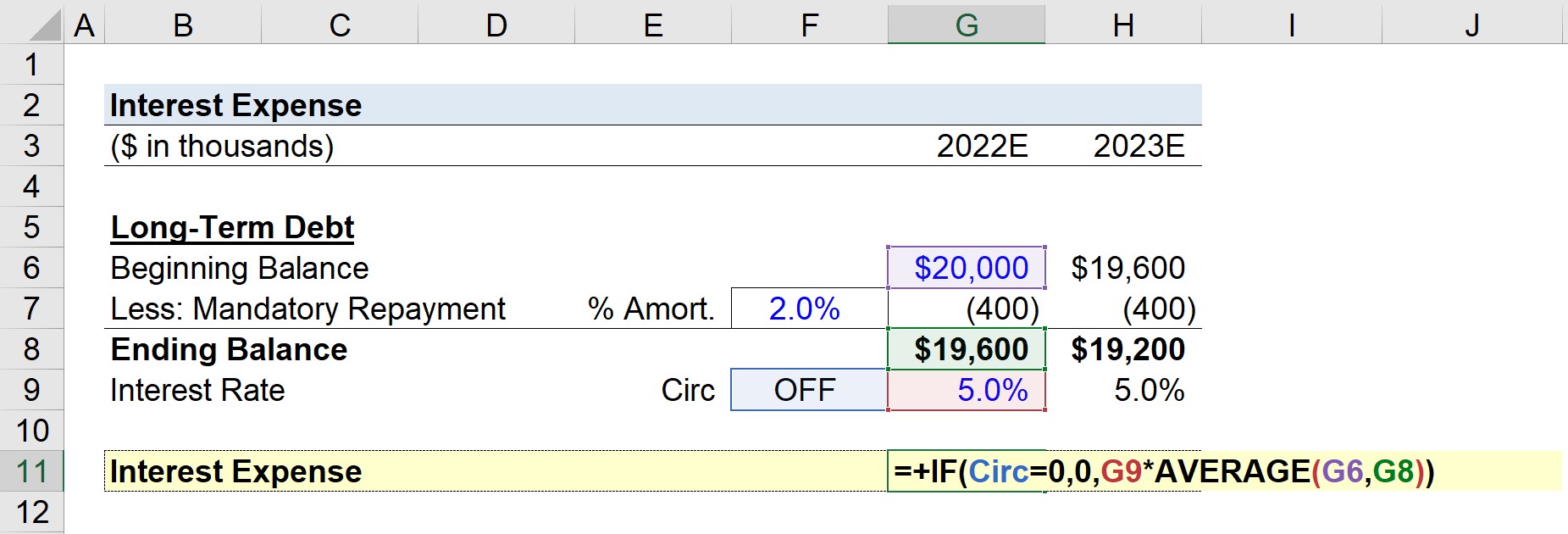
For installment loans like mortgages, auto loans, and many personal loans, an amortization schedule is used. This schedule details each payment over the life of the loan, showing how much of each payment goes towards interest and how much towards reducing the principal. In the early stages of a loan, a larger portion of the payment goes to interest, while later payments allocate more to principal. Understanding an amortization schedule allows borrowers to see exactly how their payments are applied and how much total interest they will pay. It’s also crucial for calculating the remaining principal at any point in time, which in turn affects future interest calculations.
Software and Tools for Interest Calculation
Manually calculating complex compound interest, especially for long-term loans with varying payments or interest rates, can be tedious and prone to error. Fortunately, numerous tools are available:
- Spreadsheets (Excel, Google Sheets): These are powerful for creating custom amortization schedules and performing complex interest calculations using built-in functions (e.g., FV, PV, PMT, IPMT, PPMT).
- Online Calculators: Many financial websites offer free, user-friendly interest calculators for mortgages, personal loans, credit cards, and investments.
- Financial Software: Personal finance software (e.g., Quicken, Mint) and accounting software (e.g., QuickBooks, Xero) often have integrated tools to track and calculate interest payable.
- Lender Statements: Your loan statements will always show the interest accrued and paid during a billing cycle, acting as a crucial reconciliation tool.
Common Mistakes to Avoid and Best Practices
Even with the formulas and tools, certain pitfalls can lead to incorrect interest calculations. Awareness of these common mistakes and adopting best practices will ensure accuracy.
Misinterpreting Interest Rates (APR vs. APY)
One of the most frequent errors is confusing or misapplying interest rates.
- APR (Annual Percentage Rate): This represents the annual cost of borrowing, including the nominal interest rate and some fees. It does not typically account for compounding.
- APY (Annual Percentage Yield): This reflects the true annual rate of return or cost, taking into account the effect of compounding.
When comparing loans or investments, always use the APY for an accurate apples-to-apples comparison, as it shows the real cost or return. If only APR is provided, you might need to convert it to an effective annual rate (APY) based on the compounding frequency to get a clearer picture of the actual interest payable.
Incorrect Time Periods
Ensure that the time variable (T or t) in your formula is always consistent with the annual rate. If the rate is annual but you are calculating for a month, you must use T = 1/12 (or R/12 if the rate needs to be monthly). Incorrectly using months directly in a formula expecting years, or vice-versa, will lead to significant errors. Similarly, if a loan term is stated in months, convert it to years (e.g., 60 months = 5 years).
Neglecting Compounding Frequency
As demonstrated, compounding frequency (n) dramatically impacts total interest. Forgetting to factor in ‘n’ or using the wrong value for it is a common mistake that can lead to under- or overestimation of interest payable, especially for long-term loans or investments where the difference accumulates significantly. Always confirm how frequently interest is compounded.
Regular Review and Reconciliation
For ongoing debts or investments, regularly reviewing statements from lenders or financial institutions is a best practice. Compare the interest charged on your statements with your own calculations. This reconciliation process helps catch errors early, ensures transparency, and confirms that the terms of the agreement are being correctly applied. For businesses, this is a critical internal control measure.
By diligently applying these principles and avoiding common mistakes, you can master the calculation of interest payable, empowering you with greater financial literacy and control over your monetary obligations.
Conclusion
Calculating interest payable is more than just a mathematical exercise; it’s a cornerstone of financial literacy and sound decision-making. Whether you’re an individual managing a mortgage, a small business owner navigating a loan, or a large corporation handling complex debt structures, accurately determining interest owed is paramount.
We’ve explored the fundamental components of interest—principal, rate, and time—and delved into the critical distinction between simple and compound interest. Understanding the ‘power of compounding’ is particularly crucial, as it dictates the true cost of borrowing and the potential for investment growth. From the straightforward simple interest formula to the more intricate compound interest calculations involving compounding frequency, equipped with these tools, you can confidently assess your financial commitments.
Furthermore, we examined practical applications across personal and business finance, highlighting the role of amortization schedules and the convenience of modern calculation tools. By acknowledging common pitfalls like misinterpreting rates or time periods and adhering to best practices like regular reconciliation, you can ensure precision in your financial assessments.
Ultimately, mastering “how to calculate interest payable” provides clarity, enabling you to budget effectively, choose wisely between financial products, and maintain healthy financial standing. It’s a skill that pays dividends, reinforcing your control over your financial future.
aViewFromTheCave is a participant in the Amazon Services LLC Associates Program, an affiliate advertising program designed to provide a means for sites to earn advertising fees by advertising and linking to Amazon.com. Amazon, the Amazon logo, AmazonSupply, and the AmazonSupply logo are trademarks of Amazon.com, Inc. or its affiliates. As an Amazon Associate we earn affiliate commissions from qualifying purchases.