
Navigating the world of car financing can feel like deciphering a complex financial puzzle, with one of the most significant pieces being interest. For many, a car loan represents one of the largest financial commitments outside of a mortgage, and understanding how interest is calculated is not just academic—it’s empowering. It enables you to make informed decisions, negotiate effectively, and ultimately save thousands of dollars over the life of your loan. This comprehensive guide will demystify car loan interest, breaking down its components, showing you how to calculate it, and equipping you with strategies to minimize its impact on your personal finances.
Understanding the Fundamentals of Car Loan Interest
Before we dive into calculations, it’s crucial to grasp the basic concepts that underpin car loan interest. Interest is essentially the cost of borrowing money, a fee charged by the lender for the privilege of using their capital. For car loans, this fee is typically expressed as an annual percentage.
What is Car Loan Interest?
At its core, car loan interest is the additional money you pay back to the lender beyond the principal amount you borrowed to purchase the vehicle. This interest compensates the lender for the risk they take by lending you money and for the time value of that money. It’s a fundamental aspect of virtually all lending agreements and a key determinant of your total repayment amount. The higher the interest rate, the more expensive the loan becomes over time.
Key Terms You Need to Know
To truly understand and calculate car loan interest, you must be familiar with several critical financial terms:
- Principal: This is the initial amount of money you borrow to buy the car, excluding any interest or fees. If your car costs $30,000 and you put down $5,000, your principal loan amount would be $25,000.
- Interest Rate: Expressed as a percentage, this is the annual cost of borrowing the principal. A 5% interest rate means you’ll pay 5% of the outstanding principal balance in interest annually.
- Loan Term: This refers to the duration over which you agree to repay the loan, typically expressed in months (e.g., 36, 48, 60, 72, or even 84 months). A longer loan term generally means lower monthly payments but often results in paying more total interest over the life of the loan.
- Annual Percentage Rate (APR): The APR is a broader measure of the cost of borrowing money. It includes not only the interest rate but also other fees associated with the loan, such as origination fees, processing fees, or closing costs. While the interest rate tells you the cost of the principal, the APR gives you the total annual cost of the loan expressed as a percentage, providing a more comprehensive view.
- Amortization: This is the process of paying off a debt over time through regular, fixed payments. Each payment consists of both principal and interest, with a larger portion going towards interest in the early stages of the loan and more towards principal as the loan matures.
Simple vs. Amortized Interest: The Car Loan Context
Most car loans use a method of interest calculation known as simple interest on a reducing balance, which is then amortized. This means interest is calculated daily or monthly on the outstanding principal balance of the loan. As you make payments, your principal balance decreases, and therefore, the amount of interest you pay each subsequent month also decreases.
This differs significantly from compound interest, where interest is calculated on the principal and on the accumulated interest from previous periods. While credit cards often use compound interest, car loans, mortgages, and personal loans generally use simple interest amortization. Understanding this distinction is vital because it means that making extra payments towards your principal can significantly reduce the total interest paid over the life of the loan.
Deconstructing the Interest Calculation Process
Now that we have the foundational understanding, let’s explore how interest is actually calculated on your car loan. While modern tools often automate this, knowing the underlying mechanics empowers you to verify calculations and understand the impact of various financial decisions.
Manual Calculation: The Simple Interest Method
For a basic understanding, let’s consider a simplified daily simple interest calculation. While your lender calculates this monthly or even daily on the decreasing balance, this method illustrates the core principle.
The formula for simple interest is:
Interest = Principal × Rate × Time
Where:
- Principal (P) is the outstanding loan balance.
- Rate (R) is the annual interest rate expressed as a decimal (e.g., 5% becomes 0.05).
- Time (T) is the loan term in years or a fraction of a year (e.g., 1 month would be 1/12).
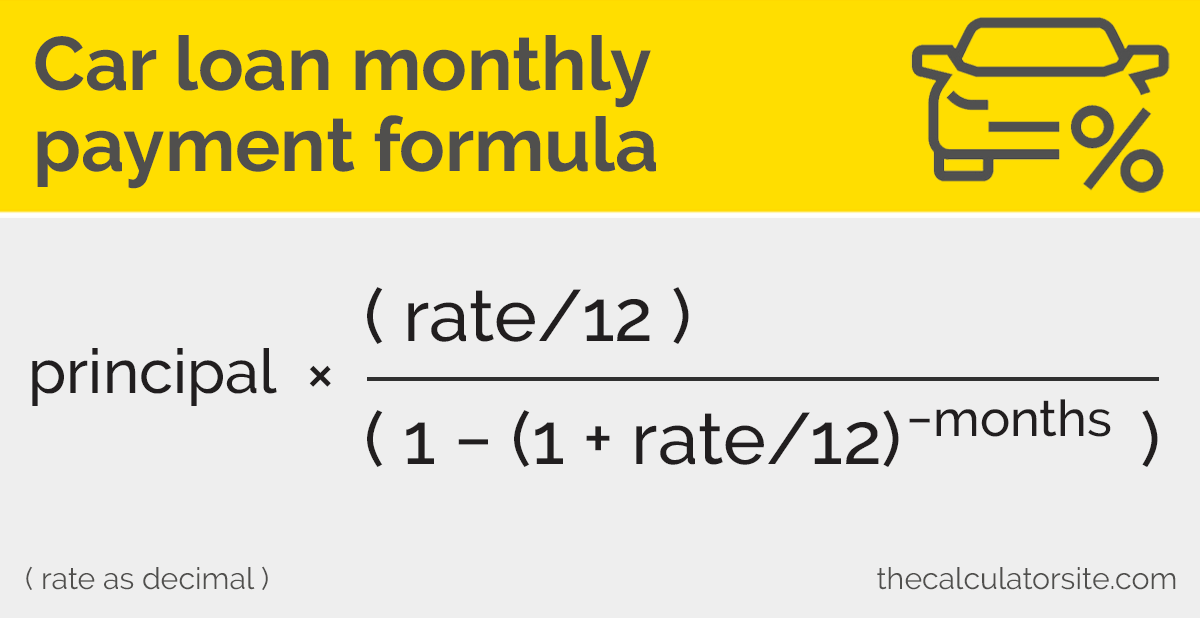
However, car loans are typically amortized, meaning interest is calculated on the remaining principal balance each month. Let’s look at a single payment’s interest portion:
- Find your monthly interest rate: Divide your annual interest rate by 12. (e.g., 6% annual rate = 0.06 / 12 = 0.005 monthly rate).
- Calculate monthly interest: Multiply your outstanding principal balance by the monthly interest rate.
Example:
- Loan Principal: $20,000
- Annual Interest Rate: 6%
- Monthly Interest Rate: 0.06 / 12 = 0.005
For the first month, the interest portion of your payment would be:
$20,000 (Principal) × 0.005 (Monthly Rate) = $100.00
If your monthly payment is, say, $386.66, then $100 goes to interest, and the remaining $286.66 ($386.66 – $100) goes towards reducing your principal balance. Your new principal balance for the next month would be $19,713.34 ($20,000 – $286.66). The interest for the next month would be calculated on this new, lower principal. This is why paying extra principal can save you money—it reduces the base on which future interest is calculated.
The Amortization Schedule: How Your Payments Work
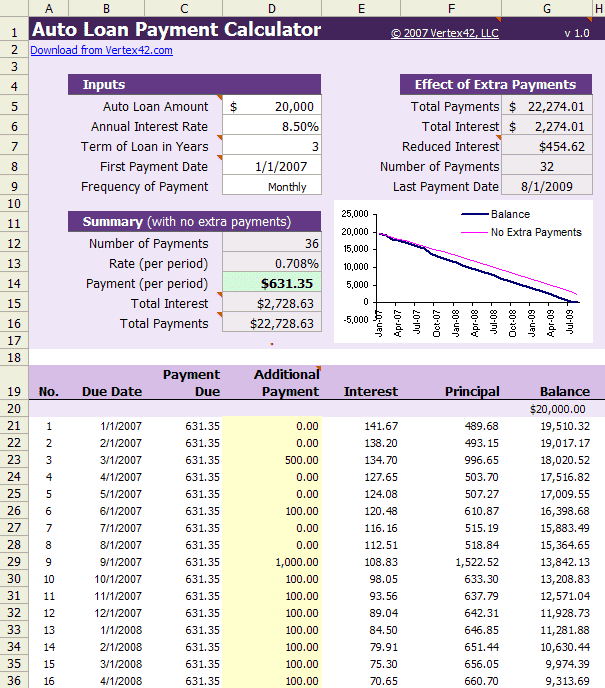
An amortization schedule provides a detailed breakdown of each payment over the life of the loan, showing how much goes towards interest and how much goes towards principal. In the early stages of a car loan, a larger portion of your monthly payment goes toward interest. As the loan matures, and your principal balance decreases, a progressively larger portion of your payment is applied to the principal.
Understanding this schedule is key:
- Early Payments: Heavily skewed towards interest. If you pay off your loan early, you save more in interest.
- Late Payments: Missing payments not only incurs late fees but can also lead to more interest accruing, as the principal isn’t reduced as planned, pushing back the point where more of your payment goes to principal.
Factors That Drive Your Interest Rate
Several crucial factors influence the interest rate you qualify for, significantly impacting your total loan cost:
- Credit Score: This is perhaps the most critical factor. Lenders use your credit score to assess your creditworthiness and the likelihood of you repaying the loan. A higher credit score (typically above 700) indicates lower risk, leading to lower interest rates. Conversely, a lower score suggests higher risk and will result in higher rates.
- Loan Term: Shorter loan terms (e.g., 36 or 48 months) generally come with lower interest rates because lenders face less risk over a shorter period. Longer terms (e.g., 72 or 84 months) reduce monthly payments but often carry higher interest rates and significantly increase the total interest paid.
- Down Payment: A larger down payment reduces the amount you need to borrow (the principal). This not only lowers your monthly payments but can also signal lower risk to lenders, potentially qualifying you for a better interest rate.
- Vehicle Type and Age: Lenders may view certain vehicles (e.g., older cars with high mileage) as higher risk due to depreciation and potential repair costs, which could lead to slightly higher interest rates. New cars typically qualify for better rates.
- Market Conditions: Broader economic factors, such as the prime rate set by central banks, influence prevailing interest rates. When interest rates are generally low, car loan rates tend to follow suit.
- Lender: Different lenders (banks, credit unions, dealership financing, online lenders) have varying risk assessments and pricing strategies. Shopping around is crucial.
Leveraging Tools for Accurate Interest Calculation
While manual calculations are good for understanding the mechanics, financial tools provide quick, accurate, and comprehensive insights into your car loan interest.
Online Car Loan Calculators: Your First Stop

Online calculators are widely available from financial institutions, automotive websites, and personal finance platforms. They are incredibly user-friendly: you simply input the loan amount, interest rate, and loan term, and they instantly provide your estimated monthly payment, total interest paid, and total cost of the loan. Many also offer amortization schedules.
Benefits:
- Instant Results: Quickly compare different scenarios (e.g., how a longer term or higher interest rate impacts your payment).
- Ease of Use: No complex math required.
- Planning: Helps you budget and understand the overall cost before committing to a loan.
Spreadsheet Software: Building Your Own Amortization Table
For a more granular view and custom analysis, spreadsheet programs like Microsoft Excel or Google Sheets are invaluable. You can build your own amortization table, allowing you to:
- Model Payments: See exactly how much principal and interest are paid each month.
- Scenario Planning: Easily adjust variables like extra payments to see the impact on interest savings and loan duration.
- Track Progress: Monitor your loan’s progress against the original schedule.
Numerous templates are available online, or you can create one from scratch using simple formulas (e.g., PMT function for monthly payment).
Understanding APR vs. Interest Rate
It’s critical to understand the distinction between the interest rate and the Annual Percentage Rate (APR). While the interest rate reflects the cost of borrowing the principal, the APR includes the interest rate plus any additional fees associated with the loan. This means the APR is often a more accurate representation of the total cost of borrowing.
When comparing loan offers, always use the APR to get a true like-for-like comparison. A loan with a slightly lower interest rate but higher fees (and thus a higher APR) could ultimately be more expensive than a loan with a slightly higher interest rate but no additional fees.
Strategies to Minimize Your Car Loan Interest Burden
Understanding interest calculation isn’t just about knowing what you’ll pay; it’s about actively finding ways to pay less. Here are effective strategies to reduce your car loan interest.
Improving Your Creditworthiness
The single most impactful step you can take is to improve your credit score. Before applying for a car loan:
- Pay Bills on Time: Payment history is the biggest factor in your score.
- Reduce Debt: Lowering your credit utilization (the amount of credit you use vs. your total available credit) can boost your score.
- Check for Errors: Review your credit report for inaccuracies that could be dragging your score down.
- Avoid New Credit: Don’t open new credit accounts right before applying for a car loan, as this can temporarily lower your score.
A higher credit score can translate directly into significantly lower interest rates, saving you thousands over the loan term.
The Power of a Down Payment and Shorter Terms
- Increase Your Down Payment: The more cash you put down upfront, the less you need to borrow. A smaller principal means less interest will accrue, and lenders may offer better rates. Aim for at least 10-20% if possible.
- Choose a Shorter Loan Term: While longer terms offer lower monthly payments, they dramatically increase the total interest paid. Opting for a 60-month loan instead of a 72-month loan, if your budget allows, can save you a substantial amount in interest, even if the monthly payment is slightly higher.
Shopping Around and Negotiating Rates
Never settle for the first loan offer you receive, especially from a dealership.
- Get Pre-Approved: Obtain pre-approvals from multiple banks, credit unions, and online lenders before you visit the dealership. This gives you a benchmark rate and strengthens your negotiating position.
- Compare Offers: Look at the APR, not just the interest rate, to compare the true cost of each loan.
- Negotiate: With pre-approvals in hand, you can often negotiate with the dealership’s finance department to beat or match your best external offer.
Refinancing Your Existing Loan
If you already have a car loan with a high interest rate, refinancing could be an excellent option. This involves taking out a new loan to pay off your old one, ideally at a lower interest rate or with a more favorable term.
Consider refinancing if:
- Your credit score has improved since you first took out the loan.
- Interest rates in the market have fallen.
- You want to change your loan term (e.g., shorten it to pay less interest or lengthen it for lower monthly payments, though the latter might increase total interest).
The Long-Term Financial Impact of Car Loan Interest
Understanding how to calculate car loan interest extends beyond mere numbers; it’s about making sound financial decisions that impact your overall wealth and stability.
Budgeting and Total Cost of Ownership
When budgeting for a car, it’s crucial to look beyond the sticker price and even the monthly payment. The “total cost of ownership” includes the purchase price, interest, insurance, fuel, maintenance, and depreciation. The interest paid on your loan is a significant component of this total cost. By minimizing interest, you free up more of your budget for other financial goals, whether that’s saving for a down payment on a home, investing, or building an emergency fund.
An informed approach to car financing ensures that your vehicle is an asset that serves your needs without becoming an undue financial burden.
Beyond the Monthly Payment: Informed Financial Decisions
Many consumers focus solely on the monthly payment when buying a car, often opting for longer terms to achieve the lowest possible payment. While understandable, this approach frequently leads to paying substantially more interest over time.
By understanding interest calculation, you shift your focus to the total cost of the loan. This perspective allows you to make strategic choices:
- Perhaps choosing a slightly less expensive car that allows for a larger down payment or a shorter loan term.
- Actively working to improve your credit to qualify for the best rates.
- Regularly assessing the potential benefits of refinancing.
These aren’t just one-off decisions but ongoing aspects of responsible personal finance management.
Calculating interest on a car loan doesn’t have to be intimidating. By understanding the core components, leveraging available tools, and implementing strategic financial practices, you can confidently navigate car financing, secure better terms, and save a significant amount of money over the life of your loan. This knowledge empowers you to be a more discerning consumer and a more effective manager of your personal finances.
aViewFromTheCave is a participant in the Amazon Services LLC Associates Program, an affiliate advertising program designed to provide a means for sites to earn advertising fees by advertising and linking to Amazon.com. Amazon, the Amazon logo, AmazonSupply, and the AmazonSupply logo are trademarks of Amazon.com, Inc. or its affiliates. As an Amazon Associate we earn affiliate commissions from qualifying purchases.