
In the world of finance, numbers are the language of progress. Whether you are tracking the performance of a stock portfolio, assessing a year-end salary bump, or analyzing the quarterly revenue of a startup, the ability to calculate a percentage increase is a fundamental skill. It transforms raw data into actionable insights, allowing investors and professionals to compare disparate figures on a level playing field. While the mathematical formula itself is straightforward, the implications of these calculations drive the global economy.
Understanding how to calculate a percentage increase is not merely about arithmetic; it is about understanding value, momentum, and the trajectory of wealth. This guide will delve into the mechanics of the calculation, its applications in personal and corporate finance, and how to interpret these figures to make smarter financial decisions.
The Fundamentals of Financial Growth: Understanding the Percentage Increase Formula
At its core, a percentage increase measures the relative change between an initial value and a final value. In finance, we are rarely interested in the absolute change alone. For instance, a $1,000 profit might sound significant, but its importance changes drastically depending on whether the initial investment was $10,000 or $1,000,000. This is why percentages are the universal currency of financial analysis.
The Basic Mathematical Equation
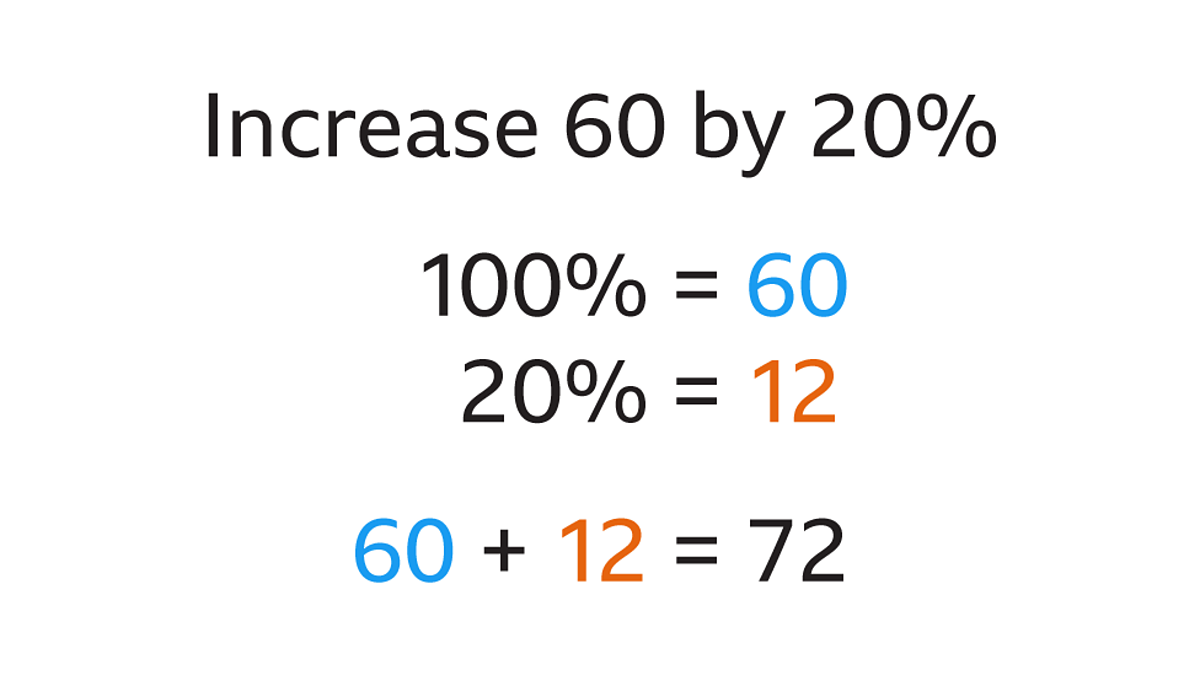
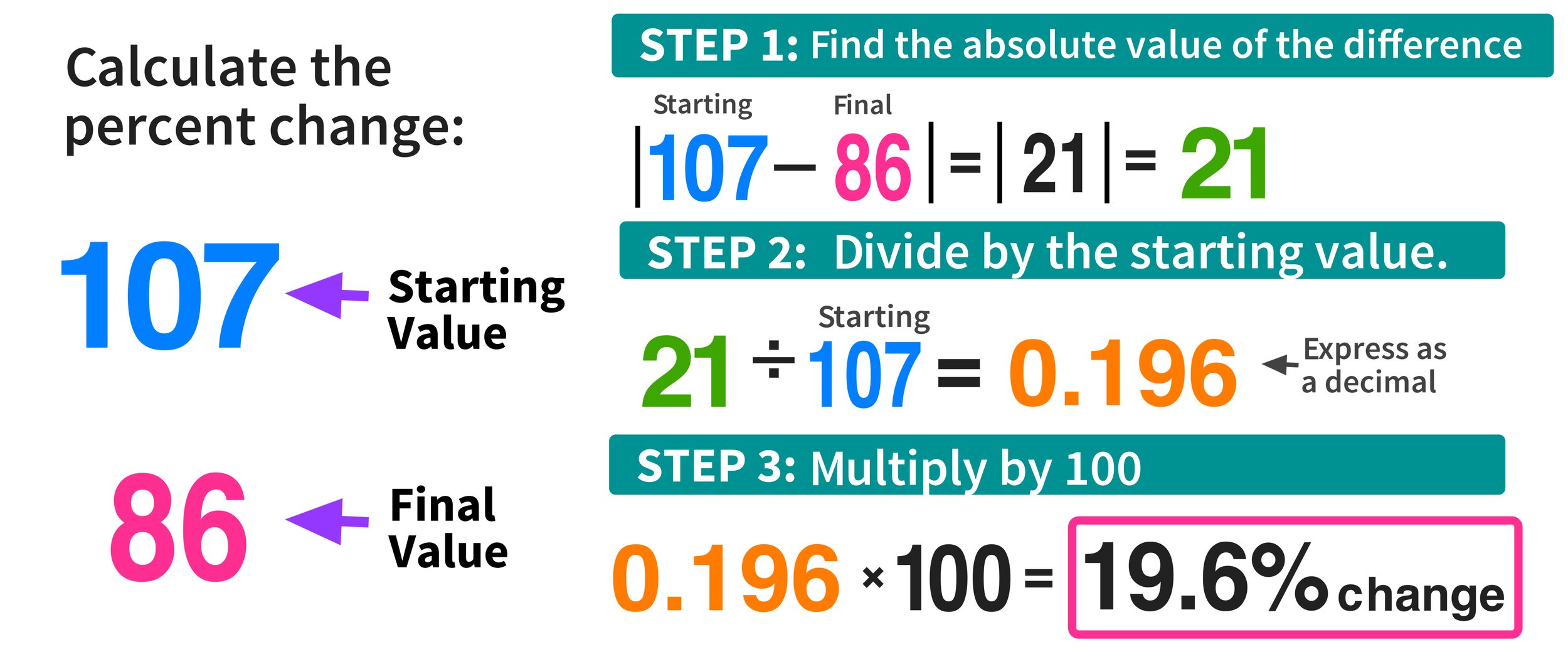
The formula for calculating a percentage increase is a three-step process:
- Subtract the original value (the “old” number) from the new value (the “new” number). This gives you the absolute increase.
- Divide that absolute increase by the original value.
- Multiply the resulting decimal by 100 to convert it into a percentage.
Mathematically, it looks like this:
Percentage Increase = [(New Value – Original Value) / Original Value] × 100
Why “New Minus Old” is the Golden Rule of Finance
The “New Minus Old” logic ensures that you are measuring growth based on your starting point. In financial reporting, the “Original Value” is often referred to as the “Base.” If you bought a share of a company at $50 and it is now worth $75, your absolute gain is $25. By dividing that $25 gain by your $50 starting price, you find a 0.5 increase, or 50%. If you were to incorrectly divide by the new price ($75), you would end up with a 33% figure, which misrepresents your actual return on capital.
Avoiding Common Mathematical Pitfalls
One of the most common mistakes in financial calculation is confusing “percentage points” with “percentage increase.” If an interest rate moves from 3% to 4%, it has increased by one percentage point. However, the percentage increase of the rate itself is actually 33.3% (calculated as [(4-3)/3] * 100). Distinguishing between these two is vital when reading central bank reports or loan agreements, as the financial implications of a 1% increase versus a one-percentage-point increase are vastly different.
Measuring Investment Performance and Portfolio Growth
For the individual investor, the percentage increase is the ultimate yardstick for success. It allows you to strip away the noise of market volatility and see exactly how hard your money is working for you. Whether you are dealing with equities, real estate, or high-yield savings accounts, these metrics are your primary navigation tools.
Calculating Return on Investment (ROI)
ROI is perhaps the most frequent application of the percentage increase formula in the world of “Money.” When you calculate ROI, you are essentially determining the percentage increase of your initial capital after accounting for costs.
For example, if you invest $10,000 in a mutual fund and sell it two years later for $12,500, your percentage increase is 25%. This figure allows you to compare that mutual fund’s performance against other benchmarks, such as the S&P 500 or the rate of inflation. Without converting these gains into percentages, comparing a $2,500 gain on a $10,000 investment to a $500 gain on a $1,000 investment would be confusing; the percentage increase makes it clear that the latter was actually a more efficient use of capital (50% vs 25%).
Year-over-Year (YoY) vs. Month-over-Month (MoM) Growth
In financial analysis, timing is everything. Investors often use Year-over-Year (YoY) calculations to smooth out seasonal fluctuations. For instance, a retail company might see a massive percentage increase in revenue in December compared to November (MoM). However, a more accurate measure of health would be comparing December of the current year to December of the previous year (YoY). This calculation helps investors identify long-term trends rather than temporary spikes caused by holiday spending or cyclical market behavior.

The Impact of Compound Growth over Time
While a simple percentage increase measures growth between two points, compound growth measures the “increase on the increase.” In finance, this is often expressed through the Compound Annual Growth Rate (CAGR). While the basic percentage increase formula tells you how much you gained in total, CAGR tells you the steady rate at which your investment grew every year as if it had grown at a constant rate. Understanding the basic percentage increase is the first step toward mastering these more complex, wealth-building concepts.
Personal Finance and Income Management
Beyond the stock market, percentage increases play a pivotal role in personal financial planning and career management. Understanding these numbers empowers individuals to negotiate better salaries and maintain their standard of living in a changing economy.
Assessing Salary Raises and Bonus Structures
When an employer offers a raise, they usually frame it in terms of a percentage. Knowing how to calculate this is essential for career planning. If you earn $70,000 and receive a $3,500 raise, calculating the percentage increase (5%) allows you to evaluate that raise against the industry standard or the current rate of inflation. Furthermore, when switching jobs, calculating the percentage increase between your current total compensation and a new offer is the only way to truly weigh the financial benefit of the move.
Monitoring Inflationary Impacts on Purchasing Power
Inflation is essentially the percentage increase in the price of goods and services over time. If the Consumer Price Index (CPI) shows an annual inflation rate of 4%, and your income only increased by 2%, your “real” income has actually decreased. By applying the percentage increase formula to your monthly expenses—rent, groceries, utilities—you can see exactly how inflation is eroding your purchasing power. This data is crucial for adjusting your budget and ensuring that your savings goals remain realistic.
Budgeting for Expense Increases
Financial stability often depends on anticipating and reacting to the percentage increase in fixed costs. For example, if your landlord announces a rent increase from $1,500 to $1,650, that represents a 10% hike. By viewing this as a percentage rather than just a $150 difference, you can better understand its impact on your overall budget. If your total income hasn’t also increased by at least 10%, you will need to find that “missing” percentage by reducing costs elsewhere or increasing your earnings.
Business Finance: Leveraging Percentage Increases for Scaling
In a corporate or small business context, percentage increases are the primary indicators of a company’s “runway” and scalability. Executives and business owners use these metrics to pitch to investors, allocate budgets, and set quarterly targets.
Analyzing Revenue and Profit Margin Growth
Revenue growth is often the first metric an investor looks at. A company that increases its revenue from $1 million to $1.5 million (a 50% increase) is generally seen as more promising than a $100 million company that only grows to $105 million (a 5% increase), despite the latter having a higher dollar-value gain.
However, savvy business owners also look at the percentage increase in profit margins. If revenue increases by 50% but operating expenses increase by 70%, the business is actually becoming less efficient. Calculating the percentage increase across different line items in a Profit & Loss (P&L) statement allows management to identify where costs are spiraling out of control.
Customer Acquisition Cost (CAC) vs. Lifetime Value (LTV) Trends
For businesses focused on growth, the relationship between the cost of getting a customer and the value that customer brings is vital. If the percentage increase in Customer Acquisition Cost (CAC) starts to outpace the percentage increase in the Lifetime Value (LTV) of the customer, the business model is headed for trouble. Monitoring these percentages allows financial officers to pivot strategies before the company runs out of cash.
Interpreting Market Share Expansion
In a competitive landscape, a business’s health is often measured by its market share. If the total market for a product grows by 20%, but your business’s sales only grow by 10%, you are actually losing market share despite having “positive” growth. By calculating the percentage increase of your sales relative to the percentage increase of the total market, you can determine whether you are leading the pack or falling behind.
Conclusion: The Strategic Value of Numerical Literacy
Mastering the calculation of percentage increases is more than a mathematical exercise; it is a vital component of financial literacy. In the context of “Money,” these percentages provide the context necessary to turn data into wisdom. They allow us to see through the illusion of raw numbers, helping us understand the true rate of our progress, the severity of our expenses, and the efficiency of our investments.
Whether you are a solo freelancer tracking your year-over-year income, a retail investor monitoring a portfolio, or a business leader scaling a corporation, the percentage increase remains the most reliable metric for measuring success. By consistently applying this formula to your financial life, you move away from guesswork and toward a strategy rooted in the hard reality of growth. In the end, wealth is not just about how much you have, but about the rate at which you are moving forward.
aViewFromTheCave is a participant in the Amazon Services LLC Associates Program, an affiliate advertising program designed to provide a means for sites to earn advertising fees by advertising and linking to Amazon.com. Amazon, the Amazon logo, AmazonSupply, and the AmazonSupply logo are trademarks of Amazon.com, Inc. or its affiliates. As an Amazon Associate we earn affiliate commissions from qualifying purchases.