
Understanding how to calculate percentage increase is a fundamental skill that underpins sound financial decision-making, from personal budgeting and investment analysis to robust business forecasting and strategic planning. In a world increasingly driven by data and metrics, the ability to accurately measure growth—be it in savings, revenue, or costs—is not just an analytical nicety but a critical component of financial literacy and success. This guide will demystify the process, providing a clear, step-by-step approach to calculating percentage increases and illustrating its diverse applications across the financial landscape. By mastering this concept, you unlock a powerful tool for monitoring progress, identifying trends, and making informed choices that propel you towards your financial goals.
The Fundamental Formula: Understanding Percentage Increase
At its core, calculating an increase in percentage involves comparing a new value to an original value and expressing that change as a proportion of the original, multiplied by one hundred. This seemingly simple calculation provides a standardized way to quantify growth, making it comparable across different scales and contexts. Without it, we would only see absolute changes, which can be misleading without the perspective of the starting point.
Deconstructing the Elements: Original vs. New Value
Before diving into the calculation, it’s crucial to identify the two key components:
- Original Value (or Starting Value): This is the baseline from which the change is measured. It could be last year’s revenue, your initial investment amount, or your monthly utility bill from the previous period. It represents the “before” state.
- New Value (or Ending Value): This is the updated figure after the increase has occurred. It could be this year’s revenue, the current value of your investment, or your latest utility bill. It represents the “after” state.
The accuracy of your percentage increase hinges entirely on correctly identifying these two values. A common mistake is to confuse which number is the original and which is the new, leading to incorrect calculations and potentially flawed conclusions. Always ensure the “original” value truly serves as your benchmark for comparison.
The Core Calculation: Step-by-Step Breakdown
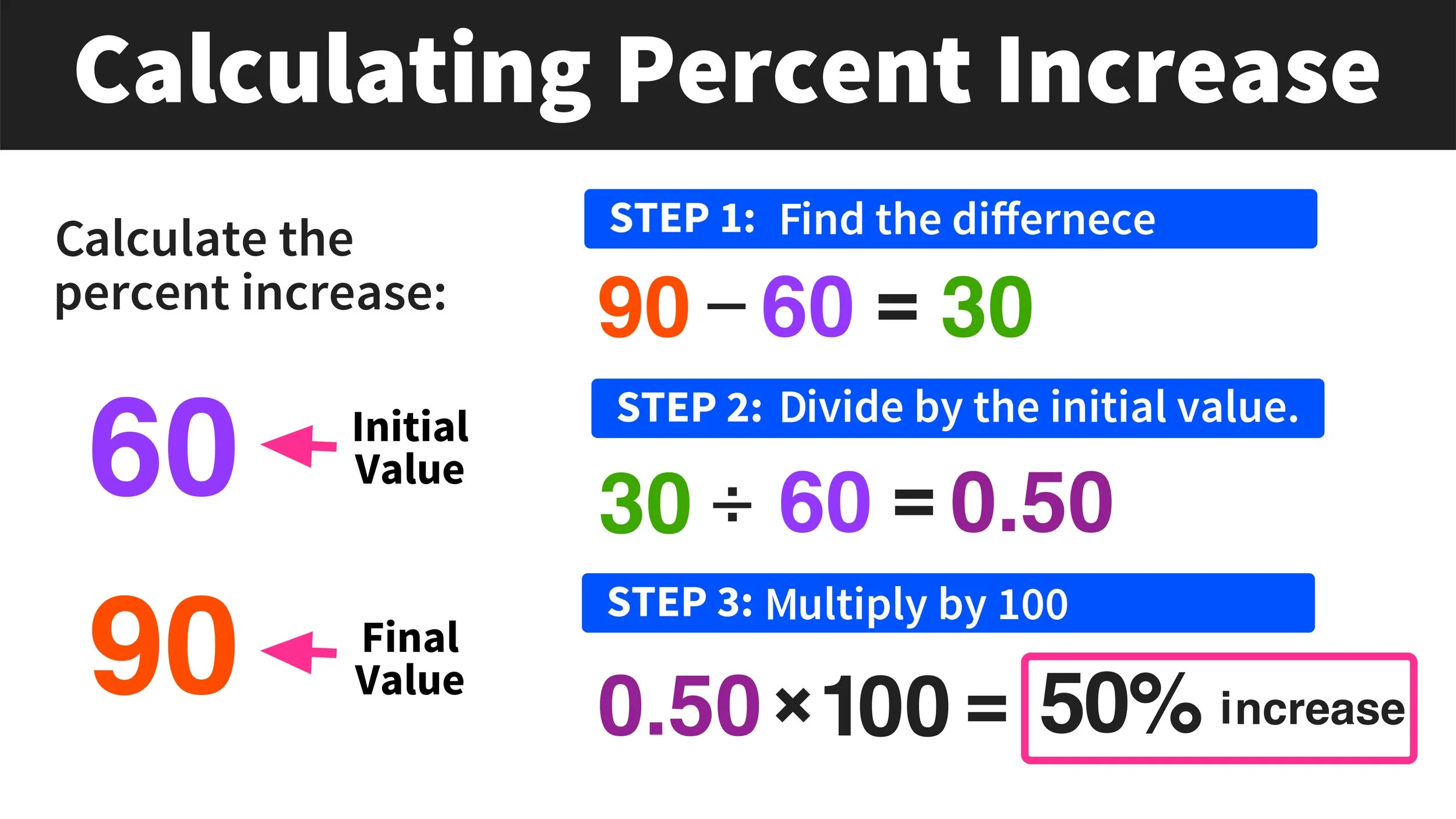
The formula for calculating percentage increase is straightforward:
Percentage Increase = [(New Value – Original Value) / Original Value] * 100
Let’s break this down into easily digestible steps:
- Find the Difference: Subtract the Original Value from the New Value. This gives you the absolute amount of the increase.
- Example: If your investment grew from $1,000 to $1,200, the difference is $1,200 – $1,000 = $200.
- Divide by the Original Value: Take the difference you calculated in step 1 and divide it by the Original Value. This step expresses the increase as a decimal proportion of the starting point.
- Example: $200 / $1,000 = 0.20
- Multiply by 100: To convert this decimal into a percentage, multiply the result from step 2 by 100.
- Example: 0.20 * 100 = 20%
So, an investment growing from $1,000 to $1,200 represents a 20% increase. This method ensures that the increase is always expressed relative to the initial amount, providing a meaningful context for the growth.
Why it Matters: Beyond Simple Subtraction
While simply subtracting the original value from the new value gives you the absolute increase, this number alone often lacks context. For instance, an increase of $100 might seem significant if it’s on an original value of $500 (a 20% increase), but it’s far less impactful if it’s on an original value of $10,000 (a 1% increase).
Percentage increase standardizes the comparison, allowing you to:
- Compare different magnitudes: You can compare the growth of a small side hustle to a large corporation’s revenue, or the appreciation of a modest stock portfolio to a multi-million-dollar real estate investment, purely based on their percentage growth rates.
- Gauge efficiency and performance: Businesses use percentage increases to evaluate departmental performance, product line growth, or marketing campaign effectiveness relative to their starting points.
- Understand relative impact: A 5% increase in your rent versus a 5% increase in your salary paints a clear picture of how your financial situation is changing, something that absolute dollar figures alone might obscure.
Practical Applications in Personal Finance
In personal finance, the ability to calculate percentage increase is an indispensable tool for managing your money, setting realistic goals, and understanding your financial trajectory. It transforms raw numbers into actionable insights, helping you make smarter decisions about how you earn, save, and spend.
Tracking Investment Growth: Stocks, Funds, and Savings
One of the most common and vital applications of percentage increase is in evaluating investment performance. Whether you’re tracking a stock, a mutual fund, a cryptocurrency, or even the interest earned on a savings account, percentage increase provides the true measure of your return on investment (ROI).
- Example: You invested $5,000 in a stock, and it’s now worth $5,750.
- Increase = $5,750 – $5,000 = $750
- Percentage Increase = ($750 / $5,000) * 100 = 15%
This 15% return tells you how effectively your capital has grown, allowing you to compare it against other investment opportunities or market benchmarks. Understanding this is crucial for portfolio rebalancing and making informed buy/sell decisions.
Budgeting and Expense Analysis: Monitoring Spending Habits
For effective personal budgeting, tracking how your expenses change over time is key. Percentage increase helps you identify which categories of spending are growing fastest, allowing you to pinpoint areas for potential savings or adjustments.
- Example: Your electricity bill was $80 last month and is $96 this month.
- Increase = $96 – $80 = $16
- Percentage Increase = ($16 / $80) * 100 = 20%
A 20% jump in electricity might prompt you to investigate energy consumption, while a smaller percentage increase might be less concerning. This analysis is vital for maintaining control over your cash flow and ensuring you stay within your budget.
Salary and Income Growth: Measuring Your Financial Progress
Monitoring your income growth through percentage increase is a powerful way to gauge your career progression and overall financial health. It helps you assess the true value of a raise or the growth of a side hustle.
- Example: Your annual salary increased from $60,000 to $63,000.
- Increase = $63,000 – $60,000 = $3,000
- Percentage Increase = ($3,000 / $60,000) * 100 = 5%
Knowing you received a 5% raise, rather than just a $3,000 raise, offers a clear benchmark for negotiating future compensation and understanding your earning power relative to inflation.
Understanding Inflation and Purchasing Power
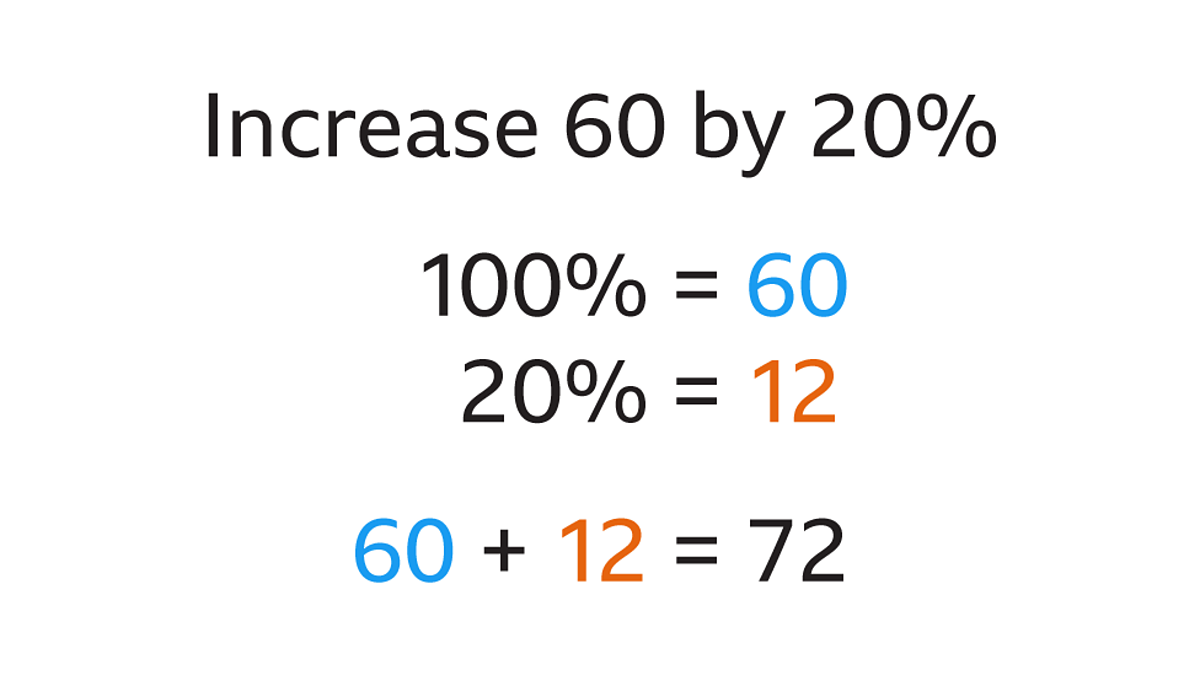
Inflation, the rate at which the general level of prices for goods and services is rising, is expressed as a percentage increase. By comparing your income growth percentage to the inflation rate, you can determine if your purchasing power is increasing, decreasing, or staying stagnant. If your salary increases by 3% but inflation is 5%, your real (inflation-adjusted) income has effectively decreased. This critical insight helps in long-term financial planning, especially for retirement.
Essential for Business Finance and Strategic Decisions
In the realm of business, calculating percentage increase is not just an analytical exercise; it’s a strategic imperative. Businesses constantly measure growth across numerous metrics to assess performance, identify opportunities, manage risks, and inform critical strategic decisions.
Revenue and Sales Growth: Benchmarking Business Performance
One of the most fundamental indicators of a business’s health and market acceptance is its revenue or sales growth. Companies track this percentage increase over various periods (month-over-month, quarter-over-quarter, year-over-year) to understand their trajectory and benchmark against competitors or industry standards.
- Example: A company’s quarterly sales increased from $500,000 to $625,000.
- Increase = $625,000 – $500,000 = $125,000
- Percentage Increase = ($125,000 / $500,000) * 100 = 25%
A 25% quarterly growth rate is a significant indicator of positive momentum, potentially signaling successful marketing campaigns, new product launches, or expanding market demand. This metric is closely watched by investors, analysts, and management alike.
Profit Margin Analysis: Optimizing Bottom-Line Performance
Profit margins (gross, operating, or net) indicate how much profit a company makes for every dollar of revenue. Tracking the percentage increase in these margins can reveal improvements in operational efficiency, pricing strategies, or cost management.
- Example: A product’s gross profit margin increased from 40% to 44%.
- Increase = 44% – 40% = 4 percentage points (This is an absolute increase in the percentage itself, not a percentage increase of the percentage).
- To calculate the percentage increase of the margin:
- Percentage Increase = [(0.44 – 0.40) / 0.40] * 100 = (0.04 / 0.40) * 100 = 10%
This means the efficiency with which the company turns revenue into gross profit improved by 10%, a crucial insight for optimizing pricing and production costs.
- Percentage Increase = [(0.44 – 0.40) / 0.40] * 100 = (0.04 / 0.40) * 100 = 10%
Cost Management and Efficiency: Identifying Rising Expenses
Just as important as tracking growth is monitoring the increase in costs. Identifying rapidly rising expenses through percentage increase allows businesses to take corrective action, negotiate better deals with suppliers, or seek more efficient processes.
- Example: Raw material costs for a manufacturing business increased from $10,000 per month to $11,500.
- Increase = $11,500 – $10,000 = $1,500
- Percentage Increase = ($1,500 / $10,000) * 100 = 15%
A 15% increase in a key cost component would prompt immediate investigation and strategic responses, such as finding alternative suppliers or passing some costs onto consumers.
Market Share and Customer Growth: Gauging Competitive Position
Businesses often measure their competitive position by tracking market share and customer growth. A percentage increase in these metrics indicates successful market penetration and customer acquisition strategies.
- Example: A company’s customer base grew from 10,000 to 12,000 active users.
- Increase = 12,000 – 10,000 = 2,000
- Percentage Increase = (2,000 / 10,000) * 100 = 20%
This 20% growth rate signifies effective customer acquisition efforts and strengthens the company’s competitive standing.
Common Pitfalls and Advanced Considerations
While the calculation itself is straightforward, interpreting percentage increases requires nuance. Several factors can influence the perceived significance of a percentage change, and being aware of these can prevent misinterpretations and lead to more robust financial analysis.
Beware of Base Effects: The Starting Point Matters
One of the most crucial considerations is the “base effect.” A large percentage increase can look incredibly impressive if the original value (the base) was very small.
- Example: A startup’s revenue jumps from $1,000 to $5,000. This is a ($4,000 / $1,000) * 100 = 400% increase!
- A mature company’s revenue jumps from $1,000,000 to $1,004,000. This is a ($4,000 / $1,000,000) * 100 = 0.4% increase.
Both companies saw a $4,000 absolute increase, but the percentage changes are vastly different due to their starting bases. While the startup’s growth is phenomenal, comparing it directly to the mature company’s growth purely by percentage without considering the base would be misleading. Context is always key.
Annualized vs. Cumulative Growth: Interpreting Timeframes
When dealing with growth over multiple periods, it’s important to distinguish between cumulative growth and annualized growth. Cumulative growth simply applies the percentage increase formula to the start and end points of the entire period. Annualized growth, on the other hand, expresses the average annual rate of growth over a multi-year period, useful for comparing investments or businesses with different time horizons. This often involves compound annual growth rate (CAGR) calculations, which are more complex than a simple percentage increase but essential for long-term financial planning.
The Role of Financial Tools and Spreadsheets
While manual calculation is excellent for understanding the concept, financial tools and spreadsheets like Microsoft Excel or Google Sheets make these calculations effortless and reduce the chance of errors, especially when dealing with large datasets. Using formulas like =(B2-A2)/A2*100 (where B2 is the New Value and A2 is the Original Value) allows for quick and accurate analysis across many rows of data, automating the process and freeing you to focus on interpretation. Many online financial calculators also offer quick solutions for these types of computations.
When Decrease Matters: Understanding Percentage Decrease
While this article focuses on increase, it’s worth noting that the formula for percentage decrease is very similar:
Percentage Decrease = [(Original Value – New Value) / Original Value] * 100
Here, the difference is calculated as Original Value minus New Value (since the new value is smaller), and the rest of the steps remain the same. Understanding both allows for a comprehensive view of financial changes, whether positive or negative.

Conclusion
Mastering the calculation of percentage increase is more than just a mathematical exercise; it’s an indispensable skill for navigating the complexities of modern finance. From monitoring your personal savings and investment returns to analyzing critical business performance metrics like revenue growth and profit margins, this fundamental calculation provides the context necessary for informed decision-making. By understanding the core formula, recognizing its diverse applications in both personal and business finance, and being aware of common pitfalls like base effects, you empower yourself with a powerful analytical tool. In a world where financial data dictates direction, the ability to accurately calculate and interpret percentage increases ensures you’re not just observing numbers, but truly understanding the narrative of financial change and progress.
aViewFromTheCave is a participant in the Amazon Services LLC Associates Program, an affiliate advertising program designed to provide a means for sites to earn advertising fees by advertising and linking to Amazon.com. Amazon, the Amazon logo, AmazonSupply, and the AmazonSupply logo are trademarks of Amazon.com, Inc. or its affiliates. As an Amazon Associate we earn affiliate commissions from qualifying purchases.