
In the dynamic world of personal finance, investing, and business, numbers tell a story. But raw numbers alone often lack the context needed for meaningful decision-making. That’s where percentages come in, offering a universal language to express change, growth, and decline in a relative and easily comparable manner. Among these, understanding how to calculate an increase in percent is perhaps one of the most vital financial skills, enabling individuals and businesses alike to gauge progress, assess performance, and forecast future trends.
From tracking the growth of your investment portfolio to analyzing the rise in your monthly expenses, or even measuring the expansion of a company’s revenue, the percentage increase provides invaluable insight. It transforms absolute dollar amounts, which can be misleading without a baseline, into an intuitive metric that clarifies the magnitude of change. This article will demystify the process, guide you through the calculation, and explore its profound applications across various financial landscapes within the “Money” sphere.
Understanding the Essence of Percentage Increase
Before diving into the mechanics, it’s crucial to grasp why percentage increases are so powerful and what they truly represent. They are more than just numbers; they are indicators of relative change, offering a standardized way to compare different financial scenarios.
Why Percentages Matter in Finance
Imagine an investment that grows by $100. Is that good? It depends. If your initial investment was $1,000, a $100 increase is significant. If your initial investment was $1,000,000, a $100 increase is negligible. This illustrates the limitation of absolute figures. Percentages, however, instantly provide context. A 10% increase from $1,000 tells a much clearer story of performance than a 0.01% increase from $1,000,000, even though both represent a $100 gain in absolute terms.
In finance, percentages allow us to:
- Compare Apples to Oranges: Easily compare the performance of different assets, businesses, or financial periods regardless of their starting values.
- Standardize Metrics: Create universally understood metrics for financial health, growth, and efficiency.
- Identify Trends: Spot patterns and trajectory in financial data over time.
- Set Realistic Goals: Define quantifiable targets for savings, investments, or business growth.
The Core Concept: Relative Change
At its heart, a percentage increase measures the relative change between two values. It answers the question: “What proportion of the original value does the increase represent?” This relativity is critical. A small absolute increase can be a large percentage increase if the base value was small, and vice versa. This concept underpins everything from understanding inflation’s impact on your purchasing power to evaluating the return on an entrepreneurial venture.
Differentiating Absolute vs. Relative Increase
It’s important to distinguish between absolute and relative increases.
- Absolute Increase: This is the simple difference between the new value and the old value. If your income went from $50,000 to $55,000, the absolute increase is $5,000. It’s a straightforward measure of how much more you have.
- Relative (Percentage) Increase: This takes the absolute increase and expresses it as a proportion of the original value, then multiplies by 100 to convert it into a percentage. Using the same example, a $5,000 increase on a $50,000 income is a 10% relative increase ($5,000 / $50,000 * 100 = 10%). This tells you the rate of growth. Both metrics are useful, but the percentage increase often provides more actionable insights, especially when comparing different situations.
The Step-by-Step Guide to Calculating Percentage Increase
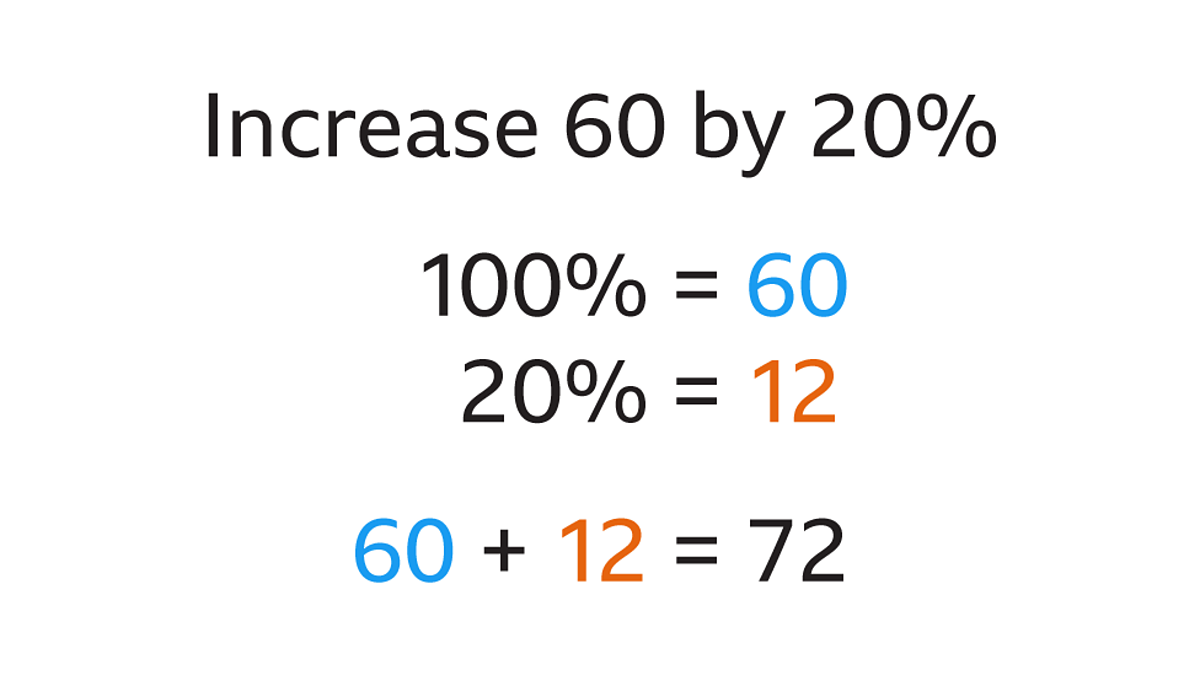
Calculating an increase in percent is a straightforward process once you understand the formula and its components. You only need two pieces of information: the original value and the new (increased) value.
Formula Breakdown: (New Value – Old Value) / Old Value * 100
Here’s the universal formula for calculating percentage increase:
Percentage Increase = ((New Value – Old Value) / Old Value) * 100
Let’s break down each part:
- New Value – Old Value: This first step calculates the absolute increase (the raw difference) between the two numbers.
- ** / Old Value:** Dividing the absolute increase by the original value converts the increase into a decimal proportion of the original. This is the “relative change” or “growth factor.”
- ** * 100:** Multiplying by 100 converts that decimal proportion into a percentage, making it easier to read and interpret.
Practical Example 1: Investment Growth
Let’s say you invested $5,000 in a stock, and a year later, its value grew to $5,750. What was your percentage increase?
- Old Value (Original Investment): $5,000
- New Value (Current Investment Value): $5,750
Step 1: Calculate the absolute increase.
$5,750 (New Value) – $5,000 (Old Value) = $750 (Absolute Increase)
Step 2: Divide the absolute increase by the old value.
$750 / $5,000 = 0.15
Step 3: Multiply by 100 to get the percentage.
0.15 * 100 = 15%
Your investment saw a 15% increase.
Practical Example 2: Income Growth
Suppose your monthly income was $3,500, and after a raise, it increased to $3,780. What was the percentage increase in your income?
- Old Value (Original Income): $3,500
- New Value (New Income): $3,780
Step 1: Calculate the absolute increase.
$3,780 – $3,500 = $280
Step 2: Divide the absolute increase by the old value.
$280 / $3,500 = 0.08
Step 3: Multiply by 100 to get the percentage.
0.08 * 100 = 8%
Your income increased by 8%.

Common Pitfalls and How to Avoid Them
While the calculation is straightforward, a few common errors can lead to incorrect results:
- Using the New Value as the Divisor: Always divide by the original (old) value. Dividing by the new value will give you an incorrect percentage relative to the final state, not the initial change.
- Forgetting to Multiply by 100: This will leave you with a decimal, which is a percentage proportion but not the percentage figure itself.
- Negative Old Value: The formula assumes a positive starting value. If you’re dealing with negative numbers, the interpretation of “percentage increase” becomes more complex and often requires a different approach or contextual explanation.
- Confusing Percentage Increase with Percentage Point Increase: If a rate goes from 5% to 7%, that’s a 2 percentage point increase, but a (7-5)/5 * 100 = 40% percentage increase in the rate itself. Be clear about what you are measuring.
Applications in Personal Finance and Investing
The ability to calculate percentage increases is indispensable in managing your personal finances and making informed investment decisions.
Tracking Portfolio Performance
For investors, percentage increase is the primary metric for evaluating returns. Whether it’s individual stocks, mutual funds, or an entire diversified portfolio, knowing the percentage gain (or loss) allows you to:
- Assess ROI (Return on Investment): Compare the performance of different investments over similar periods.
- Monitor Progress Towards Goals: See if your investments are growing at a rate sufficient to meet your long-term financial objectives (e.g., retirement, down payment).
- Rebalance Effectively: Identify which assets have outperformed and might need rebalancing to maintain your desired asset allocation.
Analyzing Budget Deviations and Spending Habits
Personal budgeting benefits immensely from percentage insights. If your grocery bill increased from $400 to $450, that’s a 12.5% increase. Understanding this allows you to:
- Pinpoint Problem Areas: Identify categories where spending is growing disproportionately.
- Adjust Future Budgets: Make informed decisions about where to cut back or allocate more funds.
- Track Cost of Living Changes: Monitor how inflation affects your regular expenses.
Understanding Inflation and Cost of Living Increases
Inflation, the general increase in prices and fall in the purchasing value of money, is always expressed as a percentage. Understanding how to calculate it (or how it affects your costs) is vital for:
- Evaluating Real Returns: Comparing your investment returns against inflation to see if your purchasing power is truly increasing.
- Negotiating Salaries: Advocating for a raise that at least keeps pace with the cost of living.
- Financial Planning: Adjusting future financial goals to account for reduced purchasing power.
Evaluating Salary Raises and Wage Growth
When offered a raise, the percentage increase tells you the true impact on your income. A $5,000 raise means different things for someone earning $50,000 versus someone earning $150,000. Expressed as a percentage, it provides a clear and comparable metric of your wage growth. This is crucial for career planning and ensuring your earnings keep pace with your experience and contributions.
Applications in Business Finance and Entrepreneurship
For business owners, managers, and entrepreneurs, percentage increases are the language of growth, efficiency, and market dynamics.
Measuring Revenue and Profit Growth
Businesses constantly track their revenue and profit figures. A percentage increase (or decrease) reveals the health and trajectory of the company:
- Sales Growth: How much have sales increased year-over-year or quarter-over-quarter? This indicates market acceptance and operational effectiveness.
- Profit Margins: While not a direct percentage increase calculation of absolute values, understanding how changes in revenue and costs impact the percentage profit margin is vital for profitability analysis.
- Investor Relations: Growth percentages are key metrics presented to potential investors and shareholders to demonstrate business momentum.
Assessing Market Share Changes
In competitive markets, businesses monitor their market share—the percentage of total sales in an industry generated by a particular company. If a company’s sales increase by 10% while the overall market only grows by 5%, this suggests an increase in market share, a critical indicator of competitive advantage.
Analyzing Cost Increases and Efficiency Gains
Costs inevitably fluctuate. Calculating the percentage increase in raw material costs, operational expenses, or labor costs helps businesses:
- Identify Cost Drivers: Understand which expenses are growing fastest and require attention.
- Improve Efficiency: Implement strategies to reduce the rate of cost increase or achieve higher output with similar costs.
- Price Products/Services: Adjust pricing strategies to absorb increased costs while maintaining profitability.
Setting Financial Targets and KPIs
Key Performance Indicators (KPIs) and financial targets are frequently expressed as percentage increases. For example:
- “We aim for a 15% increase in online sales next quarter.”
- “Our goal is to reduce customer acquisition cost by 10%.”
- “We anticipate a 20% year-over-year revenue growth.”
These percentage-based targets provide clear, measurable objectives for teams and departments.
Leveraging Financial Tools for Percentage Calculations
While a calculator is sufficient for simple percentage increases, modern financial tools can streamline the process, especially when dealing with large datasets.
Spreadsheets (Excel, Google Sheets) for Automation
Spreadsheet software like Microsoft Excel or Google Sheets is invaluable for financial analysis. You can easily set up formulas to automatically calculate percentage increases for columns of data.
- Example Formula: If your old value is in cell A2 and your new value is in cell B2, the formula
=((B2-A2)/A2)*100will give you the percentage increase. - Batch Processing: This allows you to quickly calculate percentage changes for hundreds or thousands of data points (e.g., monthly expenses over several years, daily stock prices).
Online Calculators and Financial Apps
Numerous online percentage calculators and financial apps are available. These tools are convenient for quick, one-off calculations and often come with built-in templates for common financial scenarios (e.g., calculating investment returns, loan interest). While useful, always understand the underlying formula to ensure you’re using the tool correctly and interpreting the results accurately.
The Importance of Critical Interpretation
Even with accurate calculations, the real value comes from interpreting the percentages. A 100% increase sounds phenomenal, but if it’s an increase from $1 to $2, its practical impact might be minimal. Conversely, a 1% increase on a multi-billion dollar budget is a significant absolute sum. Always consider:
- The Baseline: What was the original value?
- The Timeframe: Over what period did the increase occur? (A 10% annual increase is different from a 10% daily increase).
- The Context: What other factors (economic, market, personal) might have influenced the change?

Conclusion: Empowering Your Financial Decisions with Percentage Insights
The ability to calculate an increase in percent is far more than a simple arithmetic skill; it’s a foundational element of financial literacy. In the realm of “Money,” this calculation provides a powerful lens through which to view growth, assess performance, and understand the true impact of change.
Whether you’re meticulously managing your personal budget, strategically growing your investment portfolio, or steering the financial trajectory of a business, mastering this calculation empowers you to move beyond raw numbers. It enables you to compare, analyze, and project with confidence, transforming abstract data into actionable insights. By embracing this fundamental concept, you equip yourself with a critical tool for making smarter, more informed financial decisions, ultimately paving the way for greater financial understanding and success.
aViewFromTheCave is a participant in the Amazon Services LLC Associates Program, an affiliate advertising program designed to provide a means for sites to earn advertising fees by advertising and linking to Amazon.com. Amazon, the Amazon logo, AmazonSupply, and the AmazonSupply logo are trademarks of Amazon.com, Inc. or its affiliates. As an Amazon Associate we earn affiliate commissions from qualifying purchases.