
The financial world thrives on precision. From calculating interest rates and investment returns to budgeting and analyzing corporate performance, numbers are the bedrock of informed decision-making. While fractions represent portions of a whole, decimals are the ubiquitous language of modern finance, offering unparalleled clarity, ease of calculation, and digital compatibility. Understanding how to seamlessly convert fractions into decimals is not merely an academic exercise; it’s a fundamental skill for anyone navigating personal finance, investing, or business operations.
The Indispensable Role of Decimals in Financial Acumen
In the realm of money, ambiguity is the enemy of accuracy. Decimals provide a standardized, universal format that facilitates clear communication and complex computations. Consider a stock price quoted as $23 1/4. While perfectly understandable to a seasoned trader familiar with fractional quotations, converting it to $23.25 immediately makes it compatible with digital trading platforms, spreadsheet software, and direct comparisons with other decimal-formatted prices.
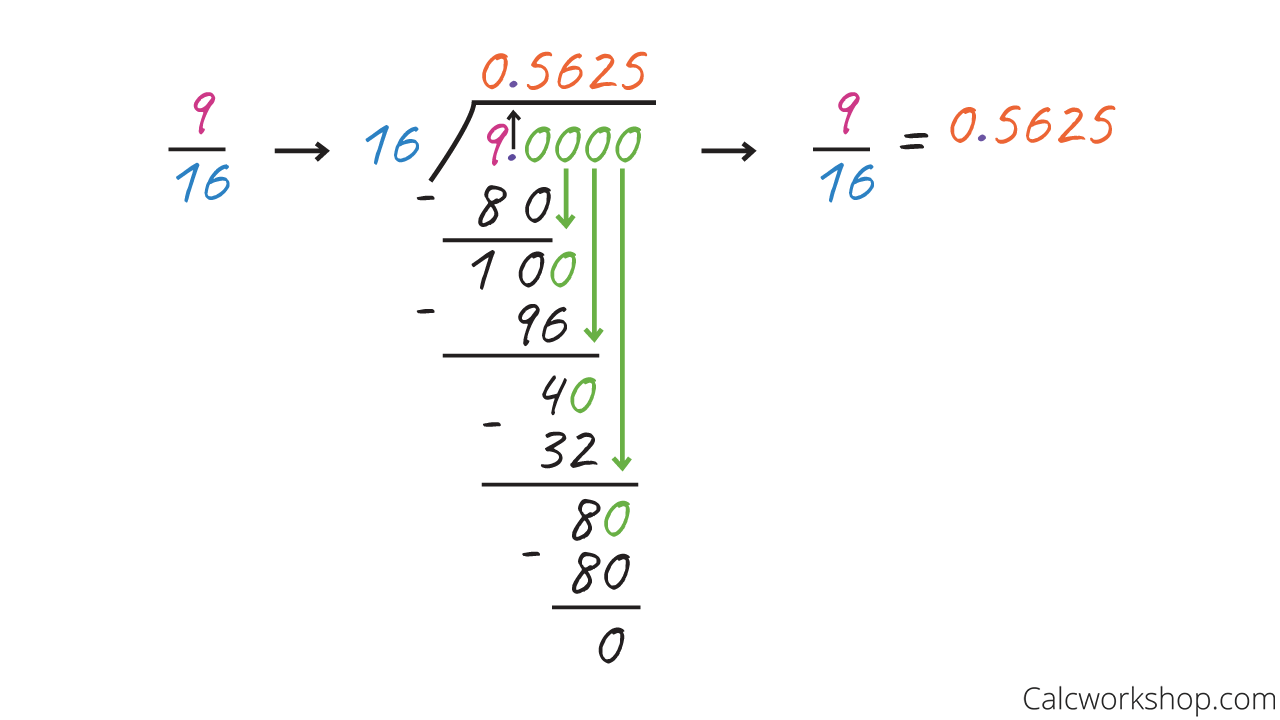
The primary limitation of fractions in finance lies in their computational inconvenience. Adding, subtracting, multiplying, or dividing fractions often requires finding common denominators, a process that is cumbersome and prone to error compared to the straightforward arithmetic of decimals. Furthermore, financial tools—from basic calculators to sophisticated financial modeling software—are inherently designed to process decimal values. Any fractional input must first be converted to a decimal for these tools to function effectively, highlighting why the conversion process is a foundational skill rather than a mere preference.
Decimals also lend themselves to easier comparisons and scaling. Is 1/8th of a percentage point move in an interest rate significant? Converting it to 0.125% makes its magnitude immediately apparent and comparable to other decimal-based rates. This clarity is crucial for tasks like budgeting, where you might allocate 1/5th of your income to savings; translating this to 0.20 or 20% provides a concrete, actionable figure for your financial planning.
Mastering the Conversion: Step-by-Step for Financial Clarity
The process of converting a fraction to a decimal is conceptually simple, yet its application unlocks a world of financial understanding.
The Basic Division Method
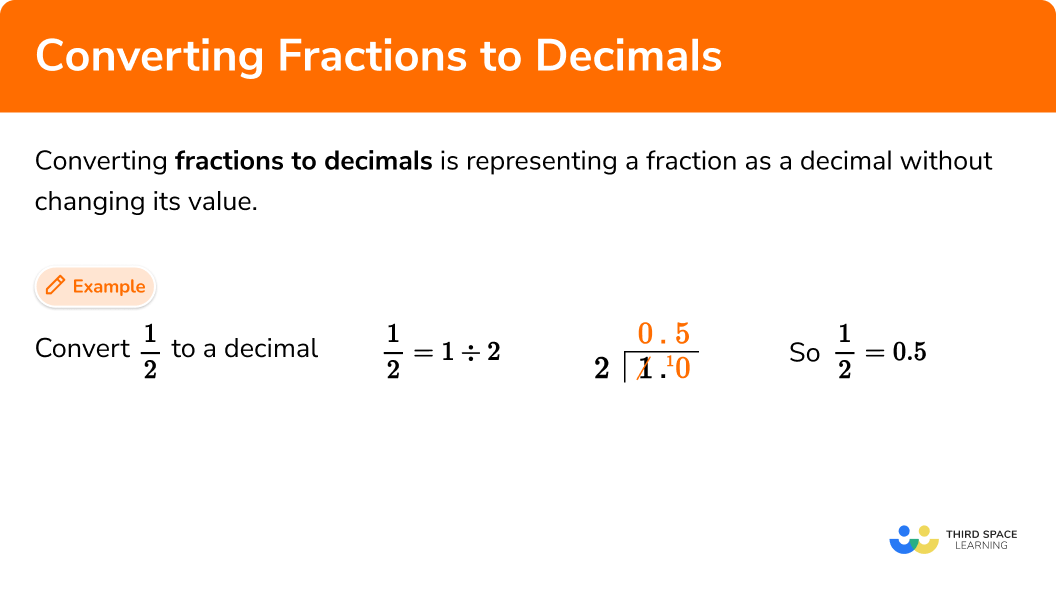
At its core, a fraction is a division problem waiting to happen. The numerator (the top number) is divided by the denominator (the bottom number).
Formula: Decimal = Numerator ÷ Denominator
Example 1: Understanding a Small Interest Rate Change
Imagine a central bank announces an interest rate hike of 1/4 of a percentage point. To understand the actual numerical impact, you convert:
1 ÷ 4 = 0.25
So, the rate increased by 0.25%. This is a much clearer figure for financial analysis than “1/4 percentage point.”
Example 2: Calculating a Share of Profit
If you are entitled to 1/3rd of a business’s profit, and the profit is $10,000, you first need to convert 1/3 to a decimal:
1 ÷ 3 = 0.3333…
Then, multiply by the total profit: $10,000 * 0.3333… = $3,333.33 (approximately). The recurring decimal highlights the need for careful rounding in financial contexts.
Handling Mixed Numbers: Real-World Investment Scenarios
Many financial figures, particularly older stock prices or specific commodity quotes, might be presented as mixed numbers (a whole number and a fraction). Converting these requires a two-step process:
- Convert the fractional part to a decimal.
- Add this decimal to the whole number.
Example: Converting a Stock Price
Historically, stock prices were often quoted in fractions. If a stock closed at $75 5/8, to enter this into a modern brokerage platform or spreadsheet, you’d convert it:
- Convert the fraction: 5 ÷ 8 = 0.625
- Add to the whole number: 75 + 0.625 = 75.625
The stock price is $75.625. This decimal format allows for precise calculation of gains, losses, and portfolio value.
Approximating and Rounding for Practical Financial Use
While mathematical precision is ideal, practical financial calculations often require rounding. Currency values, for instance, are typically expressed to two decimal places (e.g., dollars and cents). Interest rates might extend to three or four decimal places for accuracy.
Rounding Rules:
- If the digit to the right of the desired rounding place is 5 or greater, round up the last digit.
- If it’s less than 5, keep the last digit as is.
Impact of Rounding:
When dealing with large sums or long-term calculations (like compound interest), even seemingly minor rounding discrepancies can accumulate. For example, if you round 1/3 to 0.33 instead of 0.33333… and then multiply by a million, the difference can be substantial ($330,000 vs. $333,333.33). It’s crucial to understand the context and required precision for each financial task. For most day-to-day currency transactions, two decimal places are sufficient. For back-end financial modeling or very large transactions, retaining more decimal places until the final step is often preferred.
Practical Applications Across Financial Domains
The ability to convert fractions to decimals is not an isolated skill; it’s interwoven into nearly every aspect of financial management.
Personal Finance & Budgeting
Budgeting involves allocating portions of your income to various categories. If you decide to allocate 1/10th of your paycheck to an emergency fund, converting 1/10 to 0.10 or 10% makes it easy to calculate the exact dollar amount. Understanding credit card interest rates, often expressed as an Annual Percentage Rate (APR), also benefits from decimal literacy. While the APR is already a decimal (e.g., 18.99%), understanding its components, which might be discussed in fractional terms (e.g., “a quarter point increase”), requires this conversion skill.
Investing & Portfolio Management
In investing, decimals are paramount. Stock prices, bond yields, expense ratios of mutual funds and ETFs, and dividend yields are all expressed as decimals or percentages (which are decimals multiplied by 100). Analyzing a company’s earnings per share (EPS) or price-to-earnings (P/E) ratio requires converting financial data into decimal form for meaningful comparison. With the rise of fractional share investing, where you can buy a portion of a stock (e.g., 0.5 shares), understanding the relationship between fractions and decimals becomes even more direct.
Business Finance & Accounting
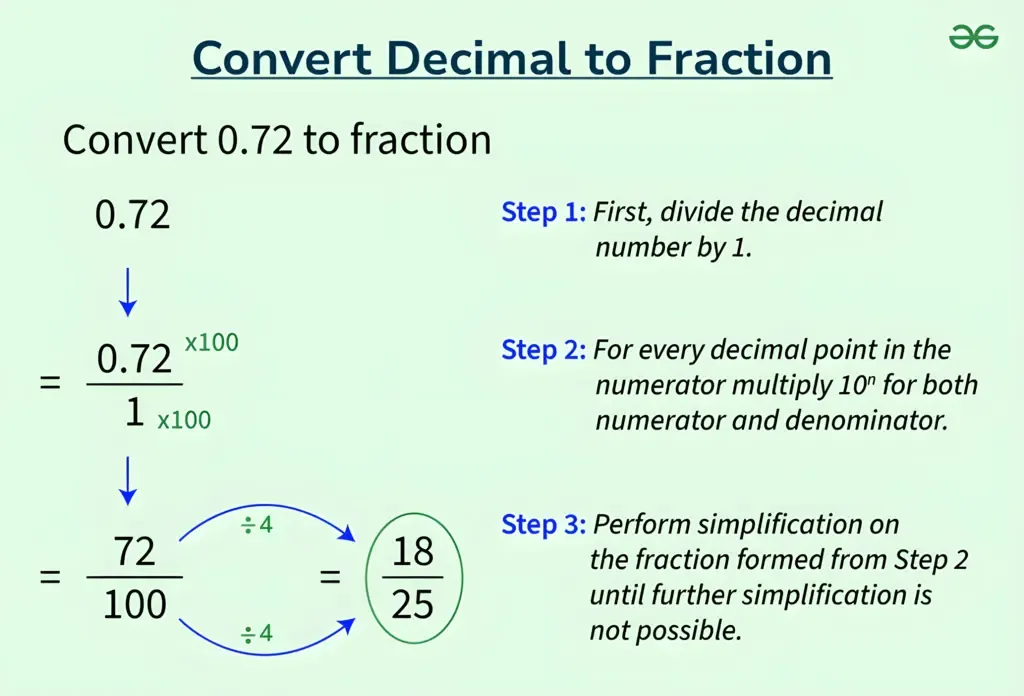
For businesses, precise financial calculations are critical for survival and growth. Calculating profit margins (Net Income ÷ Revenue), debt-to-equity ratios, or current ratios involves dividing one financial figure by another, yielding a decimal. This decimal is then interpreted to assess the company’s health and performance. Furthermore, distributing profits among partners based on fractional ownership stakes (e.g., Partner A owns 2/5, Partner B owns 3/5) necessitates converting these fractions to decimals for accurate monetary distribution. Even understanding tax rates, often given as percentages, relies on the underlying decimal form for correct calculation of liabilities.
Leveraging Financial Tools for Seamless Conversion
While manual conversion is essential for understanding the underlying mechanics, modern financial tools provide efficient and error-free ways to perform these conversions.
Spreadsheets (Excel/Google Sheets)
Spreadsheets are indispensable in finance. To convert a fraction like “1/4” in a spreadsheet, you simply input the division formula: =1/4. The cell will display 0.25. You can then easily format this cell as a percentage (25%) or currency ($0.25) as needed. For mixed numbers, you can use formulas like =75 + (5/8) for $75 5/8. Spreadsheets not only convert but also allow for complex financial modeling based on these precise decimal figures, making them a cornerstone for budgeting, investment analysis, and business forecasting.
Financial Calculators & Online Converters
For quick, on-the-go conversions or when dealing with highly complex fractions, specialized financial calculators (like the HP 12c or TI BA II Plus) or online fraction-to-decimal converters can be incredibly useful. These tools automate the process, reducing the chance of manual errors and saving time, especially when working with many data points. Always double-check results, especially when dealing with financial decisions of significant consequence.
Common Pitfalls and Best Practices
Even with simple conversions, vigilance is key in finance.
Avoiding Calculation Errors
The most common error is misinterpreting the fraction or performing incorrect division. Always ensure the numerator is divided by the denominator. For mixed numbers, ensure the fractional part is correctly converted before adding it to the whole number. Double-checking your calculations, especially for large sums, can prevent costly mistakes.
Precision vs. Practicality
Decide on the appropriate level of precision early in your financial calculations. While 1/3 is exactly 0.33333…, most currency applications round to two decimal places. Be consistent with your rounding rules within a specific calculation or financial report. However, for intermediate steps in multi-stage calculations, it’s often better to retain more decimal places to minimize cumulative rounding errors, only rounding to the desired precision at the very final step.
The Importance of Context
While decimals are dominant, understanding why fractions might appear in certain contexts is important. Historical stock quotes, specific bond market conventions, or certain commodity trading units might still use fractions. Knowing how to convert them ensures you can interpret both historical and contemporary financial data accurately, bridging the gap between different reporting standards and enhancing your overall financial literacy. The ability to fluidly move between fractional and decimal representations empowers you to engage more deeply and accurately with the full spectrum of financial information.
aViewFromTheCave is a participant in the Amazon Services LLC Associates Program, an affiliate advertising program designed to provide a means for sites to earn advertising fees by advertising and linking to Amazon.com. Amazon, the Amazon logo, AmazonSupply, and the AmazonSupply logo are trademarks of Amazon.com, Inc. or its affiliates. As an Amazon Associate we earn affiliate commissions from qualifying purchases.