
In the high-stakes world of finance, precision is not merely a preference—it is a requirement. Whether you are analyzing stock market fluctuations, calculating the effective interest rate on a commercial loan, or evaluating the yield of a municipal bond, the ability to transition between numerical formats is essential. While fractions have a long-standing history in mathematics and trade, the modern global financial system operates almost exclusively on a decimal basis. Understanding how to calculate fraction-to-decimal conversions is a fundamental skill for any investor, business owner, or financial analyst aiming for accuracy in their fiscal projections.
This guide explores the methodologies of conversion through the lens of business finance, examining why decimals have become the standard and how you can master these calculations to enhance your financial decision-making.
The Financial Logic Behind Decimals vs. Fractions
To understand the necessity of conversion, one must first understand the evolution of financial markets. For centuries, markets like the New York Stock Exchange (NYSE) traded in fractions. Stock prices were quoted in eighths (1/8) or sixteenths (1/16) of a dollar, a tradition dating back to Spanish “pieces of eight.” However, this system was cumbersome and often widened the “spread” between buy and sell prices, costing investors more in the long run.
The Shift from Fractional to Decimal Pricing in Markets
In 2001, the United States financial markets completed a transition known as “decimalization.” By moving from fractions to decimals, the minimum price increment (the tick size) dropped from 1/16th of a dollar ($0.0625) to a single penny ($0.01). This transition made the markets more transparent and accessible. For the modern investor, being able to quickly see that a 5/8 change in a stock’s value represents a $0.625 movement is critical for rapid portfolio adjustments and risk management.
Why Banks and Lenders Prefer Decimals
In the banking sector, the preference for decimals is rooted in the complexity of compound interest. Calculating interest on a loan using fractions would be incredibly inefficient. For instance, if a mortgage rate is quoted as 6 3/8%, a bank’s software immediately converts this to 6.375% to run amortization schedules. Decimals allow for infinite granularity, which is vital when dealing with millions of dollars where even the fourth or fifth decimal place can represent a significant sum of money over a thirty-year term.
Core Methods for Calculating Conversions in Business Finance
While digital tools are ubiquitous, a professional should understand the underlying mechanics of conversion to identify errors and perform “back-of-the-envelope” assessments. There are two primary manual methods for converting a fraction into a decimal.
The Division Method: The Gold Standard
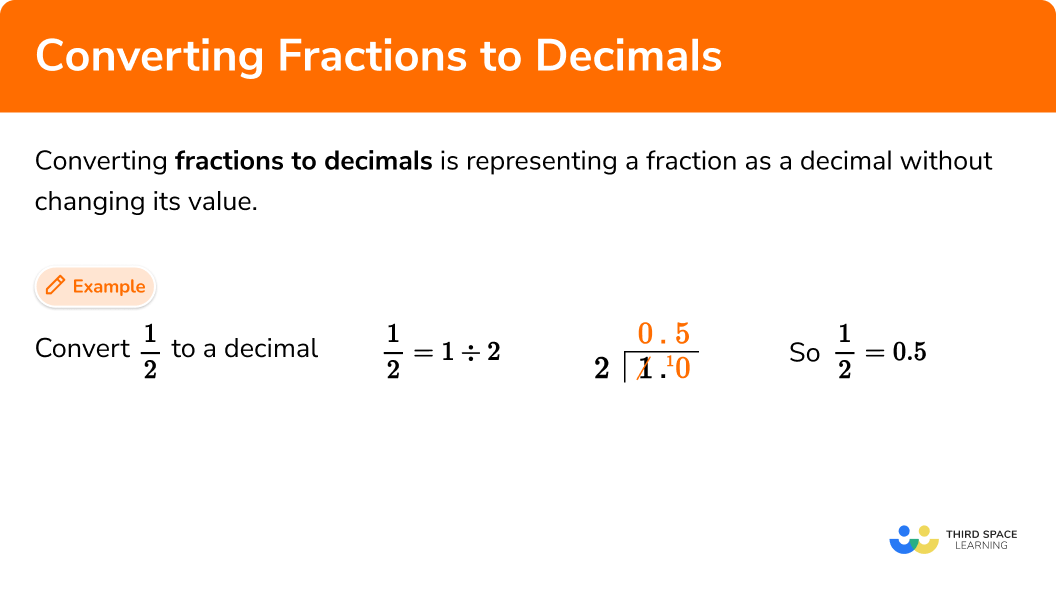
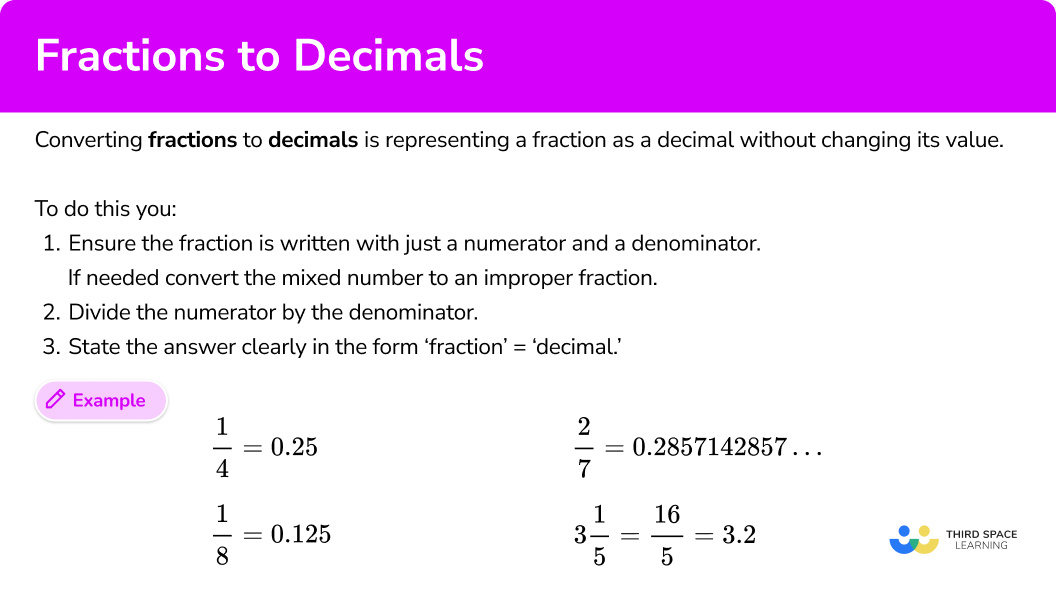
The most direct and universal way to convert any fraction to a decimal is through division. In any fraction, the top number (numerator) represents a part, while the bottom number (denominator) represents the whole. To find the decimal equivalent, you simply divide the numerator by the denominator.
For example, if you are looking at a corporate debt-to-equity ratio expressed as 3/4, the calculation is 3 ÷ 4, which equals 0.75. In financial reporting, this 0.75 provides a clearer picture for comparison against industry benchmarks than the fraction does. This method is foolproof and applies to “proper” fractions, “improper” fractions (where the numerator is larger than the denominator), and “mixed numbers” (where you keep the whole number and convert the fractional remainder).
Using Factors of 10 for Rapid Estimation
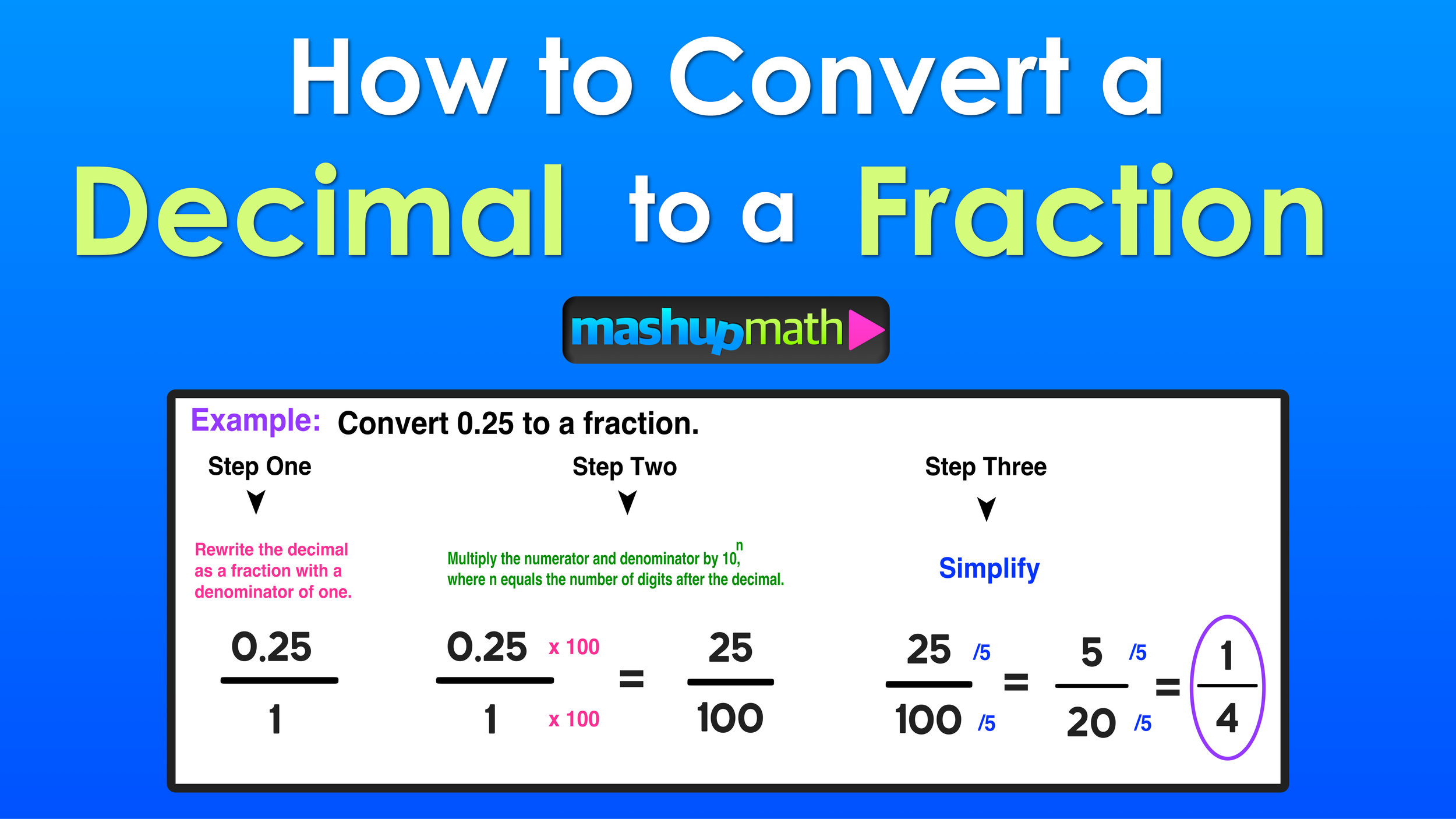
In business environments where speed is of the essence, the “factors of 10” method is a valuable mental shortcut. This involves finding a way to multiply the denominator so it becomes 10, 100, or 1,000.
If you are looking at a small business ownership stake of 1/5, you can quickly multiply both the numerator and the denominator by 2. This gives you 2/10, which is instantly recognizable as 0.2, or 20%. Similarly, if an investment fee is 1/25 of a percent, multiplying by 4 gives you 4/100, or 0.04. This method is particularly useful for common financial ratios and percentage-based commissions.
Practical Applications in Personal Finance and Investing
The utility of fraction-to-decimal conversion becomes most apparent when applied to real-world wealth management. Precise calculations prevent “rounding errors” that can erode wealth over time.
Calculating Bond Yields and Dividend Ratios
Investors often encounter fractions when dealing with bond coupons or dividend payouts. If a bond pays a “half-yearly” coupon of 3 7/16%, an investor needs to know the exact decimal to calculate the cash flow. By converting 7/16 (7 ÷ 16 = 0.4375) and adding the whole number, the investor arrives at 3.4375%.
When comparing this to a high-yield savings account or a dividend-paying stock, having everything in a decimal format allows for an “apples-to-apples” comparison. Without this conversion, it is nearly impossible to determine which asset provides the superior risk-adjusted return.
Navigating Mortgage and Loan Interest Variations
In real estate finance, “points” and interest rate fluctuations are often discussed in fractional terms. A lender might offer to lower your interest rate by 1/8 of a percent if you pay an upfront fee. To determine if this is a sound financial move, you must convert 1/8 to 0.125%.
By knowing the decimal value, you can input the figure into an amortization calculator to see exactly how many dollars you save over the life of the loan. In a $500,000 mortgage, the difference between 6.5% and 6.375% (the 1/8 difference) can result in tens of thousands of dollars in saved interest. Understanding the decimal conversion is the first step in performing a break-even analysis on that upfront cost.
Digital Tools and Automating Financial Conversions
In the modern corporate environment, manual calculation is often supplemented or replaced by digital tools. However, knowing how these tools function is key to utilizing them effectively for financial modeling.
Leveraging Spreadsheet Functions for Accuracy
Microsoft Excel and Google Sheets are the workhorses of the financial world. These programs default to decimal systems, but they allow for fractional input. If you type a fraction into a cell formatted for “Numbers,” the software automatically performs the division for you.
For more complex financial modeling, the =TEXT(A1, "# ??/??") function can reverse the process, but for calculation purposes, the =A1/B1 formula remains the standard. Professionals often use “Format Cells” to ensure that while a user might see a fraction for readability, the underlying calculation engine is utilizing a decimal to the fifteenth power for absolute precision. This prevents the cumulative errors that often plague large-scale budgetary projections.
The Role of Financial Calculators in High-Stakes Decision Making
For Chartered Financial Analysts (CFAs) and CPAs, the HP 12C or TI BA II Plus are industry standards. These calculators are designed to handle complex time-value-of-money (TVM) equations that require decimals. When inputting the “i” (interest rate) or “n” (number of periods), converting fractions is a prerequisite.
For instance, when calculating the present value of an annuity where the growth rate is 5 1/4%, the practitioner must enter 5.25. The speed at which a professional can convert these figures determines their efficiency in meetings, negotiations, and audits.
Conclusion: The Strategic Value of Numerical Literacy
The ability to calculate fraction-to-decimal conversions may seem like a basic mathematical skill, but in the context of money and business finance, it is a vital component of professional literacy. It represents the bridge between legacy trading systems and the high-speed, digitalized reality of modern global markets.
By mastering these conversions—whether through the division method, mental shortcuts, or the sophisticated use of financial software—you empower yourself to analyze data more deeply and communicate more effectively. In finance, every digit counts. Being able to see the 0.875 hidden within the 7/8 is often the difference between a mediocre investment and a strategic success. As you continue to build your financial acumen, treat these conversions not as a chore, but as a tool for unlocking the true value of your capital.
aViewFromTheCave is a participant in the Amazon Services LLC Associates Program, an affiliate advertising program designed to provide a means for sites to earn advertising fees by advertising and linking to Amazon.com. Amazon, the Amazon logo, AmazonSupply, and the AmazonSupply logo are trademarks of Amazon.com, Inc. or its affiliates. As an Amazon Associate we earn affiliate commissions from qualifying purchases.