
In an increasingly data-driven world, the ability to calculate and solve equations is more critical than ever. From the fundamental principles taught in classrooms to the complex algorithms powering artificial intelligence, equations are the language of logic, measurement, and prediction. While the core mathematical concepts remain timeless, the methods for calculating equations have undergone a revolutionary transformation, driven almost entirely by technological advancements. Gone are the days when intricate problems were solely the domain of pencil-and-paper calculations; today, a vast array of sophisticated tools stands ready to assist, offering unparalleled speed, accuracy, and insight. This article delves into how modern technology empowers us to calculate equations, exploring the tools, techniques, and best practices that define this essential skill in the 21st century.
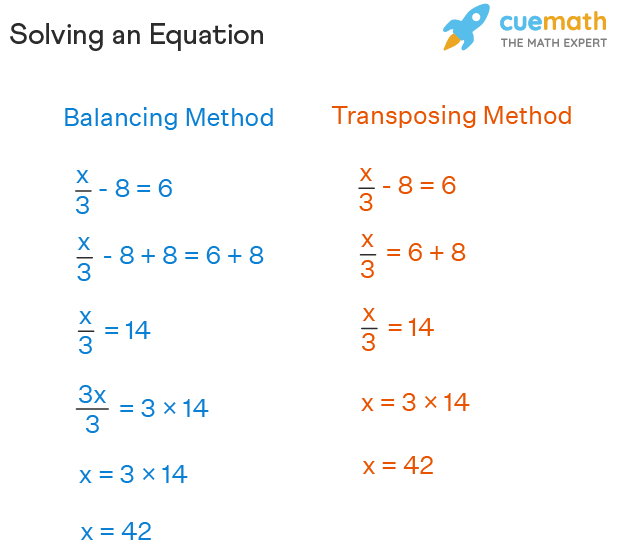
The Evolving Landscape of Equation Solving
The journey of equation solving mirrors the broader progression of human ingenuity, moving from rudimentary tools to highly advanced digital platforms. Understanding this evolution helps us appreciate the power at our fingertips today.
From Manual Calculations to Digital Dexterity
Historically, calculating equations was an arduous, error-prone task. Simple arithmetic was aided by abacuses and slide rules, while complex algebraic, differential, and integral equations demanded meticulous manual computation. Mathematicians and scientists spent countless hours deriving solutions, often limited by the sheer computational burden. The advent of mechanical calculators brought relief, but true transformation began with the digital revolution. Early computers, massive and cumbersome, could perform calculations at speeds previously unimaginable. This paved the way for personal computers and eventually, specialized software and hardware designed specifically for mathematical computation. This shift from manual to digital dexterity has democratized equation solving, making advanced mathematical tools accessible to a broader audience.
Why Modern Equation Solving Matters
Today, the ability to effectively calculate equations using technology is not just an academic skill; it’s a professional imperative across diverse fields. In engineering, technology enables the simulation of complex systems before physical prototyping, saving time and resources. In finance, sophisticated algorithms solve equations to predict market trends and manage risk. In data science and AI, machine learning models are built upon intricate sets of equations solved and optimized computationally. Even in everyday life, from budgeting apps to navigation systems, equations are constantly being solved in the background. Understanding and leveraging these technological aids allows for greater precision, efficiency, and the capacity to tackle problems that would be insurmountable otherwise.
Essential Tech Tools for Equation Calculation
The modern toolkit for equation calculation is diverse, ranging from handheld devices to powerful cloud-based platforms. Each tool offers unique strengths, catering to different levels of complexity and user needs.
Scientific and Graphing Calculators
For many, the first encounter with technological equation solving comes in the form of scientific and graphing calculators. These ubiquitous devices are workhorses for fundamental algebra, trigonometry, calculus, and statistics. Scientific calculators offer functions for logarithms, exponentials, and complex numbers, while graphing calculators visually represent functions, identify roots, and perform matrix operations. Brands like Texas Instruments and Casio have long dominated this space, evolving their devices to include symbolic manipulation capabilities and even simple programming features. They are indispensable for students and professionals requiring quick, reliable, offline calculations.
Spreadsheet Software (Excel, Google Sheets)
Spreadsheet programs like Microsoft Excel and Google Sheets are deceptively powerful equation solvers. Beyond basic arithmetic, they offer a vast library of built-in functions for statistical analysis, financial calculations, matrix operations, and iterative problem-solving (e.g., using Goal Seek or Solver add-ins). Their grid-based structure makes them ideal for organizing data, defining variables, and setting up complex formulas that involve multiple equations. The ability to visualize data immediately through charts and graphs also makes them excellent tools for understanding the implications of equation solutions, especially in business, finance, and basic scientific modeling.
Symbolic Math Software (Wolfram Alpha, MATLAB, Mathematica)
For higher-level mathematics and intricate symbolic manipulation, specialized software takes center stage.
- Wolfram Alpha: An “answer engine” and computational knowledge engine, Wolfram Alpha can understand natural language queries to solve equations, perform calculus, simplify expressions, and provide step-by-step solutions. It’s incredibly accessible and requires no programming knowledge, making complex mathematics approachable.
- MATLAB: (Matrix Laboratory) is a proprietary multi-paradigm programming language and numerical computing environment. It excels at numerical computation, matrix manipulations, algorithm implementation, and data visualization. Its rich ecosystem of toolboxes caters to specific domains like signal processing, control systems, and image processing, all heavily relying on solving complex equations.
- Mathematica: Developed by Wolfram Research, Mathematica is a symbolic and numerical computation program offering extensive capabilities for algebra, calculus, discrete mathematics, and statistical analysis. It’s renowned for its powerful symbolic manipulation engine, which can solve equations analytically where other tools might resort to numerical approximations.
These platforms are the backbone for research, advanced engineering, and scientific computing, providing unparalleled depth and flexibility in solving a vast spectrum of mathematical problems.
Programming Languages and Libraries (Python with NumPy/SciPy, R)
For ultimate flexibility and customization, programming languages combined with specialized libraries offer the most powerful approach to equation solving.
- Python: With its simplicity and vast ecosystem, Python has become a favorite. Libraries like NumPy provide robust support for numerical arrays and matrices, fundamental for linear algebra. SciPy builds on NumPy, offering modules for optimization, integration, interpolation, linear algebra, Fourier transforms, signal processing, and more – all of which involve solving various types of equations. Python’s versatility allows users to integrate equation solving into larger applications, data pipelines, or machine learning models.
- R: Primarily designed for statistical computing and graphics, R is another open-source language with powerful capabilities for solving statistical and mathematical equations. It boasts an extensive collection of packages that can handle everything from linear regression to complex differential equations, making it a staple in academia and data science.
These programming environments allow users to script custom solutions, automate repetitive tasks, and integrate equation solving seamlessly into larger computational workflows, making them invaluable for research and development.
Online Solvers and AI-Powered Assistants
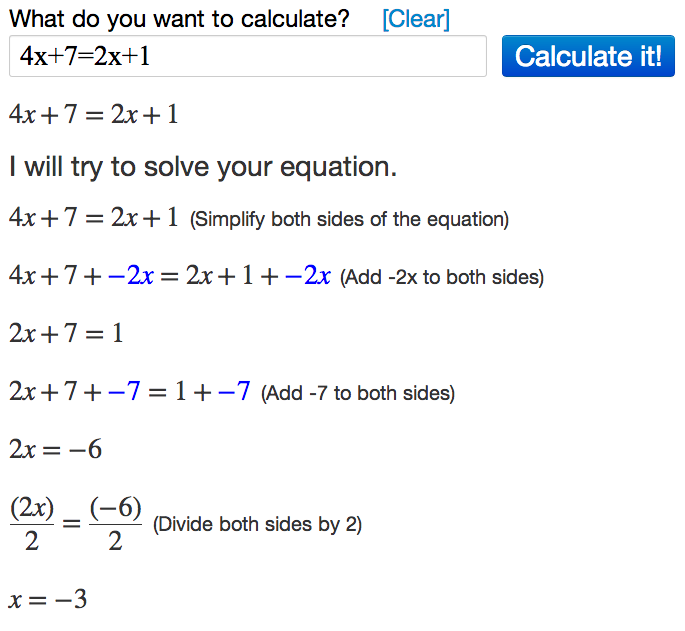
The rise of AI and cloud computing has given birth to a new generation of equation-solving tools. Online calculators like Symbolab or Mathway offer step-by-step solutions for a wide range of problems, from basic algebra to advanced calculus, often with interactive components. AI-powered assistants, such as those integrated into chatbots or dedicated math apps, can interpret handwritten equations, solve them, and explain the steps, making learning and problem-solving more intuitive and accessible, particularly for educational purposes. These tools leverage sophisticated algorithms to parse, interpret, and solve mathematical expressions with remarkable accuracy and speed.
Practical Applications Across Disciplines
The technological prowess in calculating equations extends its impact across nearly every scientific, engineering, and business discipline.
Engineering and Physics: Simulating Complex Systems
In engineering, equations are the blueprints for design and analysis. From calculating stress on materials in civil engineering to modeling fluid dynamics in aerospace, technology allows engineers to simulate complex physical systems. Software like MATLAB, ANSYS, and SolidWorks utilize numerical methods to solve partial differential equations that describe heat transfer, fluid flow, and structural integrity, enabling virtual prototyping and optimization before costly physical tests. Physicists employ similar tools to model quantum mechanics, astrophysics phenomena, and particle interactions, pushing the boundaries of scientific understanding.
Data Science and Machine Learning: Model Building and Optimization
The core of data science and machine learning lies in equations. Algorithms like linear regression, neural networks, and support vector machines are fundamentally built upon mathematical equations. Data scientists use programming languages like Python (with libraries like scikit-learn, TensorFlow, and PyTorch) and R to solve these equations repeatedly through iterative optimization processes. This allows them to train models, minimize error functions, and predict outcomes based on vast datasets. The ability to efficiently solve these equations is paramount for building accurate, robust, and scalable AI solutions.
Finance and Economics: Forecasting and Risk Assessment
While our focus remains on technology, it’s worth noting that financial modeling is heavily equation-driven. Economists and financial analysts use tools like Excel, MATLAB, and specialized financial software to solve equations for econometric models, portfolio optimization, option pricing (e.g., Black-Scholes model), and risk management. These technological solutions enable professionals to forecast market behavior, assess investment risks, and develop complex financial instruments, all underpinned by the efficient solution of intricate mathematical equations.
Everyday Problem Solving and Education
Beyond professional spheres, technology aids in everyday equation solving. Mortgage calculators, health and fitness trackers, and navigation apps all rely on embedded equations. In education, interactive software and online platforms demystify complex mathematical concepts, allowing students to visualize problems, experiment with variables, and receive immediate feedback on their solutions, fostering a deeper understanding of equations and their practical applications.
Best Practices for Effective Equation Calculation with Tech
While technology offers immense power, using it effectively requires a blend of understanding and strategic application.
Understanding the Underlying Principles
The most critical best practice is to never let the tool overshadow the foundational mathematical understanding. Technology is a powerful calculator, not a substitute for comprehension. A firm grasp of algebraic principles, calculus concepts, or statistical theory ensures that you can correctly set up equations, interpret results, and troubleshoot errors. Blindly inputting numbers without understanding the context or the math can lead to incorrect conclusions, despite the tool’s accuracy.
Choosing the Right Tool for the Job
Selecting the appropriate technological tool is crucial. A simple linear equation might only require a basic scientific calculator, while a system of non-linear differential equations demands advanced symbolic math software or a programming environment. Using a sledgehammer to crack a nut is inefficient, just as attempting to solve a complex engineering problem with only a spreadsheet can be limiting and error-prone. Assess the complexity, required accuracy, and the desired output (numerical vs. symbolic, textual vs. graphical) to make an informed choice.
Data Validation and Error Checking
Technology, while powerful, is only as good as the input it receives. Always validate your input data and meticulously check your formulas or code. Typos, incorrect variable assignments, or logical errors in programming can lead to wildly inaccurate results. Leverage features like “trace precedents” in spreadsheets, debugging tools in programming environments, and unit tests to ensure the integrity of your calculations.
Interpreting Results Critically
Automated solutions require critical interpretation. A numerical result might be mathematically correct but nonsensical in a real-world context (e.g., a negative length or an interest rate of 1000%). Always cross-reference solutions with domain knowledge, perform sanity checks, and consider edge cases. Visualization tools, often integrated into these technologies, can help in quickly identifying anomalies or unexpected trends.
Leveraging Visualization Tools
Many equation-solving platforms come with robust data visualization capabilities. Plotting functions, graphing data, and visualizing relationships between variables can provide profound insights that might be missed in raw numerical outputs. Visual representations help in understanding the behavior of equations, identifying patterns, and communicating complex findings more effectively.
The Future of Equation Calculation: AI and Beyond
The trajectory of technological advancement suggests an even more integrated and intuitive future for equation calculation.
Advanced AI for Symbolic and Numerical Solutions
Artificial intelligence is poised to further revolutionize equation solving. Future AI tools will likely offer enhanced capabilities for not just solving equations, but also for understanding their conceptual underpinnings, suggesting alternative solution paths, and even discovering new mathematical relationships. AI could become adept at handling highly unstructured mathematical problems, bridging the gap between symbolic manipulation and numerical approximation with greater efficiency and fewer human interventions. Expect more intelligent assistants that can tutor users through complex problems, personalized to individual learning styles.
Cloud-Based Collaborative Problem Solving
Cloud computing already powers many online solvers and collaborative platforms. The future will see more robust, fully integrated cloud environments where teams can work together on complex mathematical projects in real-time. These platforms will offer seamless access to vast computational resources, integrate diverse software tools, and facilitate sharing and version control of mathematical models and solutions, accelerating research and development cycles across industries.
Enhanced Accessibility and User Interfaces
The trend towards more intuitive and accessible user interfaces will continue. Natural language processing will allow users to articulate complex mathematical problems in conversational English, while advanced graphical interfaces will make it easier to define equations visually, manipulate variables, and explore solution spaces. This will further lower the barrier to entry for advanced mathematical computation, enabling a broader range of professionals and learners to harness the power of equations without needing deep expertise in specialized software syntaxes.
In conclusion, calculating equations has transcended its traditional boundaries, evolving into a dynamic field heavily intertwined with technological innovation. From handheld calculators to sophisticated AI-powered platforms, the tools available today empower us to solve problems with unprecedented precision and efficiency. By understanding these technologies, choosing the right instruments for the task, and adhering to best practices, individuals and organizations can unlock new possibilities, drive innovation, and make informed decisions in an increasingly complex world. The journey of equation solving is far from over; it continues to evolve at the forefront of technological advancement, promising an even more exciting and capable future.
aViewFromTheCave is a participant in the Amazon Services LLC Associates Program, an affiliate advertising program designed to provide a means for sites to earn advertising fees by advertising and linking to Amazon.com. Amazon, the Amazon logo, AmazonSupply, and the AmazonSupply logo are trademarks of Amazon.com, Inc. or its affiliates. As an Amazon Associate we earn affiliate commissions from qualifying purchases.