
Purchasing a car is one of the most significant financial decisions many individuals make, second only to buying a home. While the sticker price often captures immediate attention, the true cost of vehicle ownership is heavily influenced by how you finance it, specifically the interest you pay on a car loan. Understanding “how to calculate car interest” is not just about crunching numbers; it’s about empowering yourself with the financial literacy needed to make informed decisions, save money, and navigate the complex world of automotive financing with confidence. This article will demystify car loan interest, providing a comprehensive guide to understanding, calculating, and ultimately minimizing this often-overlooked expense within the realm of personal finance.
Understanding the Fundamentals of Car Loan Interest
Before diving into calculations, it’s essential to grasp the core concepts that define car loan interest. Interest is essentially the cost of borrowing money. When you take out a car loan, the lender provides you with a lump sum to purchase the vehicle, and in return, you agree to pay back that sum (the principal) plus an additional fee (the interest) over a specified period.
Defining Key Terms: APR, Principal, and Loan Term
To accurately calculate and comprehend car interest, three primary terms are crucial:
- Annual Percentage Rate (APR): This is perhaps the most critical number to understand. The APR represents the annual cost of your loan, expressed as a percentage of the amount borrowed. It includes not only the basic interest rate but also any additional fees or charges associated with the loan, such as origination fees. A lower APR means a lower overall cost for your loan. It provides a standardized way to compare different loan offers from various lenders.
- Principal Loan Amount: This is the initial sum of money you borrow to purchase the car. It’s the total price of the vehicle minus any down payment, trade-in value, or rebates. Every payment you make on your loan goes partly towards reducing this principal amount and partly towards covering the interest.
- Loan Term (Duration): This refers to the length of time, typically expressed in months (e.g., 36, 48, 60, 72, or 84 months), over which you agree to repay the loan. The loan term significantly impacts both your monthly payment and the total amount of interest you’ll pay over the life of the loan. A longer term generally means lower monthly payments but a higher total interest paid due to interest accruing over a longer period.
How Interest Accrues: Simple vs. Compound
Most car loans use simple interest, meaning the interest is calculated only on the principal amount that remains outstanding. This is generally more straightforward than compound interest, where interest is calculated on both the principal and the accumulated interest from previous periods. Understanding this distinction helps clarify how your monthly payments are applied. In a simple interest loan, early payments apply more heavily to interest, gradually shifting more towards principal as the loan matures.
Practical Approaches to Interest Calculation
While lenders provide you with a payment schedule, understanding how the numbers are derived empowers you to verify figures and negotiate better terms. There are several ways to approach calculating car interest, ranging from manual methods to leveraging technology.
Manual Calculation: The Simple Interest Method
For a basic understanding, you can manually calculate simple interest for a single payment period. This method gives you an approximation and is particularly useful for understanding how much interest you’re paying in the early stages of a loan.
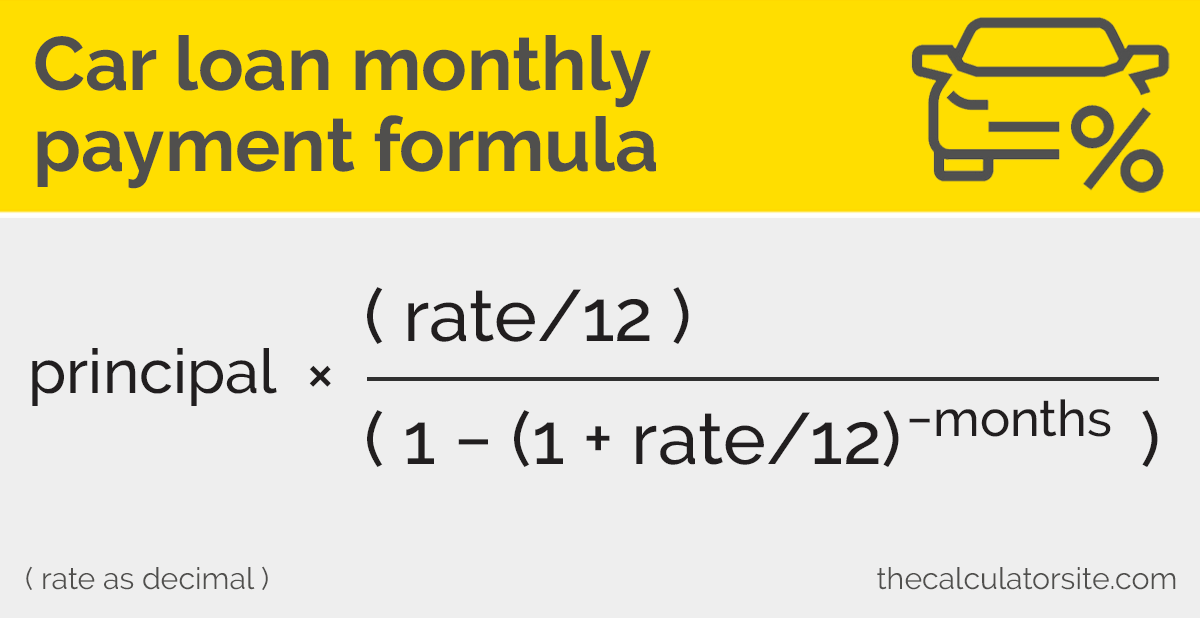
The basic formula for simple interest for a given period is:
Interest = (Principal Balance x Annual Interest Rate) / Number of Payments per Year
Let’s illustrate with an example:
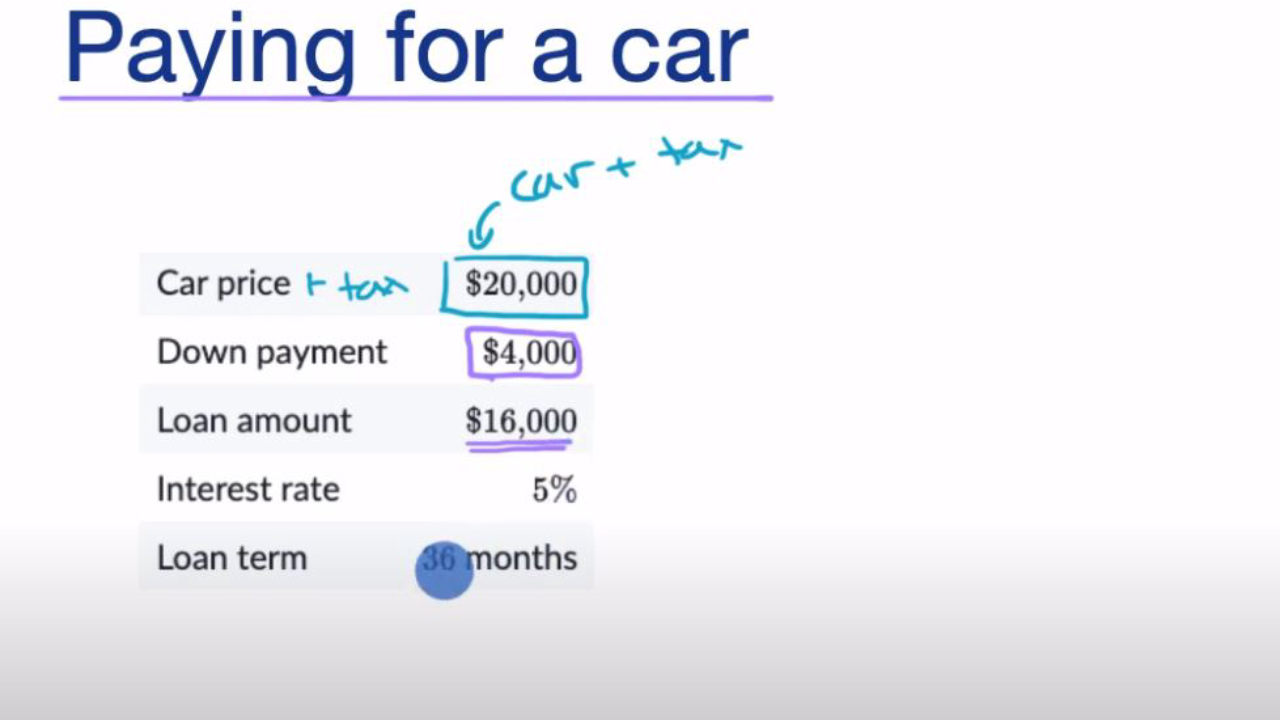
- Loan Amount (Principal): $25,000
- Annual Interest Rate (from APR): 6% (or 0.06 as a decimal)
- Loan Term: 60 months (5 years)
- Monthly Payment: Let’s assume an initial estimated monthly payment of $483.32 (this would be calculated by an amortization formula, but we’ll use it for this example).
Month 1 Calculation:
- Calculate monthly interest rate: 0.06 / 12 = 0.005
- Interest for Month 1: $25,000 (Principal) x 0.005 = $125
- Principal paid in Month 1: $483.32 (Monthly Payment) – $125 (Interest) = $358.32
- New Principal Balance: $25,000 – $358.32 = $24,641.68
This process would repeat each month, with the principal balance decreasing, and thus the interest portion of your payment also gradually decreasing, while the principal portion increases.
Leveraging Online Car Loan Calculators
For a more accurate and comprehensive calculation, especially for creating a full amortization schedule, online car loan calculators are invaluable. These tools are widely available on bank websites, financial planning sites, and automotive portals.
To use an online calculator, you typically input:
- The total loan amount (principal)
- The APR
- The loan term (in months)
The calculator will then instantly provide:
- Your estimated monthly payment
- The total amount of interest you will pay over the life of the loan
- The total cost of the loan (principal + total interest)
- Often, a detailed amortization schedule showing how each payment is broken down into principal and interest over the entire loan term.
These calculators are highly accurate as they use complex amortization formulas that would be tedious to perform manually for every single payment. They are excellent financial tools for comparing different scenarios, such as the impact of a larger down payment or a shorter loan term.
Using Spreadsheet Software for Amortization
For those who prefer a hands-on approach or need to analyze multiple scenarios in detail, spreadsheet software like Microsoft Excel or Google Sheets can be used to build a custom amortization schedule. Functions like PMT (to calculate monthly payment) and iterative formulas for interest and principal breakdown can create a dynamic tool. This method offers the highest degree of customization and allows users to model various “what-if” scenarios, such as the impact of making extra payments.
Key Factors Influencing Your Car Loan Interest Rate
The interest rate you are offered for a car loan is not arbitrary; it’s a reflection of several factors that lenders assess to determine your creditworthiness and the perceived risk of lending you money. Understanding these factors can help you position yourself for the best possible rates.
Your Credit Score and History
This is arguably the most significant factor. Lenders use your credit score (e.g., FICO score) as a quick indicator of your financial reliability. A higher credit score (typically above 700) signifies a low-risk borrower, leading to lower interest rates. Conversely, a lower credit score indicates a higher risk, resulting in higher interest rates to compensate the lender for that risk. Maintaining a good payment history, managing debt responsibly, and keeping credit utilization low are all crucial for a strong credit score.
Loan Term Length
As previously mentioned, the length of your loan term directly impacts the total interest paid and often the interest rate itself. Longer loan terms (e.g., 72 or 84 months) often come with slightly higher interest rates, even for borrowers with excellent credit. This is because the lender is exposed to the risk of default for a longer period, and the asset (the car) depreciates further over time, potentially becoming worth less than the outstanding loan balance.
Down Payment Amount
Making a substantial down payment reduces the principal amount you need to borrow. A larger down payment also signals to lenders that you are financially committed to the purchase and are less likely to default. This reduced risk often translates into a lower interest rate, as well as a lower monthly payment and less total interest paid over the life of the loan.
Vehicle Age and Type
The type of vehicle you are financing can also influence the interest rate. New cars generally command lower interest rates than used cars. This is because new cars typically have a higher resale value, making them better collateral for the lender. For used cars, older models or those with high mileage might be seen as higher risk, leading to higher interest rates. Lenders also consider the make and model’s depreciation rate.
Market Conditions and Lender Competition
Broader economic factors, such as the prime rate set by the central bank, influence interest rates across the board. When interest rates are low generally, car loan rates tend to follow suit. Additionally, the competitive landscape among lenders can drive rates down. Shopping around and comparing offers from multiple banks, credit unions, and online lenders can sometimes yield better rates than simply accepting the first offer from a dealership.
Strategies to Minimize Your Car Interest Costs
Armed with an understanding of how car interest is calculated and what influences it, you can take proactive steps to reduce the overall cost of your vehicle financing. Every percentage point saved can translate into hundreds or even thousands of dollars over the life of the loan.
Improve Your Credit Score Before Applying
If you know you’ll be buying a car in the near future, start working on your credit score well in advance. Pay down outstanding debts, dispute any inaccuracies on your credit report, and make all payments on time. Even a modest improvement in your score can unlock access to significantly better interest rates.
Make a Larger Down Payment
The more money you can put down upfront, the less you need to borrow, which directly reduces the total interest you’ll pay. A substantial down payment also strengthens your application and can lead to a lower APR. Aim for at least 10-20% of the vehicle’s purchase price if possible.
Choose the Shortest Loan Term You Can Afford
While longer terms offer lower monthly payments, they dramatically increase the total interest paid. If your budget allows, opt for a shorter loan term (e.g., 36 or 48 months). You’ll pay off the car faster, pay significantly less interest, and build equity more quickly. Use an online calculator to compare monthly payments and total interest for different terms.
Shop Around for Lenders
Don’t settle for the first loan offer you receive, especially from a dealership. Dealerships often add their own markup to the interest rates they offer. Pre-qualify with several banks, credit unions, and online lenders before you even step foot in a dealership. Having a pre-approved loan offer in hand gives you powerful leverage during negotiations and ensures you get the best possible rate. Credit unions, in particular, often offer competitive rates to their members.
Consider Refinancing Your Car Loan
If you’ve already financed a car at a higher interest rate (perhaps due to a lower credit score at the time, or high market rates), refinancing could be a smart move. If your credit score has improved or market rates have dropped, you might be able to secure a new loan with a lower APR. This could reduce your monthly payments or the total interest paid, or both. Research refinancing options from various lenders and compare them to your current loan.
Pay More Than the Minimum Monthly Payment
Even paying a small extra amount on your principal each month can significantly reduce the total interest over the life of the loan. Since car loans use simple interest, any extra principal payment immediately reduces the base on which future interest is calculated. Ensure your lender applies any extra payments directly to the principal.
Conclusion
Calculating car interest is a fundamental skill in personal finance, vital for anyone considering or currently holding an auto loan. It goes beyond simple arithmetic; it’s about understanding the financial dynamics that dictate the true cost of your vehicle. By grasping concepts like APR, principal, and loan term, utilizing calculation tools, understanding the factors that influence your rate, and implementing strategic financial planning, you can make smarter decisions. Taking the time to understand and manage your car loan interest can lead to substantial savings, accelerate your path to car ownership, and contribute significantly to your overall financial well-being. Empower yourself with this knowledge, and you’ll navigate the car buying process with far greater confidence and financial acumen.
aViewFromTheCave is a participant in the Amazon Services LLC Associates Program, an affiliate advertising program designed to provide a means for sites to earn advertising fees by advertising and linking to Amazon.com. Amazon, the Amazon logo, AmazonSupply, and the AmazonSupply logo are trademarks of Amazon.com, Inc. or its affiliates. As an Amazon Associate we earn affiliate commissions from qualifying purchases.