
For many, purchasing a car represents a significant financial commitment and a crucial life necessity. Whether it’s for commuting, family transport, or personal freedom, the prospect of new wheels is exciting. However, the financial mechanics behind securing that dream car can often feel opaque and intimidating. Understanding how car finance payments are calculated is not just about crunching numbers; it’s about empowering yourself to make informed decisions, secure the best possible deal, and manage your personal finances effectively.
This comprehensive guide will demystify the process, breaking down the core components of car finance, exploring various calculation methods, and providing practical insights to help you navigate the complexities with confidence. By the end, you’ll possess a clearer understanding of your monthly financial obligations and how to strategically approach your next vehicle purchase.
Understanding the Fundamentals of Car Finance
Before diving into the intricate world of formulas and calculators, it’s essential to grasp the foundational elements that constitute any car finance agreement. These components collectively determine your monthly payment and the total cost of your loan.
Key Components of Your Loan
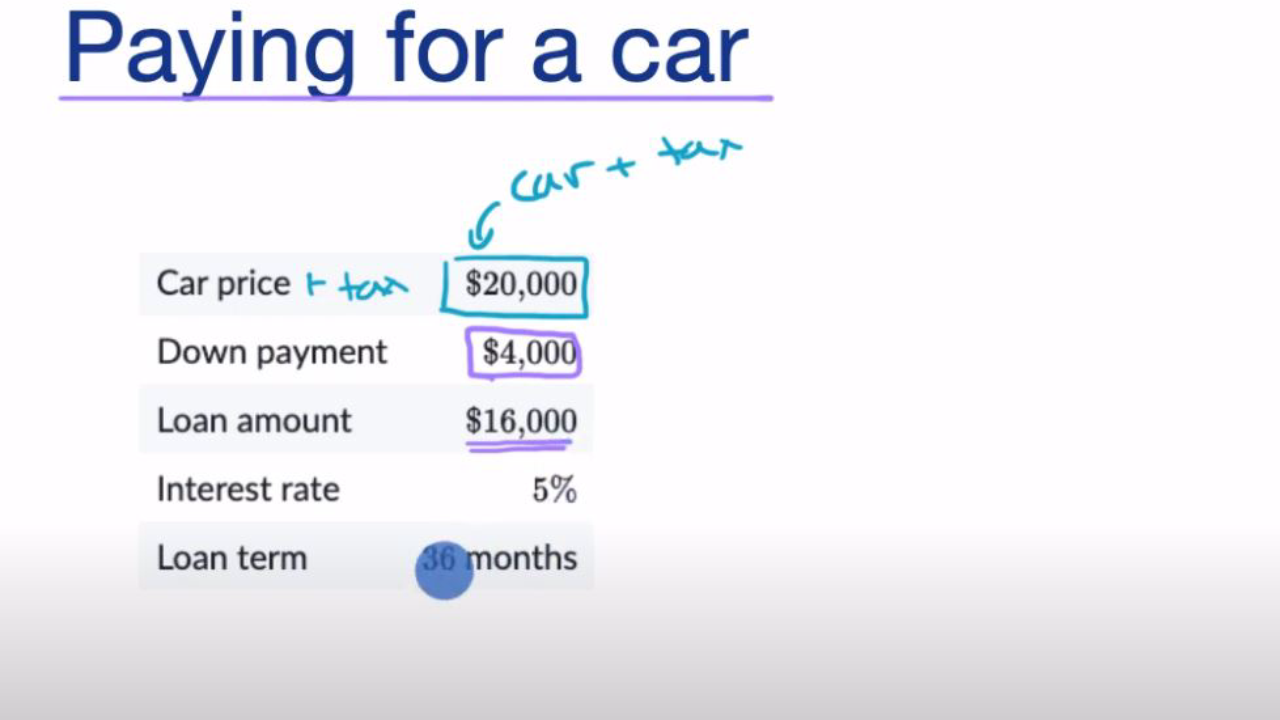
Every car finance deal typically revolves around several critical variables. The principal amount is the actual sum of money you borrow to purchase the vehicle, after any down payment or trade-in value has been applied. The interest rate, often expressed as an Annual Percentage Rate (APR), is the cost of borrowing that principal, charged as a percentage of the outstanding loan balance. The loan term, measured in months (e.g., 36, 48, 60, 72 months), dictates the duration over which you will repay the loan. Finally, any fees and charges, such as origination fees, documentation fees, or early repayment penalties, can also influence the overall cost and, in some cases, be rolled into the principal. Understanding each of these components is the first step toward accurately calculating your payments.
Types of Car Finance Explained
The landscape of car finance offers several distinct options, each with its own structure and implications for your payments. The two most common forms are Hire Purchase (HP) and Personal Contract Purchase (PCP). With HP, you essentially “hire” the car over a set period, making fixed monthly payments. Once all payments are made, and often a nominal “option to purchase” fee is paid, the car becomes yours. PCP, on the other hand, structures payments around the car’s depreciation over the loan term, rather than its full value. This results in lower monthly payments but typically includes a large “balloon payment” (Guaranteed Future Value or GFV) at the end if you wish to own the car. Alternatively, you can return the car or use any equity towards a new vehicle. Personal Loans from banks or credit unions are another option, where you borrow the full sum and own the car outright from the start, repaying the loan under standard personal loan terms. Each type carries different risks, ownership implications, and, critically, varying payment structures.
The Impact of Down Payments and Trade-ins
A down payment is an upfront lump sum of money you pay towards the car’s purchase price. This immediately reduces the principal amount you need to borrow, which in turn lowers your monthly payments and the total interest you’ll pay over the loan term. Similarly, trading in your old vehicle can serve a similar purpose. The agreed-upon value of your trade-in is deducted from the new car’s price, effectively acting as a down payment. Both strategies are powerful tools to reduce your financial burden. A larger down payment or a valuable trade-in not only makes your monthly repayments more manageable but also often strengthens your credit profile in the eyes of lenders, potentially unlocking better interest rates. It also helps to create instant equity in the vehicle, guarding against negative equity where you owe more than the car is worth.
Deconstructing the Payment Calculation
With a solid understanding of the finance fundamentals, we can now turn our attention to the actual mathematics behind your monthly car finance payment. While online calculators simplify this, knowing the underlying principles provides invaluable insight.
The Basic Loan Payment Formula (and why it matters)
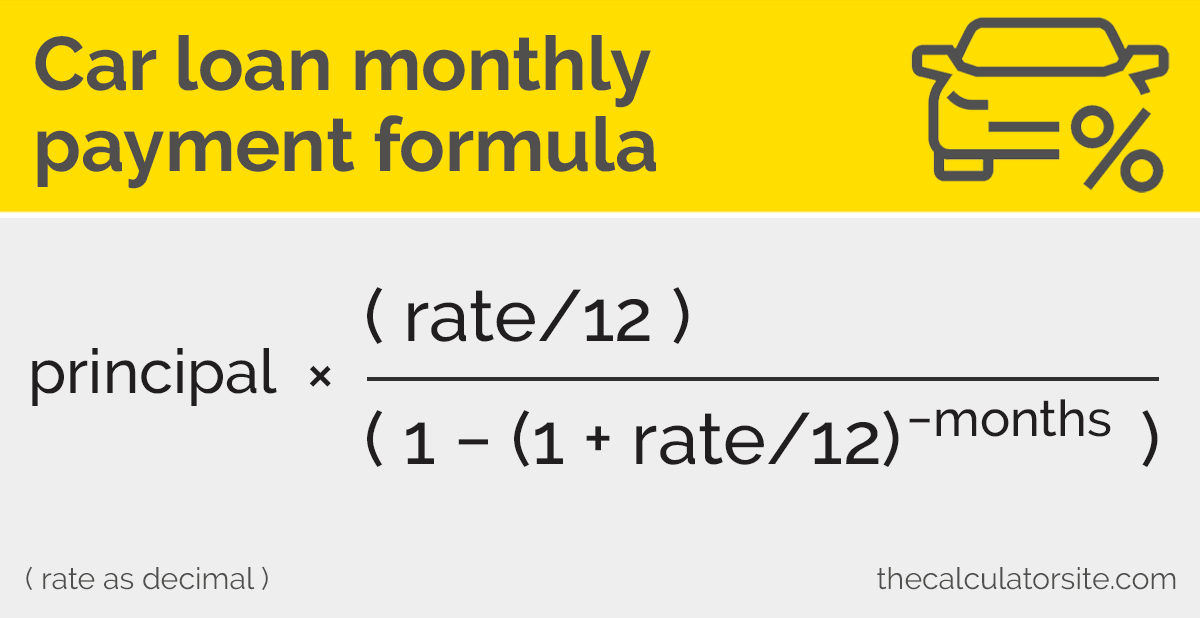
At its heart, any loan payment calculation, including car finance, relies on a standard amortisation formula. The formula calculates fixed monthly payments over a set period, ensuring that both principal and interest are gradually repaid. While you typically won’t manually calculate this (thankfully, there are tools for that!), understanding its components is key. The formula looks something like this:
M = P [ i(1 + i)^n ] / [ (1 + i)^n – 1]
Where:
-
M= Monthly Payment -
P= Principal Loan Amount (the amount you’re borrowing) -
i= Monthly Interest Rate (annual rate divided by 12) -
n= Total Number of Payments (loan term in years multiplied by 12)
Knowing this formula’s structure helps you appreciate how changes in the principal, interest rate, or loan term dramatically influence your monthly outflow. For instance, even a slight reduction in the interest rate can lead to significant savings over the life of a long-term loan. Conversely, extending the loan term to reduce monthly payments might result in paying substantially more in total interest.
Exploring Interest Rates (APR) and Loan Terms
The interest rate (APR) is arguably the most impactful variable after the principal amount itself. A lower APR means you’re paying less for the privilege of borrowing money. APR not only includes the nominal interest rate but also often encompasses certain fees, providing a more comprehensive view of the true cost of borrowing. Your credit score plays a pivotal role here; individuals with higher credit scores typically qualify for lower APRs. The loan term, as mentioned, is the length of time you have to repay the loan. While longer terms lead to lower monthly payments (by spreading the principal over more instalments), they inevitably mean you’ll pay more in total interest because the lender has more time to charge interest on the outstanding balance. Shorter terms, conversely, result in higher monthly payments but less overall interest paid. Striking the right balance between affordability and total cost is crucial.
Beyond the Principal: Fees and Additional Costs
While the principal, interest, and loan term form the backbone of your calculation, it’s vital not to overlook the array of additional fees and costs that can inflate your car finance payments or the total cost of ownership. These can include origination fees or document fees charged by the lender or dealership for processing the loan. Some agreements may have early repayment penalties if you choose to pay off the loan ahead of schedule. While not part of the finance calculation itself, remember to factor in mandatory insurance costs and road tax, which are non-negotiable aspects of car ownership. For PCP deals, there might be excess mileage charges or reconditioning fees if you return the car at the end of the term in a condition below the agreed standards. Always ask for a clear breakdown of all charges and ensure they are itemized in your finance agreement to avoid unpleasant surprises.
Practical Tools and Strategies for Calculation
Manually calculating car finance payments can be cumbersome and prone to error. Fortunately, a variety of practical tools and strategies exist to help you accurately determine your financial commitments and plan your budget effectively.

Utilizing Online Car Finance Calculators
The easiest and most common way to calculate car finance payments is through online calculators. Nearly every reputable car dealership website, financial institution, and independent finance comparison site offers a free, user-friendly calculator. You simply input the principal loan amount, the interest rate (APR), and the loan term, and the calculator instantly provides an estimated monthly payment. Many advanced calculators also allow you to factor in down payments, trade-in values, and even residual values for PCP deals, offering a highly accurate projection. These tools are invaluable for quickly comparing different scenarios – what if you put down an extra £1,000? How does a 60-month term compare to a 72-month term? Using multiple calculators from different sources can also help cross-reference results and ensure you’re getting a consistent estimate.
Spreadsheet Modeling for Personalized Insights
For those who prefer a more hands-on approach or need to integrate car finance into a broader personal budget, spreadsheet modeling (using programs like Microsoft Excel or Google Sheets) offers unparalleled flexibility. By setting up a simple spreadsheet, you can input all the variables (principal, APR, term, down payment) and use built-in financial functions, such as PMT (Payment), to calculate your monthly obligation. The PMT function takes the interest rate per period, the number of periods, and the present value of the loan.
For example, =-PMT(Rate/12, Term*12, Principal) will give you the monthly payment.
This method allows you to create sensitivity analyses, easily adjusting different variables to see their impact on your payments. You can also build out an amortisation schedule, showing how much of each payment goes towards principal vs. interest over time, giving you a detailed breakdown of your loan’s progression. It’s an excellent way to gain deep, personalized insights into your financial commitment and model various “what-if” scenarios before committing to a loan.
The Role of Pre-Approval in Budgeting
Securing pre-approval for car finance before you even step foot in a dealership is a highly recommended strategy that significantly aids in budgeting and calculation. Pre-approval means a lender has provisionally agreed to lend you a certain amount of money at a specific interest rate, based on your creditworthiness. This gives you a concrete budget to work with. You’ll know precisely how much you can afford to borrow and what your estimated monthly payments will be before you’re pressured into making a decision at the dealership. With pre-approval in hand, you can walk into negotiations with confidence, knowing your financing terms. It separates the car-buying process from the loan-shopping process, allowing you to focus purely on the vehicle’s price, rather than getting caught up in a combined negotiation that can obscure the true cost of each.
Factors That Influence Your Monthly Payment
Beyond the core variables of principal, interest, and term, several external factors play a significant role in determining the final amount of your monthly car finance payment and the overall cost of your loan. Understanding these can help you optimize your financial position.
Credit Score and Its Significance
Your credit score is perhaps the single most influential factor in determining the interest rate you’ll be offered for car finance. Lenders use your credit score as a quick indicator of your creditworthiness and your likelihood to repay the loan on time. A higher credit score (e.g., above 700 or 800 depending on the scoring model) typically signals to lenders that you are a low-risk borrower, enabling you to qualify for the most competitive interest rates (lower APRs). Conversely, a lower credit score might lead to higher interest rates, as lenders perceive a greater risk, which directly translates to higher monthly payments and a greater total cost over the loan term. Before applying for car finance, it’s always advisable to check your credit score, rectify any errors, and take steps to improve it if necessary. A few points increase in your score can translate into hundreds or even thousands of pounds saved in interest over the life of a car loan.
Vehicle Depreciation and Residual Value (PCP context)
While not directly impacting traditional HP or personal loan calculations, vehicle depreciation and its associated residual value are paramount in the calculation of PCP payments. Depreciation is the reduction in a car’s value over time due to wear and tear, mileage, and market factors. In a PCP agreement, your monthly payments largely cover the difference between the car’s initial price and its projected residual value (the car’s estimated value at the end of the contract term, also known as the Guaranteed Future Value or GFV). The higher the residual value, the lower the amount you’re financing and, consequently, the lower your monthly payments. Manufacturers often offer attractive PCP deals on vehicles known for holding their value well. Understanding depreciation helps you assess the true cost of ownership and make informed decisions about which vehicle offers better long-term value, especially if you plan to repeatedly use PCP deals.
Insurance and Maintenance Considerations
Though not directly part of the finance payment calculation, car insurance and maintenance costs are unavoidable and significant financial obligations that absolutely must be factored into your overall monthly budget when planning for a car purchase. Lenders will often require comprehensive insurance for the duration of the loan to protect their asset. The cost of insurance can vary wildly based on the vehicle’s make and model, your age, driving history, location, and desired coverage. Similarly, maintenance costs, including routine servicing, tyres, and potential repairs, should be anticipated. Newer cars typically have lower immediate maintenance costs but might have higher insurance premiums. Older cars might be cheaper to insure but could incur significant repair bills. Failing to account for these crucial expenditures can lead to financial strain, even if your car finance payments are manageable. Always obtain insurance quotes for the specific vehicle you are considering and research typical maintenance costs before finalising your purchase.
Making an Informed Decision and Managing Your Finance
Calculating car finance payments is a critical first step, but the journey to smart car ownership extends beyond mere arithmetic. Making an informed decision involves strategic negotiation, understanding the true long-term costs, and knowing your options for managing your finance over time.
Negotiating for Better Terms
The price presented for a car and its associated finance terms are rarely set in stone. Negotiating is a vital part of the car-buying process. Always aim to negotiate the price of the car first, independent of the finance. A lower purchase price directly translates to a smaller principal amount to finance, immediately reducing your monthly payments and total interest. Once the car price is agreed upon, then turn your attention to the finance terms. Armed with your pre-approval letter (if applicable) and knowledge of current market interest rates, you can leverage this information to negotiate for a lower APR from the dealership’s finance department. Don’t be afraid to walk away if the terms aren’t favourable; competition among lenders is fierce. Even a small reduction in the interest rate can save you a significant amount over a multi-year loan, so every percentage point counts.
Understanding the Total Cost of Ownership
Focusing solely on the monthly payment can be a dangerous trap. It’s crucial to understand the total cost of ownership (TCO). TCO encompasses not just the car finance payments but also every other expense associated with owning and operating the vehicle over its lifespan. This includes the car’s purchase price (or total amount paid for finance), interest charges, down payment, trade-in value, insurance premiums, road tax, fuel costs, maintenance, repairs, and even depreciation. Calculating the TCO allows you to compare vehicles on a holistic basis, revealing which option truly offers the best long-term value, rather than just the lowest monthly payment. A car with slightly higher payments but significantly lower insurance, fuel, and maintenance costs might prove to be cheaper in the long run. Use online TCO calculators and diligently research all these components for any car you consider.
Strategies for Early Repayment or Refinancing
Life circumstances change, and so too might your financial capacity. If you find yourself in a stronger financial position, early repayment of your car loan can be a highly effective strategy. Paying off your loan sooner reduces the total amount of interest you’ll pay, saving you money. However, be mindful of any early repayment penalties in your loan agreement. Some loans allow penalty-free overpayments or full early settlement. Another strategy to consider is refinancing. If your credit score has improved significantly since you first took out the loan, or if interest rates have dropped, you might be eligible for a new loan with a lower APR. Refinancing replaces your old loan with a new one, potentially lowering your monthly payments or reducing the total interest paid. Always calculate the potential savings from refinancing versus any new fees associated with the new loan to ensure it’s a financially sound move.
In conclusion, understanding how to calculate car finance payments is a fundamental skill for responsible vehicle ownership. By grasping the key components, utilizing available tools, and considering all influencing factors, you can approach the car market with confidence, secure terms that suit your budget, and ultimately drive away with peace of mind.
aViewFromTheCave is a participant in the Amazon Services LLC Associates Program, an affiliate advertising program designed to provide a means for sites to earn advertising fees by advertising and linking to Amazon.com. Amazon, the Amazon logo, AmazonSupply, and the AmazonSupply logo are trademarks of Amazon.com, Inc. or its affiliates. As an Amazon Associate we earn affiliate commissions from qualifying purchases.