
Purchasing a car is one of the most significant financial decisions many individuals make, second only perhaps to buying a home. Beyond the initial sticker price, the total cost of car ownership is heavily influenced by how you finance it. At the heart of this financing is the Annual Percentage Rate (APR) – a figure that can either save you thousands over the life of your loan or cost you dearly. Understanding how to calculate and interpret APR is not just a useful skill; it’s an essential safeguard for your financial well-being.
Many consumers mistakenly focus solely on the monthly payment or the advertised interest rate, overlooking the true cost encapsulated by the APR. This comprehensive guide aims to demystify car loan APR, breaking down its components, demonstrating how to calculate it, and equipping you with the knowledge to make informed decisions that benefit your wallet. From dissecting the numbers to understanding the external factors that influence your rate, we’ll navigate the complexities of car financing together, ensuring you drive away with not just a new vehicle, but also a solid financial understanding.
Understanding the Basics: What is Car Loan APR?
Before diving into calculations, it’s crucial to grasp what APR truly represents in the context of a car loan. Simply put, APR is the total annual cost of borrowing money, expressed as a percentage. It’s more than just the interest rate; it’s a holistic measure designed to give you a clearer picture of the loan’s expense.
APR vs. Interest Rate: The Key Difference
The terms “APR” and “interest rate” are often used interchangeably, but they are not the same. The interest rate is the percentage charged by the lender for borrowing the principal amount. It directly impacts your monthly payment and the total interest you pay over the loan term.
The APR, however, includes the interest rate plus any additional fees associated with the loan, spread out over the loan term. These fees can include origination fees, processing fees, documentation fees, and sometimes even credit report fees. By federal law, lenders are required to disclose the APR, giving consumers a standardized way to compare the true cost of different loan offers. If a loan has no additional fees beyond the interest, then the APR will be the same as the interest rate. But for most car loans, the APR will be slightly higher than the stated interest rate.
Why APR Matters for Your Car Purchase
APR is the single most important figure to consider when comparing car loan offers because it reflects the actual cost of borrowing. Focusing solely on the interest rate can be misleading. For instance, two lenders might offer seemingly identical interest rates, but if one tacks on significant fees while the other does not, their APRs will differ considerably. A higher APR means a higher overall cost for the same principal amount, directly impacting your total repayment and the equity you build in your vehicle.
A lower APR translates into lower monthly payments and less money paid over the life of the loan. This means more disposable income for you and a more financially sustainable car purchase. Understanding APR empowers you to negotiate better terms and avoid hidden costs that can inflate the price of your car beyond its value.
Components Included in APR
To truly understand APR, it’s helpful to break down what typically gets rolled into this all-encompassing rate. While the core component is the interest charged on the principal, other fees can significantly inflate the APR:
-
Interest: This is the primary cost of borrowing, determined by the lender based on market rates, your creditworthiness, and the loan term.
-
Origination Fees: A fee charged by the lender for processing a new loan application.
-
Documentation Fees (Doc Fees): Charged by dealerships or lenders for preparing and processing the loan paperwork.
-
Application Fees: Sometimes charged just for submitting your loan application, regardless of approval.
-
Underwriting Fees: Fees associated with the lender’s evaluation of your credit and risk profile.
-
Credit Report Fees: The cost of pulling your credit report, sometimes passed on to the borrower.
It’s important to note that certain costs, like sales tax, registration fees, and extended warranty purchases, are not typically included in the APR calculation, although they do add to the total cost of buying a car. The APR specifically pertains to the cost of financing itself.
The Simple Path: Calculating Basic APR
While modern financial tools make calculating APR relatively straightforward, understanding the underlying mechanics provides invaluable insight. For a truly simple interest loan without additional fees, the APR equals the interest rate. However, when fees are involved, the calculation becomes more nuanced.
Manual Calculation for Simple Interest Loans
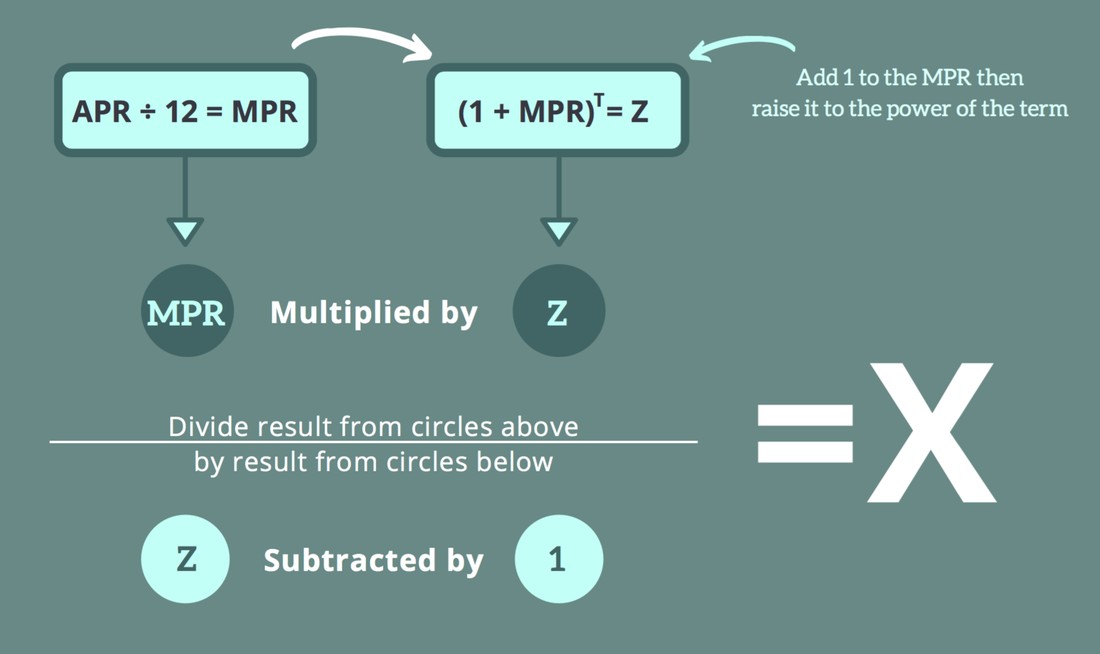
Let’s start with a foundational understanding. For a basic loan where interest is the only cost, the calculation is conceptually simple, though the actual formula for monthly payments can be complex. The standard formula for calculating a fixed monthly payment for a loan (P) over (n) months at a monthly interest rate (i) is:
$M = P [i(1+i)^n] / [(1+i)^n – 1]$
Where:
-
M = Monthly payment
-
P = Principal loan amount
-
i = Monthly interest rate (annual rate divided by 12)
-
n = Total number of payments (loan term in months)
Once you have your monthly payment, you can work backward to find the effective APR. However, this is largely simplified for practical purposes when additional fees are added.
The Role of Loan Term and Principal
Both the principal loan amount and the loan term are critical variables that influence your total interest paid, and therefore, indirectly, the APR you perceive. A larger principal means more money to accrue interest. A longer loan term, while potentially offering lower monthly payments, almost always results in paying significantly more interest over the life of the loan, thereby increasing the total cost of borrowing. A higher total cost, when spread over the same principal, can be seen as an effectively higher “true” cost of borrowing, which is what APR aims to capture.
Example Calculation Walkthrough
Let’s illustrate with a hypothetical scenario to demonstrate how fees elevate the APR above the nominal interest rate.
Suppose you’re looking at a car loan with the following terms:
-
Principal Loan Amount (P): $20,000
-
Stated Annual Interest Rate: 5.00%
-
Loan Term (n): 60 months (5 years)
-
One-time Origination Fee: $200
-
Documentation Fee: $50
Step 1: Calculate the monthly payment based on the stated interest rate.
Using a loan payment calculator or the formula above with a 5.00% annual rate (0.05/12 = 0.00416667 monthly rate), the monthly payment would be approximately $377.42.
Total interest paid over 60 months: ($377.42 * 60) – $20,000 = $2,645.20
Step 2: Add all non-interest fees to the total cost.
Total fees = $200 (Origination) + $50 (Documentation) = $250
Step 3: Calculate the total cost of borrowing.
Total cost = Total interest + Total fees = $2,645.20 + $250 = $2,895.20
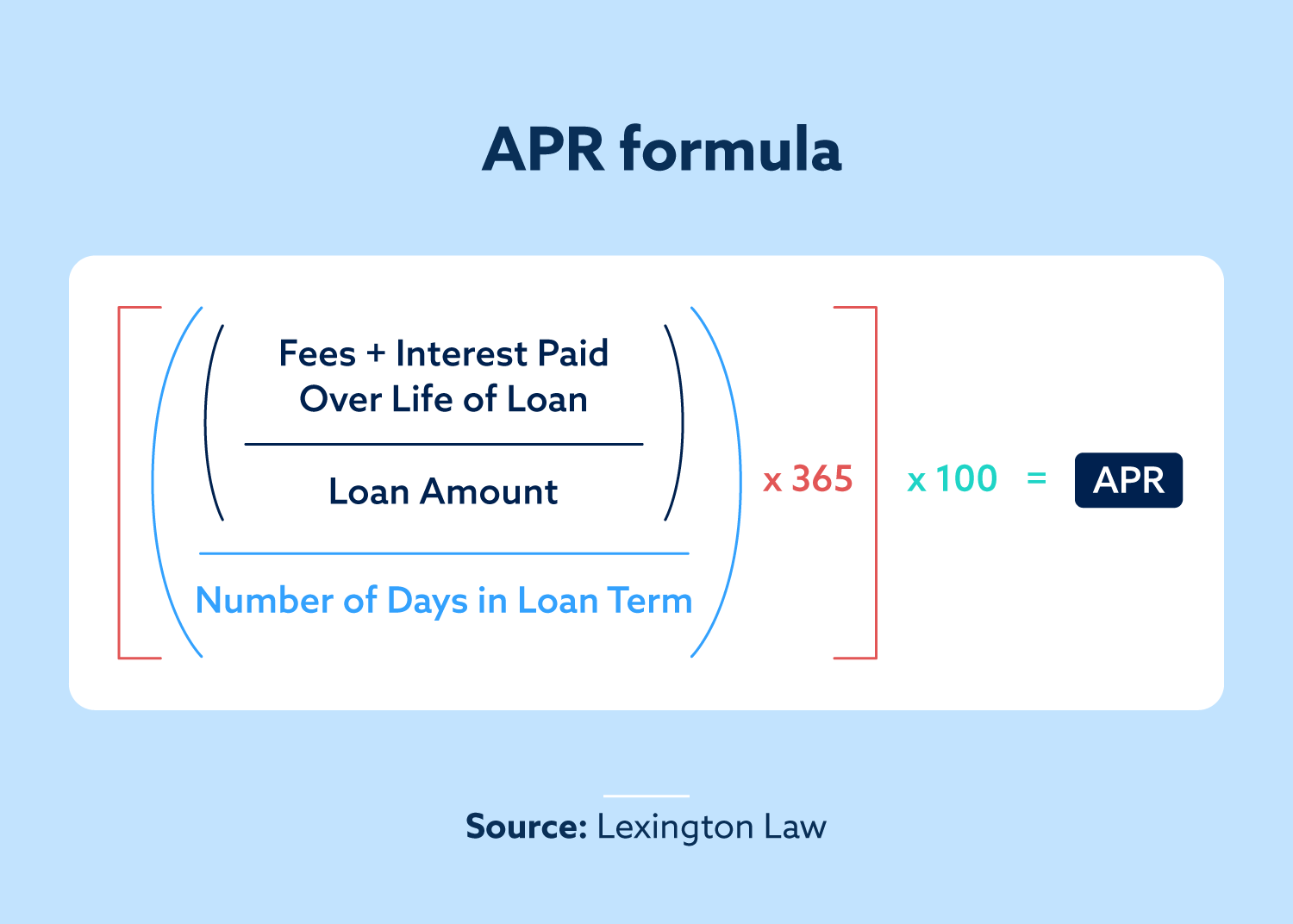
Step 4: Use a financial calculator or APR formula to find the APR.
To calculate the actual APR, you need to think of the fees as additional interest. Essentially, you’re borrowing $20,000, but paying back as if you borrowed slightly more at a higher rate. Online APR calculators are the easiest way to do this. You input the principal amount, the interest rate, the loan term, and the total amount of fees.
If we plug in a loan amount of $20,000, a loan term of 60 months, and total payments of ($377.42 * 60) + $250 = $22,895.20 (Principal + Interest + Fees), an APR calculator would reveal an APR of approximately 5.45%.
Notice how the 5.00% interest rate became 5.45% APR due to the inclusion of fees. This seemingly small difference can add up over the life of the loan. This example highlights why comparing APRs, not just interest rates, is crucial.
Beyond Simple: Factors Influencing Your Car Loan APR

The APR you’re offered isn’t a universal figure; it’s highly personalized. Several key factors weigh heavily on the rate lenders are willing to extend to you. Understanding these can empower you to improve your standing before even stepping into a dealership.
Your Credit Score: The Ultimate Determinant
Your credit score is arguably the most significant factor influencing your car loan APR. Lenders use it to assess your creditworthiness and the risk associated with lending you money.
-
Excellent Credit (780+): Borrowers with excellent credit scores typically qualify for the lowest APRs, as they represent the lowest risk to lenders.
-
Good Credit (670-779): Still qualifies for competitive rates, though perhaps not the absolute best.
-
Fair Credit (580-669): May face higher APRs due to increased perceived risk.
-
Poor Credit (Below 580): Likely to receive significantly higher APRs, or may struggle to get approved for a loan at all.
A difference of even 100 points on your credit score can translate to several percentage points in APR, significantly impacting your total cost.
Down Payment and Loan-to-Value (LTV) Ratio
The amount of money you put down upfront as a down payment also plays a crucial role. A larger down payment reduces the principal loan amount, which in turn lowers the lender’s risk. This lower risk often translates into a more favorable APR.
The Loan-to-Value (LTV) ratio compares the loan amount to the car’s value. A high LTV (e.g., financing 100% of the car’s value) indicates higher risk for the lender, potentially leading to a higher APR. Conversely, a lower LTV (e.g., a substantial down payment) can secure a better rate.
Loan Term and Repayment Structure
The length of your loan, or its term, impacts both your monthly payment and the total interest paid. While a longer loan term (e.g., 72 or 84 months) can lower your monthly payments, it typically results in a higher overall interest cost and often a slightly higher APR. Lenders perceive longer terms as riskier because more can happen over an extended period, increasing the chance of default. Shorter terms (e.g., 36 or 48 months) usually come with lower APRs but higher monthly payments.
Lender Type and Competitive Rates
Not all lenders are created equal. The type of institution you borrow from can influence the APR offered:
-
Banks: Often offer competitive rates, especially if you have an existing relationship with them.
-
Credit Unions: Known for member-focused services and often offer some of the lowest APRs due to their non-profit status.
-
Dealership Financing: Convenient, as it’s done on-site, but may not always offer the most competitive rates. They often work with multiple lenders, so comparison is key.
-
Online Lenders: Have become increasingly popular, offering quick approvals and competitive rates, often with a wider range of options for varying credit scores.
Shopping around and getting quotes from multiple types of lenders is critical to finding the best APR.
Fees and Charges: Unpacking the Hidden Costs
As discussed, fees beyond the interest rate inflate the APR. These can vary significantly by lender and even by state. Be vigilant about:
-
Origination Fees: Common with many lenders.
-
Application Fees: Less common but can appear.
-
Processing or Document Fees: Often charged by dealerships.
-
Prepayment Penalties: Some loans penalize you for paying off the loan early. While not part of the APR calculation, they impact total cost and should be avoided.
Always ask for a detailed breakdown of all fees associated with the loan to ensure you understand every component contributing to the final APR.
Practical Tools and Resources for APR Calculation
While understanding the mechanics of APR is important, manually calculating it with all its nuances can be cumbersome. Fortunately, a variety of accessible tools can simplify this process.
Utilizing Online APR Calculators
For most consumers, online APR calculators are the most practical and efficient way to determine the true cost of a loan. Websites like Bankrate, NerdWallet, and various bank/credit union sites offer free, user-friendly tools. You typically input:
-
The principal loan amount
-
The stated interest rate
-
The loan term in months
-
Any additional loan fees (origination, documentation, etc.)
The calculator then instantly provides the accurate APR, allowing you to quickly compare different offers side-by-side. Always use these tools to confirm the APR quoted by a lender.
Lender Disclosures and Loan Documents
By law, lenders are required to provide you with clear disclosures, including the Annual Percentage Rate (APR). This information is typically found in the loan agreement or a Truth-in-Lending Act (TILA) disclosure statement. Before signing any loan documents, meticulously review these disclosures. The APR presented here is the official figure you should rely on. If the APR quoted verbally or in initial estimates differs significantly from the disclosure, ask for clarification. Don’t be afraid to question anything you don’t understand.
Spreadsheet Formulas for Advanced Users
For those comfortable with spreadsheets (like Microsoft Excel or Google Sheets), you can create your own APR calculator using built-in financial functions. The RATE function is particularly useful. You can calculate the periodic interest rate, and then multiply by the number of periods in a year to get an approximation of the APR. For a more precise APR that accounts for fees, you would typically use an iterative solver or specialized financial software, treating the fees as a reduction in the initial principal received. While this offers the most control, for most car buyers, online calculators suffice. An example formula might look like: =RATE(nper, pmt, pv, [fv], [type]) where pv (present value) would be adjusted to account for fees.
Strategies to Secure a Favorable Car Loan APR
Knowledge about APR is powerful, but applying that knowledge through strategic action is where you truly save money. There are several proactive steps you can take to position yourself for the best possible car loan APR.
Improving Your Creditworthiness
Since your credit score is the most significant factor, focusing on improving it before applying for a car loan can yield substantial savings.
-
Check Your Credit Report: Obtain free copies of your credit report from AnnualCreditReport.com. Review them for errors and dispute any inaccuracies.
-
Pay Bills on Time: Payment history is the largest component of your credit score.
-
Reduce Existing Debt: Lowering your credit utilization (the amount of credit you’re using compared to your available credit) can boost your score.
-
Avoid New Credit Inquiries: Opening new credit accounts right before applying for a car loan can temporarily ding your score.
Even a few months of diligent credit management can significantly improve your score and lower your potential APR.
Shopping Around for Lenders
Never take the first loan offer you receive. Just as you compare car models and prices, you should compare loan offers from multiple lenders.
-
Get Pre-Approved: Seek pre-approval from your bank, credit union, and online lenders before visiting a dealership. Pre-approvals give you a concrete loan offer (including the APR) that you can bring to the dealer, acting as leverage.
-
Compare All Terms: Don’t just look at the APR. Compare loan terms, monthly payments, and any specific conditions or penalties.
-
Understand Soft vs. Hard Inquiries: Most pre-approvals use a “soft credit inquiry” which doesn’t affect your score. Once you formally apply, it becomes a “hard inquiry,” which can slightly lower your score. However, multiple hard inquiries for the same type of loan within a short period (typically 14-45 days, depending on the scoring model) are usually treated as a single inquiry, so comparison shopping for loans won’t hurt your score excessively if done within a reasonable timeframe.
Negotiating Terms Beyond the Sticker Price
Your negotiation power extends beyond the car’s price; it applies to financing too.
-
Have Your Pre-Approval Ready: This shows the dealer you’re a serious buyer with financing already secured, forcing them to compete if they want your business.
-
Separate Car Price from Financing: Try to negotiate the car’s purchase price first. Once that’s settled, then discuss financing options. Mixing them can make it harder to see where you’re getting a good deal (or not).
-
Question All Fees: Ask about every fee included in the loan. Some are non-negotiable, but others might be, especially if you have a strong negotiating position.
Understanding Pre-approvals vs. Dealer Financing
Pre-approvals from external lenders give you a baseline APR to compare against any financing offers from the dealership. Dealerships often have relationships with multiple lenders and may be able to offer competitive rates, sometimes even special promotional APRs. However, they also have an incentive to maximize their profit on the financing. By having your own pre-approval, you ensure you have a fallback and can identify if the dealer’s offer is truly superior or if it’s inflated. Always choose the option with the lowest overall APR and favorable terms that meet your financial goals.
Calculating APR on a car loan isn’t just an academic exercise; it’s a critical step in prudent financial management. By understanding what APR entails, how it’s calculated, and the factors that influence it, you empower yourself to make smarter choices that protect your wealth. Don’t let confusing jargon or hurried sales tactics deter you from scrutinizing every aspect of your car loan. With the insights provided here, you’re now better equipped to negotiate, compare, and ultimately secure the best possible financing for your next vehicle, ensuring a smoother ride for both you and your finances.
aViewFromTheCave is a participant in the Amazon Services LLC Associates Program, an affiliate advertising program designed to provide a means for sites to earn advertising fees by advertising and linking to Amazon.com. Amazon, the Amazon logo, AmazonSupply, and the AmazonSupply logo are trademarks of Amazon.com, Inc. or its affiliates. As an Amazon Associate we earn affiliate commissions from qualifying purchases.