
In the world of finance, numbers are the language of progress. Whether you are tracking the growth of a retirement account, evaluating a salary offer, or measuring the year-over-year revenue of a small business, the ability to quantify growth is essential. While raw numbers tell part of the story, percentages provide the context necessary for informed decision-making. Knowing that an investment grew by $1,000 is helpful, but knowing that the $1,000 represents a 10% increase provides a much clearer picture of performance.
Calculating a percentage increase is one of the most fundamental skills in financial literacy. It allows investors, entrepreneurs, and earners to strip away the noise and focus on the rate of change. This guide explores the mathematical mechanics of percentage increases and demonstrates how to apply this logic to various sectors of your financial life.
The Fundamental Formula: Mastering the Mechanics of Change
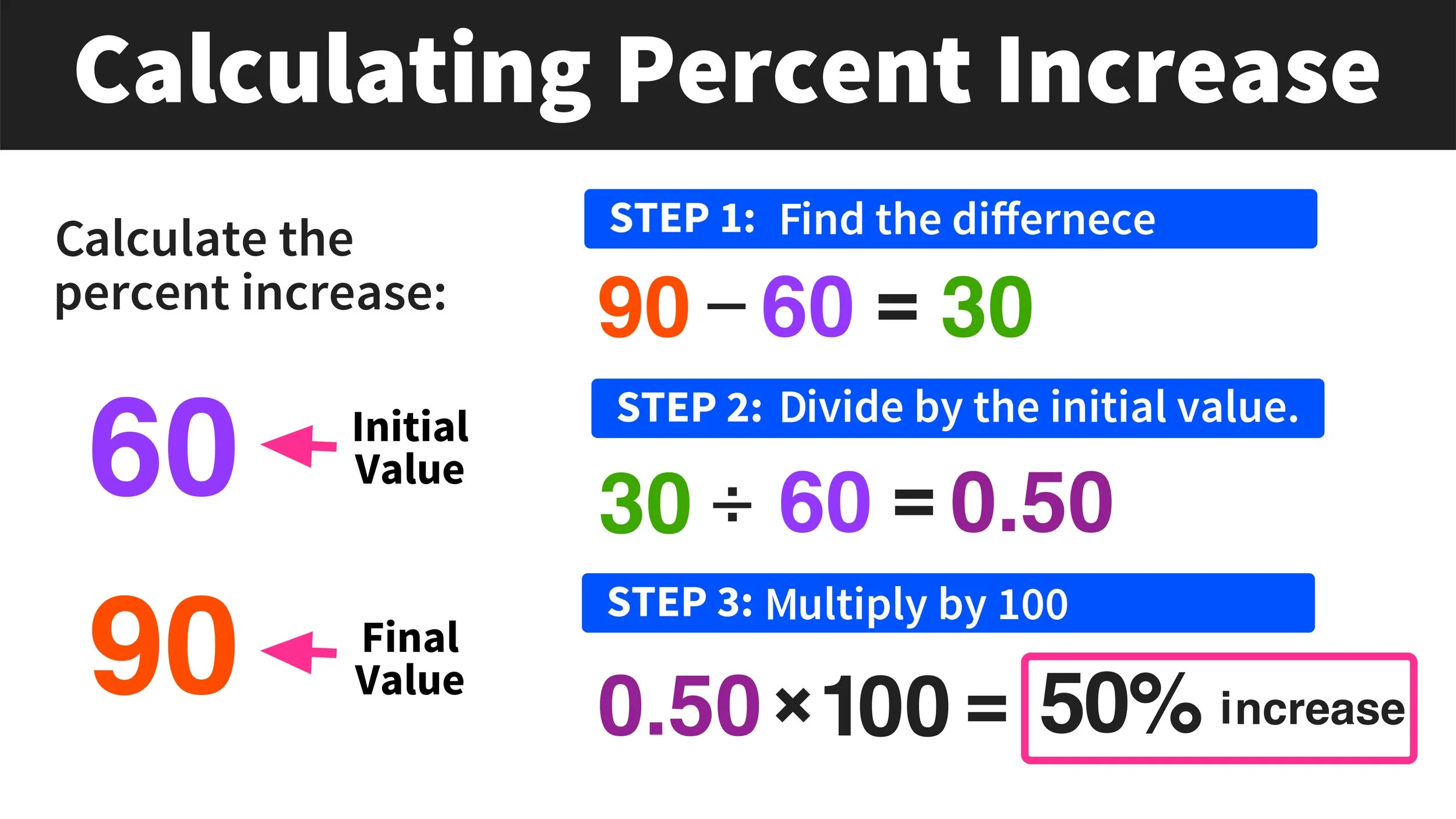
Before applying percentage increases to complex investment portfolios or corporate balance sheets, one must master the basic arithmetic. A percentage increase represents the difference between a final value and an initial value, expressed as a fraction of the initial value.
The Step-by-Step Calculation
The formula for calculating a percentage increase is straightforward:
((New Value – Original Value) / Original Value) × 100 = Percentage Increase
To execute this calculation accurately, follow these three steps:
- Find the Difference: Subtract the original (starting) value from the new (ending) value. This result is the “absolute increase.”
- Divide by the Original: Divide the absolute increase by the original value. This gives you a decimal representation of the growth.
- Convert to a Percentage: Multiply the decimal by 100 to arrive at the final percentage.
Why the “Original Value” Matters
A common mistake in financial calculations is dividing by the new value instead of the original one. In finance, we are always measuring growth relative to where we started. If you have $100 and it grows to $150, your growth is based on that initial $100. Dividing the $50 gain by the original $100 results in a 50% increase. If you were to incorrectly divide by the new $150, you would get 33.3%, which provides a misleading view of your asset’s performance.
Understanding Percentage Points vs. Percentages
In financial news, you will often hear about interest rates rising by “half a percent.” It is vital to distinguish between a percentage increase and a percentage point increase. If a mortgage rate moves from 4% to 5%, that is a 1-percentage-point increase. However, in terms of the cost of interest, that is a 25% increase in the rate itself ((5-4)/4 = 0.25). Distinguishing between these two concepts is critical for accurate financial planning and debt management.
Percentage Growth in Personal Finance: Salary, Savings, and Inflation
Applying the percentage increase formula to your personal life is the first step toward building a robust financial plan. It allows you to move beyond “feeling” like you are making progress and start proving it with data.
Evaluating Salary Increases and Total Compensation
When you receive a raise, the absolute dollar amount is often what catches your eye first. However, calculating the percentage increase is what helps you determine if your income is truly keeping pace with your lifestyle and the economy. If you receive a $5,000 raise on a $50,000 salary, that is a 10% increase. If you receive the same $5,000 raise on a $100,000 salary, it is only a 5% increase.
Understanding this percentage is crucial when negotiating. Most companies budget for annual “cost-of-living” adjustments (COLAs) based on percentages. If you know the industry average for raises is 4% and you are offered 2%, you have a data-backed foundation for negotiation.
Tracking the Impact of Inflation
Inflation is essentially a percentage increase in the price of goods and services over time. To maintain your standard of living, your income must increase at a percentage rate equal to or higher than the inflation rate (often measured by the Consumer Price Index, or CPI).
If inflation is at 6% annually, and your savings account is only earning 1% interest, your “real” wealth is actually decreasing. By calculating the percentage increase of your expenses versus the percentage increase of your income, you can identify “lifestyle creep” or potential deficits before they become catastrophic.
Measuring Savings Rate Progress
Financial advisors often recommend saving a specific percentage of your income (e.g., 15% or 20%). As your income grows, your savings should grow proportionally. By calculating the percentage increase in your total annual savings, you can ensure that you are scaling your future security alongside your current earnings.
Percentage Increases in Investing: ROI and Portfolio Performance
For the investor, percentage increase is the ultimate metric. It allows for the comparison of wildly different asset classes, such as comparing the growth of a single share of a high-priced stock to the yield of a government bond.
Calculating Return on Investment (ROI)
The most common application of percentage increase in the market is the Return on Investment (ROI). Whether you are flipping a house or buying Bitcoin, the formula remains the same.
- Initial Investment: $10,000
- Current Value: $12,500
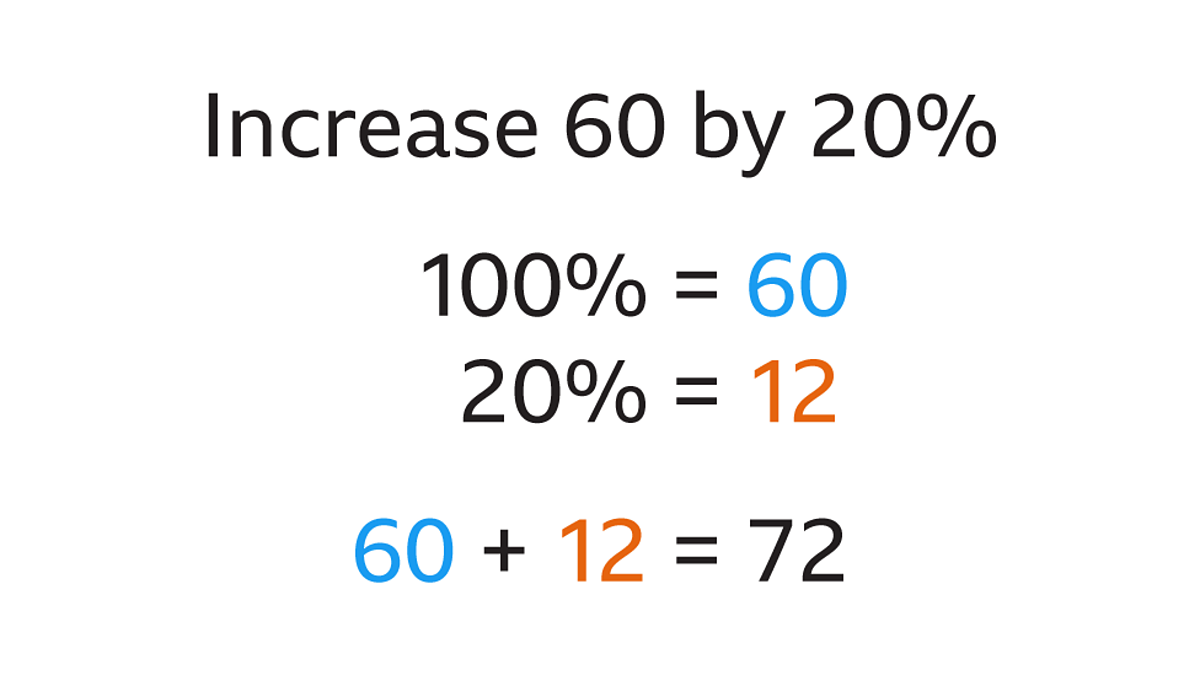
- Calculation: (($12,500 – $10,000) / $10,000) * 100 = 25% increase.
This 25% figure is the “nominal” return. To get a truly professional view of your investment, you must also consider the timeframe. A 25% increase over one year is excellent; a 25% increase over ten years is significantly less impressive when compared to historical market averages.
Dividend Growth Investing
For income-focused investors, the “Dividend Growth Rate” is a vital percentage. This measures how much a company increases its payout to shareholders annually. If a company paid $1.00 per share last year and $1.05 this year, that is a 5% dividend increase. Investors look for companies that consistently increase their dividends at a percentage that outpaces inflation, ensuring a growing stream of passive income.
Portfolio Rebalancing and Asset Allocation
A well-diversified portfolio consists of various asset classes (stocks, bonds, real estate) held in specific percentages. Over time, certain assets will experience a higher percentage increase than others, causing your portfolio to become “top-heavy” in one area. By calculating the percentage growth of each sector, you can identify when it is time to sell a portion of your winners to reinvest in undervalued areas, maintaining your desired risk profile.
Business Finance: Revenue, Profitability, and Scalability
In a corporate or entrepreneurial setting, percentage increases are the primary Key Performance Indicators (KPIs) used to communicate health to stakeholders and investors.
Year-Over-Year (YoY) Revenue Growth
Investors rarely care about a single month of high sales; they look for trends. Year-over-year growth compares a specific period (like Q3 of 2023) to the same period in the previous year (Q3 of 2022). This accounts for seasonality—for example, a retail business will almost always see a percentage increase in sales in December compared to November, but the real test is whether they saw an increase compared to the previous December.
Improving Profit Margins
A business can increase its revenue while simultaneously losing money if its expenses are increasing at a higher percentage rate. This is why “Margin Expansion” is a critical concept. If a business has a 10% profit margin and manages to increase it to 12% through efficiency, that is a 20% increase in the efficiency of the business ((12-10)/10). In the eyes of an acquisition specialist or a stock analyst, a percentage increase in profit margin is often more valuable than a percentage increase in raw revenue.
Customer Acquisition Costs (CAC) vs. Lifetime Value (LTV)
For startups, the relationship between the cost to acquire a customer and the value that customer brings is measured in percentages. If your CAC increases by 10% while your LTV remains stagnant, your business model is becoming less sustainable. Calculating these percentage shifts allows business owners to pivot their marketing strategies before their cash reserves are depleted.
The Strategic Importance of Financial Literacy
Understanding how to calculate and interpret percentage increases is more than just a math exercise; it is a strategic advantage. It shifts your perspective from a “fixed” mindset (how much money do I have?) to a “growth” mindset (at what rate is my wealth expanding?).
Overcoming Numerical Bias
Humans are naturally prone to “nominal loss aversion,” where we focus on the total dollar amount lost or gained. However, a $500 loss on a $1,000 investment is a 50% disaster, while a $500 loss on a $100,000 portfolio is a negligible 0.5% fluctuation. By always converting changes to percentages, you can maintain emotional equilibrium during market volatility. You learn to ignore the “noise” of small dollar changes and focus on the “signal” of significant percentage shifts.
Setting Quantifiable Financial Goals
“I want to make more money next year” is a vague desire. “I want to increase my net worth by 15% next year” is a measurable goal. By using percentages, you can work backward to determine exactly what actions are required. If you need a 15% increase, you can decide how much of that will come from a salary percentage increase, how much from investment growth, and how much from a percentage reduction in expenses.

Conclusion: The Power of Proportional Thinking
The ability to calculate an increase as a percentage is a fundamental pillar of financial competence. It provides the framework for comparing investments, negotiating fair compensation, and auditing the health of a business. In an era where financial data is more accessible than ever, the winners are those who can interpret that data correctly. By mastering this simple formula and applying it across your financial landscape, you move from being a passive observer of your bank account to an active manager of your economic future. Remember: in finance, it’s not just about how much you grow; it’s about the rate at which you rise.
aViewFromTheCave is a participant in the Amazon Services LLC Associates Program, an affiliate advertising program designed to provide a means for sites to earn advertising fees by advertising and linking to Amazon.com. Amazon, the Amazon logo, AmazonSupply, and the AmazonSupply logo are trademarks of Amazon.com, Inc. or its affiliates. As an Amazon Associate we earn affiliate commissions from qualifying purchases.