
In the intricate world of finance, understanding percentages isn’t just a useful skill; it’s a fundamental pillar upon which sound financial decisions are built. From deciphering the true cost of a discounted item to estimating interest accrual on a loan or calculating investment returns, the ability to derive an absolute amount from a given percentage is indispensable. This guide will demystify the process, providing clear methodologies and illustrating practical applications across personal finance, business, and investing, empowering you to navigate your financial landscape with newfound confidence and precision.
The Fundamental Importance of Percentage Calculations in Finance
Percentages are a universal language of proportion and change, critical for comparing disparate figures and understanding relative magnitudes. In finance, they move beyond abstract mathematics to become tangible tools that directly impact our wallets and financial strategies. Without a firm grasp of how to calculate an amount from a percentage, individuals and businesses alike are at a significant disadvantage, unable to accurately assess opportunities, risks, or performance.
Everyday Financial Decisions
Consider the multitude of financial interactions we encounter daily. A “20% off” sale, a “15% tip,” a “3% annual interest rate” on a savings account, or a “28% income tax bracket” – all these figures are expressed as percentages. To understand their real-world impact – how much money you save, how much you should pay, how much your savings grow, or how much tax you owe – requires converting these percentages back into concrete dollar amounts. This basic calculation empowers consumers to make informed purchasing decisions, manage their budgets effectively, and avoid costly misunderstandings. It’s the difference between blindly accepting a number and truly comprehending its financial implications.
Business and Investment Insights
For businesses, calculating amounts from percentages is even more critical, forming the backbone of pricing strategies, profit analysis, and financial reporting. Businesses use percentages to determine profit margins, calculate sales tax, set commission structures, and analyze growth rates. In the realm of investing, percentages dictate everything from portfolio allocation and dividend yields to capital gains and losses. Investors rely on these calculations to evaluate potential returns, assess risk exposure, and track the performance of their holdings. A miscalculation, or a lack of understanding, can lead to suboptimal decisions, missed opportunities, or significant financial losses. Mastery of this skill is, therefore, not merely academic but a prerequisite for financial literacy and success in any monetary endeavor.
Mastering the Core Calculation Methods
While seemingly complex, calculating an amount from a percentage boils down to a few straightforward methods. Understanding these core approaches will equip you to tackle any percentage-related financial problem with ease and accuracy.
The Basic Formula: Percentage as a Decimal
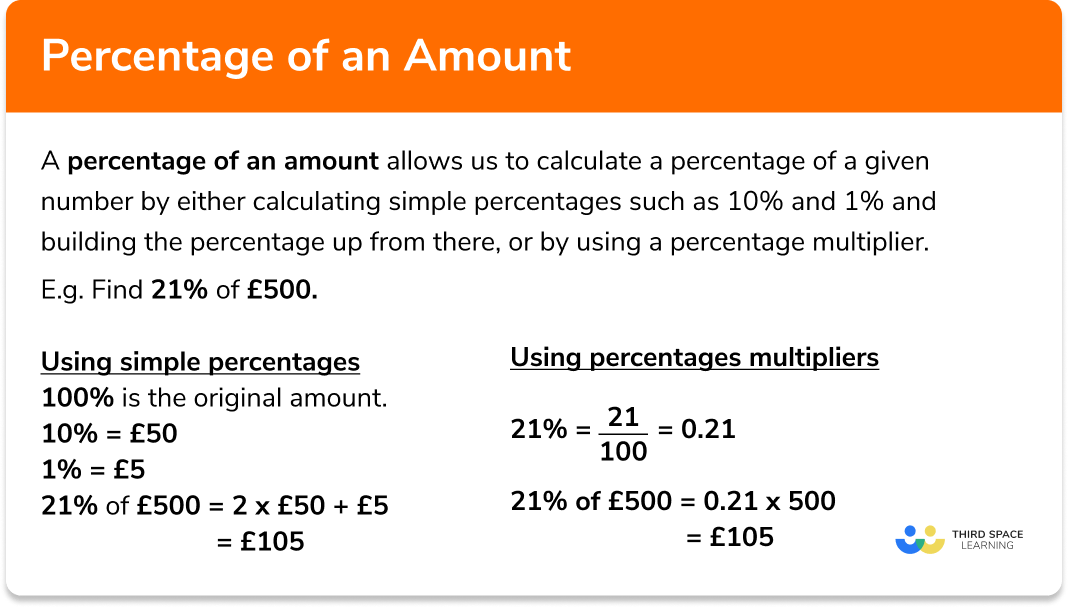
The most common and arguably the simplest method involves converting the percentage into its decimal equivalent before performing multiplication. This approach is widely applicable and forms the basis for many financial software functions.
The formula is: Amount = Percentage (as a decimal) × Total Value
To convert a percentage to a decimal, you simply divide it by 100 (or move the decimal point two places to the left).
- For example, 25% becomes 0.25.
- 7% becomes 0.07.
- 120% becomes 1.20.
Let’s illustrate with an example: You want to calculate 15% of $200.
- Convert 15% to a decimal: 15 / 100 = 0.15.
- Multiply the decimal by the total value: 0.15 × $200 = $30.
So, 15% of $200 is $30. This method is intuitive and direct, making it a go-to for quick calculations.
The Proportion Method
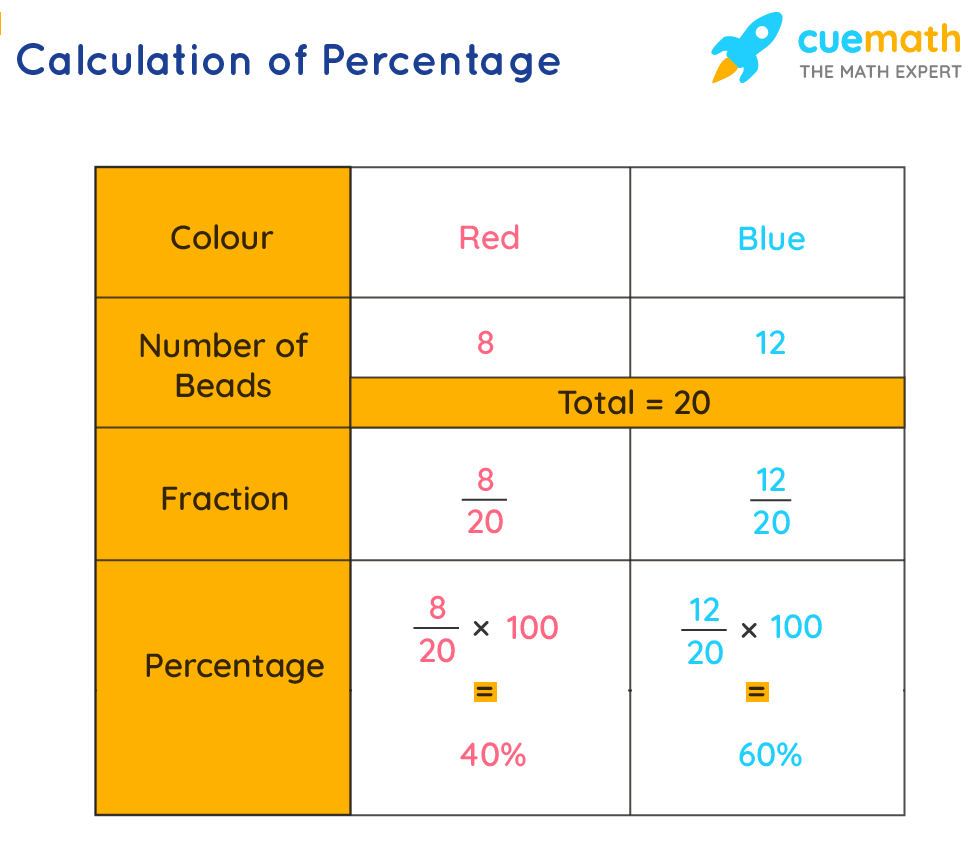
Another powerful method is using proportions. This approach frames the problem as a ratio, where the percentage is a part of 100, and the unknown amount is a part of the total value. This method is particularly useful when you need to visualize the relationship between the parts and the whole.
The formula is: (Percentage / 100) = (Amount / Total Value)
To find the amount, you can rearrange the formula: Amount = (Percentage × Total Value) / 100
Using the same example: Calculate 15% of $200.
- Set up the proportion: 15 / 100 = Amount / $200.
- Cross-multiply: 100 × Amount = 15 × $200.
- Simplify: 100 × Amount = $3000.
- Solve for Amount: Amount = $3000 / 100 = $30.
Both methods yield the same result, confirming their validity. The proportion method can be especially helpful when one of the other variables (percentage or total value) is unknown, allowing for flexible problem-solving.
Using a Calculator Efficiently
While manual calculations are excellent for understanding the underlying principles, financial tools and calculators are indispensable for speed and accuracy in real-world scenarios. Most standard calculators have a “%” button, which can simplify the process, though it’s crucial to understand how your specific calculator functions.
Typically, to calculate 15% of $200:
- Enter the total value: 200.
- Press the multiplication key: ×.
- Enter the percentage: 15.
- Press the percentage key: %.
- The result should be 30.
Some calculators might require you to enter 200 * 0.15 directly. Always test your calculator’s percentage function with a known calculation to ensure you understand its specific logic. Financial calculators and spreadsheet software (like Microsoft Excel or Google Sheets) offer even more sophisticated functions, often allowing you to input percentages directly without manual decimal conversion, streamlining complex financial modeling.
Practical Applications in Personal Finance
Understanding how to calculate an amount from a percentage isn’t just an academic exercise; it’s a crucial life skill that empowers you to manage your personal finances more effectively, make smarter spending decisions, and plan for a secure future.

Unlocking Discounts and Sales
One of the most immediate applications is understanding sales and discounts. When you see “25% off” on an item priced at $80, you can quickly calculate your savings and the final price.
- Savings: 0.25 × $80 = $20.
- Final Price: $80 – $20 = $60.
This ability prevents overspending on perceived deals and helps identify genuine bargains, ensuring you get the most value for your money. It’s also vital for comparing offers, such as “30% off” versus “$20 off,” to see which yields a greater saving on a particular item.
Understanding Taxes and Tips
Taxes and tips are ubiquitous in daily transactions. Whether it’s sales tax on a purchase or gratuity for a service, these are almost always expressed as percentages.
- Sales Tax: If you buy an item for $50 in an area with an 8% sales tax:
- Tax amount: 0.08 × $50 = $4.
- Total cost: $50 + $4 = $54.
- Tips: For a $75 restaurant bill with a desired 18% tip:
- Tip amount: 0.18 × $75 = $13.50.
- Total paid: $75 + $13.50 = $88.50.
Accurate calculation here ensures you’re budgeting correctly for your expenses and fulfilling your social obligations without guesswork.
Calculating Interest, Savings, and Debt Repayments
Interest rates are the lifeblood of savings accounts, loans, and credit cards, and they are always expressed as percentages.
- Savings Interest: If you have $1,000 in a savings account earning 2% annual interest:
- Annual interest earned: 0.02 × $1,000 = $20.
- Loan Interest: On a $5,000 loan with a 6% annual interest rate (simplified for illustration):
- Annual interest: 0.06 × $5,000 = $300.
Understanding these calculations helps you project the growth of your investments, determine the true cost of borrowing, and strategically pay down high-interest debts. It’s the first step towards comprehending the power of compounding.
- Annual interest: 0.06 × $5,000 = $300.
Budgeting and Financial Planning
Effective budgeting relies heavily on percentage-based allocations. Many financial experts recommend allocating specific percentages of your income to different categories, such as the 50/30/20 rule (50% for needs, 30% for wants, 20% for savings/debt repayment).
- If your monthly net income is $3,500:
- Needs (50%): 0.50 × $3,500 = $1,750.
- Wants (30%): 0.30 × $3,500 = $1,050.
- Savings/Debt (20%): 0.20 × $3,500 = $700.
This systematic approach helps ensure that all financial obligations are met, savings goals are pursued, and discretionary spending is kept in check, leading to greater financial stability and progress toward long-term goals.
Business Finance and Investment Scenarios
Beyond personal finance, calculating amounts from percentages is the bedrock of business operations, strategic decision-making, and sophisticated investment analysis. For entrepreneurs, managers, and investors, these calculations are not merely transactional but instrumental in growth, profitability, and risk management.
Profit Margins and Pricing Strategies
Businesses rely on percentages to define and measure their profitability. Gross profit margin, operating profit margin, and net profit margin are all percentage-based metrics derived from absolute dollar amounts. To set competitive prices while ensuring profitability, businesses must calculate their desired profit as a percentage of cost or selling price.
- If a product costs $60 to produce and you want a 40% gross profit margin on the selling price:
- Cost represents 60% of the selling price (100% – 40% margin).
- Selling Price = Cost / (1 – Gross Profit Margin as decimal)
- Selling Price = $60 / (1 – 0.40) = $60 / 0.60 = $100.
- Gross Profit: $100 – $60 = $40 (which is 40% of $100).
These calculations are essential for sustainable business models and effective pricing strategies.
Sales Tax and Commissions
Managing sales tax collection and calculating employee commissions are routine tasks that depend on percentage calculations.
- Sales Tax Collection: If a business sells $10,000 worth of goods in a region with 7.5% sales tax:
- Tax to collect: 0.075 × $10,000 = $750.
This amount must be accurately collected from customers and remitted to the taxing authorities.
- Tax to collect: 0.075 × $10,000 = $750.
- Sales Commissions: A salesperson earns a 10% commission on sales. If they make $5,000 in sales:
- Commission earned: 0.10 × $5,000 = $500.
Clear commission structures incentivize performance and accurately determine compensation.
- Commission earned: 0.10 × $5,000 = $500.
Investment Returns and Portfolio Allocation
In the investment world, percentages are the primary language for evaluating performance and managing risk.
- Capital Gains/Losses: If an investment of $10,000 grows by 12%:
- Gain: 0.12 × $10,000 = $1,200.
- New value: $10,000 + $1,200 = $11,200.
- Dividend Yield: If a stock trading at $50 per share pays a 3% dividend yield, the annual dividend per share is:
- Dividend per share: 0.03 × $50 = $1.50.
- Portfolio Allocation: An investor wants 60% of their $100,000 portfolio in stocks and 40% in bonds:
- Stocks: 0.60 × $100,000 = $60,000.
- Bonds: 0.40 × $100,000 = $40,000.
These calculations are fundamental for constructing diversified portfolios, assessing investment growth, and comparing the performance of different assets.
Financial Ratios and Performance Analysis
Many key financial ratios, used by analysts and investors to gauge a company’s health and performance, are expressed as percentages. While these ratios typically involve dividing one financial metric by another, understanding how they translate into absolute terms (e.g., how a 20% net profit margin translates into $X profit on $Y revenue) is critical for deeper analysis. Calculating the dollar impact of changes in these percentages helps in forecasting and strategic planning.
Common Pitfalls and Advanced Considerations
While the basic calculations are straightforward, the financial landscape can present nuances that require a deeper understanding to avoid common pitfalls and leverage more advanced financial tools.
Distinguishing Between “Percentage Of” and “Percentage Change”
A frequent source of confusion is mixing up “calculating a percentage of an amount” with “calculating a percentage change.” Our focus has been on the former. Percentage change involves calculating the relative increase or decrease between two amounts, then expressing that as a percentage of the original amount. While related, it’s a different calculation often used for growth rates or inflation. Always be clear about which type of percentage calculation you need to perform.
The Impact of Compounding
When dealing with interest, especially over longer periods, simple interest calculations (like the basic examples above) give way to the power of compounding. Compounding means that interest is earned not only on the initial principal but also on the accumulated interest from previous periods. This significantly amplifies growth over time. While the fundamental calculation of “percentage of an amount” remains, understanding how that percentage applies to an ever-growing principal is crucial for retirement planning, loan amortization, and long-term investment strategies. Financial calculators and spreadsheets are invaluable for accurately modeling compound interest.
Leveraging Financial Software and Spreadsheets
For more complex financial scenarios, such as detailed budgets, intricate investment portfolios, or business forecasts, manual calculations become cumbersome and prone to error. Financial software, banking apps, and especially spreadsheet programs like Excel or Google Sheets, offer robust functionalities to automate these calculations.
- Spreadsheets: Cells can be formatted to display numbers as percentages, and formulas can directly reference other cells, making it easy to calculate amounts based on changing percentages or total values. For example, you can set up a column for “Amount” where each cell is calculated as
[Percentage Cell] * [Total Value Cell]. This not only saves time but also allows for dynamic modeling, where you can instantly see the impact of adjusting interest rates, discount percentages, or income allocations. Mastering basic spreadsheet functions likeSUM,PRODUCT, and percentage formatting will significantly enhance your financial analytical capabilities.
In conclusion, the ability to calculate an amount from a percentage is more than a mathematical trick; it is a vital skill for anyone navigating the financial world. From personal budgeting to professional investment management, this foundational knowledge empowers individuals to make informed decisions, understand true costs and gains, and ultimately, achieve their financial objectives. By mastering the core methods and understanding their practical applications, you gain an invaluable tool for financial literacy and success.
aViewFromTheCave is a participant in the Amazon Services LLC Associates Program, an affiliate advertising program designed to provide a means for sites to earn advertising fees by advertising and linking to Amazon.com. Amazon, the Amazon logo, AmazonSupply, and the AmazonSupply logo are trademarks of Amazon.com, Inc. or its affiliates. As an Amazon Associate we earn affiliate commissions from qualifying purchases.