
In the realm of personal and business finance, numbers are the fundamental building blocks, but percentages are the blueprints that give those numbers meaning. Whether you are evaluating the performance of a stock portfolio, determining the health of a business through profit margins, or simply trying to figure out the impact of an interest rate hike on your monthly mortgage payment, understanding how to calculate amounts in percentage is an essential skill.
Percentages allow us to standardize information, making it possible to compare a small startup’s growth to a multinational corporation’s expansion on an equal playing field. In this comprehensive guide, we will explore the mathematical foundations of percentage calculations and apply them to the most critical aspects of your financial life.
The Foundation of Financial Literacy: Understanding Percentage Calculations
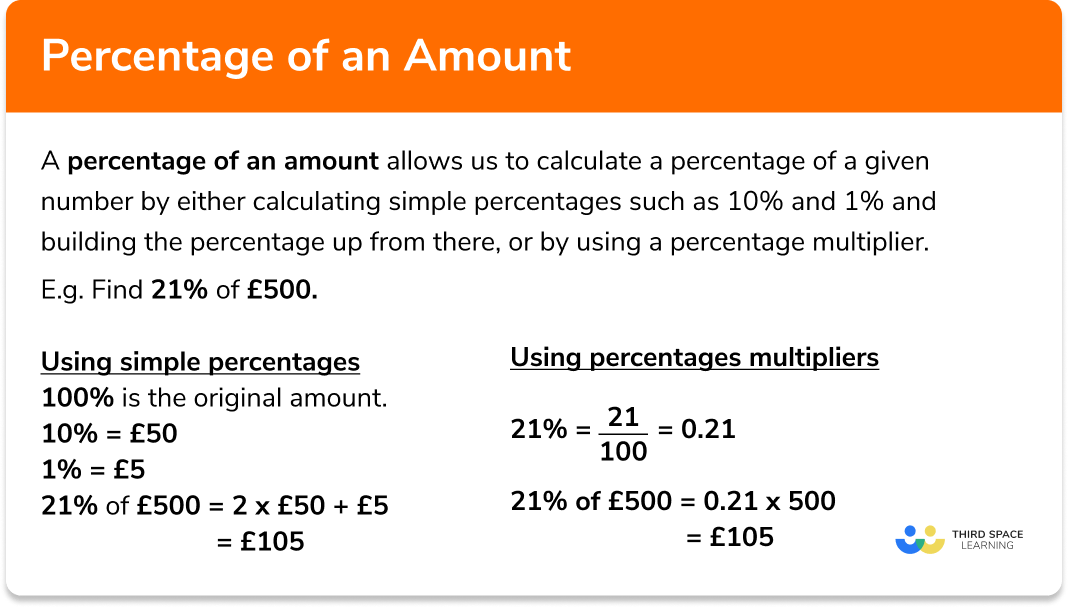
At its core, a percentage is a ratio that represents a fraction of 100. The word “percent” literally stems from the Latin per centum, meaning “by the hundred.” In finance, this simple concept becomes a powerful tool for measuring change, proportion, and risk.
The Basic Formula Every Investor Needs
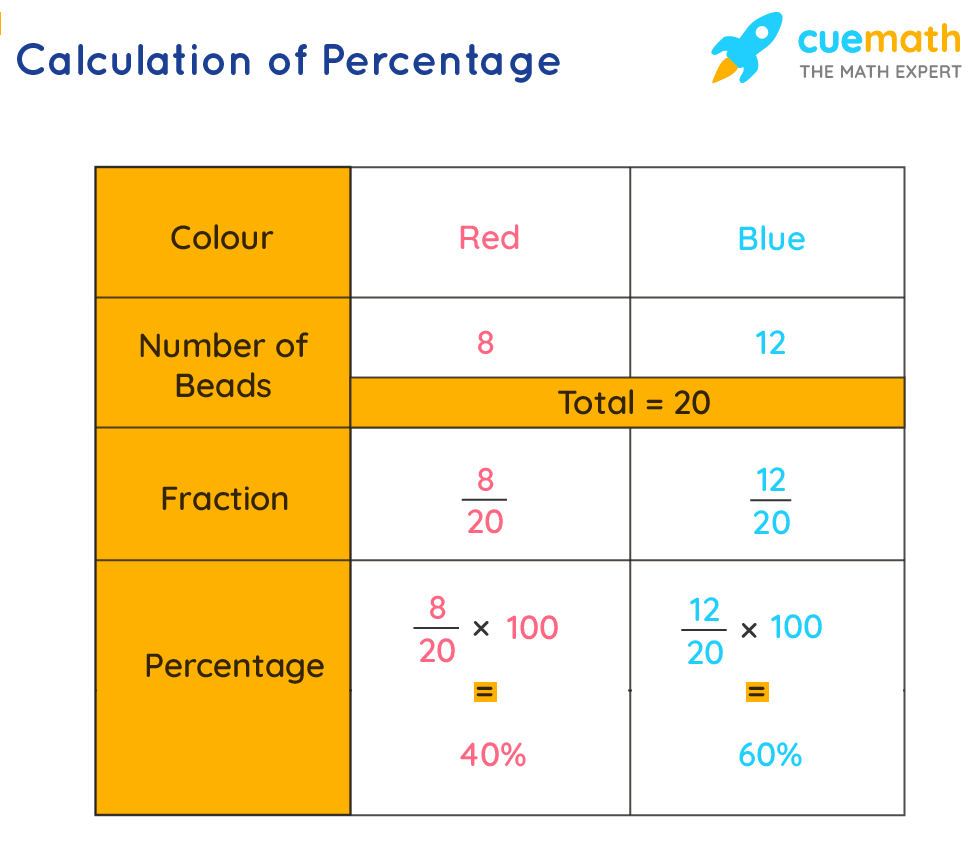
To calculate what percentage one specific amount is of a total, you use the fundamental percentage formula:
Percentage = (Part / Whole) × 100
For example, if you have a total investment portfolio of $50,000 and you hold $10,000 in gold, you can find the percentage of your portfolio dedicated to gold by dividing 10,000 by 50,000 (which equals 0.2) and then multiplying by 100 to get 20%. This calculation is vital for asset allocation, ensuring that you are not over-leveraged in a single asset class.
Converting Fractions and Decimals to Percentages
In financial reports, you will often encounter figures expressed as decimals or fractions. Understanding how to pivot between these formats is crucial for quick mental math. To convert a decimal to a percentage, shift the decimal point two places to the right. A 0.075 yield on a bond is instantly recognizable as a 7.5% return. Conversely, when performing calculations on a smartphone or calculator, you must convert percentages back to decimals (7.5% becomes 0.075) to ensure the math remains accurate.
Calculating Percentage Increase and Decrease
In the volatile world of money, values rarely stay static. Calculating the percentage change is how we measure market volatility or inflation. The formula is:
Percentage Change = [(New Value – Old Value) / Old Value] × 100
If a stock you bought for $150 rises to $180, the “New Value” minus “Old Value” is $30. Dividing $30 by the original $150 gives you 0.2, or a 20% gain. Mastering this formula allows you to strip away the “noise” of raw dollar amounts and see the actual growth rate of your capital.
Percentages in Personal Finance: Tracking Growth and Expenses
For the individual, percentage calculations are the pulse of a healthy budget. They move beyond the “how much” and answer the “how sustainable.”
Calculating Interest Rates on Savings and Loans
Interest is perhaps the most common application of percentages in daily life. Whether it is the Annual Percentage Yield (APY) on your savings account or the Annual Percentage Rate (APR) on a credit card, the percentage determines how much your money will grow or how much the debt will cost you.
When calculating simple interest, you multiply the principal amount by the interest rate and the time period. However, in modern finance, we usually deal with compound interest—where the percentage is applied to the principal plus accumulated interest. Understanding that a 5% interest rate compounded monthly results in a higher “effective” rate than 5% compounded annually is a hallmark of financial sophistication.
Managing Your Budget Using the 50/30/20 Rule
Financial advisors often recommend the 50/30/20 rule as a benchmark for personal stability. This strategy dictates that:
- 50% of your after-tax income should go toward Needs (rent, utilities, groceries).
- 30% should go toward Wants (dining out, hobbies, travel).
- 20% should go toward Financial Goals (debt repayment, savings, investments).
To apply this, you must calculate the percentage amount of your total paycheck. If your take-home pay is $4,000, calculating 20% ($4,000 × 0.20) tells you that you should be funneling $800 into savings every month. Without this percentage-based framework, it is easy to “feel” like you are saving enough while your actual wealth remains stagnant.
The Impact of Inflation on Purchasing Power
Inflation is measured as a percentage increase in the Consumer Price Index (CPI). If inflation is 3%, the “amount” your money can buy decreases by that same percentage. Calculating the real value of your money requires subtracting the inflation percentage from your nominal gains. If your savings account pays 4% interest but inflation is 3%, your “real” percentage gain is only 1%.
Advanced Business Applications: Profit Margins and Markup

For entrepreneurs and business owners, percentage calculations are the difference between a thriving enterprise and bankruptcy. Raw revenue is a vanity metric; percentages represent the “sanity” of the business model.
Gross vs. Net Profit Margin Calculations
Profit margin is the percentage of revenue that remains after all expenses are paid. It is calculated by dividing profit by total revenue.
- Gross Profit Margin: This focuses on the cost of goods sold (COGS). If a product sells for $100 and costs $60 to manufacture, the gross profit is $40, and the margin is 40%.
- Net Profit Margin: This is the ultimate “bottom line.” It takes the gross profit and subtracts all other expenses—rent, salaries, taxes, and marketing. If that same $100 sale results in only $10 of actual profit after all bills are paid, the net profit margin is 10%.
Understanding these percentages helps a business owner decide whether they need to raise prices (increase the margin) or cut operational costs.
Markup vs. Margin: Avoiding the Common Trap
One of the most frequent errors in business finance is confusing “markup” with “margin.”
- Markup is the percentage added to the cost to reach a selling price. If an item costs $50 and you mark it up by 50%, you sell it for $75.
- Margin, however, is calculated based on the selling price. In the example above, the $25 profit divided by the $75 selling price results in a 33.3% margin.
Business owners who aim for a 50% margin but only apply a 50% markup will find themselves consistently underfunded because they haven’t mastered the percentage math behind their pricing strategy.
Understanding Tax Calculations and VAT
Taxes are almost always expressed as a percentage of income or sales. For businesses operating in regions with Value Added Tax (VAT) or Goods and Services Tax (GST), the ability to calculate the percentage amount included in a price is vital for accounting. To find the amount of tax in a total price, you don’t simply multiply by the tax rate; you divide the total by (1 + tax rate). For a $110 item with a 10% tax, the math is $110 / 1.10, revealing a base price of $100 and a tax amount of $10.
Investment Metrics: Measuring ROI and Portfolio Performance
In the world of investing, percentages are the universal language used to compare different asset classes, from real estate to cryptocurrencies.
Calculating Return on Investment (ROI)
ROI is the most straightforward way to see if an investment is “worth it.” The formula is:
ROI = [(Current Value – Initial Cost) / Initial Cost] × 100
Whether you are flipping a house or buying shares of an index fund, this percentage allows you to see the efficiency of your capital. An investment that returns $5,000 might sound great, but if it required a $100,000 initial layout, that is only a 5% ROI. If another investment returned $2,000 on a $10,000 layout, that is a 20% ROI. The percentage reveals that the second option is a much more efficient use of your money.
Compound Annual Growth Rate (CAGR) and Yield
While simple ROI tells you how much you gained, CAGR tells you the mean annual growth rate of an investment over a specified period longer than one year. This is a more complex percentage calculation that accounts for the effects of compounding.
Similarly, “Yield” is a percentage used to describe the income generated by an investment, such as dividends from stocks or interest from bonds. A stock price might drop, but if it pays a 4% dividend yield, the investor is still generating a percentage-based cash flow that can be reinvested to buy more shares.
Assessing Portfolio Risk: Drawdowns and Volatility
Professional money managers use percentages to measure risk. A “drawdown” is the percentage decline from a peak to a trough in a portfolio. If your $100,000 portfolio drops to $80,000, you have experienced a 20% drawdown. Understanding these percentages is crucial for emotional regulation in investing; knowing that the S&P 500 has a historical average intra-year drawdown of about 14% helps investors stay the course during market dips.
Tools and Strategies for Error-Free Financial Calculations
While the logic of percentages is simple, the execution in complex financial environments can be prone to human error. Utilizing the right tools ensures that your financial planning remains accurate.
Using Spreadsheet Software for Automation
Programs like Microsoft Excel or Google Sheets are the gold standard for financial percentage calculations. They use specific functions to handle these tasks automatically. For example, to find a percentage in Excel, you simply use the formula =Part/Total and then click the “Percent Style” button. For more complex tasks, like finding the percentage of a total with multiple variables, spreadsheets allow you to create dynamic models where you can change a single number and watch the percentage adjustments ripple through your entire budget or business plan.
Avoiding Common Mathematical Pitfalls in Finance
One of the most dangerous mistakes in money management is the “asymmetry of loss.” If your investment loses 50% of its value, it must gain 100%—not 50%—just to get back to where it started.
- Start: $100
- 50% Loss: $50
- 50% Gain (on $50): $75 (You are still down 25% from the start!)
Understanding this mathematical reality changes how an investor views risk. It highlights the importance of protecting the downside, as the percentage required to recover from a loss is always higher than the percentage of the loss itself.
Conclusion: The Power of Percentage in Wealth Building
Mastering how to calculate amounts in percentage is more than just a mathematical exercise; it is a fundamental pillar of financial freedom. By viewing your money through the lens of percentages, you gain the ability to compare opportunities, identify inefficiencies in your spending, and accurately track your progress toward long-term goals. Whether you are a student, a homeowner, or a CEO, the ability to fluently speak the language of percentages will empower you to make smarter, more informed, and more profitable financial decisions.
aViewFromTheCave is a participant in the Amazon Services LLC Associates Program, an affiliate advertising program designed to provide a means for sites to earn advertising fees by advertising and linking to Amazon.com. Amazon, the Amazon logo, AmazonSupply, and the AmazonSupply logo are trademarks of Amazon.com, Inc. or its affiliates. As an Amazon Associate we earn affiliate commissions from qualifying purchases.