
Understanding how to calculate a percent of a percent is a critical skill for anyone navigating the complexities of personal finance, investing, business operations, and financial analysis. This seemingly abstract mathematical concept underpins numerous real-world financial scenarios, from assessing compound investment returns to deciphering layered discounts and calculating effective interest rates. Mastery of this calculation empowers individuals and businesses to make more informed financial decisions, accurately project outcomes, and identify hidden costs or benefits.
The Core Concept: Understanding Nested Percentages
At its heart, calculating a percent of a percent involves applying one percentage reduction or increase to a value that has already been subjected to another percentage change. It’s not about simply adding or subtracting percentages; rather, it’s about understanding the sequential impact of these proportional adjustments on a fluctuating base.

What is “A Percent Of A Percent”?
Imagine you receive a 10% bonus, but 20% of that bonus is withheld for taxes. Or consider an investment that grows by 8%, but then a 1% management fee is applied to the new total. These are classic examples of a percent of a percent. The crucial insight is that the second percentage is not applied to the original starting value, but rather to the result of the first percentage calculation. This sequential nature is what makes the calculation distinct and often leads to common errors when misunderstood.
The Foundational Math Explained
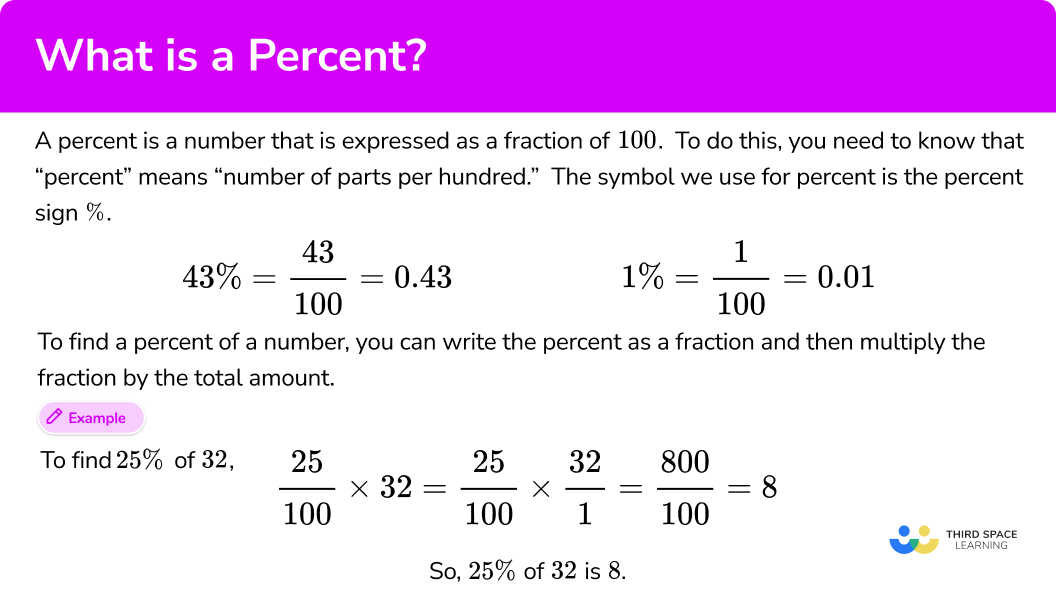
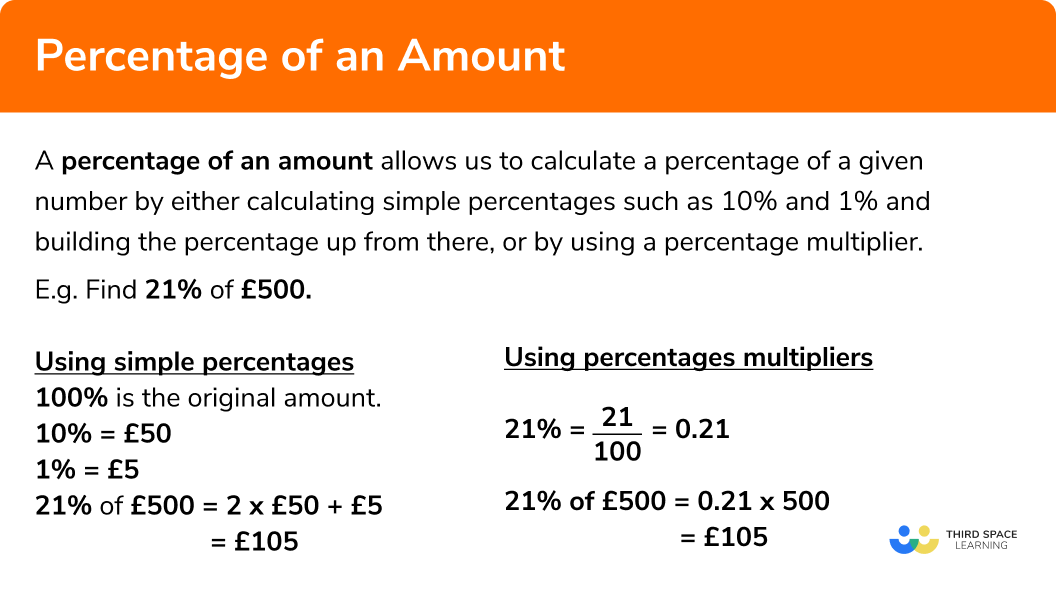
The fundamental principle behind calculating a percent of a percent is rooted in multiplication. When you calculate a percentage of a number, you are essentially multiplying that number by the decimal equivalent of the percentage. For instance, 20% of 100 is 0.20 * 100 = 20. When you calculate a percent of that result, you are performing a subsequent multiplication.
Consider a starting value (V).
- A percentage change P1 is applied: V * (1 + P1/100) or V * (1 – P1/100). Let’s call this new value V1.
- A second percentage change P2 is applied to V1: V1 * (1 + P2/100) or V1 * (1 – P2/100).
The key is that P2 is applied to V1, not V. This sequential application through multiplication is what differentiates it from simple percentage addition or subtraction.
Real-World Financial Applications
The ability to calculate a percent of a percent is not merely an academic exercise; it’s a practical necessity across various financial domains.
Investment Returns and Compound Growth
One of the most significant applications is in understanding compound investment returns. An investment grows by a certain percentage each year, but that percentage is applied to the new, larger balance from the previous year, including accumulated earnings. This exponential growth is precisely a percent of a percent repeatedly applied over time. For instance, if your portfolio gains 7% in year one and another 7% in year two, the second 7% is on a higher base, resulting in a return greater than a simple 14% over two years. Similarly, when calculating the real return on an investment after accounting for inflation (e.g., a 10% nominal return minus 3% inflation), you’re effectively applying a reduction percentage to the growth percentage.
Sequential Discounts and Markups
Retailers frequently offer sequential discounts, such as “20% off plus an additional 10% off the sale price.” Consumers often mistakenly assume a 30% total discount. However, the 10% is applied to the price after the initial 20% reduction, not to the original price. This results in a slightly smaller overall discount than a simple sum. Conversely, a product might be marked up by a certain percentage, and then an additional percentage is added for shipping or handling, again affecting the final cost sequentially.
Tax Calculations and Layered Fees
Many financial transactions involve multiple layers of taxes or fees. For example, some investment products might have a management fee (a percentage of assets under management), followed by a performance fee (a percentage of profits above a certain benchmark). Income taxes often involve progressive brackets, where different percentages apply to different portions of income, but then other deductions or credits (themselves often percentage-based) are applied to the resulting taxable income or tax liability. Understanding these layered percentage calculations is vital for accurate financial planning and forecasting.
Commission Structures and Performance Bonuses
Sales professionals and financial advisors often work with commission structures that can involve a percent of a percent. A salesperson might earn a 5% commission on total sales, but their manager might receive an override commission of 10% of the salesperson’s commission. Similarly, a performance bonus structure might dictate a percentage bonus on profits, but then a portion of that bonus might be subject to a secondary percentage for a team pool or tax withholding.
Step-by-Step Calculation Guide
Calculating a percent of a percent is straightforward once you understand the conversion to decimals and the power of multiplication.
Converting Percentages to Decimals
The first crucial step is to convert all percentages into their decimal equivalents. To do this, simply divide the percentage by 100.
- 10% becomes 0.10
- 25% becomes 0.25
- 1% becomes 0.01
- 0.5% becomes 0.005
When dealing with increases, you’ll want to add this decimal to 1 (representing 100% of the original value). So, a 10% increase is 1 + 0.10 = 1.10.
For decreases, you’ll subtract the decimal from 1. A 10% decrease is 1 – 0.10 = 0.90.
The Multiplication Rule
Once percentages are converted to decimals (and adjusted for increases/decreases), the calculation becomes a simple series of multiplications.
Let’s say you have an initial value (V) and two sequential percentage changes, P1 and P2.
Scenario 1: Two Increases
If V increases by P1, then the new value increases by P2.
Final Value = V * (1 + P1/100) * (1 + P2/100)
Scenario 2: Two Decreases
If V decreases by P1, then the new value decreases by P2.
Final Value = V * (1 – P1/100) * (1 – P2/100)
Scenario 3: An Increase and a Decrease
If V increases by P1, then the new value decreases by P2.
Final Value = V * (1 + P1/100) * (1 – P2/100)
The order of operations matters if the base for the second percentage is specifically the result of the first. If both percentages refer to the original base, it’s a different calculation (and not “a percent of a percent”).
Reverting to Percentage Format
After performing the multiplication, your result will be a decimal. To express the final change as a single, effective percentage, you’ll typically:
- Divide the final value by the original value.
- Subtract 1 from this result (if it was an increase) or subtract the result from 1 (if it was a decrease).
- Multiply by 100 to convert back to a percentage.
Example: If an original value of 1 became 1.21 after two increases, the effective change is (1.21 / 1) – 1 = 0.21, or 21%.
Practical Examples in Finance
Let’s put these steps into action with concrete financial scenarios.
Calculating Net Investment Growth
Suppose you invest $10,000. In the first year, your investment grows by 12%. In the second year, it grows by another 8%. What is the total value of your investment, and what is the effective overall percentage growth?
- Year 1 Growth: $10,000 * (1 + 0.12) = $10,000 * 1.12 = $11,200
- Year 2 Growth (on new base): $11,200 * (1 + 0.08) = $11,200 * 1.08 = $12,096
The final value is $12,096.
To find the effective overall percentage growth:
($12,096 / $10,000) – 1 = 1.2096 – 1 = 0.2096
Effective growth = 20.96%
Notice this is higher than a simple 12% + 8% = 20% due to compounding.
Determining the Final Price After Multiple Discounts
A product originally priced at $200 is on sale for 25% off. As a loyalty member, you receive an additional 10% off the sale price. What is the final price?
- First Discount: $200 * (1 – 0.25) = $200 * 0.75 = $150
- Second Discount (on new base): $150 * (1 – 0.10) = $150 * 0.90 = $135
The final price is $135.
If you had simply added the discounts (25% + 10% = 35%) and applied it to the original price:
$200 * (1 – 0.35) = $200 * 0.65 = $130. This is incorrect and results in a lower price than you would actually pay. The effective total discount is ($200 – $135) / $200 = $65 / $200 = 0.325 or 32.5%.
Analyzing Effective Interest Rates
A loan has a stated annual interest rate of 6%. However, there’s also an annual administrative fee of 0.5% of the outstanding loan balance. What is the effective annual cost of borrowing?
While these aren’t strictly sequential on the same base in the same way as discounts, understanding how multiple percentage costs combine is critical. If the 0.5% fee is applied after the interest calculation, it’s a clear percent of a percent.
Let’s assume the 0.5% fee is applied to the loan balance after the 6% interest has been added (a less common but illustrative scenario).
Original Loan: $10,000
- Interest Applied: $10,000 * (1 + 0.06) = $10,600
- Fee Applied (on new balance): $10,600 * (1 + 0.005) = $10,600 * 1.005 = $10,653
The total amount after one year is $10,653. The effective annual cost is ($10,653 – $10,000) / $10,000 = 0.0653 or 6.53%.
More commonly, both might apply to the principal, or the fee applies to the principal, and interest applies to the outstanding balance. The critical takeaway is that when one percentage modifies a value, and a subsequent percentage acts on that modified value, you’re dealing with a percent of a percent.
Avoiding Common Pitfalls
While the calculation is simple, several common mistakes can lead to incorrect financial assessments.
The Order of Operations Matters
In finance, the sequence of percentage applications can significantly alter the outcome. A 10% increase followed by a 5% decrease is not the same as a 5% decrease followed by a 10% increase, even though the final net change will be the same regardless of the order for two general percentage changes (e.g., V * 1.10 * 0.95 = V * 0.95 * 1.10). However, in specific contexts like tax planning or tiered compensation, the order can matter if certain percentages apply only to specific portions or if thresholds are involved. For example, if a bonus is taxed before a charitable deduction is taken from the remaining amount, the net is different than if the deduction is taken first. Always clarify the exact sequence of application.
Don’t Add Percentages Directly
The most frequent error is simply adding or subtracting percentages when they apply sequentially to a changing base. As shown with the discount and investment examples, a 25% discount and an additional 10% discount do not equate to a 35% discount. Similarly, 10% growth then 10% growth does not equal 20% growth. Always convert to decimals and multiply.
The Importance of Base Values
Always be clear about the base to which each percentage is being applied. Is it the original value, the value after the first change, or a specific component of the value? Misidentifying the base is a primary cause of calculation errors in complex financial scenarios.
Mastering the calculation of a percent of a percent is an indispensable tool in your financial toolkit. It provides clarity and accuracy in analyzing investments, evaluating spending, forecasting business performance, and navigating the nuances of financial markets. By consistently converting percentages to decimals and applying the multiplicative principle, you can confidently unravel even the most layered financial scenarios.
aViewFromTheCave is a participant in the Amazon Services LLC Associates Program, an affiliate advertising program designed to provide a means for sites to earn advertising fees by advertising and linking to Amazon.com. Amazon, the Amazon logo, AmazonSupply, and the AmazonSupply logo are trademarks of Amazon.com, Inc. or its affiliates. As an Amazon Associate we earn affiliate commissions from qualifying purchases.