
In the dynamic world of finance, numbers tell a story. Whether you’re tracking your investments, analyzing business performance, or simply managing your personal budget, understanding how values change over time is paramount. One of the most fundamental and widely used metrics for this purpose is the percent increase. It quantifies the relative growth of a value, offering a clearer picture than absolute numbers alone. A dollar increase might seem small on a multi-million dollar portfolio, but it represents a significant gain on a modest savings account. Conversely, a large absolute increase might still be a minor percentage if the starting base was very high.
This guide will demystify the calculation of percent increase, providing you with a robust framework to apply this essential skill across various financial scenarios. From personal finance to business analysis, mastering this calculation empowers you to make more informed decisions and gain deeper insights into financial trends.
The Fundamental Formula for Percent Increase
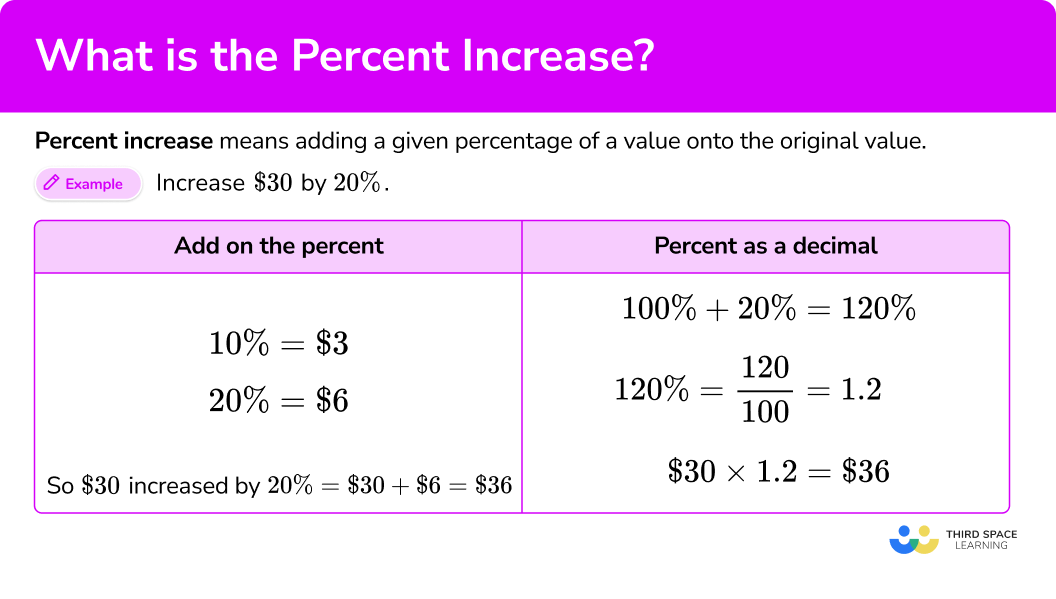
At its core, calculating a percent increase is about understanding the relative change from an initial value to a new, larger value. It’s a measure of growth expressed as a percentage of the original amount. The concept is straightforward, but precision in application is key.
Deconstructing the Formula
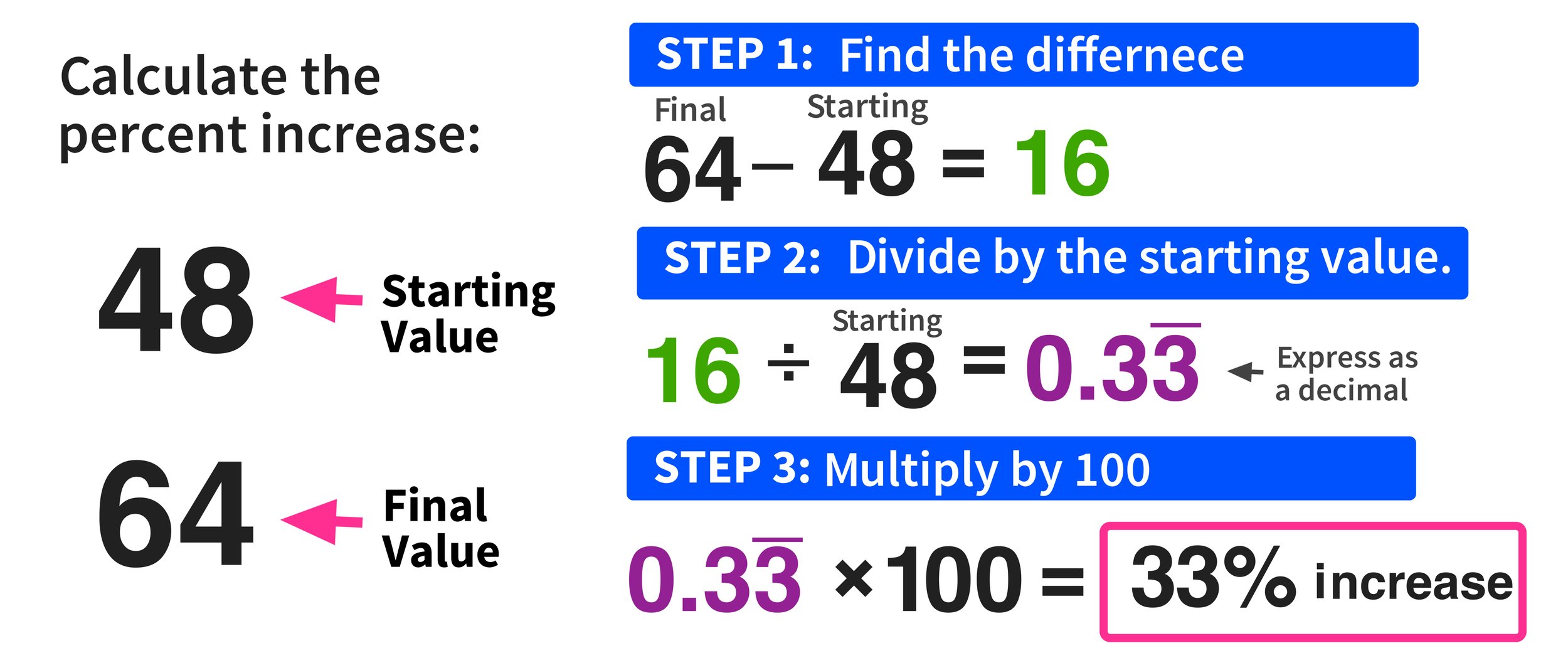
The formula for calculating a percent increase is elegant in its simplicity, yet powerful in its utility:
Percent Increase = ((New Value – Old Value) / Old Value) × 100
Let’s break down each component:
- New Value: This is the larger, subsequent number you are comparing against the original. It represents the value after the increase.
- Old Value (or Original Value): This is the initial, smaller number from which the increase is measured. It serves as the baseline for comparison.
- New Value – Old Value: This first step calculates the absolute change or the amount of increase. It tells you how much the value has grown in raw numerical terms.
- (New Value – Old Value) / Old Value: Dividing the absolute change by the old value converts this change into a decimal representation of the increase. This effectively answers: “What proportion of the original value is the increase?”
- × 100: Finally, multiplying the decimal by 100 converts it into a percentage, making it easier to understand and compare.
Step-by-Step Calculation Guide
Let’s walk through an example to solidify your understanding. Suppose your investment portfolio grew from $10,000 (Old Value) to $12,500 (New Value) over a year.
-
Identify Old and New Values:
- Old Value = $10,000
- New Value = $12,500
-
Subtract the Old Value from the New Value (Find the Absolute Change):
- Absolute Change = $12,500 – $10,000 = $2,500
-
Divide the Absolute Change by the Old Value (Convert to a Decimal):
- Decimal Increase = $2,500 / $10,000 = 0.25
-
Multiply the Decimal by 100 (Convert to a Percentage):
- Percent Increase = 0.25 × 100 = 25%
Therefore, your investment portfolio experienced a 25% increase.
Common Pitfalls and How to Avoid Them
While the formula is straightforward, missteps can lead to incorrect results:
- Using the Wrong ‘Old’ Value: Always ensure the denominator in your division is the original or starting value. If you mistakenly use the new value, you’ll get an inaccurate percentage.
- Forgetting to Multiply by 100: This is a common oversight. Without multiplying by 100, your result will be a decimal fraction, not a percentage.
- Confusing Increase with Decrease: This article focuses on increase, meaning the New Value must be greater than the Old Value. If the New Value is less than the Old Value, you are calculating a percent decrease, which would yield a negative result with this formula, indicating a loss. While the formula technically works for both, it’s crucial to interpret the sign correctly.
Real-World Applications in Personal Finance
Understanding percent increase is not just an academic exercise; it’s a vital tool for managing and growing your personal wealth. From evaluating investment performance to understanding the erosion of purchasing power, this calculation provides critical insights.
Tracking Investment Growth
One of the most powerful applications of percent increase is in assessing the performance of your investments. Whether you’re tracking individual stocks, mutual funds, cryptocurrency, or your entire portfolio, the percentage gain is often more informative than the raw dollar amount.
- Example: You invested $5,000 in a tech stock, and it grew to $6,250 within six months.
- Percent Increase = (($6,250 – $5,000) / $5,000) × 100 = ($1,250 / $5,000) × 100 = 0.25 × 100 = 25%.
- This 25% tells you the growth rate, allowing you to compare it against other investments, market benchmarks, or your financial goals. A $1,250 gain on $5,000 is excellent, but on a $100,000 investment, it would be a mere 1.25%, a much less impressive performance.
- Beyond Simple Growth: For longer-term investments, concepts like Compound Annual Growth Rate (CAGR) build upon the percent increase, accounting for compounding over multiple periods. While more complex, the foundational understanding of percent increase is essential.
Analyzing Salary & Income Growth
Your personal income is the engine of your financial life, and tracking its growth is crucial for career planning and financial stability.
- Example: Your annual salary increased from $60,000 to $63,000 after your performance review.
- Percent Increase = (($63,000 – $60,000) / $60,000) × 100 = ($3,000 / $60,000) × 100 = 0.05 × 100 = 5%.
- A 5% raise is a clear metric you can use to assess your compensation against industry averages, inflation, or your expectations. Similarly, if you have multiple income streams or side hustles, calculating the percent increase for each can help you identify which ventures are growing most effectively.
Understanding Inflation and Cost of Living
Inflation is the rate at which the general level of prices for goods and services is rising, and subsequently, purchasing power is falling. Percent increase is the primary tool used to measure it.
- Example: The average cost of consumer goods in your region increased from $1,000 to $1,030 over the last year.
- Inflation Rate (Percent Increase) = (($1,030 – $1,000) / $1,000) × 100 = ($30 / $1,000) × 100 = 0.03 × 100 = 3%.
- Understanding this 3% inflation rate is vital. If your salary only increased by 2% (as in the example above, if your raise was only $2,000 on $100,000, for example), your real purchasing power has decreased, even with a nominal raise. This highlights the importance of ensuring your income growth keeps pace with or exceeds the cost of living increases.
Business Finance Insights Through Percent Increase
Beyond personal finance, percent increase is an indispensable metric in the business world, used by analysts, managers, and investors to gauge performance, identify trends, and make strategic decisions.
Revenue and Sales Growth
For any business, revenue is the lifeblood. Tracking its growth percentage provides critical insights into market penetration, product success, and overall business health.
- Example: A company’s quarterly revenue grew from $500,000 in Q1 to $575,000 in Q2.
- Percent Increase = (($575,000 – $500,000) / $500,000) × 100 = ($75,000 / $500,000) × 100 = 0.15 × 100 = 15%.
- A 15% quarter-over-quarter revenue increase signals strong performance, potentially driven by successful marketing campaigns, new product launches, or expanding customer base. This metric is far more meaningful than simply stating “revenue increased by $75,000” as it contextualizes the growth relative to the starting point.
Profit Margin Analysis
While revenue growth is important, profit margin indicates how efficiently a company converts revenue into profit. An increasing profit margin percentage is often a sign of improved operational efficiency or pricing power.
- Example: A company’s net profit increased from $50,000 to $60,000 while its revenue also grew. The profit margin (profit as a percentage of revenue) also needs to be calculated, but for simplicity, let’s look at the absolute profit growth.
- Percent Increase in Profit = (($60,000 – $50,000) / $50,000) × 100 = ($10,000 / $50,000) × 100 = 0.20 × 100 = 20%.
- A 20% increase in profit suggests the company is not only growing its top line but also managing its costs effectively or achieving better pricing for its products/services.
Expense Management and Cost Reduction
Conversely, businesses constantly monitor expenses. An increase in a particular expense category, expressed as a percentage, can highlight areas needing attention for cost control.
- Example: A company’s utility bills increased from $2,000 to $2,300 month-over-month.
- Percent Increase = (($2,300 – $2,000) / $2,000) × 100 = ($300 / $2,000) × 100 = 0.15 × 100 = 15%.
- A 15% increase in utility costs is significant and warrants investigation. This could be due to seasonal factors, increased operations, or rising energy prices. Pinpointing such increases quickly allows management to take corrective action, if necessary.
Tools and Tips for Efficient Calculation
While understanding the manual calculation is essential, various tools can help you compute percent increases quickly and accurately, especially when dealing with large datasets or frequent calculations.
Using Spreadsheets (Excel/Google Sheets)
Spreadsheets are arguably the most versatile tools for financial calculations. They allow for automation, error checking, and scalability.
- Basic Formula: If your Old Value is in cell A1 and your New Value is in cell B1, the formula for percent increase would be:
=(B1-A1)/A1 - Formatting as Percentage: To display the result as a percentage (e.g., 0.25 becomes 25%), simply format the cell containing the formula as a “Percentage” from the number format options. Excel and Google Sheets automatically multiply by 100 and add the percent symbol for you.
- Advantages: Spreadsheets are invaluable for tracking trends over time, comparing multiple values, and integrating calculations into larger financial models.
Online Calculators and Financial Apps
For quick, one-off calculations, or when you don’t have a spreadsheet readily available, online percent increase calculators or financial apps are extremely convenient.
- Ease of Use: Simply input your old and new values, and the calculator provides the result instantly.
- When to Use Them: Ideal for quick checks, verifying manual calculations, or when you need an answer without setting up a full spreadsheet. Many personal finance apps also incorporate these calculations for tracking investments or budgets.
Mental Math for Quick Estimates
While not precise, the ability to mentally estimate percent increases can be useful for rapid decision-making or getting a rough sense of scale.
- Rounding and Simple Fractions: If a value increases from 100 to 120, it’s easy to see a 20% increase (20/100). If it goes from 50 to 75, that’s a 25 increase on 50, which is half of 50, so 50%.
- When to Use: Great for comparing approximate growth rates, quickly assessing headlines, or understanding the general magnitude of a change before diving into precise calculations.

Conclusion
The ability to calculate a percent increase between two numbers is a foundational skill in the realm of finance. It transforms raw data into meaningful insights, allowing you to gauge growth, assess performance, and understand relative change across a multitude of financial contexts. From tracking the gains in your investment portfolio and the growth of your income to analyzing business revenues and controlling expenses, this simple yet powerful formula provides clarity and empowers informed decision-making.
By mastering the formula, understanding its applications, and utilizing available tools, you equip yourself with an essential financial literacy tool. Embrace the power of percentages, and let them illuminate the story your numbers are trying to tell.
aViewFromTheCave is a participant in the Amazon Services LLC Associates Program, an affiliate advertising program designed to provide a means for sites to earn advertising fees by advertising and linking to Amazon.com. Amazon, the Amazon logo, AmazonSupply, and the AmazonSupply logo are trademarks of Amazon.com, Inc. or its affiliates. As an Amazon Associate we earn affiliate commissions from qualifying purchases.