
Purchasing a vehicle is often the second-largest financial commitment a person makes, surpassed only by the purchase of a home. Yet, a surprising number of consumers enter dealerships with only a vague understanding of how their monthly obligation is actually derived. In the world of personal finance, being “payment-focused” rather than “price-focused” is a common pitfall that can lead to long-term fiscal strain. Understanding the intricate variables that dictate a car payment is not just about arithmetic; it is about empowerment. By mastering the calculation of a car payment, you transition from a passive consumer to a strategic navigator of your own financial destiny.
The Essential Components of a Car Loan
Before diving into the mathematical formulas, one must understand the raw ingredients that comprise a monthly vehicle installment. A car payment is not a monolithic figure; it is a composite of several distinct financial levers, each of which can be adjusted to change the final outcome.
The Principal Amount
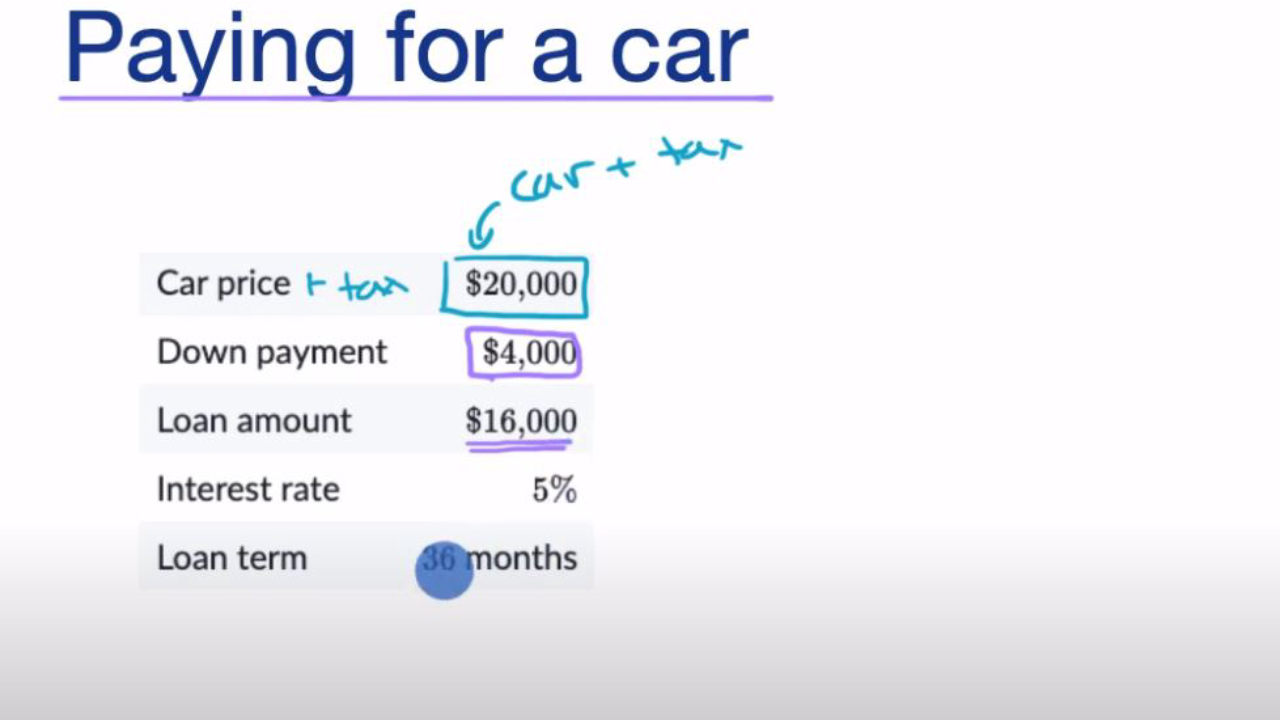
The principal is the foundational balance of the loan. It is the total amount of money you are borrowing from a lender to cover the purchase. However, the principal is rarely the same as the vehicle’s “sticker price.” To arrive at the principal, you must take the negotiated price of the car and add necessary costs such as sales tax, registration fees, and documentation fees. Conversely, you subtract your down payment and the agreed-upon value of any trade-in vehicle. The resulting figure is the actual debt you are servicing.
The Annual Percentage Rate (APR)
Interest is the price you pay for the privilege of using the bank’s money. In the context of auto loans, this is expressed as the Annual Percentage Rate (APR). Unlike simple interest, car loans typically use a pre-computed interest or a simple interest formula calculated daily based on the remaining balance. Your APR is heavily influenced by external factors, such as the Federal Reserve’s prime rate, and internal factors, most notably your credit score. A difference of even 2% in your APR can result in thousands of dollars of additional cost over the life of the loan.
The Loan Term
The term is the duration of the loan, usually expressed in months. Standard terms typically range from 36 to 72 months, though 84-month loans have become increasingly common as vehicle prices rise. While a longer term reduces the monthly payment—making a more expensive car feel “affordable”—it simultaneously increases the total interest paid. In the Money niche, the term length is often viewed as a double-edged sword: it provides cash-flow flexibility but risks “negative equity,” where you owe more than the car is worth.
The Mathematical Formula for Car Payments
While most people rely on digital tools, understanding the underlying algebra provides clarity on how interest and principal interact over time. Car loans are typically amortized, meaning the payment remains constant while the proportion of the payment going toward interest decreases as the balance drops.
The Standard Amortization Equation
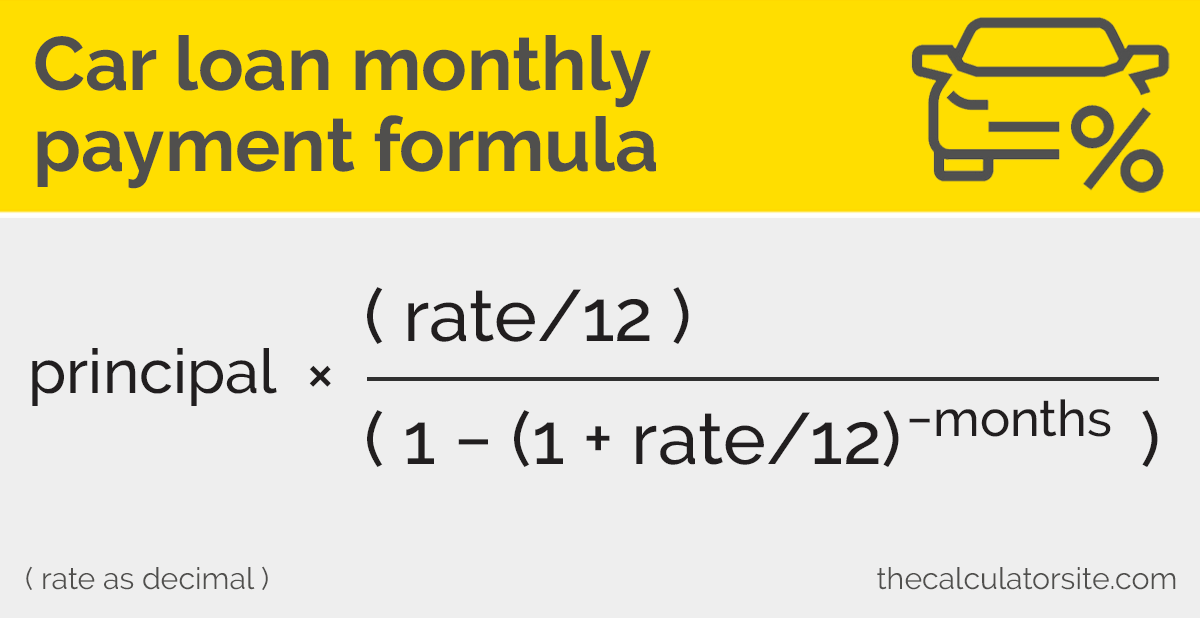
To calculate the monthly payment ($M$) manually, you use the following formula:
$M = P [ i(1 + i)^n ] / [ (1 + i)^n – 1 ]$
Where:
- $P$ = Principal loan amount
- $i$ = Monthly interest rate (Annual rate divided by 12)
- $n$ = Number of months (the loan term)
For example, if you are borrowing $30,000 ($P$) at a 6% annual interest rate ($i$ = 0.005) for 60 months ($n$), the calculation reveals the mechanical reality of your debt. The exponentiation in this formula highlights why interest accumulates so aggressively in the early stages of a loan.
Understanding Simple Interest Amortization
Most modern auto loans utilize “simple interest.” This means interest is calculated based on the balance of the loan on the day the payment is received. From a personal finance perspective, this is a significant advantage. It means that if you pay more than the minimum monthly requirement, or if you pay earlier than the due date, you reduce the principal faster. This, in turn, reduces the amount of interest that can accrue for the following month, effectively shortening your loan term and saving you money.
Factors That Shift the Financial Equation
Calculating a car payment is not a static exercise. Several variables can be manipulated before you ever step foot in a showroom to ensure the resulting numbers align with your broader financial goals.
The Power of the Down Payment
The down payment is perhaps the most effective tool for lowering a car payment. In financial planning, the “20/4/10 rule” suggests putting at least 20% down. A substantial down payment serves two purposes: it reduces the principal ($P$) in our formula, and it acts as a hedge against depreciation. Because new cars lose a significant portion of their value the moment they are driven off the lot, a 20% down payment ensures that the loan balance remains lower than the car’s market value, protecting you from being “underwater.”
Credit Scores and Interest Tiering
Lenders categorize borrowers into “tiers” based on their credit reports. A “Prime” or “Super Prime” borrower (typically those with scores above 740) will receive the lowest possible APR. As scores decrease into the “Subprime” range, the APR climbs exponentially to compensate the lender for the increased risk of default. When calculating your potential payment, it is vital to know your score beforehand. A small investment of time in improving your credit score by 30 to 50 points before applying for a loan can result in a significantly lower monthly obligation.
Taxes, Fees, and “Hidden” Add-ons
A common mistake in car payment calculation is failing to account for “out-the-door” costs. Depending on your jurisdiction, sales tax can add 5% to 10% to the vehicle’s price. Furthermore, dealerships often include “back-end” products such as Extended Warranties, Gap Insurance, or Nitrogen-filled tires. If these are financed into the loan, they increase the principal. From a wealth-management standpoint, it is often better to pay for taxes and fees upfront in cash rather than financing them and paying interest on taxes for the next five years.
Tools for Precise Calculation
In the modern era, you do not need a financial degree to run these numbers. Various technological and methodological tools can help you verify the dealer’s math and ensure accuracy.
Utilizing Online Financial Calculators
Most reputable financial websites offer car payment calculators. These tools allow you to toggle variables like APR and term length to see real-time changes in the payment. When using these, look for “Advanced” versions that allow you to input sales tax and trade-in values. These calculators provide a “sanity check” against the figures presented in a dealership’s F&I (Finance and Insurance) office.
Creating a DIY Amortization Schedule
For those who want absolute control, a spreadsheet (Excel or Google Sheets) is the gold standard. By using the =PMT() function, you can model different scenarios. More importantly, you can build an amortization table that shows exactly how much of each payment is going toward interest versus principal. Seeing that a $500 payment in the first month only reduces your debt by $350 (with $150 going to interest) is a powerful psychological motivator to pay off the loan early.
Strategic Financial Considerations Beyond the Payment
A car payment should never be viewed in isolation. It must be integrated into your total financial ecosystem. The goal is not just to afford the payment, but to ensure the vehicle does not impede your ability to invest, save for retirement, or build an emergency fund.
The 20/4/10 Rule of Thumb
Financial experts often point to the 20/4/10 rule as a benchmark for car affordability:
- 20% Down: As mentioned, this protects against depreciation.
- 4-Year Term: Limit the loan to 48 months. This prevents you from paying excessive interest and ensures you aren’t still paying for a car that has begun to require significant repairs.
- 10% of Income: Your total transportation costs (loan payment, insurance, fuel, and maintenance) should not exceed 10% of your gross monthly income.
Calculating your car payment using these constraints ensures that your vehicle remains a tool for mobility rather than a burden on your net worth.

Total Cost of Ownership (TCO)
The monthly bank draft is only one part of the equation. A “cheap” car payment on a vehicle with high insurance premiums, poor fuel economy, and expensive proprietary parts can be more costly than a higher payment on a more reliable, efficient vehicle. When calculating what you can afford, always include an estimate for recurring costs. True financial literacy involves looking past the “Monthly Payment” line and analyzing the Total Cost of Ownership over the entire period you plan to own the vehicle.
By approaching car payment calculation with mathematical precision and strategic foresight, you ensure that your next vehicle purchase is a sound financial decision. Knowledge of the principal, interest, and term—combined with a disciplined approach to down payments and credit management—is the key to driving a vehicle that fits both your lifestyle and your balance sheet.
aViewFromTheCave is a participant in the Amazon Services LLC Associates Program, an affiliate advertising program designed to provide a means for sites to earn advertising fees by advertising and linking to Amazon.com. Amazon, the Amazon logo, AmazonSupply, and the AmazonSupply logo are trademarks of Amazon.com, Inc. or its affiliates. As an Amazon Associate we earn affiliate commissions from qualifying purchases.